
BuddhistCatholicContemplativeEvangelicalGeneral ChristianHinduJewishLatter-day SaintMuslimNew VisionsProgressive Christian
Beliefs
- Buddhist
- Catholic
- Contemplative
- Evangelical
- General Christian
- Hindu
- Jewish
- Latter-day Saint
- More Voices
- Muslim
- New Visions
- Pagan
- Progressive Christian
Topics
- Religion News
- Food and Religion
- Sports and Religion
- Religious Art
- Religious Music and Entertainment
- Religious Events
- History and Religion
- Style and Religion
- Politics and Religion
- Women in Religion
- Recreation Outdoors and Religion
- Business Finance and Religion
- Careers Workplace and Religion
- Education and Religion
- Family Parenting and Religion
- Health Fitness and Religion
- Home and Religion
- Relationships and Religion
- Technology and Religion
- Travel and Religion
Columnists
- Buddhist Columnists
- Business Finance and Religion Columnists
- Careers Workplace and Religion Columnists
- Catholic Columnists
- Contemplative Columnists
- Education and Religion Columnists
- Evangelists Columnists
- Family Parenting and Religion Columnists
- General Christian Columnists
- Health Fitness and Religion Columnists
- Hindu Columnists
- History and Religion Columnists
- Home and Religion Columnists
- Jewish Columnists
- More Voices Columnists
- Latter Day Columnists
- Muslim Columnists
- New Visions Columnists
- Nonreligious Columnists
- Pagan Columnists
- Politics and Religion Columnists
- Progressive Columnists
- Recreation Outdoors and Religion Columnists
- Relationships and Religion Columnists
- Religion News Columnists
- Religious Art Columnists
- Religious Events Columnists
- Religious Music and Entertainment Columnists
- Sports and Religion Columnists
- Style and Religion Columnists
- Technology and Religion Columnists
- Travel and Religion Columnists
- Women in Religion Columnists
Resource Library
- 2026 Calendar
- Library of World Religions
- The 100 Most Holy Places on Earth
- Patheos Answers
- Podcasts
- Videos
- Faith Leaders Database
- Anglican Episcopalian
- Bahai
- Baptist
- Buddhism
- Christianity
- Confucianism
- Eastern Orthodoxy
- Hinduism
- Holiness and Pentecostal
- ISKCON
- Islam
- Judaism
- Lutheran
- Methodist
- The Church of Jesus Christ of Latter-day Saints
- New Age
- Paganism
- Presbytarian and Reformed
- Protestantism
- Religion Behind the Scenes
- Roman Catholic
- Scientology
- Shia Islam
- Sikhism
- Sufism
- Sunni Islam
- Taoism
- Zen
- See all religions
Research Tools
 Ad-Free & Subscriber Log-In Subscription Support
Ad-Free & Subscriber Log-In Subscription Support
Follow Patheos 

- Trending:
- Forgiveness
- |
- Marriage
- |
- Consciousness
- |
- Death Penalty
- |
- Election
- |
- Halloween

- Home
- Latter-day Saint
- “Historicity: Does it matter?”
“Historicity: Does it matter?”
Last updated on: November 1, 2019 at 4:46 pm by Dan Peterson
“Historicity: Does it matter?” 2019-11-01T16:46:53-06:00 Dan Peterson
Patheos Explore the world's faith through different perspectives on religion and spirituality! Patheos has the views of the prevalent religions and spiritualities of the world.
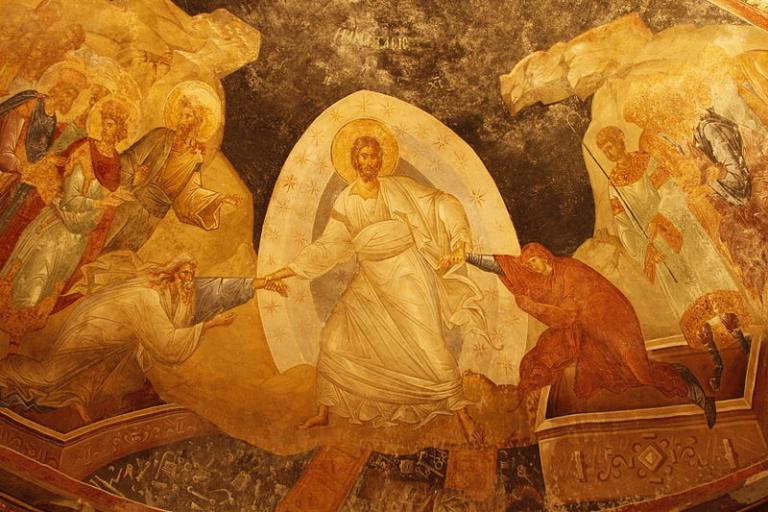
“Hê Anastasis” (“The Resurrection:)
A fresco painting in Istanbul’s medieval Chora Church depicts Christ standing upon the smashed doors of the Underworld, retrieving Adam and Eve from their long bondage there.
(Wikimedia Commons public domain image)
Responding in a friendly and positive way to some comments that I recently made here about the importance of scriptural historicity, Tom Hobson, a Presbyterian pastor, kindly called my attention to a series of three relevant and thoughtful articles that he published in The Presbyterian Outlook back in 2009. In turn, having read them, I’m happy to bring them to the notice of those who follow this blog:
“Historicity: Does it matter?”
“Historicity: Does it matter? Part 2”
“Historicity: Does it matter? Part 3”
I think it obvious and undeniable that the historicity (or lack thereof) of certain events narrated in scripture matters very, very much, though not everything is of equal importance. For example, I can think of no major principle of my faith that would be compromised were it to be found that the book of Job is fictional:
“There was a man in the land of Uz whose name was Job, and that man was blameless and upright, one who feared God and turned away from evil” (Job 1:1 ESV).
This isn’t quite “Once upon a time” or “A long time ago in a galaxy far, far away,” but it’s curiously vague. We learn nothing about the specific town in which Job lived, nor about his lineage. Was he a Hebrew, an Israelite? A pagan? When did he live? We aren’t told. We can’t even determine where “the land of Uz” might have been located.
And are we really to believe that Satan mingles freely in heaven with “the sons of God” and places bets with the Supreme Being about whether this or that mortal will remain faithful even if subjected to exceptional stress as part of the wager?
The most eloquent passages and fundamental truths expressed in the book of Job will remain intact even if we conclude that it’s more like the plainly fictitious New Testament parables of Jesus than like a modern academic biography.
Of course, things are very different where Jesus is concerned.
During the four years that my wife and I lived in Cairo, we counted among our friends an American Lutheran minister who pastored the non-denominational expatriate chapel near our apartment. I’m quite confident that he was a serious believer. But it would have been difficult to prove that from his Easter sermons, which we attended annually. In those sermons — at least, as I remember them — there were many references to the return of spring, with its beautiful sunny weather and its lovely flowers, but the resurrection of Jesus was conspicuous by its absence.
I think that he perhaps didn’t want to offend some in his very disparate congregation, but I always felt empty at the end of his remarks. To me, on that most important of all Christian holidays, there was little that was distinctively Christian in his message. Pretty flowers and clear blue skies are very, very nice, but “if in this life only we have hope in Christ, we are of all men most miserable” (1 Corinthians 15:19).
Previous Post

November 1, 2019
"The Role and Purpose of Synagogues in the Days of Jesus and Paul"
Next Post
November 1, 2019 "Harriet"
Browse Our Archives
Select a Category Uncategorized
Select a Month October 2026 September 2026 August 2026 July 2026 June 2026 May 2026 April 2026 March 2026 February 2026 January 2026 December 2025 November 2025 October 2025 September 2025 August 2025 July 2025 June 2025 May 2025 April 2025 March 2025 February 2025 January 2025 December 2024 November 2024 October 2024 September 2024 August 2024 July 2024 June 2024 May 2024 April 2024 March 2024 February 2024 January 2024 December 2023 November 2023 October 2023 September 2023 August 2023 July 2023 June 2023 May 2023 April 2023 March 2023 February 2023 January 2023 December 2022 November 2022 October 2022 September 2022 August 2022 July 2022 June 2022 May 2022 April 2022 March 2022 February 2022 January 2022 December 2021 November 2021 October 2021 September 2021 August 2021 July 2021 June 2021 May 2021 April 2021 March 2021 February 2021 January 2021 December 2020 November 2020 October 2020 September 2020 August 2020 July 2020 June 2020 May 2020 April 2020 March 2020 February 2020 January 2020 December 2019 November 2019 October 2019 September 2019 August 2019 July 2019 June 2019 May 2019 April 2019 March 2019 February 2019 January 2019 December 2018 November 2018 October 2018 September 2018 August 2018 July 2018 June 2018 May 2018 April 2018 March 2018 February 2018 January 2018 December 2017 November 2017 October 2017 September 2017 August 2017 July 2017 June 2017 May 2017 April 2017 March 2017 February 2017 January 2017 December 2016 November 2016 October 2016 September 2016 August 2016 July 2016 June 2016 May 2016 April 2016 March 2016 February 2016 January 2016 December 2015 November 2015 October 2015 September 2015 August 2015 July 2015 June 2015 May 2015 April 2015 March 2015 February 2015 January 2015 December 2014 November 2014 March 2014 August 2013 February 2012
Follow Us!
TAKE THE
Religious Wisdom Quiz
How many years from Abraham to Jesus?
Select your answer to see how you score.
2500 years 1500 years 1000 years 2000 years
Related posts from Sic et Non


Some notes on the archaeology of the Bible

An action movie and some vacuous theology

TRENDING AT PATHEOS Latter-day Saint

A new article, written by Jeff Lindsay and Gale L. Pooley,...

Swimfan: Forgotten Aughts Pleasures
This is a recovery effort. In 2002, My Big Fat Greek Wedding...

Top Three Anti-Catholic Lies About Catholicism
This is my initial transcript for the video, "THE 3 WORST...

Pope Leo Celebrates Mass for Nurses & Docs...
I don't have any idea how he did it, but Pope Leo...

The Sermon on the Mount, Part I: Matthew...
The Sermon on the Mount, Part I (Matthew 4:12-5:12) St. Matthew moves...

What's up from Crossway: Reviewing some of their latest A few weeks...
view all Latter-day Saint blogs
Ad-Free & Subscriber Log-In Subscription Support
- About Us
- 2026 Calendar
- Videos
- Podcasts
- Library of World Religions
- Faith In Media Tracker
- Advertise With Us
- Write for Us
- Privacy Policy
- Terms of Service
- Do Not Sell My Data
- Contact Us
- Radiant Digital
- Manage Newsletter Subscriptions
- Unsubscribe From Notifications
- Sitemap
Copyright 2008-2026, Patheos. All rights reserved.
Subscription Support Ad-Free & Subscriber Log-In
Follow Patheos