
BuddhistCatholicContemplativeEvangelicalGeneral ChristianHinduJewishLatter-day SaintMuslimNew VisionsProgressive Christian
Beliefs
- Buddhist
- Catholic
- Contemplative
- Evangelical
- General Christian
- Hindu
- Jewish
- Latter-day Saint
- More Voices
- Muslim
- New Visions
- Pagan
- Progressive Christian
Topics
- Religion News
- Food and Religion
- Sports and Religion
- Religious Art
- Religious Music and Entertainment
- Religious Events
- History and Religion
- Style and Religion
- Politics and Religion
- Women in Religion
- Recreation Outdoors and Religion
- Business Finance and Religion
- Careers Workplace and Religion
- Education and Religion
- Family Parenting and Religion
- Health Fitness and Religion
- Home and Religion
- Relationships and Religion
- Technology and Religion
- Travel and Religion
Columnists
- Buddhist Columnists
- Business Finance and Religion Columnists
- Careers Workplace and Religion Columnists
- Catholic Columnists
- Contemplative Columnists
- Education and Religion Columnists
- Evangelists Columnists
- Family Parenting and Religion Columnists
- General Christian Columnists
- Health Fitness and Religion Columnists
- Hindu Columnists
- History and Religion Columnists
- Home and Religion Columnists
- Jewish Columnists
- More Voices Columnists
- Latter Day Columnists
- Muslim Columnists
- New Visions Columnists
- Nonreligious Columnists
- Pagan Columnists
- Politics and Religion Columnists
- Progressive Columnists
- Recreation Outdoors and Religion Columnists
- Relationships and Religion Columnists
- Religion News Columnists
- Religious Art Columnists
- Religious Events Columnists
- Religious Music and Entertainment Columnists
- Sports and Religion Columnists
- Style and Religion Columnists
- Technology and Religion Columnists
- Travel and Religion Columnists
- Women in Religion Columnists
Resource Library
- 2026 Calendar
- Library of World Religions
- The 100 Most Holy Places on Earth
- Patheos Answers
- Podcasts
- Videos
- Faith Leaders Database
- Anglican Episcopalian
- Bahai
- Baptist
- Buddhism
- Christianity
- Confucianism
- Eastern Orthodoxy
- Hinduism
- Holiness and Pentecostal
- ISKCON
- Islam
- Judaism
- Lutheran
- Methodist
- The Church of Jesus Christ of Latter-day Saints
- New Age
- Paganism
- Presbytarian and Reformed
- Protestantism
- Religion Behind the Scenes
- Roman Catholic
- Scientology
- Shia Islam
- Sikhism
- Sufism
- Sunni Islam
- Taoism
- Zen
- See all religions
Research Tools
 Ad-Free & Subscriber Log-In Subscription Support
Ad-Free & Subscriber Log-In Subscription Support
Follow Patheos 

- Trending:
- Forgiveness
- |
- Marriage
- |
- Consciousness
- |
- Death Penalty
- |
- Election
- |
- Halloween

- Home
- Latter-day Saint
- A Kierkegaardian reaction to “Thoroughly Modern Millie”
A Kierkegaardian reaction to “Thoroughly Modern Millie”
Last updated on: November 13, 2019 at 8:38 pm by Dan Peterson
A Kierkegaardian reaction to “Thoroughly Modern Millie” 2019-11-13T20:38:33-07:00 Dan Peterson
Patheos Explore the world's faith through different perspectives on religion and spirituality! Patheos has the views of the prevalent religions and spiritualities of the world.
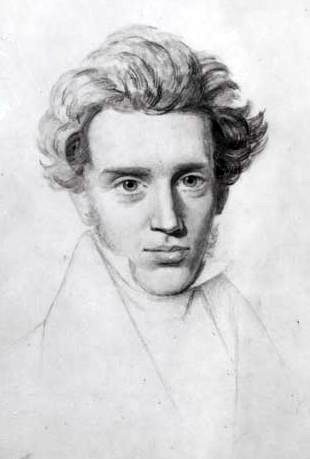
Søren Kierkegaard (1813-1855), at approximately forty years of age. He was dead at 42.
(Wikimedia Commons public domain image)
We’re just back from a strong performance of the musical Thoroughly Modern Millie at the Hale Center Theater in Orem.
Curiously, it got me to thinking about a passage in the Philosophical Fragments (1844) of the Danish philosopher Søren Kierkegaard.
Kierkegaard uses a parable about a king and a maiden to make the point that, if God were to reveal himself fully and with unmistakable, irresistible clarity, that revelation would overwhelm and destroy our freedom.
In the story, a king falls deeply, passionately, in love with a peasant girl. But how can the king reveal his love to a woman of humble parentage — given the huge disparity of rank, status and wealth between them — without coercing and crushing her? If she were aware of his position, how would he (or she) be certain that her love for him was genuine, unaffected by his status, unintimidated by his power?
“Not to reveal oneself,” Kierkegaard writes, “is the death of love, to reveal oneself is the death of the beloved.” The only real choice open to the king is to court his beloved indirectly, by descending to her station, by taking on the character of a servant. So he disguises himself.
God, Kierkegaard says, wants us to love him freely because we come to know him as lovable, not because he’s powerful, terrifying or overwhelming. And we have abundant reason to do that.
In a similar way, though he wants us to develop faith or trust in him, he doesn’t seek a compelled belief. He doesn’t desire an assent that has been forced upon us because we had no rational alternative or escape.
Accordingly, for those with eyes to see and ears to hear, there are hints and clues. But they are not coercive. They weren’t designed to be.
Moreover, questions, even possible reasons for doubt, definitely exist — and they do so, I believe, by divine intention.
***

Since I’m trying to support their fundraising, I hope that the good folks at the Hale Center Theater won’t object to my having borrowed this image from them.
Incidentally, the Hale Center Theater has now begun fundraising efforts for a new facility to be built at University Place in Orem. (The current facility is much, much too small, although directors, actors, and choreographers regularly manage to do wonders with it.) As I understand what they have in mind, the new building will include a 568-seat main stage theater with a proscenium thrust stage — which means that the audience will surround three of the stage’s four sides — as well as a 200-seat black box theater and a grand lobby.
I hope that they will speedily acquire the financial support that they need to make this project a reality. Over many years, the productions at the Hale have been a major ornament to life in Utah Valley.
Next Post

November 13, 2019 Some Arabic influence in the American Southwest
Browse Our Archives
Select a Category Uncategorized
Select a Month October 2026 September 2026 August 2026 July 2026 June 2026 May 2026 April 2026 March 2026 February 2026 January 2026 December 2025 November 2025 October 2025 September 2025 August 2025 July 2025 June 2025 May 2025 April 2025 March 2025 February 2025 January 2025 December 2024 November 2024 October 2024 September 2024 August 2024 July 2024 June 2024 May 2024 April 2024 March 2024 February 2024 January 2024 December 2023 November 2023 October 2023 September 2023 August 2023 July 2023 June 2023 May 2023 April 2023 March 2023 February 2023 January 2023 December 2022 November 2022 October 2022 September 2022 August 2022 July 2022 June 2022 May 2022 April 2022 March 2022 February 2022 January 2022 December 2021 November 2021 October 2021 September 2021 August 2021 July 2021 June 2021 May 2021 April 2021 March 2021 February 2021 January 2021 December 2020 November 2020 October 2020 September 2020 August 2020 July 2020 June 2020 May 2020 April 2020 March 2020 February 2020 January 2020 December 2019 November 2019 October 2019 September 2019 August 2019 July 2019 June 2019 May 2019 April 2019 March 2019 February 2019 January 2019 December 2018 November 2018 October 2018 September 2018 August 2018 July 2018 June 2018 May 2018 April 2018 March 2018 February 2018 January 2018 December 2017 November 2017 October 2017 September 2017 August 2017 July 2017 June 2017 May 2017 April 2017 March 2017 February 2017 January 2017 December 2016 November 2016 October 2016 September 2016 August 2016 July 2016 June 2016 May 2016 April 2016 March 2016 February 2016 January 2016 December 2015 November 2015 October 2015 September 2015 August 2015 July 2015 June 2015 May 2015 April 2015 March 2015 February 2015 January 2015 December 2014 November 2014 March 2014 August 2013 February 2012
Follow Us!
TAKE THE
Religious Wisdom Quiz
True or False: Deborah was a prophetess and judge who led Israel to victory over the Canaanites.
Select your answer to see how you score.
TRUE FALSE
Related posts from Sic et Non


"A Country Doctor's Healing Encounters With the Hereafter"

Evidence and argument in thinking about the existence...

Desire, Experience, and the Divine
TRENDING AT PATHEOS Latter-day Saint

A new article, written by Jeff Lindsay and Gale L. Pooley,...

Swimfan: Forgotten Aughts Pleasures
This is a recovery effort. In 2002, My Big Fat Greek Wedding...

Top Three Anti-Catholic Lies About Catholicism
This is my initial transcript for the video, "THE 3 WORST...

Pope Leo Celebrates Mass for Nurses & Docs...
I don't have any idea how he did it, but Pope Leo...

The Sermon on the Mount, Part I: Matthew...
The Sermon on the Mount, Part I (Matthew 4:12-5:12) St. Matthew moves...

What's up from Crossway: Reviewing some of their latest A few weeks...
view all Latter-day Saint blogs
Ad-Free & Subscriber Log-In Subscription Support
- About Us
- 2026 Calendar
- Videos
- Podcasts
- Library of World Religions
- Faith In Media Tracker
- Advertise With Us
- Write for Us
- Privacy Policy
- Terms of Service
- Do Not Sell My Data
- Contact Us
- Radiant Digital
- Manage Newsletter Subscriptions
- Unsubscribe From Notifications
- Sitemap
Copyright 2008-2026, Patheos. All rights reserved.
Subscription Support Ad-Free & Subscriber Log-In
Follow Patheos