
BuddhistCatholicContemplativeEvangelicalGeneral ChristianHinduJewishLatter-day SaintMuslimNew VisionsProgressive Christian
Beliefs
- Buddhist
- Catholic
- Contemplative
- Evangelical
- General Christian
- Hindu
- Jewish
- Latter-day Saint
- More Voices
- Muslim
- New Visions
- Pagan
- Progressive Christian
Topics
- Religion News
- Food and Religion
- Sports and Religion
- Religious Art
- Religious Music and Entertainment
- Religious Events
- History and Religion
- Style and Religion
- Politics and Religion
- Women in Religion
- Recreation Outdoors and Religion
- Business Finance and Religion
- Careers Workplace and Religion
- Education and Religion
- Family Parenting and Religion
- Health Fitness and Religion
- Home and Religion
- Relationships and Religion
- Technology and Religion
- Travel and Religion
Columnists
- Buddhist Columnists
- Business Finance and Religion Columnists
- Careers Workplace and Religion Columnists
- Catholic Columnists
- Contemplative Columnists
- Education and Religion Columnists
- Evangelists Columnists
- Family Parenting and Religion Columnists
- General Christian Columnists
- Health Fitness and Religion Columnists
- Hindu Columnists
- History and Religion Columnists
- Home and Religion Columnists
- Jewish Columnists
- More Voices Columnists
- Latter Day Columnists
- Muslim Columnists
- New Visions Columnists
- Nonreligious Columnists
- Pagan Columnists
- Politics and Religion Columnists
- Progressive Columnists
- Recreation Outdoors and Religion Columnists
- Relationships and Religion Columnists
- Religion News Columnists
- Religious Art Columnists
- Religious Events Columnists
- Religious Music and Entertainment Columnists
- Sports and Religion Columnists
- Style and Religion Columnists
- Technology and Religion Columnists
- Travel and Religion Columnists
- Women in Religion Columnists
Resource Library
- 2026 Calendar
- Library of World Religions
- The 100 Most Holy Places on Earth
- Patheos Answers
- Podcasts
- Videos
- Faith Leaders Database
- Anglican Episcopalian
- Bahai
- Baptist
- Buddhism
- Christianity
- Confucianism
- Eastern Orthodoxy
- Hinduism
- Holiness and Pentecostal
- ISKCON
- Islam
- Judaism
- Lutheran
- Methodist
- The Church of Jesus Christ of Latter-day Saints
- New Age
- Paganism
- Presbytarian and Reformed
- Protestantism
- Religion Behind the Scenes
- Roman Catholic
- Scientology
- Shia Islam
- Sikhism
- Sufism
- Sunni Islam
- Taoism
- Zen
- See all religions
Research Tools
 Ad-Free & Subscriber Log-In Subscription Support
Ad-Free & Subscriber Log-In Subscription Support
Follow Patheos 

- Trending:
- Forgiveness
- |
- Marriage
- |
- Consciousness
- |
- Death Penalty
- |
- Election
- |
- Halloween

- Home
- Latter-day Saint
- Regarding President Nelson’s imminent speech to the NAACP
Regarding President Nelson’s imminent speech to the NAACP
Last updated on: July 19, 2019 at 9:54 pm by Dan Peterson
Regarding President Nelson’s imminent speech to the NAACP 2019-07-19T21:54:21-06:00 Dan Peterson
Patheos Explore the world's faith through different perspectives on religion and spirituality! Patheos has the views of the prevalent religions and spiritualities of the world.
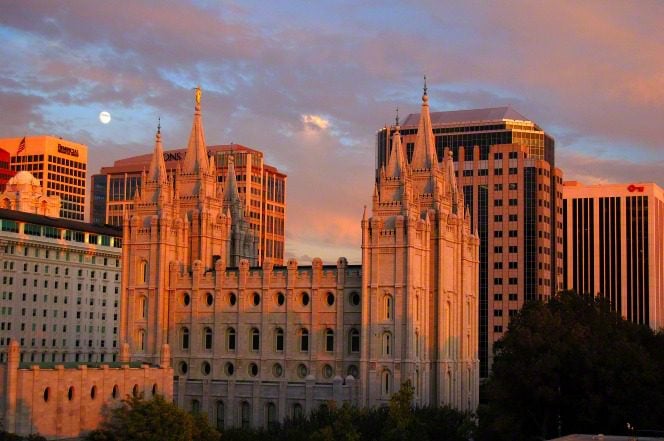
The 1978 Revelation on Priesthood was received in the Salt Lake City Utah Temple (LDS.org)
The latest installation of the biweekly Deseret News column by William J. Hamblin and Daniel C. Peterson has appeared:
“‘Greater love hath no man than this'”
***
“President Nelson to speak at NAACP national convention on Sunday”
There’s speculation in some circles about what he might say. For example:
“Will the Mormon president apologize to the NAACP for the church’s past racism?”
I don’t expect an apology, myself, and, if I were the one speaking, I wouldn’t offer one. (What President Nelson might do, of course, I do not know.)
I expect that my disinclination to apologize will earn me considerable flak. It’s not a politically correct stance to take, and some, no doubt, will say that it’s an immoral one. I get that.
But permit me to explain.
I found the pre-1978 priesthood ban baffling and, to say the least of it, awkward, and I was absolutely delighted when the news of the revelation rescinding it reached me in Switzerland. Now, black men and boys could be ordained to the priesthood, black men and women of the appropriate ages could enter the temples of the Church, and black families could be sealed in those temples for time and all eternity. I still remember where I was when I heard the news, and I recall very clearly the glow that enveloped me for days thereafter.
That said, though, I tend to resist confident assertions that the priesthood policy was, simply, the product of racism — whether Brigham Young’s or more general — that it was an evil mistake, and that the Church should therefore apologize for it. I have no theory of its origin to offer, no theological justification to provide for it, no apologetic to make on its behalf. I simply point to the fact that at least some Church leaders had hoped to rescind it earlier but felt themselves prevented (by the Lord himself) from doing so.
Now, obviously, such an argument will carry little if any weight with those who believe that the Church of Jesus Christ of Latter-day Saints is led by ordinary mortals (or, even, by less than ordinary mortals) who have no access to the mind of God. But for me, since I believe that there is a God and that he stands in a special revelatory relationship with the prophets and apostles at the helm of the Church, it’s pivotal.
Here is a specific illustration of what I have in mind, drawn from Gregory A. Prince and Wm. Robert Wright, David O. McKay and the Rise of Modern Mormonism (Salt Lake City: University of Utah Press, 2005), 103-104, 183:
It appears that President Hugh B. Brown, the first First Counselor in the First Presidency of the Church of whom I was aware and a man for whom I felt and still feel considerable veneration, really hoped to see the priesthood exclusion policy overturned. Therefore, he attempted to persuade President David O. McKay to make that change.
Reportedly, President McKay told some people that he had prayed about the matter and that the answer was “Not yet.” In fact, according to Richard Jackson, President McKay said that he had prayed repeatedly about the question and that he was told by the Lord to not bring the subject up again, that the change would come, but not during his administration. The Prophet even seems to have felt himself somewhat rebuked:
“I’ve inquired of the Lord repeatedly. The last time I did it was late last night. I was told, with no discussion, not to bring the subject up with the Lord again; that the time will come, but it will not be my time, and to leave the subject alone.”
If accurately reported and true, these accounts strongly suggest that, for his own inscrutable reasons, the Lord himself permitted the ban to continue until June 1978. And that would tend to suggest that the policy was something more than merely the lamentable product of regrettable (and undeniable) nineteenth-century racism.
The opening sentence of Gregory A. Prince, “David O. McKay and Blacks: Building the Foundation for the 1978 Revelation,” Dialogue: A Journal of Mormon Thought 35/1 (June 2010): 145, which quotes a General Authority who served under President McKay, is significant here: “If there was ever a person, in terms of social justice in our society, for fairness, it would have been David O. McKay. Had it been up to him, alone, he would have given the Black the priesthood that quick!”
But President McKay — like President Spencer W. Kimball after him — plainly didn’t believe that a resolution of the matter was simply “up to him, alone.” Both President McKay and President Kimball believed that lifting the race-based restriction on access to priesthood ordination would need to be authorized by clear revelation. And both — both — believed themselves to have received revelation on the subject.
That is why, deeply happy though I am that the priesthood ban is no longer in place, I find myself unable simply to brush it off as a human mistake or as the simple and glaringly obvious product of human sin — however much it may look like precisely that.
And I’m thrilled that President Nelson, successor to Brigham Young and to David O. McKay and Spencer W. Kimball, will be addressing the NAACP on Sunday. I’m praying for him and for his audience.
Previous Post

July 19, 2019
Apollo 11, broccoli, and the pressing need for more trees
Next Post
July 19, 2019 A Million Dollar Quartet and Joseph's Dreamcoat
Browse Our Archives
Select a Category Uncategorized
Select a Month October 2026 September 2026 August 2026 July 2026 June 2026 May 2026 April 2026 March 2026 February 2026 January 2026 December 2025 November 2025 October 2025 September 2025 August 2025 July 2025 June 2025 May 2025 April 2025 March 2025 February 2025 January 2025 December 2024 November 2024 October 2024 September 2024 August 2024 July 2024 June 2024 May 2024 April 2024 March 2024 February 2024 January 2024 December 2023 November 2023 October 2023 September 2023 August 2023 July 2023 June 2023 May 2023 April 2023 March 2023 February 2023 January 2023 December 2022 November 2022 October 2022 September 2022 August 2022 July 2022 June 2022 May 2022 April 2022 March 2022 February 2022 January 2022 December 2021 November 2021 October 2021 September 2021 August 2021 July 2021 June 2021 May 2021 April 2021 March 2021 February 2021 January 2021 December 2020 November 2020 October 2020 September 2020 August 2020 July 2020 June 2020 May 2020 April 2020 March 2020 February 2020 January 2020 December 2019 November 2019 October 2019 September 2019 August 2019 July 2019 June 2019 May 2019 April 2019 March 2019 February 2019 January 2019 December 2018 November 2018 October 2018 September 2018 August 2018 July 2018 June 2018 May 2018 April 2018 March 2018 February 2018 January 2018 December 2017 November 2017 October 2017 September 2017 August 2017 July 2017 June 2017 May 2017 April 2017 March 2017 February 2017 January 2017 December 2016 November 2016 October 2016 September 2016 August 2016 July 2016 June 2016 May 2016 April 2016 March 2016 February 2016 January 2016 December 2015 November 2015 October 2015 September 2015 August 2015 July 2015 June 2015 May 2015 April 2015 March 2015 February 2015 January 2015 December 2014 November 2014 March 2014 August 2013 February 2012
Follow Us!
TAKE THE
Religious Wisdom Quiz
In what city did the disciples first preach to Gentiles and were first called Christians?
Select your answer to see how you score.
Jerusalem Corinth Antioch Ephesus
Related posts from Sic et Non

The Iron Gates and the Lion of the...


Learning more about a region of which I've...

From Serbia's "White City," Belgrade
TRENDING AT PATHEOS Latter-day Saint

Emotion in Early Christianity by Andrew Crislip
Andrew Crislip’s Emotion in Early Christianity examines an often overlooked dimension of...

16 Spiritual Touchstones for a More Grounded Life
After decades of spiritual study, here are 16 principles I try...

Catholic Evangelization: Sharing Your Faith Every Day
Welcome back to the Graceful Awakening mini-series called, “From Faith to Mission.” ...

The Pillar of the Boatmen: the Ancient Monument...
The Pillar of the Boatmen is a Romano-Gaulish sculpture that dates from...

In one sense walking into Westminster Abbey is like walking down the...

'Super Scam Me' Exposes AI Jon Bon Jovi...
Leslie Pickett believed she was in a relationship with Jon Bon Jovi....
view all Latter-day Saint blogs
Ad-Free & Subscriber Log-In Subscription Support
- About Us
- 2026 Calendar
- Videos
- Podcasts
- Library of World Religions
- Faith In Media Tracker
- Advertise With Us
- Write for Us
- Privacy Policy
- Terms of Service
- Do Not Sell My Data
- Contact Us
- Radiant Digital
- Manage Newsletter Subscriptions
- Unsubscribe From Notifications
- Sitemap
Copyright 2008-2026, Patheos. All rights reserved.
Subscription Support Ad-Free & Subscriber Log-In
Follow Patheos