
BuddhistCatholicContemplativeEvangelicalGeneral ChristianHinduJewishLatter-day SaintMuslimNew VisionsProgressive Christian
Beliefs
- Buddhist
- Catholic
- Contemplative
- Evangelical
- General Christian
- Hindu
- Jewish
- Latter-day Saint
- More Voices
- Muslim
- New Visions
- Pagan
- Progressive Christian
Topics
- Religion News
- Food and Religion
- Sports and Religion
- Religious Art
- Religious Music and Entertainment
- Religious Events
- History and Religion
- Style and Religion
- Politics and Religion
- Women in Religion
- Recreation Outdoors and Religion
- Business Finance and Religion
- Careers Workplace and Religion
- Education and Religion
- Family Parenting and Religion
- Health Fitness and Religion
- Home and Religion
- Relationships and Religion
- Technology and Religion
- Travel and Religion
Columnists
- Buddhist Columnists
- Business Finance and Religion Columnists
- Careers Workplace and Religion Columnists
- Catholic Columnists
- Contemplative Columnists
- Education and Religion Columnists
- Evangelists Columnists
- Family Parenting and Religion Columnists
- General Christian Columnists
- Health Fitness and Religion Columnists
- Hindu Columnists
- History and Religion Columnists
- Home and Religion Columnists
- Jewish Columnists
- More Voices Columnists
- Latter Day Columnists
- Muslim Columnists
- New Visions Columnists
- Nonreligious Columnists
- Pagan Columnists
- Politics and Religion Columnists
- Progressive Columnists
- Recreation Outdoors and Religion Columnists
- Relationships and Religion Columnists
- Religion News Columnists
- Religious Art Columnists
- Religious Events Columnists
- Religious Music and Entertainment Columnists
- Sports and Religion Columnists
- Style and Religion Columnists
- Technology and Religion Columnists
- Travel and Religion Columnists
- Women in Religion Columnists
Resource Library
- 2026 Calendar
- Library of World Religions
- The 100 Most Holy Places on Earth
- Patheos Answers
- Podcasts
- Videos
- Faith Leaders Database
- Anglican Episcopalian
- Bahai
- Baptist
- Buddhism
- Christianity
- Confucianism
- Eastern Orthodoxy
- Hinduism
- Holiness and Pentecostal
- ISKCON
- Islam
- Judaism
- Lutheran
- Methodist
- The Church of Jesus Christ of Latter-day Saints
- New Age
- Paganism
- Presbytarian and Reformed
- Protestantism
- Religion Behind the Scenes
- Roman Catholic
- Scientology
- Shia Islam
- Sikhism
- Sufism
- Sunni Islam
- Taoism
- Zen
- See all religions
Research Tools
 Ad-Free & Subscriber Log-In Subscription Support
Ad-Free & Subscriber Log-In Subscription Support
Follow Patheos 

- Trending:
- Forgiveness
- |
- Marriage
- |
- Consciousness
- |
- Death Penalty
- |
- Election
- |
- Halloween

- Home
- Latter-day Saint
- New Testament Notes 161-163
New Testament Notes 161-163
Last updated on: April 1, 2019 at 11:31 pm by Dan Peterson
New Testament Notes 161-163 2019-04-01T23:31:57-06:00 Dan Peterson
Patheos Explore the world's faith through different perspectives on religion and spirituality! Patheos has the views of the prevalent religions and spiritualities of the world.
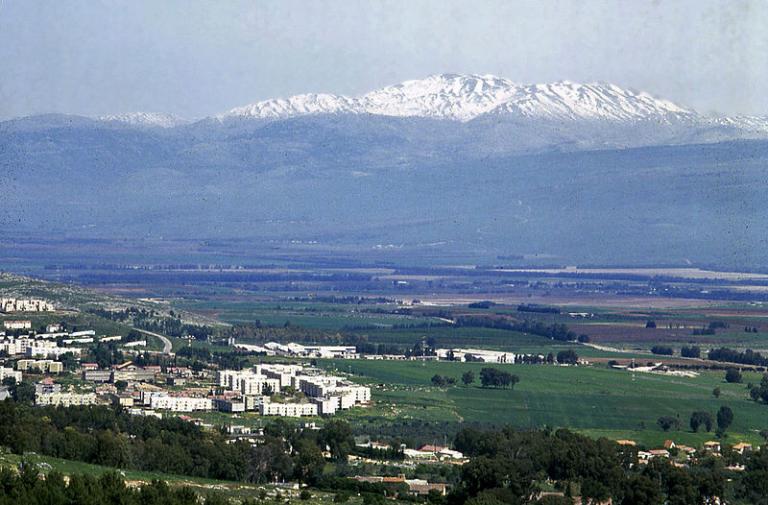
Israel’s Hula Valley, with Mount Hermon (aka Jabal al-Shaykh, on the border of Israel, Lebanon, and Syria) in the background. Caesarea Philippi sits at the base of Mount Hermon, which is one of the reasons that I’m inclined to accept it as the Mount of Transfiguration. (Wikimedia Commons public domain photograph)
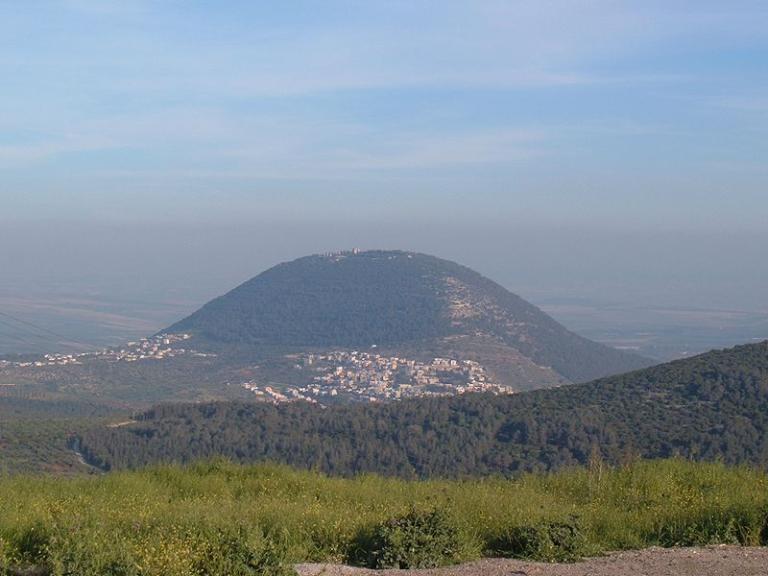
Mount Tabor, near Nazareth, is the more traditional site, and it’s a real possibility.
(Wikimedia Commons public domain image)
Compare Matthew 3:17; Mark 1:11; Luke 3:22; 9:37; John 12:28-30
In Matthew 16, Jesus promised to give Peter the keys of the kingdom of heaven. In Matthew 17, Peter, James, and John — acting as the First Presidency of the Church — received them.
As one of the the Church’s New Testament manuals for college-age students explains, “These keys include the power to administer the ordinances of salvation in a manner acceptable to God and the power to administer the Church of Jesus Christ on the earth. An event similar to this one in Matthew occurred in our day when the Prophet Joseph Smith received the keys of the kingdom for this dispensation in the Kirtland Temple in 1836 [see Doctrine and Covenants 110]. Since then the keys have been given by ordination to every Church President.”
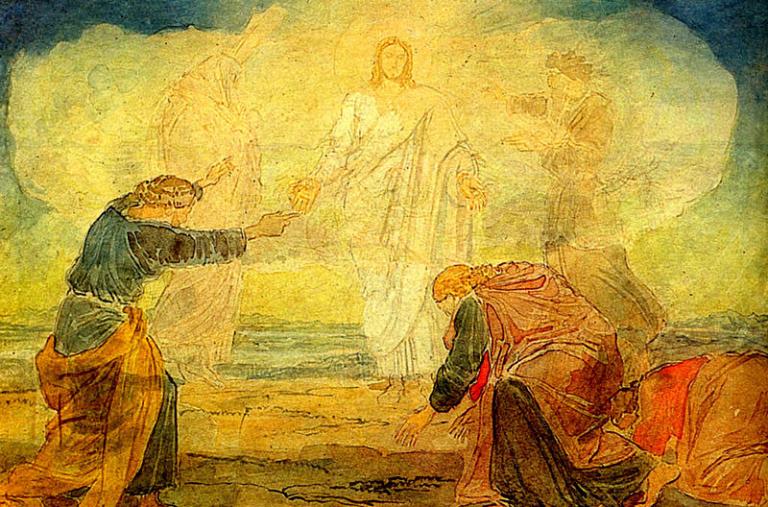
A 19th-century conception of the Transfiguration of Jesus Christ by Alexander Andreyevich Ivanov
(Wikimedia Commons public domain image))
Elias, of course, is a Greek form of the Hebrew name Elijah (more properly, אֱלִיָּהוּ, Eliyahu; the Greek alphabet can’t represent a medial “h”).
Since Joseph Smith taught of a character called Elias who is distinct from the historical prophet Elijah, many critics have contended that he simply didn’t understand that Elias and Elijah, in his Bible, referred to the same person.
But it’s nowhere near that simple, as ought to be evident from the sheer fact that, in these passages, John the Baptist is described as Elijah/Elias — which, barring a totally invisible and unknown ancient Jewish/Christian doctrine of reincarnation, he most obviously wasn’t in any literal sense, and was never claimed to be.
For a helpful compendium of LDS ideas on this subject, see
http://en.fairmormon.org/Mormonism_and_temples/Elias_and_Elijah_at_the_Kirtland_Temple
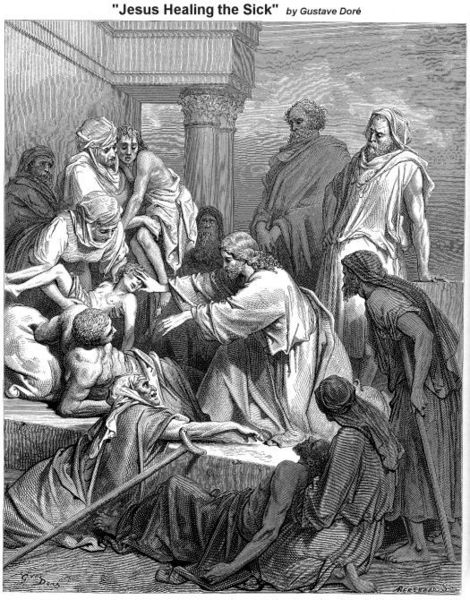
“Jesus Healing the Sick,” by Gustave Dore
Compare Matthew 17:9; 21:21; Mark 9:9; 11:22-23; Luke 17:6; John 14:9
1.
Again, these passages, with their rebuke of the disciples for their lack of healing faith, demonstrate rather clearly (to my mind, at least) that the Church was not to be built upon the “rock” of mortal human beings — not even those who had been called to be apostles.
2.
I’ve always loved the humanly real passage in which the boy’s father begs for help and says “I believe; help my unbelief!”
Many of us, I suspect, can hear ourselves in that heartfelt plea. Perhaps, in this story, even the apostles could.
Previous Post

April 1, 2019
Two films that need to be seen
Next Post
April 2, 2019 Against straw men
Browse Our Archives
Select a Category Uncategorized
Select a Month October 2026 September 2026 August 2026 July 2026 June 2026 May 2026 April 2026 March 2026 February 2026 January 2026 December 2025 November 2025 October 2025 September 2025 August 2025 July 2025 June 2025 May 2025 April 2025 March 2025 February 2025 January 2025 December 2024 November 2024 October 2024 September 2024 August 2024 July 2024 June 2024 May 2024 April 2024 March 2024 February 2024 January 2024 December 2023 November 2023 October 2023 September 2023 August 2023 July 2023 June 2023 May 2023 April 2023 March 2023 February 2023 January 2023 December 2022 November 2022 October 2022 September 2022 August 2022 July 2022 June 2022 May 2022 April 2022 March 2022 February 2022 January 2022 December 2021 November 2021 October 2021 September 2021 August 2021 July 2021 June 2021 May 2021 April 2021 March 2021 February 2021 January 2021 December 2020 November 2020 October 2020 September 2020 August 2020 July 2020 June 2020 May 2020 April 2020 March 2020 February 2020 January 2020 December 2019 November 2019 October 2019 September 2019 August 2019 July 2019 June 2019 May 2019 April 2019 March 2019 February 2019 January 2019 December 2018 November 2018 October 2018 September 2018 August 2018 July 2018 June 2018 May 2018 April 2018 March 2018 February 2018 January 2018 December 2017 November 2017 October 2017 September 2017 August 2017 July 2017 June 2017 May 2017 April 2017 March 2017 February 2017 January 2017 December 2016 November 2016 October 2016 September 2016 August 2016 July 2016 June 2016 May 2016 April 2016 March 2016 February 2016 January 2016 December 2015 November 2015 October 2015 September 2015 August 2015 July 2015 June 2015 May 2015 April 2015 March 2015 February 2015 January 2015 December 2014 November 2014 March 2014 August 2013 February 2012
Follow Us!
TAKE THE
Religious Wisdom Quiz
Which Christian denomination is known for wearing plain clothing and avoiding modern technology?
Select your answer to see how you score.
Baptists Presbyterians Amish Lutherans
Related posts from Sic et Non

Notes on Women, Priesthood, and General Conference

An action movie and some vacuous theology
Racial Harmony After the Priesthood Ban

"The World's Sixteen Crucified Saviors"?
TRENDING AT PATHEOS Latter-day Saint

The Sermon on the Mount, Part I: Matthew...
The Sermon on the Mount, Part I (Matthew 4:12-5:12) St. Matthew moves...

What's up from Crossway: Reviewing some of their latest A few weeks...

Janie Learns the Way of the Cross: A...
Teaching children about Jesus' Passion can be challenging. Many parents and educators...

Looking For Good Catholic Writing - October 2026
He alone extends the heavens, and he walks upon the waves of...

In "Irreplaceable," our book on vocation and technology, Trevor Sutton and I...

I was strolling through the top floor of the brand new Parthenon...
view all Latter-day Saint blogs
Ad-Free & Subscriber Log-In Subscription Support
- About Us
- 2026 Calendar
- Videos
- Podcasts
- Library of World Religions
- Faith In Media Tracker
- Advertise With Us
- Write for Us
- Privacy Policy
- Terms of Service
- Do Not Sell My Data
- Contact Us
- Radiant Digital
- Manage Newsletter Subscriptions
- Unsubscribe From Notifications
- Sitemap
Copyright 2008-2026, Patheos. All rights reserved.
Subscription Support Ad-Free & Subscriber Log-In
Follow Patheos