
BuddhistCatholicContemplativeEvangelicalGeneral ChristianHinduJewishLatter-day SaintMuslimNew VisionsProgressive Christian
Beliefs
- Buddhist
- Catholic
- Contemplative
- Evangelical
- General Christian
- Hindu
- Jewish
- Latter-day Saint
- More Voices
- Muslim
- New Visions
- Pagan
- Progressive Christian
Topics
- Religion News
- Food and Religion
- Sports and Religion
- Religious Art
- Religious Music and Entertainment
- Religious Events
- History and Religion
- Style and Religion
- Politics and Religion
- Women in Religion
- Recreation Outdoors and Religion
- Business Finance and Religion
- Careers Workplace and Religion
- Education and Religion
- Family Parenting and Religion
- Health Fitness and Religion
- Home and Religion
- Relationships and Religion
- Technology and Religion
- Travel and Religion
Columnists
- Buddhist Columnists
- Business Finance and Religion Columnists
- Careers Workplace and Religion Columnists
- Catholic Columnists
- Contemplative Columnists
- Education and Religion Columnists
- Evangelists Columnists
- Family Parenting and Religion Columnists
- General Christian Columnists
- Health Fitness and Religion Columnists
- Hindu Columnists
- History and Religion Columnists
- Home and Religion Columnists
- Jewish Columnists
- More Voices Columnists
- Latter Day Columnists
- Muslim Columnists
- New Visions Columnists
- Nonreligious Columnists
- Pagan Columnists
- Politics and Religion Columnists
- Progressive Columnists
- Recreation Outdoors and Religion Columnists
- Relationships and Religion Columnists
- Religion News Columnists
- Religious Art Columnists
- Religious Events Columnists
- Religious Music and Entertainment Columnists
- Sports and Religion Columnists
- Style and Religion Columnists
- Technology and Religion Columnists
- Travel and Religion Columnists
- Women in Religion Columnists
Resource Library
- 2026 Calendar
- Library of World Religions
- The 100 Most Holy Places on Earth
- Patheos Answers
- Podcasts
- Videos
- Faith Leaders Database
- Anglican Episcopalian
- Bahai
- Baptist
- Buddhism
- Christianity
- Confucianism
- Eastern Orthodoxy
- Hinduism
- Holiness and Pentecostal
- ISKCON
- Islam
- Judaism
- Lutheran
- Methodist
- The Church of Jesus Christ of Latter-day Saints
- New Age
- Paganism
- Presbytarian and Reformed
- Protestantism
- Religion Behind the Scenes
- Roman Catholic
- Scientology
- Shia Islam
- Sikhism
- Sufism
- Sunni Islam
- Taoism
- Zen
- See all religions
Research Tools
 Ad-Free & Subscriber Log-In Subscription Support
Ad-Free & Subscriber Log-In Subscription Support
Follow Patheos 

- Trending:
- Forgiveness
- |
- Marriage
- |
- Consciousness
- |
- Death Penalty
- |
- Election
- |
- Halloween

- Home
- Latter-day Saint
- “Infected with doubt”
“Infected with doubt”
Last updated on: April 18, 2019 at 12:23 am by Dan Peterson
“Infected with doubt” 2019-04-18T00:23:29-06:00 Dan Peterson
Patheos Explore the world's faith through different perspectives on religion and spirituality! Patheos has the views of the prevalent religions and spiritualities of the world.
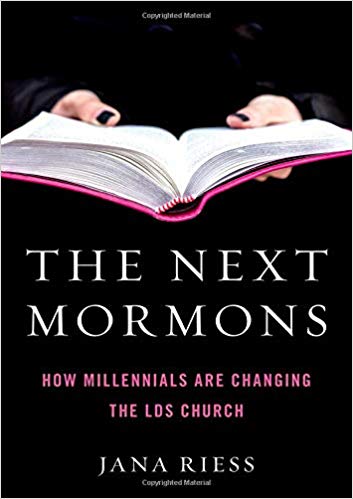
Cover image from Amazon.com
A significant passage from Jana Riess, The Next Mormons: How Millennials Are Changing the LDS Church (Oxford University Press, 2019), 31-32:
Mormons who are divorced or separated are more than twice as likely to be doubters as those who are married (28 vs. 12 percent). . . .
The factor that makes the most difference, though, is not about age or political affiliation or marital status. It has to do with the people around you. . . . In each case, the fewer Mormon family members and friends people have, the more likely they are to be doubters. This is most often the case for those who have zero close friends or extended family members who are Mormon (44 and 35 percent). Doubting also rises as the number of loved ones who have left the church increases. . . . Doubting is least common among those whose closest friends are all Mormon (4 percent) and whose extended family are all Mormon (7 percent).
These findings underscore the importance of social networks in the spectrum of belief and doubt. Relationships matter. When LDS leader Henry B. Eyring used the phrase “infected with doubt” in 2013, he faced heavy criticism. But his metaphor was appropriate at least in one way: doubting is statistically more likely to be associated with the Mormon composition of people’s social networks than it is with their demographic characteristics. Those who have friends and family who are Mormon and stay Mormon tend to be believers, while those with friends and family who are not Mormon or stop identifying as Mormon are more likely to be doubters.
I think this a very important observation, and I offer a slight extension of it:
One of the unique features of attrition from the Church in recent years has been the online emergence of virtual communities — or, I myself might prefer, ersatz communities — of unbelievers that provide something of a reinforcing “social network” for apostasy and apostates. In the old days, if somebody exited the Church he would simply be an isolated “village atheist,” as it were. Now, though, he can join a network of similarly-inclined folks who will welcome him enthusiastically and, in many cases, strengthen his resolve to leave and supply him with additional reasons (or seeming reasons) to justify his departure. In some ways, such “communities” serve as something of a mirror image of the fellowship of the Saints.
Withdrawn into such insular groups, people who were once merely inactive or unhappy at church or weak in the faith or actually unbelieving — and who may even, in some cases, have been seeking fortification and rationalization for their taking leave of the Saints (and, perhaps, to a degree from family and friends) — will often tend to become more radically disaffected, even hostile, urging each other on to ever greater disdain for their former faith community, for doctrines that they themselves once understood and believed, and, not infrequently, for those, including family members, who continue to be faithful believers in its claims (e.g., “Morgbots” or “Mor(m)ons”). To those who continue communicant and believing, however, stumbling into one of these online groups and encountering its sometimes stunning hostility and its seeming inversion of how things look to a believer can be quite a shock.
A striking though plainly quite extreme parallel to this phenomenon, in my judgment, is the online “Incel” subculture.
Church of Jesus Christ of Latter-day Saints
Previous Post

April 16, 2019
New Testament Notes 218-222
Next Post
April 17, 2019 Irena Sendler (1910-2008)
Browse Our Archives
Select a Category Uncategorized
Select a Month October 2026 September 2026 August 2026 July 2026 June 2026 May 2026 April 2026 March 2026 February 2026 January 2026 December 2025 November 2025 October 2025 September 2025 August 2025 July 2025 June 2025 May 2025 April 2025 March 2025 February 2025 January 2025 December 2024 November 2024 October 2024 September 2024 August 2024 July 2024 June 2024 May 2024 April 2024 March 2024 February 2024 January 2024 December 2023 November 2023 October 2023 September 2023 August 2023 July 2023 June 2023 May 2023 April 2023 March 2023 February 2023 January 2023 December 2022 November 2022 October 2022 September 2022 August 2022 July 2022 June 2022 May 2022 April 2022 March 2022 February 2022 January 2022 December 2021 November 2021 October 2021 September 2021 August 2021 July 2021 June 2021 May 2021 April 2021 March 2021 February 2021 January 2021 December 2020 November 2020 October 2020 September 2020 August 2020 July 2020 June 2020 May 2020 April 2020 March 2020 February 2020 January 2020 December 2019 November 2019 October 2019 September 2019 August 2019 July 2019 June 2019 May 2019 April 2019 March 2019 February 2019 January 2019 December 2018 November 2018 October 2018 September 2018 August 2018 July 2018 June 2018 May 2018 April 2018 March 2018 February 2018 January 2018 December 2017 November 2017 October 2017 September 2017 August 2017 July 2017 June 2017 May 2017 April 2017 March 2017 February 2017 January 2017 December 2016 November 2016 October 2016 September 2016 August 2016 July 2016 June 2016 May 2016 April 2016 March 2016 February 2016 January 2016 December 2015 November 2015 October 2015 September 2015 August 2015 July 2015 June 2015 May 2015 April 2015 March 2015 February 2015 January 2015 December 2014 November 2014 March 2014 August 2013 February 2012
Follow Us!
TAKE THE
Religious Wisdom Quiz
Which Christian principle is highlighted in the parable of the Good Samaritan?
Select your answer to see how you score.
Seek praise Ignore strangers Compassion for all Only help friends
Related posts from Sic et Non
Reflections on People Who Leave the Church


Why Some Leave the Church and How We...

Studying the Pearl of Great Price, and Evolution
TRENDING AT PATHEOS Latter-day Saint

When Halloween Unmasks Married Hearts
Written by Dr. David K. Ewen from Eternal Truth Bible College Behind...

Aristotle. He’s been called the father of logic, the father of the...

Methodist Central Hall and Westminster Abbey
Situated on the same square is Methodist Central Hall and Westminster Abbey. ...

57th Dove Awards Honor Dolly Parton, Crown New...
On gospel music’s biggest night, the 57th annual GMA Dove Awards honored...

The First Eucharistic Controversy: Christ’s Real Presence
For Catholics, the Eucharist is the source and summit of the Christian...

What a Stop Sign Can Teach Us About...
How to Make a Decision When You Can't Hear God Main point:...
view all Latter-day Saint blogs
Ad-Free & Subscriber Log-In Subscription Support
- About Us
- 2026 Calendar
- Videos
- Podcasts
- Library of World Religions
- Faith In Media Tracker
- Advertise With Us
- Write for Us
- Privacy Policy
- Terms of Service
- Do Not Sell My Data
- Contact Us
- Radiant Digital
- Manage Newsletter Subscriptions
- Unsubscribe From Notifications
- Sitemap
Copyright 2008-2026, Patheos. All rights reserved.
Subscription Support Ad-Free & Subscriber Log-In
Follow Patheos