
BuddhistCatholicContemplativeEvangelicalGeneral ChristianHinduJewishLatter-day SaintMuslimNew VisionsProgressive Christian
Beliefs
- Buddhist
- Catholic
- Contemplative
- Evangelical
- General Christian
- Hindu
- Jewish
- Latter-day Saint
- More Voices
- Muslim
- New Visions
- Pagan
- Progressive Christian
Topics
- Religion News
- Food and Religion
- Sports and Religion
- Religious Art
- Religious Music and Entertainment
- Religious Events
- History and Religion
- Style and Religion
- Politics and Religion
- Women in Religion
- Recreation Outdoors and Religion
- Business Finance and Religion
- Careers Workplace and Religion
- Education and Religion
- Family Parenting and Religion
- Health Fitness and Religion
- Home and Religion
- Relationships and Religion
- Technology and Religion
- Travel and Religion
Columnists
- Buddhist Columnists
- Business Finance and Religion Columnists
- Careers Workplace and Religion Columnists
- Catholic Columnists
- Contemplative Columnists
- Education and Religion Columnists
- Evangelists Columnists
- Family Parenting and Religion Columnists
- General Christian Columnists
- Health Fitness and Religion Columnists
- Hindu Columnists
- History and Religion Columnists
- Home and Religion Columnists
- Jewish Columnists
- More Voices Columnists
- Latter Day Columnists
- Muslim Columnists
- New Visions Columnists
- Nonreligious Columnists
- Pagan Columnists
- Politics and Religion Columnists
- Progressive Columnists
- Recreation Outdoors and Religion Columnists
- Relationships and Religion Columnists
- Religion News Columnists
- Religious Art Columnists
- Religious Events Columnists
- Religious Music and Entertainment Columnists
- Sports and Religion Columnists
- Style and Religion Columnists
- Technology and Religion Columnists
- Travel and Religion Columnists
- Women in Religion Columnists
Resource Library
- 2026 Calendar
- Library of World Religions
- The 100 Most Holy Places on Earth
- Patheos Answers
- Podcasts
- Videos
- Faith Leaders Database
- Anglican Episcopalian
- Bahai
- Baptist
- Buddhism
- Christianity
- Confucianism
- Eastern Orthodoxy
- Hinduism
- Holiness and Pentecostal
- ISKCON
- Islam
- Judaism
- Lutheran
- Methodist
- The Church of Jesus Christ of Latter-day Saints
- New Age
- Paganism
- Presbytarian and Reformed
- Protestantism
- Religion Behind the Scenes
- Roman Catholic
- Scientology
- Shia Islam
- Sikhism
- Sufism
- Sunni Islam
- Taoism
- Zen
- See all religions
Research Tools
 Ad-Free & Subscriber Log-In Subscription Support
Ad-Free & Subscriber Log-In Subscription Support
Follow Patheos 

- Trending:
- Forgiveness
- |
- Marriage
- |
- Consciousness
- |
- Death Penalty
- |
- Election
- |
- Halloween

- Home
- Latter-day Saint
- A brief primer on Arabic and Islamic names
A brief primer on Arabic and Islamic names
Last updated on: April 6, 2019 at 7:15 pm by Dan Peterson
A brief primer on Arabic and Islamic names 2019-04-06T19:15:38-06:00 Dan Peterson
Patheos Explore the world's faith through different perspectives on religion and spirituality! Patheos has the views of the prevalent religions and spiritualities of the world.
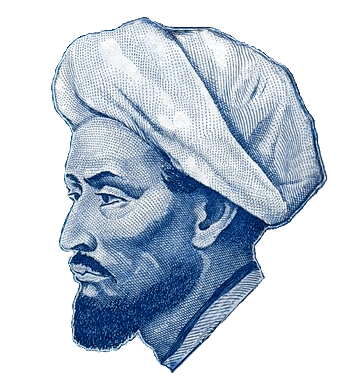
This image of the eminent Muslim philosopher al-Farabi appears on a Kazakhstan banknote
(Wikimedia Commons public domain)
I repeat a few words about Arabic/Islamic names that I hope some will find helpful.
There are certain basic elements. For instance, there is the kunya, an honorific given to married parents that includes the name of their eldest son. The father of Yusuf (“Joseph”) would thus be known as Abu Yusuf, from the Arabic Ab/Abu (“father”), while the mother would be called Umm Yusuf. Abu Nasr al-Farabi, shown above, seems to have been the father of a son named Nasr (or, as some would spell it, Nasser).
Yusuf’s father and mother will, of course, have their own personal names. The masculine parental unit might be Muhammad, for example. Actually, the odds are good that he will be, since, I’m told, Muhammad is the world’s most common given name. (Variant forms include Turkish Mehmet, as well as other versions of the same h-m-d root — which conveys the idea of “praise” — such as Mahmud [“praised”] and the comparative or superlative Ahmad [“most praised”].) The mother might be Maryam (“Mary”). Yusuf will, in this case, also be known as Ibn Muhammad (“the son of Muhammad”).
If you’ve read the Old Testament, you’ve seen the Hebrew cognate to Arabic ibn. It’s ben. Think of Benjamin, “the son of the right [hand].” (Yamin means “right” in Arabic, as in Hebrew.) Think, for that matter, of Judah Ben Hur — “the son of Hur,” as he’s occasionally called in the film.
You’ve also seen the Hebrew cognate to Arabic Ab/Abu (“father”). Think of Abimelech (“my father is a king”; Arabic malik = English king) and of Abraham (which probably originally meant something like “father is exalted”).
The feminine equivalent of ibn (“son”) is bint (“daughter”). So Yusuf’s sister will be, say, Soraya bint Muhammad.
Ibn and bint are often abbreviated as, respectively, b. and bt.
Someday, Yusuf himself will very likely have a son. Let’s call that son Khalil. That will give us a three-generation genealogical chain: Abu Khalil Yusuf b. Muhammad. Such chains can be (and, in classical times, often were) extended indefinitely. Thus, for example, the great eleventh-century physician and philosopher Avicenna or Ibn Sina was, in full, Abū ʿAlī al-Ḥusayn ibn ʿAbd Allāh ibn al-Ḥasan ibn ʿAlī ibn Sīnā.
Sometimes, particularly in the premodern or classical period, other identifiers are attached to names: To take an example, we might run into Abu Khalil Yusuf b. Muhammad al-Baghdadi, which would indicate that there is some connection with Baghdad (on the part of either the son or the father). Or Abu Khalil Yusuf b. Muhammad al-Dimashqi (“the Damascene” or “the one from or connected with Damascus”) or al-Misri (indicating a connection with Misr [Egypt]) or al-Halabi (“the one from Halab [Aleppo]”), or al-Turki (“the Turk”) or al-Farisi (“the Persian”). This term is called a nisba. The philosopher Abu Nasr al-Farabi seems to have been connected with a place called Farab or Faryab, located somewhere in Central Asia.
In other cases, we’ll see descriptive titles. One of the earliest significant masters of Arabic prose is the eighth-century Persian Abū Muhammad ʿAbd Allāh Rūzbih ibn Dādūya (Persian: ابو محمد عبدالله روزبه ابن دادویه) — ‘Abd Allah Ruzbih, who was the father of Muhammad and the son of Daduya (a pre-Islamic Iranian name) — who is by far most widely known as Ibn al-Muqaffa*‘* (Arabic: ابن المقفع). Al-Muqaffa‘ means “the one with the crushed hand,” because ‘Abd Allah Ruzbih’s father had been a government functionary who was punished by having his hand crushed after being convicted of embezzlement.
Then there is the laqab, which offers another way of distinguishing one person from another. One example of this can be seen in the name of the most famous of the ‘Abbasid caliphs, Harun al-Rashid (“Aaron [compare Hebrew Aharon] the Rightly-Guided”). Other examples include Aladdin (‘Ala al-Din, “Exalted One of the Religion”), Sayf al-Dawla (“Sword of the State”), al-Mansur (“the Victorious”), al-Tawil (“the Tall”). The famous author of the Rubaiyat, known in English as Omar Khayyam, is ‘Umar the Tentmaker.
Many Arabic/Islamic personal names are compounds — very commonly combining the word*‘abd* (“slave” or “servant”) with one of the ninety-nine “Most Beautiful Names” (al-asma al-husna, which refer to divine attributes). Thus, we commonly find ‘Abd al-Karim (“Slave of the Noble One”), ‘Abd al-Rahman (“Slave of the Merciful One”), ‘Abd al-Wahhab (“Slave of the Generous One”), ‘Abd al-Malik (“Slave of the King”), and*‘Abd Allah* or Abdullah (“Slave of God [Allah]”). Arabic-speaking Christians sometimes bear the name ‘Abd al-Masih (“Slave of the Messiah”). You may have noticed the closely related name of a “minor” Hebrew prophet, Obadiah. He was the “servant” or “slave” (compare obad- to ‘abd) of Yah (= the first syllable of the divine name Yahweh or Jehovah).
Such compound names are inseparable.
Permit me to explain with three examples:
1. Gamal Abdel Nasser, the leader of Egypt until his death in 1970, was typically referred to in the American press as President Nasser or, simply, as Nasser. More accurately, his name was Gamal ‘Abd al-Nasir. (Gamal represents the Cairene Egyptian pronunciation of the standard Arabic word jamal, meaning “beauty.”) ‘Abd al-Nasir means “Slave of the Victor [i.e., of God].” Abdel and Nasser aren’t the Egyptian president’s middle and last names. They are one name. On its own, Abdel (= ‘Abd al-) means simply “slave of the.” It’s an incomplete thought. And anybody familiar with President Nasser’s biography (which prominently includes the disastrous Six-Day War with Israel) won’t easily confuse him with God the Victor.
2. Kareem Abdul-Jabbar was a great basketball player for the UCLA Bruins, the Milwaukee Bucks, and the Los Angeles Lakers. I sometimes heard him referred to as, simply, Jabbar. But, again, Jabbar is a divine name. It means “omnipotent.” Kareem, who was Lew Alcindor before his conversion to Islam, is ‘abd al-jabbar, “slave of the Omnipotent One.” And, just for the record, although he was a remarkably good basketball player I myself can testify that he sometimes missed free throws.
3. Finally, back in the late 1970s and early 1980s, the FBI ran a sting operation (called ABSCAM) that netted the convictions of, among others, one member of the United States Senate and six members of the House of Representatives — all but one of them Democrats, I’m happy to say. To carry it out, the Bureau set up a phony Arab company called Abdul Enterprises. Now, though, you know enough about Arabic naming practices to realize that this corporate name was very fishy. Would a native speaker of Arabic really call his company Slave-of-the Enterprises? Heck, even one of the two fictional shaykhs behind the supposed firm was named Kambir Abdul Rahman (“Kambir, Slave of the Merciful”).
Can you now see the practical benefits of learning Arabic? You would never have fallen for the ABSCAM sting.
Previous Post

April 6, 2019
Science marches on
Next Post
April 6, 2019 The Kingdom is rolling forth, but it needs to regain speed.
Browse Our Archives
Select a Category Uncategorized
Select a Month October 2026 September 2026 August 2026 July 2026 June 2026 May 2026 April 2026 March 2026 February 2026 January 2026 December 2025 November 2025 October 2025 September 2025 August 2025 July 2025 June 2025 May 2025 April 2025 March 2025 February 2025 January 2025 December 2024 November 2024 October 2024 September 2024 August 2024 July 2024 June 2024 May 2024 April 2024 March 2024 February 2024 January 2024 December 2023 November 2023 October 2023 September 2023 August 2023 July 2023 June 2023 May 2023 April 2023 March 2023 February 2023 January 2023 December 2022 November 2022 October 2022 September 2022 August 2022 July 2022 June 2022 May 2022 April 2022 March 2022 February 2022 January 2022 December 2021 November 2021 October 2021 September 2021 August 2021 July 2021 June 2021 May 2021 April 2021 March 2021 February 2021 January 2021 December 2020 November 2020 October 2020 September 2020 August 2020 July 2020 June 2020 May 2020 April 2020 March 2020 February 2020 January 2020 December 2019 November 2019 October 2019 September 2019 August 2019 July 2019 June 2019 May 2019 April 2019 March 2019 February 2019 January 2019 December 2018 November 2018 October 2018 September 2018 August 2018 July 2018 June 2018 May 2018 April 2018 March 2018 February 2018 January 2018 December 2017 November 2017 October 2017 September 2017 August 2017 July 2017 June 2017 May 2017 April 2017 March 2017 February 2017 January 2017 December 2016 November 2016 October 2016 September 2016 August 2016 July 2016 June 2016 May 2016 April 2016 March 2016 February 2016 January 2016 December 2015 November 2015 October 2015 September 2015 August 2015 July 2015 June 2015 May 2015 April 2015 March 2015 February 2015 January 2015 December 2014 November 2014 March 2014 August 2013 February 2012
Follow Us!
TAKE THE
Religious Wisdom Quiz
What did Nehemiah do upon reading that Moabites and Ammonites were forbidden in God's assembly?
Select your answer to see how you score.
Started a fast Expelled them Rebuilt the altar Closed the gates
Related posts from Sic et Non

Islam in America or Islam versus America?

A basic working chronology of Islamic-era Iran

Actual Data and Actual Crusades

TRENDING AT PATHEOS Latter-day Saint

Swimfan: Forgotten Aughts Pleasures
This is a recovery effort. In 2002, My Big Fat Greek Wedding...

Top Three Anti-Catholic Lies About Catholicism
This is my initial transcript for the video, "THE 3 WORST...

Pope Leo Celebrates Mass for Nurses & Docs...
I don't have any idea how he did it, but Pope Leo...

The Sermon on the Mount, Part I: Matthew...
The Sermon on the Mount, Part I (Matthew 4:12-5:12) St. Matthew moves...

What's up from Crossway: Reviewing some of their latest A few weeks...

Janie Learns the Way of the Cross: A...
Teaching children about Jesus' Passion can be challenging. Many parents and educators...
view all Latter-day Saint blogs
Ad-Free & Subscriber Log-In Subscription Support
- About Us
- 2026 Calendar
- Videos
- Podcasts
- Library of World Religions
- Faith In Media Tracker
- Advertise With Us
- Write for Us
- Privacy Policy
- Terms of Service
- Do Not Sell My Data
- Contact Us
- Radiant Digital
- Manage Newsletter Subscriptions
- Unsubscribe From Notifications
- Sitemap
Copyright 2008-2026, Patheos. All rights reserved.
Subscription Support Ad-Free & Subscriber Log-In
Follow Patheos