
BuddhistCatholicContemplativeEvangelicalGeneral ChristianHinduJewishLatter-day SaintMuslimNew VisionsProgressive Christian
Beliefs
- Buddhist
- Catholic
- Contemplative
- Evangelical
- General Christian
- Hindu
- Jewish
- Latter-day Saint
- More Voices
- Muslim
- New Visions
- Pagan
- Progressive Christian
Topics
- Religion News
- Food and Religion
- Sports and Religion
- Religious Art
- Religious Music and Entertainment
- Religious Events
- History and Religion
- Style and Religion
- Politics and Religion
- Women in Religion
- Recreation Outdoors and Religion
- Business Finance and Religion
- Careers Workplace and Religion
- Education and Religion
- Family Parenting and Religion
- Health Fitness and Religion
- Home and Religion
- Relationships and Religion
- Technology and Religion
- Travel and Religion
Columnists
- Buddhist Columnists
- Business Finance and Religion Columnists
- Careers Workplace and Religion Columnists
- Catholic Columnists
- Contemplative Columnists
- Education and Religion Columnists
- Evangelists Columnists
- Family Parenting and Religion Columnists
- General Christian Columnists
- Health Fitness and Religion Columnists
- Hindu Columnists
- History and Religion Columnists
- Home and Religion Columnists
- Jewish Columnists
- More Voices Columnists
- Latter Day Columnists
- Muslim Columnists
- New Visions Columnists
- Nonreligious Columnists
- Pagan Columnists
- Politics and Religion Columnists
- Progressive Columnists
- Recreation Outdoors and Religion Columnists
- Relationships and Religion Columnists
- Religion News Columnists
- Religious Art Columnists
- Religious Events Columnists
- Religious Music and Entertainment Columnists
- Sports and Religion Columnists
- Style and Religion Columnists
- Technology and Religion Columnists
- Travel and Religion Columnists
- Women in Religion Columnists
Resource Library
- 2026 Calendar
- Library of World Religions
- The 100 Most Holy Places on Earth
- Patheos Answers
- Podcasts
- Videos
- Faith Leaders Database
- Anglican Episcopalian
- Bahai
- Baptist
- Buddhism
- Christianity
- Confucianism
- Eastern Orthodoxy
- Hinduism
- Holiness and Pentecostal
- ISKCON
- Islam
- Judaism
- Lutheran
- Methodist
- The Church of Jesus Christ of Latter-day Saints
- New Age
- Paganism
- Presbytarian and Reformed
- Protestantism
- Religion Behind the Scenes
- Roman Catholic
- Scientology
- Shia Islam
- Sikhism
- Sufism
- Sunni Islam
- Taoism
- Zen
- See all religions
Research Tools
 Ad-Free & Subscriber Log-In Subscription Support
Ad-Free & Subscriber Log-In Subscription Support
Follow Patheos 

- Trending:
- Forgiveness
- |
- Marriage
- |
- Consciousness
- |
- Death Penalty
- |
- Election
- |
- Halloween

- Home
- Latter-day Saint
- Reprising “Everyone Else Makes Such Lonely Heavens”
Reprising “Everyone Else Makes Such Lonely Heavens”
Last updated on: March 31, 2019 at 1:18 am by Dan Peterson
Reprising “Everyone Else Makes Such Lonely Heavens” 2019-03-31T01:18:39-06:00 Dan Peterson
Patheos Explore the world's faith through different perspectives on religion and spirituality! Patheos has the views of the prevalent religions and spiritualities of the world.
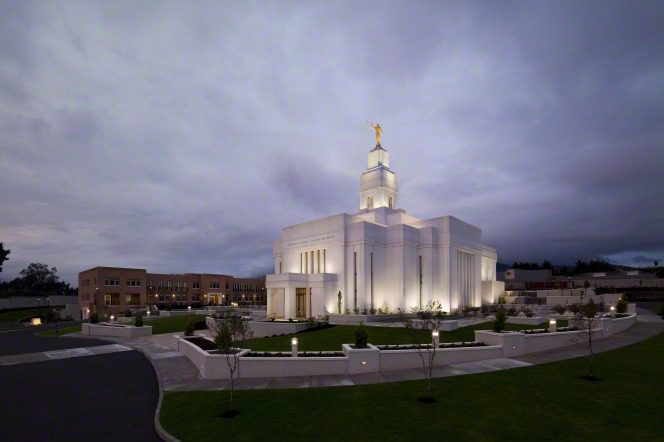
The Quetzaltenango Guatemala Temple (LDS.org)
The most recent instantiation of the biweekly Hamblin/Peterson column has appeared in the Deseret News:
“Exploring the Hindu scriptures known as the Upanishads”
***
It seems, though, rather futile to write. Why? Because at least certain people are so determined to have me say what they want me to have said that what I actually write seems, in many cases, completely irrelevant.
For example, in response to my recent essay “Research and More Research” in Interpreter: A Journal of Latter-day Saint Faith and Scholarship, two or three of my more chronically misguided critics are agreed that my principal thesis in that short little piece is that, when it comes to the Gospel, ignorance is to be preferred to knowledge, because ignorance will help you to maintain your faith.
I would have been disappointed, in a way, if they had actually gotten it right. In a world of tumult and change, it’s nice to know that some things are constant.
***
The video that has been posted on the Church’s website under the title “Newsroom Has a New Name, Same Standard of Excellence” is actually considerably more interesting than that title suggests. It’s only 1:53 minutes long, and I hope that you’ll watch it:
“Newsroom Has a New Name, Same Standard of Excellence”
***
And here’s a link to the new 2019 video that’s been produced for showing at temple open houses. It’s just slightly more than nine and a half minutes long, and it’s certainly suitable for sharing on Facebook and your own blog or website if you have one:
https://www.lds.org/temples/open-houses
Speaking of which, here’s an item from the Richmond Times-Dispatch: “Church of Jesus Christ of Latter-day Saints files plans for first Virginia temple in Henrico”
***
While I’m thinking about temples, here’s a piece that I wrote for the official Church website back in 2005, in connection with the bicentennial of the birth of Joseph Smith:
Everyone Else Makes Such Lonely Heavens [1]
For these defects, and for no other evil,
we now are lost and punished just with this:
we have no hope and yet we live in longing.
Dante’s Inferno[2]
The New Testament states unequivocally that, besides Jesus Christ, “there is none other name under heaven given among men whereby we must be saved.”[3] And yet hundreds of millions of souls, probably the majority of all who have ever lived, were never taught about Christianity and perhaps never so much as heard the name of Jesus Christ. Are these millions of souls lost for the eternities? If so, can God be considered just, let alone merciful?
The poet Dante Alighieri, upon entering (fictionally) into the next world, was astonished by what he saw: “I should never have believed,” he wrote in his Inferno, “that death could have unmade so many souls.”[4] Strikingly, despite his obvious admiration for Socrates, Plato, Aristotle, the great Islamic philosophers Avicenna and Averros, and the chivalrous Muslim military hero Saladin, Dante felt obliged to place them all in Hell.[5] Even his guide, companion and “kindly master,” the Roman poet Virgil, was eternally barred from heaven. Virgil explains the reason to Dante as follows:
I’d have you know, before you go ahead,
they did not sin; and yet, though they have merits,
that’s not enough, because they lacked baptism,
the portal of the faith that you embrace.
And if they lived before Christianity,
they did not worship God in fitting ways;
and of such spirits I myself am one.
For these defects, and for no other evil,
we now are lost and punished just with this:
we have no hope and yet we live in longing.[6]
The founding Mormon prophet, Joseph Smith, proclaimed a much more generous and expansive view of eternal possibilities. He pointed out that even the New Testament itself suggests a hopeful escape from this troubling prospect, citing the Apostle Paul’s reference to a practice long since forgotten or ignored by mainstream Christianity.[7]
Else what shall they do which are baptized for the dead,
if the dead rise not at all? Why are they then baptized for
the dead?[8]
Though vicarious or “proxy” baptism is but briefly mentioned in the Bible, a restoration of this ancient Christian practice became a foundational doctrine of the Latter-day Saint faith.
Today, members of The Church of Jesus Christ of Latter-day Saints labor to gather genealogical records and to construct temples[9] in which baptisms for the dead and related ordinances can be performed. In striking contrast to the horrific atrocities committed by men and governments in the course of history, this vicarious temple service extends the love of God, with full salvational access, to every human who ever lived.
Proxy temple work best reflects the foundational Latter-day Saint conviction that the power of the atonement of Christ extends even to those who did not hear: every person who has ever lived is to be individually remembered, labored for and valued, thus vindicating the justice of God and illustrating the breadth of his redemptive love. Any rite performed in a Latter-day Saint temple on behalf of a deceased person, who yet lives as a spirit being, is a rite of offering only, exacting no forced compliance nor acceptance of the rite. There is no imposed change of identity, heritage or religious belief, nor is the individual’s name added to the membership rolls of The Church of Jesus Christ of Latter-day Saints.
Previous Post

March 30, 2019
On "the most significant event in the history of life on Earth"
Next Post
March 30, 2019 New Testament Notes 157-158
Browse Our Archives
Select a Category Uncategorized
Select a Month October 2026 September 2026 August 2026 July 2026 June 2026 May 2026 April 2026 March 2026 February 2026 January 2026 December 2025 November 2025 October 2025 September 2025 August 2025 July 2025 June 2025 May 2025 April 2025 March 2025 February 2025 January 2025 December 2024 November 2024 October 2024 September 2024 August 2024 July 2024 June 2024 May 2024 April 2024 March 2024 February 2024 January 2024 December 2023 November 2023 October 2023 September 2023 August 2023 July 2023 June 2023 May 2023 April 2023 March 2023 February 2023 January 2023 December 2022 November 2022 October 2022 September 2022 August 2022 July 2022 June 2022 May 2022 April 2022 March 2022 February 2022 January 2022 December 2021 November 2021 October 2021 September 2021 August 2021 July 2021 June 2021 May 2021 April 2021 March 2021 February 2021 January 2021 December 2020 November 2020 October 2020 September 2020 August 2020 July 2020 June 2020 May 2020 April 2020 March 2020 February 2020 January 2020 December 2019 November 2019 October 2019 September 2019 August 2019 July 2019 June 2019 May 2019 April 2019 March 2019 February 2019 January 2019 December 2018 November 2018 October 2018 September 2018 August 2018 July 2018 June 2018 May 2018 April 2018 March 2018 February 2018 January 2018 December 2017 November 2017 October 2017 September 2017 August 2017 July 2017 June 2017 May 2017 April 2017 March 2017 February 2017 January 2017 December 2016 November 2016 October 2016 September 2016 August 2016 July 2016 June 2016 May 2016 April 2016 March 2016 February 2016 January 2016 December 2015 November 2015 October 2015 September 2015 August 2015 July 2015 June 2015 May 2015 April 2015 March 2015 February 2015 January 2015 December 2014 November 2014 March 2014 August 2013 February 2012
Follow Us!
TAKE THE
Religious Wisdom Quiz
True or False: Hebrews teaches that the blood of bulls and goats can take away sins.
Select your answer to see how you score.
FALSE TRUE
Related posts from Sic et Non

The Iron Gates and the Lion of the...


Learning more about a region of which I've...

From Serbia's "White City," Belgrade
TRENDING AT PATHEOS Latter-day Saint

The Iron Gates and the Lion of the...
Yesterday, I didn't finish my report about, well, yesterday. So I'll...

Dolly Parton’s Last Song Wins Dove Award with...
Bluegrass band The Grascals, speaking on the red carpet at the 57th...

The Image: On the Horror of Capitalism and...
The Image Then went the Pharisees, and took counsel how they might...

We are approaching the date of our new American national holiday: October...

Letters on Living the Faith by C.S. Lewis
Most of us met C.S. Lewis as a public intellectual. Mere Christianity....

When Halloween Unmasks Married Hearts
Written by Dr. David K. Ewen from Eternal Truth Bible College Behind...
view all Latter-day Saint blogs
Ad-Free & Subscriber Log-In Subscription Support
- About Us
- 2026 Calendar
- Videos
- Podcasts
- Library of World Religions
- Faith In Media Tracker
- Advertise With Us
- Write for Us
- Privacy Policy
- Terms of Service
- Do Not Sell My Data
- Contact Us
- Radiant Digital
- Manage Newsletter Subscriptions
- Unsubscribe From Notifications
- Sitemap
Copyright 2008-2026, Patheos. All rights reserved.
Subscription Support Ad-Free & Subscriber Log-In
Follow Patheos