
BuddhistCatholicContemplativeEvangelicalGeneral ChristianHinduJewishLatter-day SaintMuslimNew VisionsProgressive Christian
Beliefs
- Buddhist
- Catholic
- Contemplative
- Evangelical
- General Christian
- Hindu
- Jewish
- Latter-day Saint
- More Voices
- Muslim
- New Visions
- Pagan
- Progressive Christian
Topics
- Religion News
- Food and Religion
- Sports and Religion
- Religious Art
- Religious Music and Entertainment
- Religious Events
- History and Religion
- Style and Religion
- Politics and Religion
- Women in Religion
- Recreation Outdoors and Religion
- Business Finance and Religion
- Careers Workplace and Religion
- Education and Religion
- Family Parenting and Religion
- Health Fitness and Religion
- Home and Religion
- Relationships and Religion
- Technology and Religion
- Travel and Religion
Columnists
- Buddhist Columnists
- Business Finance and Religion Columnists
- Careers Workplace and Religion Columnists
- Catholic Columnists
- Contemplative Columnists
- Education and Religion Columnists
- Evangelists Columnists
- Family Parenting and Religion Columnists
- General Christian Columnists
- Health Fitness and Religion Columnists
- Hindu Columnists
- History and Religion Columnists
- Home and Religion Columnists
- Jewish Columnists
- More Voices Columnists
- Latter Day Columnists
- Muslim Columnists
- New Visions Columnists
- Nonreligious Columnists
- Pagan Columnists
- Politics and Religion Columnists
- Progressive Columnists
- Recreation Outdoors and Religion Columnists
- Relationships and Religion Columnists
- Religion News Columnists
- Religious Art Columnists
- Religious Events Columnists
- Religious Music and Entertainment Columnists
- Sports and Religion Columnists
- Style and Religion Columnists
- Technology and Religion Columnists
- Travel and Religion Columnists
- Women in Religion Columnists
Resource Library
- 2026 Calendar
- Library of World Religions
- The 100 Most Holy Places on Earth
- Patheos Answers
- Podcasts
- Videos
- Faith Leaders Database
- Anglican Episcopalian
- Bahai
- Baptist
- Buddhism
- Christianity
- Confucianism
- Eastern Orthodoxy
- Hinduism
- Holiness and Pentecostal
- ISKCON
- Islam
- Judaism
- Lutheran
- Methodist
- The Church of Jesus Christ of Latter-day Saints
- New Age
- Paganism
- Presbytarian and Reformed
- Protestantism
- Religion Behind the Scenes
- Roman Catholic
- Scientology
- Shia Islam
- Sikhism
- Sufism
- Sunni Islam
- Taoism
- Zen
- See all religions
Research Tools
 Ad-Free & Subscriber Log-In Subscription Support
Ad-Free & Subscriber Log-In Subscription Support
Follow Patheos 

- Trending:
- Forgiveness
- |
- Marriage
- |
- Consciousness
- |
- Death Penalty
- |
- Election
- |
- Halloween

- Home
- Latter-day Saint
- New Testament Notes 76-79
New Testament Notes 76-79
Last updated on: March 4, 2019 at 9:00 pm by Dan Peterson
New Testament Notes 76-79 2019-03-04T21:00:18-07:00 Dan Peterson
Patheos Explore the world's faith through different perspectives on religion and spirituality! Patheos has the views of the prevalent religions and spiritualities of the world.

Another look at the Sea of Galilee (Wikimedia Commons public domain photograph)
Compare Mark 1:21-22; Luke 4:32; 7:1; John 7:46
His audience’s perception that Jesus “taught them as one having authority, and not as the scribes,” has always struck me powerfully.
And it’s clear that he does precisely that.
When he performs a miracle, he doesn’t perform it “in the name of” someone else — that is, by borrowed authority. His authority is innate. It’s his. When he goes up onto the mount, it’s to proclaim his law — not, Moses-like, to receive it. And when he quotes what was said “by them of old time” and immediately overturns it, he doesn’t produce an argument or cite authorities to justify his reasoning. He simply states the truth. As if he needs nobody else’s authority to say and do such things. Which, in fact, is precisely true.
***

A fertile plain in modern Israel
(Wikimedia Commons public domain image)
Compare Matthew 4:24-5:2; Mark 3:7-13
There is an obvious version of the Sermon on the Mount given in Luke. It’s often called “The Sermon on the Plain.”
Is Luke giving a variant account of the incident in Matthew?
Maybe.
I think it entirely plausible, though, and not at all difficult to imagine, that Jesus might have delivered so great a sermon on more than one occasion during his Palestinian ministry. After all, as Latter-day Saints know, he also delivered it to the Nephites following his resurrection.
I myself have only three ideas, one joke, and five and a half anecdotes, and I recycle them endlessly in various classes and speeches. But this is probably the greatest, richest, most quotable and discussed sermons in history. Unlike my shallow twaddle, it deserves to be repeated.
This reading sets the stage for the Sermon on the Plain.
***
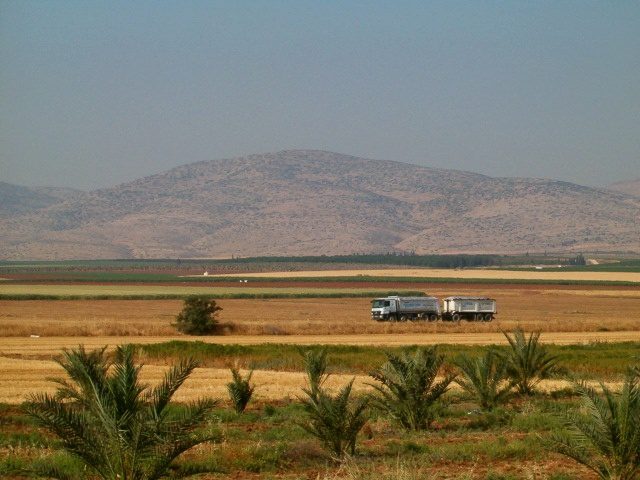
Nobody knows where the “plain” of the Sermon on the Plain might have been, but this modern Israeli plain will serve well enough. (Wikimedia Commons public domain image)
Compare Matthew 5:3-13
The Beatitudes, as they’re given in Luke’s account of the Sermon on the Plain, vary somewhat from those given by Matthew in his account of the Sermon on the Mount.
For instance, they’re addressed to the Savior’s audience, in the second person plural, rather than spoken in the third person plural.
Luke 6:20 pronounces a blessing upon the “poor,” rather than specifying the “poor in spirit.” And it speaks of the “kingdom of God” rather than, as Matthew does, of the “kingdom of heaven” (or, more properly, the “kingdom of the heavens,” ἡ βασιλεία τῶν οὐρανῶν). And it’s opposed by Luke 6:24, which pronounces a “woe” to the rich.
“Those who mourn” and “the meek,” of Matthew 5:5-6, are missing. As are, while we’re at it, “the merciful,” “the pure in heart,” “the peacemakers,” and “those who are persecuted for righteousness’ sake” (i.e., Matthew 5:7-10).
Luke’s “blessed are you that hunger now” (6:21) varies from Matthew’s “hunger and thirst for righteousness” (Matthew 5:6). And it’s paired with Luke 6:25a (“Woe to you that are full now, for you shall hunger”).
The Lukan “Blessed are you that weep now, for you shall laugh” (6:21b) has no real counterpart in Matthew’s sermon, but, again, is contrasted with Luke 25b (“Woe to you that laugh now, for you shall mourn and weep”).
The same sort of contrast follows Luke 6:22-23, which is pretty much equivalent to Matthew 5:11-12 but which lacks the rejoinder given in Luke 6:26: “Woe to you, when all men speak well of you, for so their fathers did to the false prophets.”
Next Post

March 4, 2019 "Was Pontius Pilate's Ring Discovered at Herodium?"
Browse Our Archives
Select a Category Uncategorized
Select a Month October 2026 September 2026 August 2026 July 2026 June 2026 May 2026 April 2026 March 2026 February 2026 January 2026 December 2025 November 2025 October 2025 September 2025 August 2025 July 2025 June 2025 May 2025 April 2025 March 2025 February 2025 January 2025 December 2024 November 2024 October 2024 September 2024 August 2024 July 2024 June 2024 May 2024 April 2024 March 2024 February 2024 January 2024 December 2023 November 2023 October 2023 September 2023 August 2023 July 2023 June 2023 May 2023 April 2023 March 2023 February 2023 January 2023 December 2022 November 2022 October 2022 September 2022 August 2022 July 2022 June 2022 May 2022 April 2022 March 2022 February 2022 January 2022 December 2021 November 2021 October 2021 September 2021 August 2021 July 2021 June 2021 May 2021 April 2021 March 2021 February 2021 January 2021 December 2020 November 2020 October 2020 September 2020 August 2020 July 2020 June 2020 May 2020 April 2020 March 2020 February 2020 January 2020 December 2019 November 2019 October 2019 September 2019 August 2019 July 2019 June 2019 May 2019 April 2019 March 2019 February 2019 January 2019 December 2018 November 2018 October 2018 September 2018 August 2018 July 2018 June 2018 May 2018 April 2018 March 2018 February 2018 January 2018 December 2017 November 2017 October 2017 September 2017 August 2017 July 2017 June 2017 May 2017 April 2017 March 2017 February 2017 January 2017 December 2016 November 2016 October 2016 September 2016 August 2016 July 2016 June 2016 May 2016 April 2016 March 2016 February 2016 January 2016 December 2015 November 2015 October 2015 September 2015 August 2015 July 2015 June 2015 May 2015 April 2015 March 2015 February 2015 January 2015 December 2014 November 2014 March 2014 August 2013 February 2012
Follow Us!
TAKE THE
Religious Wisdom Quiz
Who said: "You are a chosen people, a royal priesthood, a holy nation, God's special possession"?
Select your answer to see how you score.
Moses Peter James Paul
Related posts from Sic et Non
Some notes on the resurrection of Jesus
Setting the Record Straight, Though Without Much Real...

“In This Batter’d Caravanserai”
Are the New Testament Gospels Worthy of Trust?
TRENDING AT PATHEOS Latter-day Saint

The First Eucharistic Controversy: Christ’s Real Presence
For Catholics, the Eucharist is the source and summit of the Christian...

How to Make a Decision When You Can't...
Main point: It’s much more valuable to stay close to God so...

Archdiocese Hosts Military Marriage Retreat in Germany
RASTATT, Germany — The transient military lifestyle, with its frequent deployments and...

Nearly every morning, I make the drive to Detroit with my high-school-age...

The Real AI Story Is Adoption Without Trust
Artificial intelligence has crossed a political threshold. It is no longer a...

A new article, written by Jeff Lindsay and Gale L. Pooley,...
view all Latter-day Saint blogs
Ad-Free & Subscriber Log-In Subscription Support
- About Us
- 2026 Calendar
- Videos
- Podcasts
- Library of World Religions
- Faith In Media Tracker
- Advertise With Us
- Write for Us
- Privacy Policy
- Terms of Service
- Do Not Sell My Data
- Contact Us
- Radiant Digital
- Manage Newsletter Subscriptions
- Unsubscribe From Notifications
- Sitemap
Copyright 2008-2026, Patheos. All rights reserved.
Subscription Support Ad-Free & Subscriber Log-In
Follow Patheos