
BuddhistCatholicContemplativeEvangelicalGeneral ChristianHinduJewishLatter-day SaintMuslimNew VisionsProgressive Christian
Beliefs
- Buddhist
- Catholic
- Contemplative
- Evangelical
- General Christian
- Hindu
- Jewish
- Latter-day Saint
- More Voices
- Muslim
- New Visions
- Pagan
- Progressive Christian
Topics
- Religion News
- Food and Religion
- Sports and Religion
- Religious Art
- Religious Music and Entertainment
- Religious Events
- History and Religion
- Style and Religion
- Politics and Religion
- Women in Religion
- Recreation Outdoors and Religion
- Business Finance and Religion
- Careers Workplace and Religion
- Education and Religion
- Family Parenting and Religion
- Health Fitness and Religion
- Home and Religion
- Relationships and Religion
- Technology and Religion
- Travel and Religion
Columnists
- Buddhist Columnists
- Business Finance and Religion Columnists
- Careers Workplace and Religion Columnists
- Catholic Columnists
- Contemplative Columnists
- Education and Religion Columnists
- Evangelists Columnists
- Family Parenting and Religion Columnists
- General Christian Columnists
- Health Fitness and Religion Columnists
- Hindu Columnists
- History and Religion Columnists
- Home and Religion Columnists
- Jewish Columnists
- More Voices Columnists
- Latter Day Columnists
- Muslim Columnists
- New Visions Columnists
- Nonreligious Columnists
- Pagan Columnists
- Politics and Religion Columnists
- Progressive Columnists
- Recreation Outdoors and Religion Columnists
- Relationships and Religion Columnists
- Religion News Columnists
- Religious Art Columnists
- Religious Events Columnists
- Religious Music and Entertainment Columnists
- Sports and Religion Columnists
- Style and Religion Columnists
- Technology and Religion Columnists
- Travel and Religion Columnists
- Women in Religion Columnists
Resource Library
- 2026 Calendar
- Library of World Religions
- The 100 Most Holy Places on Earth
- Patheos Answers
- Podcasts
- Videos
- Faith Leaders Database
- Anglican Episcopalian
- Bahai
- Baptist
- Buddhism
- Christianity
- Confucianism
- Eastern Orthodoxy
- Hinduism
- Holiness and Pentecostal
- ISKCON
- Islam
- Judaism
- Lutheran
- Methodist
- The Church of Jesus Christ of Latter-day Saints
- New Age
- Paganism
- Presbytarian and Reformed
- Protestantism
- Religion Behind the Scenes
- Roman Catholic
- Scientology
- Shia Islam
- Sikhism
- Sufism
- Sunni Islam
- Taoism
- Zen
- See all religions
Research Tools
 Ad-Free & Subscriber Log-In Subscription Support
Ad-Free & Subscriber Log-In Subscription Support
Follow Patheos 

- Trending:
- Forgiveness
- |
- Marriage
- |
- Consciousness
- |
- Death Penalty
- |
- Election
- |
- Halloween

- Home
- Latter-day Saint
- On that article about “Mental Distress and Disaffection from the Church”
On that article about “Mental Distress and Disaffection from the Church”
Last updated on: February 17, 2019 at 7:41 pm by Dan Peterson
On that article about “Mental Distress and Disaffection from the Church” 2019-02-17T19:41:58-07:00 Dan Peterson
Patheos Explore the world's faith through different perspectives on religion and spirituality! Patheos has the views of the prevalent religions and spiritualities of the world.

Frank Bramley (1857-1915), “A Hopeless Dawn”
(Wikimedia Commons public domain image, Tate Gallery, London)
Over the past few weeks, I’ve watched with fascination — though, unfortunately, not altogether in surprise — at the reaction in a few places to the article by Steven T. Densley, Jr. and Geret Giles that appeared in Interpreter: A Journal of Latter-day Saint Faith and Scholarship on 18 January 2019. It is entitled “Barriers to Belief: Mental Distress and Disaffection from the Church”:
Here is the summary paragraph that precedes the published article:
Abstract: People leave the Church for a variety of reasons. Of all the reasons why people leave, one that has attracted little or no attention is the influence of mental distress. People who experience anxiety or depression see things differently than those who do not. Recognizing that people with mental distress have a different experience with church than others may help us to make adjustments that can prevent some amount of disaffection from the Church. This article takes a first step in identifying ways that mental distress can affect church activity and in presenting some of the things that individuals, friends, family members and Church leaders can do to help make being a member of The Church of Jesus Christ of Latter day Saints a little easier for those who experience mental distress.
Certain readers of the article — well, to be fully candid, I’m not absolutely sure that they have read the article and, in certain cases at least, I rather doubt that they have even glanced in its direction — have been mightily incensed at it because, they say, it claims that people leave the Church due to mental problems.
Well, it does suggest that — or, to be precise, it suggests that mental and/or emotional problems might be factors in certain cases of departure from the Church. And precision is very important here.
Consider the proposition
(A) People die due to drunk driving.
Strictly understood, this simply means that drunk driving is a factor in an unspecified number or proportion of deaths — a claim that is scarcely controversial. (I myself lost a very, very close friend to a drunken driver, years ago.)
It would be wildly unjustified, however, to insist that (A) means
(B) All people die due to drunk driving
For one thing, (A) simply doesn’t say that. Moreover, (B) is plainly false. People die from a host of causes, including disease, war, murder, falls from cliffs, botched surgeries, snakebite, drunk driving, food poisoning, drowning, airline crashes, and old age.
Manifestly, the most plausible reading of (A), and a thoroughly defensible one, is
(C) Some people die due to drunk driving.
In response to the Densley/Giles article, one or two critics have simply defined religious belief as itself a mental illness or mass delusion. But that’s mere bargain-basement pop Freudianism, and not very interesting. Others have declared, without offering statistical or other evidence in support of their assertion, that belief in the claims of the Restoration itself causes mental illness.
A few critics, however, profess to find the Densley/Giles article insulting and perhaps even legally defamatory because, they say, it argues that failure to believe Joseph Smith’s claims or a decision to leave the Church is, flatly, a sign of mental illness. Densley and Giles, these critics say, are inviting members of the Church to regard all who depart from it as mentally ill, even delusional, to stigmatize them as “the other,” and encouraging family members of those who leave to treat them as psychologically defective. One reliably malevolent misreader even suggests that the publication of the article illustrates the hilarious pleasure that I derive from ridiculing the mentally ill.
But Densley and Giles certainly do not argue (in analogy to [B], above) that all who leave the Church do so because they’re emotionally disturbed and/or psychogically disordered. Rather, they contend (in analogy to [C], above) that some who leave the Church may do so in part because of mental/emotional challenges. That’s quite a different proposition.
Even the abstract alone, quoted above, is enough to make this clear: “People leave the Church for a variety of reasons. . . . [O]ne [of those reasons] . . . is the influence of mental distress. . . . [We may be able to make] adjustments that can prevent some amount of disaffection from the Church . . . [M]ental distress can affect church activity.” (emphasis mine).
Moreover, the motivation of the authors is plainly neither to insult nor defame anybody, nor to stigmatize anyone, nor to “other” people who may be experiencing crises of faith. Even if one disagrees with the argument made in the article, its authors (who plainly and frankly write as believing Latter-day Saints) have an unmistakably pastoral intent, representing their essay as “a first step in identifying ways that mental distress can affect church activity and in presenting some of the things that individuals, friends, family members and Church leaders can do to help make being a member of The Church of Jesus Christ of Latter day Saints a little easier for those who experience mental distress.”
To portray this as an attempt to stigmatize, marginalize, insult, or defame struggling members of the Church seems quite manifestly unjust.
I encourage people who haven’t read the article yet to do so, and I invite those who may have read it as malicious to read it again.
Church of Jesus Christ of Latter-day Saints
Previous Post

February 10, 2019
Gleanings on a Sabbath in February
Next Post
February 10, 2019 New Testament Notes 29-30
Browse Our Archives
Select a Category Uncategorized
Select a Month October 2026 September 2026 August 2026 July 2026 June 2026 May 2026 April 2026 March 2026 February 2026 January 2026 December 2025 November 2025 October 2025 September 2025 August 2025 July 2025 June 2025 May 2025 April 2025 March 2025 February 2025 January 2025 December 2024 November 2024 October 2024 September 2024 August 2024 July 2024 June 2024 May 2024 April 2024 March 2024 February 2024 January 2024 December 2023 November 2023 October 2023 September 2023 August 2023 July 2023 June 2023 May 2023 April 2023 March 2023 February 2023 January 2023 December 2022 November 2022 October 2022 September 2022 August 2022 July 2022 June 2022 May 2022 April 2022 March 2022 February 2022 January 2022 December 2021 November 2021 October 2021 September 2021 August 2021 July 2021 June 2021 May 2021 April 2021 March 2021 February 2021 January 2021 December 2020 November 2020 October 2020 September 2020 August 2020 July 2020 June 2020 May 2020 April 2020 March 2020 February 2020 January 2020 December 2019 November 2019 October 2019 September 2019 August 2019 July 2019 June 2019 May 2019 April 2019 March 2019 February 2019 January 2019 December 2018 November 2018 October 2018 September 2018 August 2018 July 2018 June 2018 May 2018 April 2018 March 2018 February 2018 January 2018 December 2017 November 2017 October 2017 September 2017 August 2017 July 2017 June 2017 May 2017 April 2017 March 2017 February 2017 January 2017 December 2016 November 2016 October 2016 September 2016 August 2016 July 2016 June 2016 May 2016 April 2016 March 2016 February 2016 January 2016 December 2015 November 2015 October 2015 September 2015 August 2015 July 2015 June 2015 May 2015 April 2015 March 2015 February 2015 January 2015 December 2014 November 2014 March 2014 August 2013 February 2012
Follow Us!
TAKE THE
Religious Wisdom Quiz
True or False: Cornelius was a Roman centurion who was the first Gentile convert.
Select your answer to see how you score.
TRUE FALSE
Related posts from Sic et Non

We've been at it for fourteen years now

This Wednesday, Thursday, Friday, and Saturday
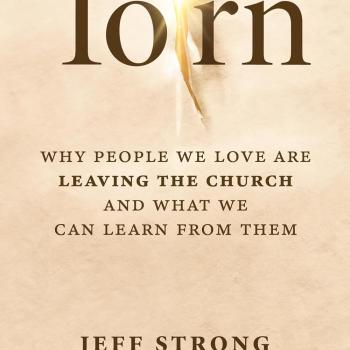
Reflections on People Who Leave the Church

TRENDING AT PATHEOS Latter-day Saint

The Sermon on the Mount, Part I: Matthew...
The Sermon on the Mount, Part I (Matthew 4:12-5:12) St. Matthew moves...

What's up from Crossway: Reviewing some of their latest A few weeks...

Janie Learns the Way of the Cross: A...
Teaching children about Jesus' Passion can be challenging. Many parents and educators...

Looking For Good Catholic Writing - October 2026
He alone extends the heavens, and he walks upon the waves of...

In "Irreplaceable," our book on vocation and technology, Trevor Sutton and I...

I was strolling through the top floor of the brand new Parthenon...
view all Latter-day Saint blogs
Ad-Free & Subscriber Log-In Subscription Support
- About Us
- 2026 Calendar
- Videos
- Podcasts
- Library of World Religions
- Faith In Media Tracker
- Advertise With Us
- Write for Us
- Privacy Policy
- Terms of Service
- Do Not Sell My Data
- Contact Us
- Radiant Digital
- Manage Newsletter Subscriptions
- Unsubscribe From Notifications
- Sitemap
Copyright 2008-2026, Patheos. All rights reserved.
Subscription Support Ad-Free & Subscriber Log-In
Follow Patheos