
BuddhistCatholicContemplativeEvangelicalGeneral ChristianHinduJewishLatter-day SaintMuslimNew VisionsProgressive Christian
Beliefs
- Buddhist
- Catholic
- Contemplative
- Evangelical
- General Christian
- Hindu
- Jewish
- Latter-day Saint
- More Voices
- Muslim
- New Visions
- Pagan
- Progressive Christian
Topics
- Religion News
- Food and Religion
- Sports and Religion
- Religious Art
- Religious Music and Entertainment
- Religious Events
- History and Religion
- Style and Religion
- Politics and Religion
- Women in Religion
- Recreation Outdoors and Religion
- Business Finance and Religion
- Careers Workplace and Religion
- Education and Religion
- Family Parenting and Religion
- Health Fitness and Religion
- Home and Religion
- Relationships and Religion
- Technology and Religion
- Travel and Religion
Columnists
- Buddhist Columnists
- Business Finance and Religion Columnists
- Careers Workplace and Religion Columnists
- Catholic Columnists
- Contemplative Columnists
- Education and Religion Columnists
- Evangelists Columnists
- Family Parenting and Religion Columnists
- General Christian Columnists
- Health Fitness and Religion Columnists
- Hindu Columnists
- History and Religion Columnists
- Home and Religion Columnists
- Jewish Columnists
- More Voices Columnists
- Latter Day Columnists
- Muslim Columnists
- New Visions Columnists
- Nonreligious Columnists
- Pagan Columnists
- Politics and Religion Columnists
- Progressive Columnists
- Recreation Outdoors and Religion Columnists
- Relationships and Religion Columnists
- Religion News Columnists
- Religious Art Columnists
- Religious Events Columnists
- Religious Music and Entertainment Columnists
- Sports and Religion Columnists
- Style and Religion Columnists
- Technology and Religion Columnists
- Travel and Religion Columnists
- Women in Religion Columnists
Resource Library
- 2026 Calendar
- Library of World Religions
- The 100 Most Holy Places on Earth
- Patheos Answers
- Podcasts
- Videos
- Faith Leaders Database
- Anglican Episcopalian
- Bahai
- Baptist
- Buddhism
- Christianity
- Confucianism
- Eastern Orthodoxy
- Hinduism
- Holiness and Pentecostal
- ISKCON
- Islam
- Judaism
- Lutheran
- Methodist
- The Church of Jesus Christ of Latter-day Saints
- New Age
- Paganism
- Presbytarian and Reformed
- Protestantism
- Religion Behind the Scenes
- Roman Catholic
- Scientology
- Shia Islam
- Sikhism
- Sufism
- Sunni Islam
- Taoism
- Zen
- See all religions
Research Tools
 Ad-Free & Subscriber Log-In Subscription Support
Ad-Free & Subscriber Log-In Subscription Support
Follow Patheos 

- Trending:
- Forgiveness
- |
- Marriage
- |
- Consciousness
- |
- Death Penalty
- |
- Election
- |
- Halloween

- Home
- Latter-day Saint
- Why humans — unlike the great apes — must be active to be healthy (1)
Why humans — unlike the great apes — must be active to be healthy (1)
Last updated on: February 2, 2019 at 12:52 am by Dan Peterson
Why humans — unlike the great apes — must be active to be healthy (1) 2019-02-02T00:52:37-07:00 Dan Peterson
Patheos Explore the world's faith through different perspectives on religion and spirituality! Patheos has the views of the prevalent religions and spiritualities of the world.
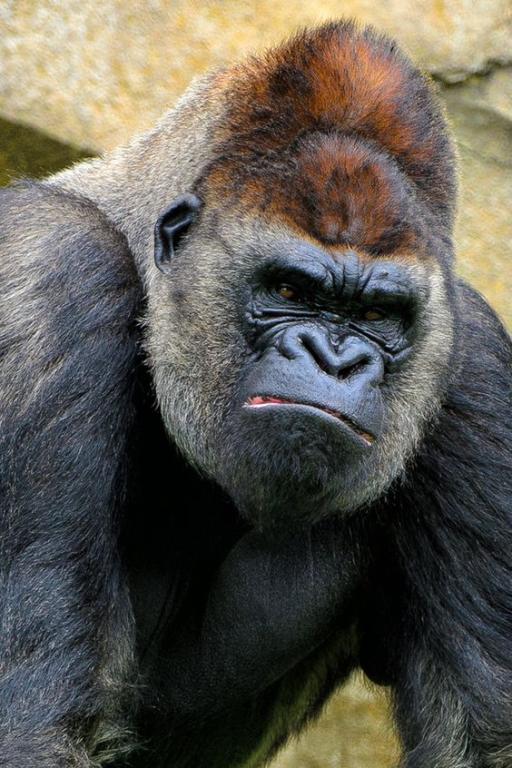
My famously repellent personality is almost indistinguishable from this gentleman’s, but he has certain innate health advantages — to say nothing of his full head of hair — that I can only envy. (Wikimedia Commons public domain image)
An article in the January 2019 issue of Scientific American — “Evolved to Exercise: Unlike our ape cousins, humans require high levels of physical activity to be healthy” — by Herman Pontzer, an associate professor of evolutionary anthropology at Duke University, is not only extremely interesting but offers some quite practical implications. Herewith, some notes from it:
We share more than 97 percent of our DNA with orangutans, bonobos, chimpanzees, and gorillas — although, I add for the sake of perspective, we apparently also share roughly 60 percent of our DNA with bananas. And the great apes are like us in many regards. They’re clever, use tools, fight and make up, seek privacy for sex, sometimes kill for “turf.” Their kids learn from their mothers, roughhouse and play with one another, and throw temper tantrums.
“And yet,” writes Pontzer, “it is the differences, rather than the similarities, between humans and apes that are casting new light on the way our bodies work.” It’s not a matter merely of “shape and behavior” but of “the fundamental function of our cells.”
A typical day’s agenda for a chimpanzee in the wild reads like the daily schedule for lethargic retirees on a Caribbean cruise, though with fewer organized activities. Wake up early, crack of dawn, then off to breakfast (fruit). Eat until you are stuffed, and next find a nice place for a nap, maybe some light grooming. After an hour or so (no rush!) go find a sunny tree with figs and gorge yourself. Maybe go meet some friends, a bit more grooming, another nap. Around five o’clock, have an early dinner (more fruit, maybe some leaves), then it is time to find a nice sleeping tree, build a nest and call it a night. Sure, there are frenetic pant-hoot choruses when the fruit is really great and the occasional scuffle or monkey hunt, and the alpha male needs to carve some time out every day to thrash a few victims or display mightily. But in general, chimpanzee life is pretty mellow.
And this is pretty much the way for orangutans, bonobos, and gorillas, as well. Great apes spend roughly eight to ten hours daily resting, rooming, and eating before they knock off in the evening for nine or ten hours of well-earned sleep.
In humans, such regular behavior would be a recipe for serious health problems. Taking fewer than 10,000 steps daily, for example, has been linked with increased risk of cardiovascular and metabolic disease (such as type 2 diabetes). Sitting at a desk (as I’m doing right now) or in front of the television has been associated with increased risk of disease and a shorter life span, even among people who exercise. Physical inactivity is arguably on a par with smoking as a risk to health. “Among Scottish adults, those watching more than two hours of television a day had a 125 percent increase in cardiac events such as heart attack or stroke. A study in Australian adults reported that every hour accumulated watching television shortened life expectancy by 22 minutes.”
By contrast, even in captivity, chimpanzees and other apes suffer only rarely from diabetes, blood pressure doesn’t increase as they age, and, despite naturally high levels of cholesterol, their arteries don’t harden and clog over time. They don’t develop heart disease or suffer from heart attacks brought on by occluded arteries. And they remain lean, with levels of body fat reminiscent of Olympic athletes.
So what happened to us?
(To be continued.)
Previous Post

January 30, 2019
New Testament Note 12
Next Post
January 31, 2019 Faith, Scholarship, Faithful Scholarship, and the Like
Browse Our Archives
Select a Category Uncategorized
Select a Month October 2026 September 2026 August 2026 July 2026 June 2026 May 2026 April 2026 March 2026 February 2026 January 2026 December 2025 November 2025 October 2025 September 2025 August 2025 July 2025 June 2025 May 2025 April 2025 March 2025 February 2025 January 2025 December 2024 November 2024 October 2024 September 2024 August 2024 July 2024 June 2024 May 2024 April 2024 March 2024 February 2024 January 2024 December 2023 November 2023 October 2023 September 2023 August 2023 July 2023 June 2023 May 2023 April 2023 March 2023 February 2023 January 2023 December 2022 November 2022 October 2022 September 2022 August 2022 July 2022 June 2022 May 2022 April 2022 March 2022 February 2022 January 2022 December 2021 November 2021 October 2021 September 2021 August 2021 July 2021 June 2021 May 2021 April 2021 March 2021 February 2021 January 2021 December 2020 November 2020 October 2020 September 2020 August 2020 July 2020 June 2020 May 2020 April 2020 March 2020 February 2020 January 2020 December 2019 November 2019 October 2019 September 2019 August 2019 July 2019 June 2019 May 2019 April 2019 March 2019 February 2019 January 2019 December 2018 November 2018 October 2018 September 2018 August 2018 July 2018 June 2018 May 2018 April 2018 March 2018 February 2018 January 2018 December 2017 November 2017 October 2017 September 2017 August 2017 July 2017 June 2017 May 2017 April 2017 March 2017 February 2017 January 2017 December 2016 November 2016 October 2016 September 2016 August 2016 July 2016 June 2016 May 2016 April 2016 March 2016 February 2016 January 2016 December 2015 November 2015 October 2015 September 2015 August 2015 July 2015 June 2015 May 2015 April 2015 March 2015 February 2015 January 2015 December 2014 November 2014 March 2014 August 2013 February 2012
Follow Us!
TAKE THE
Religious Wisdom Quiz
Which disciple was known as "the beloved"?
Select your answer to see how you score.
John Andrew Peter Matthew
Related posts from Sic et Non

"The Virtue of the Word of God"

On Religious Involvement and Health


Is the Church a hotbed of child abuse?...
TRENDING AT PATHEOS Latter-day Saint

Swimfan: Forgotten Aughts Pleasures
This is a recovery effort. In 2002, My Big Fat Greek Wedding...

Top Three Anti-Catholic Lies About Catholicism
This is my initial transcript for the video, "THE 3 WORST...

Pope Leo Celebrates Mass for Nurses & Docs...
I don't have any idea how he did it, but Pope Leo...

The Sermon on the Mount, Part I: Matthew...
The Sermon on the Mount, Part I (Matthew 4:12-5:12) St. Matthew moves...

What's up from Crossway: Reviewing some of their latest A few weeks...

Janie Learns the Way of the Cross: A...
Teaching children about Jesus' Passion can be challenging. Many parents and educators...
view all Latter-day Saint blogs
Ad-Free & Subscriber Log-In Subscription Support
- About Us
- 2026 Calendar
- Videos
- Podcasts
- Library of World Religions
- Faith In Media Tracker
- Advertise With Us
- Write for Us
- Privacy Policy
- Terms of Service
- Do Not Sell My Data
- Contact Us
- Radiant Digital
- Manage Newsletter Subscriptions
- Unsubscribe From Notifications
- Sitemap
Copyright 2008-2026, Patheos. All rights reserved.
Subscription Support Ad-Free & Subscriber Log-In
Follow Patheos