
BuddhistCatholicContemplativeEvangelicalGeneral ChristianHinduJewishLatter-day SaintMuslimNew VisionsProgressive Christian
Beliefs
- Buddhist
- Catholic
- Contemplative
- Evangelical
- General Christian
- Hindu
- Jewish
- Latter-day Saint
- More Voices
- Muslim
- New Visions
- Pagan
- Progressive Christian
Topics
- Religion News
- Food and Religion
- Sports and Religion
- Religious Art
- Religious Music and Entertainment
- Religious Events
- History and Religion
- Style and Religion
- Politics and Religion
- Women in Religion
- Recreation Outdoors and Religion
- Business Finance and Religion
- Careers Workplace and Religion
- Education and Religion
- Family Parenting and Religion
- Health Fitness and Religion
- Home and Religion
- Relationships and Religion
- Technology and Religion
- Travel and Religion
Columnists
- Buddhist Columnists
- Business Finance and Religion Columnists
- Careers Workplace and Religion Columnists
- Catholic Columnists
- Contemplative Columnists
- Education and Religion Columnists
- Evangelists Columnists
- Family Parenting and Religion Columnists
- General Christian Columnists
- Health Fitness and Religion Columnists
- Hindu Columnists
- History and Religion Columnists
- Home and Religion Columnists
- Jewish Columnists
- More Voices Columnists
- Latter Day Columnists
- Muslim Columnists
- New Visions Columnists
- Nonreligious Columnists
- Pagan Columnists
- Politics and Religion Columnists
- Progressive Columnists
- Recreation Outdoors and Religion Columnists
- Relationships and Religion Columnists
- Religion News Columnists
- Religious Art Columnists
- Religious Events Columnists
- Religious Music and Entertainment Columnists
- Sports and Religion Columnists
- Style and Religion Columnists
- Technology and Religion Columnists
- Travel and Religion Columnists
- Women in Religion Columnists
Resource Library
- 2026 Calendar
- Library of World Religions
- The 100 Most Holy Places on Earth
- Patheos Answers
- Podcasts
- Videos
- Faith Leaders Database
- Anglican Episcopalian
- Bahai
- Baptist
- Buddhism
- Christianity
- Confucianism
- Eastern Orthodoxy
- Hinduism
- Holiness and Pentecostal
- ISKCON
- Islam
- Judaism
- Lutheran
- Methodist
- The Church of Jesus Christ of Latter-day Saints
- New Age
- Paganism
- Presbytarian and Reformed
- Protestantism
- Religion Behind the Scenes
- Roman Catholic
- Scientology
- Shia Islam
- Sikhism
- Sufism
- Sunni Islam
- Taoism
- Zen
- See all religions
Research Tools
 Ad-Free & Subscriber Log-In Subscription Support
Ad-Free & Subscriber Log-In Subscription Support
Follow Patheos 

- Trending:
- Forgiveness
- |
- Marriage
- |
- Consciousness
- |
- Death Penalty
- |
- Election
- |
- Halloween

- Home
- Latter-day Saint
- Big Questions (B)
Big Questions (B)
Last updated on: September 23, 2018 at 7:00 pm by Dan Peterson
Big Questions (B) 2018-09-23T19:00:39-06:00 Dan Peterson
Patheos Explore the world's faith through different perspectives on religion and spirituality! Patheos has the views of the prevalent religions and spiritualities of the world.
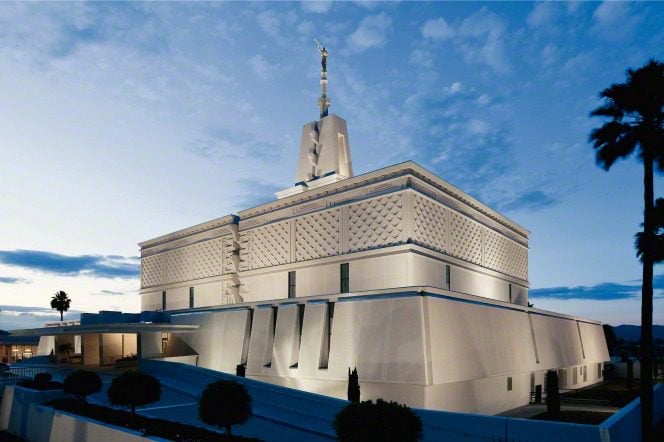
Evening at the Mexico City Mexico Temple (Wikimedia Commons public domain photo)
In my previous post — creatively titled “Big Questions (A)” — I responded to a reader’s concerns about the Church’s numbers being small and about the fact that even its numbered members too often have a hard time holding on. I continue my reply to him in this post. Here’s a continuation of his comment to me:
If we truly all passed the first estate with flying colors by following Christ’s plan why has this earth been such a hell hole for the majority of God’s children? Why did they have to suffer the sins of their fathers who caused the church to be taken from the earth 6 different times? It certainly wasn’t those spirits in heavens waiting to come down fault that their forbearers were wicked was it? The Plan of Salvation just seems so inefficient and selective. Why could’t God have helped just a little bit more? Isnt the Celestial kingdom going to be quite a lonely place? What think ye??
It’s true that, on earth, the Plan of Salvation is in one sense “selective.” As I pointed out in my prior response, that seems to be baked into the system. The scriptures not only acknowledge it but predict it. Whether it’s “inefficient,” though, is a distinct matter. Our ability to determine its efficiency or inefficiency depends on how well we understand the intention behind it. Efficient at doing . . . what, exactly? And on that question, although we understand what the end game is, what the Father’s ultimate goal is — “For behold, this is my work and my glory—to bring to pass the immortality and eternal life of man” (Moses 1:39); God “will have all men to be saved, and to come unto the knowledge of the truth” (1 Timothy 2:4) — I’m reasonably confident that we have a very weak grasp of the intervening steps in the process.
For my thoughts are not your thoughts, neither are your ways my ways, saith the Lord. For as the heavens are higher than the earth, so are my ways higher than your ways, and my thoughts than your thoughts. (Isaiah 55:8-9)
As to whether the Celestial Kingdom is going to be a lonely place, I rather doubt it.
For one thing, there are all those many millions of children who have died, and who continue to die, before the age of accountability. They’re apparently bound for the Celestial Kingdom. For another, I’m something of a quasi-universalist. (A topic for another day, that. And maybe not on my blog. We’ll see. To me, it’s a sacred and sensitive subject.)
But it seems to me that wickedness is what gets people into the Terrestrial Kingdom and the Telestial Kingdom. And indifference to truth is a species of wickedness. But those who sincerely seek to do right and to find and live by the truth will, I think, be fine in the long run. And those, in my still rather sunny view of humanity, is a pretty big group. Merely failing to accept a disputed proposition that one maybe didn’t even have the chance to fairly hear, or to hear at all, isn’t going to cost one the opportunity to return to the presence of one’s Father.
This whole question is one of the reasons I so love the gospel and the doctrines of the Restoration. I love the concept of salvation for the dead. I love temples. I do not fear for the future of the hundreds and hundreds of millions who have died without knowing the truth. (See, by the way, the solemn event described in this article, almost forgotten today but remembered by God: “100 years ago, US fought its deadliest battle in France.”) The news of the gospel is good beyond fathoming.
Finally, a note on another comment from this reader:
Why are there millions of Muslims marching to Mecca every year who are just as sold on their religion as the average LDS? Most of them will never convert in this life or maybe the next. BOM says “we will rise with same spirit as we had in this life.” Why did’t God cause Mohammad to be killed off in his early days before he could lead so many souls astray? After all God told Nephi “it was better for one man to perish than for a whole Nation to dwindle in unbelief.”
(First: I note the use of the verb marching. It suggests militancy. But the hajj pilgrimage isn’t militant or militaristic. It’s devotional. We should be careful not to use inflammatory and misleading language in such cases; there’s already too much heat and too little light in some contemporary Western conversations about Islam.)
I don’t know what the percentage will be, in the next life, of Muslim converts to the gospel. I have no idea whether it will be higher than the conversion rate among deceased Catholics or Buddhists or Sikhs or Shintoists, or lower, or the same.
As to why why God didn’t kill Muhammad off “in his early days before he could lead so many souls astray,” I don’t share your premise. I’m quite comfortable, to the contrary, with accepting Muhammad as divinely inspired. I agree with President Spencer W. Kimball and his counselors that Muhammad “received a portion of God’s light” and that “moral truths were given to [him] by God to enlighten whole nations and to bring a higher level of understanding to individuals.” I simply cannot see any plausible way of viewing Muhammad’s effect on seventh-century pagan Arabia as “leading souls astray” and causing the jahili Arabs to “dwindle in unbelief.” Quite the opposite, in fact.
If God didn’t kill genuinely evil men like Hitler or Stalin or Pol Pot or Mao off, why on earth should he have intervened to kill Muhammad? I don’t regard Muhammad as evil.
I’m confident that devout Muslims who sincerely tried to live up to the moral ideals of their faith and who sincerely sought God will be entirely okay, and much more than merely okay, in the eternities.
Church of Jesus Christ of Latter-day Saints
salvation of the unevangelized
Previous Post

September 23, 2018
Big Questions (A)
Next Post
September 23, 2018 "This absolute light, which seemed to envelop me"
Browse Our Archives
Select a Category Uncategorized
Select a Month October 2026 September 2026 August 2026 July 2026 June 2026 May 2026 April 2026 March 2026 February 2026 January 2026 December 2025 November 2025 October 2025 September 2025 August 2025 July 2025 June 2025 May 2025 April 2025 March 2025 February 2025 January 2025 December 2024 November 2024 October 2024 September 2024 August 2024 July 2024 June 2024 May 2024 April 2024 March 2024 February 2024 January 2024 December 2023 November 2023 October 2023 September 2023 August 2023 July 2023 June 2023 May 2023 April 2023 March 2023 February 2023 January 2023 December 2022 November 2022 October 2022 September 2022 August 2022 July 2022 June 2022 May 2022 April 2022 March 2022 February 2022 January 2022 December 2021 November 2021 October 2021 September 2021 August 2021 July 2021 June 2021 May 2021 April 2021 March 2021 February 2021 January 2021 December 2020 November 2020 October 2020 September 2020 August 2020 July 2020 June 2020 May 2020 April 2020 March 2020 February 2020 January 2020 December 2019 November 2019 October 2019 September 2019 August 2019 July 2019 June 2019 May 2019 April 2019 March 2019 February 2019 January 2019 December 2018 November 2018 October 2018 September 2018 August 2018 July 2018 June 2018 May 2018 April 2018 March 2018 February 2018 January 2018 December 2017 November 2017 October 2017 September 2017 August 2017 July 2017 June 2017 May 2017 April 2017 March 2017 February 2017 January 2017 December 2016 November 2016 October 2016 September 2016 August 2016 July 2016 June 2016 May 2016 April 2016 March 2016 February 2016 January 2016 December 2015 November 2015 October 2015 September 2015 August 2015 July 2015 June 2015 May 2015 April 2015 March 2015 February 2015 January 2015 December 2014 November 2014 March 2014 August 2013 February 2012
Follow Us!
TAKE THE
Religious Wisdom Quiz
I climbed a tree to see Jesus passing by because I was short in stature and curious about this teacher. Who perched in the branches?
Select your answer to see how you score.
Nicodemus Zacchaeus Bartimaeus Matthew
Related posts from Sic et Non

Once More, Can There Be Any Valid Criticisms...


One Glorious Sunday in the Fall
A few notes from a listener. What would...
TRENDING AT PATHEOS Latter-day Saint

Pope Leo Celebrates Mass for Nurses & Docs...
I don't have any idea how he did it, but Pope Leo...

The Sermon on the Mount, Part I: Matthew...
The Sermon on the Mount, Part I (Matthew 4:12-5:12) St. Matthew moves...

What's up from Crossway: Reviewing some of their latest A few weeks...

Janie Learns the Way of the Cross: A...
Teaching children about Jesus' Passion can be challenging. Many parents and educators...

Looking For Good Catholic Writing - October 2026
He alone extends the heavens, and he walks upon the waves of...

In "Irreplaceable," our book on vocation and technology, Trevor Sutton and I...
view all Latter-day Saint blogs
Ad-Free & Subscriber Log-In Subscription Support
- About Us
- 2026 Calendar
- Videos
- Podcasts
- Library of World Religions
- Faith In Media Tracker
- Advertise With Us
- Write for Us
- Privacy Policy
- Terms of Service
- Do Not Sell My Data
- Contact Us
- Radiant Digital
- Manage Newsletter Subscriptions
- Unsubscribe From Notifications
- Sitemap
Copyright 2008-2026, Patheos. All rights reserved.
Subscription Support Ad-Free & Subscriber Log-In
Follow Patheos