
BuddhistCatholicContemplativeEvangelicalGeneral ChristianHinduJewishLatter-day SaintMuslimNew VisionsProgressive Christian
Beliefs
- Buddhist
- Catholic
- Contemplative
- Evangelical
- General Christian
- Hindu
- Jewish
- Latter-day Saint
- More Voices
- Muslim
- New Visions
- Pagan
- Progressive Christian
Topics
- Religion News
- Food and Religion
- Sports and Religion
- Religious Art
- Religious Music and Entertainment
- Religious Events
- History and Religion
- Style and Religion
- Politics and Religion
- Women in Religion
- Recreation Outdoors and Religion
- Business Finance and Religion
- Careers Workplace and Religion
- Education and Religion
- Family Parenting and Religion
- Health Fitness and Religion
- Home and Religion
- Relationships and Religion
- Technology and Religion
- Travel and Religion
Columnists
- Buddhist Columnists
- Business Finance and Religion Columnists
- Careers Workplace and Religion Columnists
- Catholic Columnists
- Contemplative Columnists
- Education and Religion Columnists
- Evangelists Columnists
- Family Parenting and Religion Columnists
- General Christian Columnists
- Health Fitness and Religion Columnists
- Hindu Columnists
- History and Religion Columnists
- Home and Religion Columnists
- Jewish Columnists
- More Voices Columnists
- Latter Day Columnists
- Muslim Columnists
- New Visions Columnists
- Nonreligious Columnists
- Pagan Columnists
- Politics and Religion Columnists
- Progressive Columnists
- Recreation Outdoors and Religion Columnists
- Relationships and Religion Columnists
- Religion News Columnists
- Religious Art Columnists
- Religious Events Columnists
- Religious Music and Entertainment Columnists
- Sports and Religion Columnists
- Style and Religion Columnists
- Technology and Religion Columnists
- Travel and Religion Columnists
- Women in Religion Columnists
Resource Library
- 2026 Calendar
- Library of World Religions
- The 100 Most Holy Places on Earth
- Patheos Answers
- Podcasts
- Videos
- Faith Leaders Database
- Anglican Episcopalian
- Bahai
- Baptist
- Buddhism
- Christianity
- Confucianism
- Eastern Orthodoxy
- Hinduism
- Holiness and Pentecostal
- ISKCON
- Islam
- Judaism
- Lutheran
- Methodist
- The Church of Jesus Christ of Latter-day Saints
- New Age
- Paganism
- Presbytarian and Reformed
- Protestantism
- Religion Behind the Scenes
- Roman Catholic
- Scientology
- Shia Islam
- Sikhism
- Sufism
- Sunni Islam
- Taoism
- Zen
- See all religions
Research Tools
 Ad-Free & Subscriber Log-In Subscription Support
Ad-Free & Subscriber Log-In Subscription Support
Follow Patheos 

- Trending:
- Forgiveness
- |
- Marriage
- |
- Consciousness
- |
- Death Penalty
- |
- Election
- |
- Halloween

- Home
- Latter-day Saint
- Big Questions (A)
Big Questions (A)
Last updated on: September 23, 2018 at 6:58 pm by Dan Peterson
Big Questions (A) 2018-09-23T18:58:58-06:00 Dan Peterson
Patheos Explore the world's faith through different perspectives on religion and spirituality! Patheos has the views of the prevalent religions and spiritualities of the world.
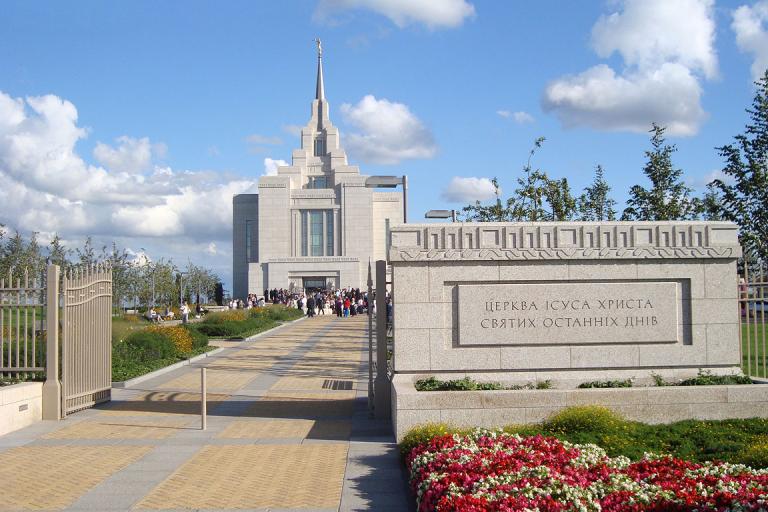
The Kyiv Ukraine Temple (Wikimedia Commons public domain)
A reader of this blog sent me a heartfelt question, or complex of questions, last night, and I’ve chosen to respond to him here rather than on Facebook. Not because I have a decisive or overpoweringly persuasive answer to his concern — it will rapidly be all too obvious that I don’t — but because I think that the topic he raises is very significant and because I hope and think that others might have some helpful thoughts to contribute regarding it.
Recently I have begun to question the math in the Plan of Salvation. I thought you might be able give me your valuable insights. I will be as succinct as possible; Only 1% of the World population is LDS. Of that 1% only half are active in church. Of the half of percent active only about half of them are temple worthy and attend the temple. And we probably have more members with true gospel living than in any other dispensation. Why has the gospel been so hard to find on this earth and why is it so difficult for so many good people I know to keep testimonies?
First, I observe that the scriptures have always candidly acknowledged that faithful Saints constitute, and will constitute, a small minority in the world.
In Genesis 22:18, the Lord tells Abraham, the patriarch of a small, nomadic family of no great outward consequence and no statistical significance in the world, that “in thy seed shall all the nations of the earth be blessed.”
Even among Abraham’s posterity themselves, the faithful were and are often outnumbered by those who have wandered away: “Yet,” the Lord tells Elijah, “I have left me seven thousand in Israel, all the knees which have not bowed unto Baal, and every mouth which hath not kissed him.” (1 Kings 19:18).
Throughout both the Old and New Testaments, the prophets and apostles speak of a saving or saved “remnant” (Isaiah 10:20-22; 11:11-16; Romans 11:5; Revelation 12:17; and many other passages).
Perhaps the classic text on the subject is the Savior’s declaration, in the Sermon on the Mount, that “wide is the gate, and broad is the way, that leadeth to destruction, and many there be which go in thereat,” while “strait [i.e., narrow] is the gate, and narrow is the way, which leadeth unto life, and few there be that find it” (Matthew 7:13-14).
And the numbers will likely always be relatively small. We love to see, in the Church of Jesus Christ of Latter-day Saints, the “stone [that] was cut out without hands” and then “became a great mountain, and filled the whole earth” (Daniel 2:34-35). “And in the days of these kings shall the God of heaven set up a kingdom, which shall never be destroyed: and the kingdom shall not be left to other people, but it shall break in pieces and consume all these kingdoms, and it shall stand for ever” (Daniel 2:44).
But that prophecy needs to be properly understood.
Peering into the future, Nephi reports that “I beheld the church of the Lamb of God, and its numbers were few. . . . I beheld that the church of the Lamb, who were the saints of God, were . . . upon all the face of the earth; and their dominions upon the face of the earth were small” (1 Nephi 14:12).
Worldwide extension, but not worldwide dominance. International reach, but small numbers. Exactly as we’re seeing today.
From the beginning, the Nephites were outnumbered by the Lamanites, and the Lehites altogether were a tiny group who had fled violent rejection by the rulers and the popular majority in Jerusalem. “The time passed away with us,” reports Jacob, “and also our lives passed away like as it were unto us a dream, we being a lonesome and a solemn people, wanderers, cast out from Jerusalem, born in tribulation, in a wilderness, and hated of our brethren, which caused wars and contentions; wherefore, we did mourn out our days” (Jacob 7:26).
But at least they got away alive. Jeremiah, Lehi’s contemporary, was dragged off to Egypt and murdered. And disobedient Judah, like unfaithful Israel before it, was destroyed and its inhabitants carted off to Mesopotamia.
Why is it so difficult for so many good people to keep testimonies?
The answer to that is, of course, peculiar to each individual. But it’s sadly true that we live in a time of unusual challenges to testimonies, and that more than a few are falling victim to those challenges. We have not yet adequately responded, though I hope that the forces of truth are beginning to regroup.
But, here again, the scriptures candidly note that many of the faithful will fall away. Thus, for example, the parable of the sower in Matthew 13 speaks of seeds that spring up but that are then scorched by the sun and die. That’s why scriptural texts continually tell us that “he that endureth to the end shall be saved” (Matthew 10:22) and that, “if ye shall be obedient to the commandments, and endure to the end, ye shall be saved” (1 Nephi 22:31). If it were easy and almost universally common to remain faithful until the end, such exhortations would scarcely be necessary.
Of the eleven official Witnesses to the Book of Mormon, only five were in full fellowship with the Church at their deaths — and two of those five, Oliver Cowdery and Martin Harris, had returned only after lengthy periods of disaffection. They continued to affirm their experiences with the Book of Mormon plates, and so forth, but their steps faltered with respect to the Church.
Of the original 1835 Quorum of the Twelve Apostles, only six, or half, were still apostles by the time they died — and of the six who remained, two had experienced prolonged episodes of disaffection. (And two of the six former apostles eventually returned to the Church, but they were never readmitted to the Twelve.)
Apostasy occurred even in the very presence of the Savior himself, as recorded (for example) in John 6:66-69:
From that time many of his disciples went back, and walked no more with him. Then said Jesus unto the twelve, Will ye also go away? Then Simon Peter answered him, Lord, to whom shall we go? thou hast the words of eternal life. And we believe and are sure that thou art that Christ, the Son of the living God.
The fear that loved ones will fall away explains why, when major scriptural figures hear that those they care about are still committed to the gospel even after a long absence, there are such notable expressions of joy. After all, mortal life and human nature being what they are, continued faithfulness takes real work. It’s not the default setting. Thus, for example, 1 John 3:1-4:
The elder unto the well beloved Gaius, whom I love in the truth. Beloved, I wish above all things that thou mayest prosper and be in health, even as thy soul prospereth. For I rejoiced greatly, when the brethren came and testified of the truth that is in thee, even as thou walkest in the truth. I have no greater joy than to hear that my children walk in truth.
And Alma 17:1-2:
And now it came to pass that as Alma was journeying from the land of Gideon southward, away to the land of Manti, behold, to his astonishment, he met with the sons of Mosiah journeying towards the land of Zarahemla.
Now these sons of Mosiah were with Alma at the time the angel first appeared unto him; therefore Alma did rejoice exceedingly to see his brethren; and what added more to his joy, they were still his brethren in the Lord; yea, and they had waxed strong in the knowledge of the truth; for they were men of a sound understanding and they had searched the scriptures diligently, that they might know the word of God.
To be continued.
Church of Jesus Christ of Latter-day Saints
Next Post

September 23, 2018 Big Questions (B)
Browse Our Archives
Select a Category Uncategorized
Select a Month October 2026 September 2026 August 2026 July 2026 June 2026 May 2026 April 2026 March 2026 February 2026 January 2026 December 2025 November 2025 October 2025 September 2025 August 2025 July 2025 June 2025 May 2025 April 2025 March 2025 February 2025 January 2025 December 2024 November 2024 October 2024 September 2024 August 2024 July 2024 June 2024 May 2024 April 2024 March 2024 February 2024 January 2024 December 2023 November 2023 October 2023 September 2023 August 2023 July 2023 June 2023 May 2023 April 2023 March 2023 February 2023 January 2023 December 2022 November 2022 October 2022 September 2022 August 2022 July 2022 June 2022 May 2022 April 2022 March 2022 February 2022 January 2022 December 2021 November 2021 October 2021 September 2021 August 2021 July 2021 June 2021 May 2021 April 2021 March 2021 February 2021 January 2021 December 2020 November 2020 October 2020 September 2020 August 2020 July 2020 June 2020 May 2020 April 2020 March 2020 February 2020 January 2020 December 2019 November 2019 October 2019 September 2019 August 2019 July 2019 June 2019 May 2019 April 2019 March 2019 February 2019 January 2019 December 2018 November 2018 October 2018 September 2018 August 2018 July 2018 June 2018 May 2018 April 2018 March 2018 February 2018 January 2018 December 2017 November 2017 October 2017 September 2017 August 2017 July 2017 June 2017 May 2017 April 2017 March 2017 February 2017 January 2017 December 2016 November 2016 October 2016 September 2016 August 2016 July 2016 June 2016 May 2016 April 2016 March 2016 February 2016 January 2016 December 2015 November 2015 October 2015 September 2015 August 2015 July 2015 June 2015 May 2015 April 2015 March 2015 February 2015 January 2015 December 2014 November 2014 March 2014 August 2013 February 2012
Follow Us!
TAKE THE
Religious Wisdom Quiz
True or False: The first plague in Egypt turned the Nile River into blood.
Select your answer to see how you score.
FALSE TRUE
Related posts from Sic et Non

Of Temples and Extermination Camps

C. S. Lewis and Baptism for the Dead

Once More, Can There Be Any Valid Criticisms...

Prediction is difficult. Especially about the future.
TRENDING AT PATHEOS Latter-day Saint

Letters on Living the Faith by C.S. Lewis
Most of us met C.S. Lewis as a public intellectual. Mere Christianity....

When Halloween Unmasks Married Hearts
Written by Dr. David K. Ewen from Eternal Truth Bible College Behind...

Aristotle. He’s been called the father of logic, the father of the...

Methodist Central Hall and Westminster Abbey
Situated on the same square is Methodist Central Hall and Westminster Abbey. ...

57th Dove Awards Honor Dolly Parton, Crown New...
On gospel music’s biggest night, the 57th annual GMA Dove Awards honored...

The First Eucharistic Controversy: Christ’s Real Presence
For Catholics, the Eucharist is the source and summit of the Christian...
view all Latter-day Saint blogs
Ad-Free & Subscriber Log-In Subscription Support
- About Us
- 2026 Calendar
- Videos
- Podcasts
- Library of World Religions
- Faith In Media Tracker
- Advertise With Us
- Write for Us
- Privacy Policy
- Terms of Service
- Do Not Sell My Data
- Contact Us
- Radiant Digital
- Manage Newsletter Subscriptions
- Unsubscribe From Notifications
- Sitemap
Copyright 2008-2026, Patheos. All rights reserved.
Subscription Support Ad-Free & Subscriber Log-In
Follow Patheos