
BuddhistCatholicContemplativeEvangelicalGeneral ChristianHinduJewishLatter-day SaintMuslimNew VisionsProgressive Christian
Beliefs
- Buddhist
- Catholic
- Contemplative
- Evangelical
- General Christian
- Hindu
- Jewish
- Latter-day Saint
- More Voices
- Muslim
- New Visions
- Pagan
- Progressive Christian
Topics
- Religion News
- Food and Religion
- Sports and Religion
- Religious Art
- Religious Music and Entertainment
- Religious Events
- History and Religion
- Style and Religion
- Politics and Religion
- Women in Religion
- Recreation Outdoors and Religion
- Business Finance and Religion
- Careers Workplace and Religion
- Education and Religion
- Family Parenting and Religion
- Health Fitness and Religion
- Home and Religion
- Relationships and Religion
- Technology and Religion
- Travel and Religion
Columnists
- Buddhist Columnists
- Business Finance and Religion Columnists
- Careers Workplace and Religion Columnists
- Catholic Columnists
- Contemplative Columnists
- Education and Religion Columnists
- Evangelists Columnists
- Family Parenting and Religion Columnists
- General Christian Columnists
- Health Fitness and Religion Columnists
- Hindu Columnists
- History and Religion Columnists
- Home and Religion Columnists
- Jewish Columnists
- More Voices Columnists
- Latter Day Columnists
- Muslim Columnists
- New Visions Columnists
- Nonreligious Columnists
- Pagan Columnists
- Politics and Religion Columnists
- Progressive Columnists
- Recreation Outdoors and Religion Columnists
- Relationships and Religion Columnists
- Religion News Columnists
- Religious Art Columnists
- Religious Events Columnists
- Religious Music and Entertainment Columnists
- Sports and Religion Columnists
- Style and Religion Columnists
- Technology and Religion Columnists
- Travel and Religion Columnists
- Women in Religion Columnists
Resource Library
- 2026 Calendar
- Library of World Religions
- The 100 Most Holy Places on Earth
- Patheos Answers
- Podcasts
- Videos
- Faith Leaders Database
- Anglican Episcopalian
- Bahai
- Baptist
- Buddhism
- Christianity
- Confucianism
- Eastern Orthodoxy
- Hinduism
- Holiness and Pentecostal
- ISKCON
- Islam
- Judaism
- Lutheran
- Methodist
- The Church of Jesus Christ of Latter-day Saints
- New Age
- Paganism
- Presbytarian and Reformed
- Protestantism
- Religion Behind the Scenes
- Roman Catholic
- Scientology
- Shia Islam
- Sikhism
- Sufism
- Sunni Islam
- Taoism
- Zen
- See all religions
Research Tools
 Ad-Free & Subscriber Log-In Subscription Support
Ad-Free & Subscriber Log-In Subscription Support
Follow Patheos 

- Trending:
- Forgiveness
- |
- Marriage
- |
- Consciousness
- |
- Death Penalty
- |
- Election
- |
- Halloween

- Home
- Latter-day Saint
- Religion in Iran (A)
Religion in Iran (A)
Last updated on: September 5, 2018 at 9:53 am by Dan Peterson
Religion in Iran (A) 2018-09-05T09:53:04-06:00 Dan Peterson
Patheos Explore the world's faith through different perspectives on religion and spirituality! Patheos has the views of the prevalent religions and spiritualities of the world.
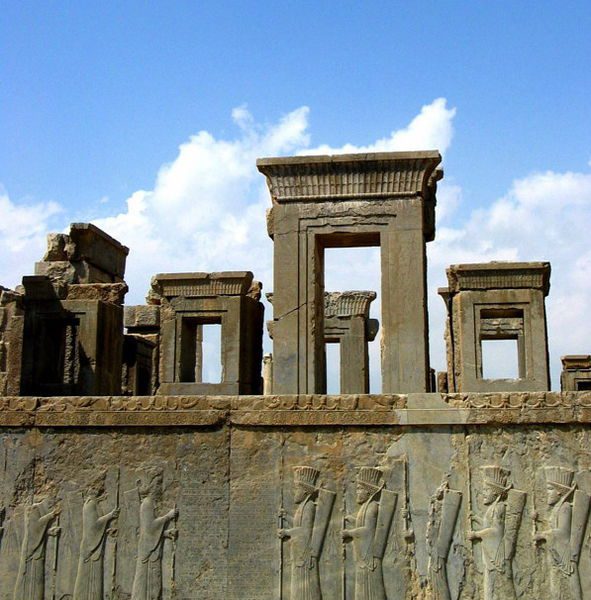
The ruins of ancient Persepolis, in Iran — the ceremonial capital of the Achaemenid Empire between about BC 550 and BC 330 — is one of the most impressive archaeological sites I’ve ever visited. (Wikimedia Commons public domain)
Rough notes for The Book:
Iran – officially, since 1979, the Islamic Republic of Iran, but also historically known as Persia – is the home of one of the greatest and richest civilizations of human history. That civilization began with the Elamite kingdoms of the fourth millennium before Christ, but it began its rise to greatness in the seventh century BC when the region was unified by the Iranian Medes. By the sixth century before Christ, the Achaemenid Empire, founded by Cyrus the Great, extended from southeastern Europe to the Indus River Valley.
It was in the sixth-fifth century before Christ that the faith known as Zoroastrianism (or, sometimes, as Mazdeanism) entered into the historical record. Named after the prophet Zoroaster (or Zarathustra), who probably lived and taught in the second millennium before the birth of Jesus, Zoroastrianism would remain the state religion of Iran for more than twelve hundred years, from almost 600 BC until roughly 650 AD.
Zoroastrianism survives to this day, with between 150,000 and 200,000 adherents. In fact, it may even be enjoying something of a small and rather silent resurgence among those Iranians who wish to affirm their Persian nationalism while defying the Islamist regime that rules their country.
Zoroastrianism is a monotheistic religion of a pronouncedly dualistic kind – focused, for example on the opposition of good and evil, light and darkness, virtue and vice. In it, the creator God is known as Ahura Mazda (“Wise Lord”) and he is locked in cosmic battle with Ahriman or Angra Mainyu (“Destructive Spirit”), whom he will ultimately defeat.
Alexander the Great seized the Iranian realm – among many others! – in the fourth century BC, introducing Greek intellectual culture to the area. Iran was dominated by fragmented Hellenistic states until the emergence of the Parthian Empire about a hundred years later. For centuries, the Parthians represented a serious threat to the eastern border regions of the Roman Empire and, later, of their Byzantine successors. Finally, in the third century after Christ, the Sasanian Empire arose.
It was under the Sasanians that the prophet Mani was executed in AD 274. His teachings survived him, however, in the form of what is called Manichaeism, and they quickly spread across the Aramaic-speaking regions of the Middle East and beyond, flourishing especially between the third and seventh centuries AD (i.e., between Mani’s own life and the advent of Islam). At its height, Manichaeism could justly be decribed as, if not a global religion, certainly very near one. Manichaean churches and Manichaean scriptural manuscripts have been found at sites from the Roman Empire in the West to China in the East. For a while, Manichaeism was a serious rival to Christianity; St. Augustine (d. AD 430), for example, although raised as a Christian (by St. Monica, no less), converted to Manichaeism at the age of seventeen and didn’t return to Christianity until he was 31. In the Far East, the Manichaean faith survived for a much longer period, finally fading from visibility in south China under the Ming Dynasty in the fourteenth century AD.
Like Zoroastrianism, Manichaeism was strongly dualistic – dualism, indeed, is typically recognized as a signature characteristic of natively Iranian religions in their various forms — telling of a struggle between the spiritual world of goodness and light, on the one hand, and, on the other, the material world of evil and darkness. Salvation is effected by removing light (including the souls of the righteous) from the world of matter and returning it to its native world of light, from which it has fallen.
The Sasanid Empire remained a significant world power over the next four hundred years, until the entrance of Islam into the Iranian plateau put an end to it. The advent of Islam also led, very quickly, to the suppression of Zoroastrianism – which, judging from the relatively weak resistance that it offered, may have been largely the religion of the unpopular Persian aristocracy much more than of the masses – and of Manichaeism, which was regarded as a serious theological threat by Muslim thinkers for centuries after it had essentially disappeared.
Posted from Newport Beach, California
Previous Post

July 6, 2018
Chesterton on the Mormons
Next Post
July 7, 2018 Why I'm Unworthy of Mr. Rogers' Neighborhood
Browse Our Archives
Select a Category Uncategorized
Select a Month October 2026 September 2026 August 2026 July 2026 June 2026 May 2026 April 2026 March 2026 February 2026 January 2026 December 2025 November 2025 October 2025 September 2025 August 2025 July 2025 June 2025 May 2025 April 2025 March 2025 February 2025 January 2025 December 2024 November 2024 October 2024 September 2024 August 2024 July 2024 June 2024 May 2024 April 2024 March 2024 February 2024 January 2024 December 2023 November 2023 October 2023 September 2023 August 2023 July 2023 June 2023 May 2023 April 2023 March 2023 February 2023 January 2023 December 2022 November 2022 October 2022 September 2022 August 2022 July 2022 June 2022 May 2022 April 2022 March 2022 February 2022 January 2022 December 2021 November 2021 October 2021 September 2021 August 2021 July 2021 June 2021 May 2021 April 2021 March 2021 February 2021 January 2021 December 2020 November 2020 October 2020 September 2020 August 2020 July 2020 June 2020 May 2020 April 2020 March 2020 February 2020 January 2020 December 2019 November 2019 October 2019 September 2019 August 2019 July 2019 June 2019 May 2019 April 2019 March 2019 February 2019 January 2019 December 2018 November 2018 October 2018 September 2018 August 2018 July 2018 June 2018 May 2018 April 2018 March 2018 February 2018 January 2018 December 2017 November 2017 October 2017 September 2017 August 2017 July 2017 June 2017 May 2017 April 2017 March 2017 February 2017 January 2017 December 2016 November 2016 October 2016 September 2016 August 2016 July 2016 June 2016 May 2016 April 2016 March 2016 February 2016 January 2016 December 2015 November 2015 October 2015 September 2015 August 2015 July 2015 June 2015 May 2015 April 2015 March 2015 February 2015 January 2015 December 2014 November 2014 March 2014 August 2013 February 2012
Follow Us!
TAKE THE
Religious Wisdom Quiz
In the beginning was the Word, and the Word was with God, and the Word was what?
Select your answer to see how you score.
Good God The Spirit Logos
Related posts from Sic et Non

The Iron Gates and the Lion of the...


Learning more about a region of which I've...

From Serbia's "White City," Belgrade
TRENDING AT PATHEOS Latter-day Saint

In one sense walking into Westminster Abbey is like walking down the...

'Super Scam Me' Exposes AI Jon Bon Jovi...
Leslie Pickett believed she was in a relationship with Jon Bon Jovi....

The Brazilian Remake of Kendricks' 'Flywheel' Opens in...
“Flywheel,” the story that launched the Kendrick Brothers’ filmmaking career is getting...

The Dangers of Gradual Accommodation (Winking at Sin)
Recently, the “law of gradualness” resurfaced during the opening of a weeklong,...

The Iron Gates and the Lion of the...
Yesterday, I didn't finish my report about, well, yesterday. So I'll...

The Image: On the Horror of Capitalism and...
The Image Then went the Pharisees, and took counsel how they might...
view all Latter-day Saint blogs
Ad-Free & Subscriber Log-In Subscription Support
- About Us
- 2026 Calendar
- Videos
- Podcasts
- Library of World Religions
- Faith In Media Tracker
- Advertise With Us
- Write for Us
- Privacy Policy
- Terms of Service
- Do Not Sell My Data
- Contact Us
- Radiant Digital
- Manage Newsletter Subscriptions
- Unsubscribe From Notifications
- Sitemap
Copyright 2008-2026, Patheos. All rights reserved.
Subscription Support Ad-Free & Subscriber Log-In
Follow Patheos