
BuddhistCatholicContemplativeEvangelicalGeneral ChristianHinduJewishLatter-day SaintMuslimNew VisionsProgressive Christian
Beliefs
- Buddhist
- Catholic
- Contemplative
- Evangelical
- General Christian
- Hindu
- Jewish
- Latter-day Saint
- More Voices
- Muslim
- New Visions
- Pagan
- Progressive Christian
Topics
- Religion News
- Food and Religion
- Sports and Religion
- Religious Art
- Religious Music and Entertainment
- Religious Events
- History and Religion
- Style and Religion
- Politics and Religion
- Women in Religion
- Recreation Outdoors and Religion
- Business Finance and Religion
- Careers Workplace and Religion
- Education and Religion
- Family Parenting and Religion
- Health Fitness and Religion
- Home and Religion
- Relationships and Religion
- Technology and Religion
- Travel and Religion
Columnists
- Buddhist Columnists
- Business Finance and Religion Columnists
- Careers Workplace and Religion Columnists
- Catholic Columnists
- Contemplative Columnists
- Education and Religion Columnists
- Evangelists Columnists
- Family Parenting and Religion Columnists
- General Christian Columnists
- Health Fitness and Religion Columnists
- Hindu Columnists
- History and Religion Columnists
- Home and Religion Columnists
- Jewish Columnists
- More Voices Columnists
- Latter Day Columnists
- Muslim Columnists
- New Visions Columnists
- Nonreligious Columnists
- Pagan Columnists
- Politics and Religion Columnists
- Progressive Columnists
- Recreation Outdoors and Religion Columnists
- Relationships and Religion Columnists
- Religion News Columnists
- Religious Art Columnists
- Religious Events Columnists
- Religious Music and Entertainment Columnists
- Sports and Religion Columnists
- Style and Religion Columnists
- Technology and Religion Columnists
- Travel and Religion Columnists
- Women in Religion Columnists
Resource Library
- 2026 Calendar
- Library of World Religions
- The 100 Most Holy Places on Earth
- Patheos Answers
- Podcasts
- Videos
- Faith Leaders Database
- Anglican Episcopalian
- Bahai
- Baptist
- Buddhism
- Christianity
- Confucianism
- Eastern Orthodoxy
- Hinduism
- Holiness and Pentecostal
- ISKCON
- Islam
- Judaism
- Lutheran
- Methodist
- The Church of Jesus Christ of Latter-day Saints
- New Age
- Paganism
- Presbytarian and Reformed
- Protestantism
- Religion Behind the Scenes
- Roman Catholic
- Scientology
- Shia Islam
- Sikhism
- Sufism
- Sunni Islam
- Taoism
- Zen
- See all religions
Research Tools
 Ad-Free & Subscriber Log-In Subscription Support
Ad-Free & Subscriber Log-In Subscription Support
Follow Patheos 

- Trending:
- Forgiveness
- |
- Marriage
- |
- Consciousness
- |
- Death Penalty
- |
- Election
- |
- Halloween

- Home
- Latter-day Saint
- Islam and the challenge of the modern world
Islam and the challenge of the modern world
Last updated on: April 3, 2018 at 11:35 pm by Dan Peterson
Islam and the challenge of the modern world 2018-04-03T23:35:00-06:00 Dan Peterson
Patheos Explore the world's faith through different perspectives on religion and spirituality! Patheos has the views of the prevalent religions and spiritualities of the world.
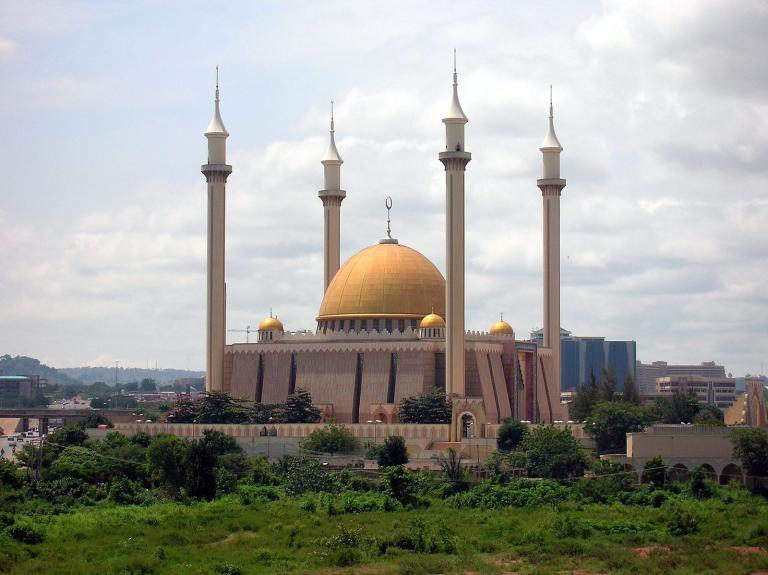
The Abuja National Mosque or Nigerian National Mosque
(Wikimedia Commons public domain)
More from The Manuscript:
The struggle that today’s Muslims have with the massive fact of the West is well illustrated in contemporary Arabic and other Near Eastern literatures. Several issues constantly appear: How is Western scientific rationalism to be balanced against faith? This is the old issue, faced also in the West itself, of reason versus revelation, of faith versus science. And how are traditional ways to be balanced against innovations? What about dress? What about economic progress? How far should it be allowed to damage the real values of the people? Their uncertainty is well illustrated in the title of a book published in 1964 by the well-known Arab thinker Muhammad Qutb: Are We Still Muslims? it asked.[1]
Do any of these struggles sound familiar? I have argued that we in the West have much to learn in observing these issues and how they are dealt with by Muslims because these are our issues as well. The advantage is that they are more clearly drawn, more starkly apparent, in the Near East. When we are making compromises, we are often not even aware that we are doing so because both our religion and our science, our religious values and the secular values that often threaten them, are clothed in the same language. Things are clearer, in some ways, for the Muslim. The ideas that threaten his traditional values often come clothed in a foreign accent. Ours come in clothes like our own, speaking in a familiar tongue.
I do not want to give the impression that Islam is faltering across the board. This would be completely, and even dramatically, untrue. Several million Muslims now live in North America, making Islam a larger religion in our own society than several of the religious denominations that we still call “mainstream.” And Islam is spreading rapidly here. It is also growing spectacularly in Africa. There, I suspect, it may serve the same role that it served for the hanifs in early Arabia: It allows people to choose a religion that is not politically involved with any perceived oppressor. To choose Christianity or even secular consumerism is to align oneself with the West, just as to choose communism was to align oneself with what was once considered the other superpower. But Islam is a religion that, for some reason, comes free of the taint of imperialism or aggression. Why this should be so is not precisely clear. After all, the early Arab conquests, though not unusual by ancient standards, were clearly imperialistic by today’s standard. And although Islam’s record on racial matters is considerably better than Christianity’s, Arab Muslims were centrally involved in the African slave trade until surprisingly recent times.[2] Nevertheless, many blacks in the United States—athletes like Muhammad Ali (Cassius Clay) and Kareem Abdul Jabbar (Lew Alcindor)—have opted to reject their “slave-names” and the “slave religion” that went with them, Christianity, and to adopt Islam and Arabic names instead.
Lamin Sanneh, then of Harvard Divinity School, visited Brigham Young University many years ago for a conference on religion in Africa. Prof. Sanneh, a West African Christian who had received an Islamic education, had much to say about the relations between Islam and Christianity in Africa.[3] One of his insights in particular stood out, and I have continued to reflect upon it ever since: Christians, he observed, go out of their way to translate the Bible into every language they can. And when they take its message, they make every effort to strip it of nonessentials. “You do not need to wear Western clothing to be a Christian,” they point out. “Nor do you need to adopt a Western lifestyle or favor Western politics.” They try to fit Christianity into the local culture with the least possible disruption, hoping to minimize the obstacles that will always be there to hinder people from accepting Christ. And these efforts have been very successful. Christianity is growing quite rapidly in parts of Africa, for instance. But Muslims’ efforts to spread their religion have tended to be quite different. If you want to read the Islamic scripture, they say, you should preferably do it in Arabic. You should pray in Arabic. You should probably adopt an Arabic name. Perhaps, in some areas, you should even begin to dress like an Arab. Islam, in other words, makes little or no effort to fit into the local culture. And Islam is growing more rapidly in Africa than Christianity.
[1] His brother, Sayyid Qutb, is even more famous (or notorious).
[2] See, on this question, Bernard Lewis’s Race and Slavery in the Middle East: An Historical Inquiry (New York: Oxford University Press, 1990).
[3] A version of Prof. Sanneh’s presentation has been published as Lamin Sanneh, “Translatability in Islam and in Christianity in Africa: A Thematic Approach,” in Religion in Africa: Experience and Expression, edited by Thomas D. Blakely, Walter E. A. van Beek, and Dennis L. Thomson (London: James Currey, and Portsmouth, New Hampshire: Heinemann, 1994), 23-45.
Previous Post

April 3, 2018
"When you think about it, it does get spooky."
Next Post
April 3, 2018 "He was naturally fond of the young"
Browse Our Archives
Select a Category Uncategorized
Select a Month October 2026 September 2026 August 2026 July 2026 June 2026 May 2026 April 2026 March 2026 February 2026 January 2026 December 2025 November 2025 October 2025 September 2025 August 2025 July 2025 June 2025 May 2025 April 2025 March 2025 February 2025 January 2025 December 2024 November 2024 October 2024 September 2024 August 2024 July 2024 June 2024 May 2024 April 2024 March 2024 February 2024 January 2024 December 2023 November 2023 October 2023 September 2023 August 2023 July 2023 June 2023 May 2023 April 2023 March 2023 February 2023 January 2023 December 2022 November 2022 October 2022 September 2022 August 2022 July 2022 June 2022 May 2022 April 2022 March 2022 February 2022 January 2022 December 2021 November 2021 October 2021 September 2021 August 2021 July 2021 June 2021 May 2021 April 2021 March 2021 February 2021 January 2021 December 2020 November 2020 October 2020 September 2020 August 2020 July 2020 June 2020 May 2020 April 2020 March 2020 February 2020 January 2020 December 2019 November 2019 October 2019 September 2019 August 2019 July 2019 June 2019 May 2019 April 2019 March 2019 February 2019 January 2019 December 2018 November 2018 October 2018 September 2018 August 2018 July 2018 June 2018 May 2018 April 2018 March 2018 February 2018 January 2018 December 2017 November 2017 October 2017 September 2017 August 2017 July 2017 June 2017 May 2017 April 2017 March 2017 February 2017 January 2017 December 2016 November 2016 October 2016 September 2016 August 2016 July 2016 June 2016 May 2016 April 2016 March 2016 February 2016 January 2016 December 2015 November 2015 October 2015 September 2015 August 2015 July 2015 June 2015 May 2015 April 2015 March 2015 February 2015 January 2015 December 2014 November 2014 March 2014 August 2013 February 2012
Follow Us!
TAKE THE
Religious Wisdom Quiz
In Revelation, how many lampstands does John see?
Select your answer to see how you score.
Four lampstands Twelve lampstands Ten lampstands Seven golden lampstands
Related posts from Sic et Non

Islam in America or Islam versus America?

A basic working chronology of Islamic-era Iran

Actual Data and Actual Crusades

TRENDING AT PATHEOS Latter-day Saint

The Problem with False Prophets
Miller’s Station UMC| 10/18/26| Anchor Verse: Jeremiah 23: 1, 9-23 I...

Emotion in Early Christianity by Andrew Crislip
Andrew Crislip’s Emotion in Early Christianity examines an often overlooked dimension of...

16 Spiritual Touchstones for a More Grounded Life
After decades of spiritual study, here are 16 principles I try...

Catholic Evangelization: Sharing Your Faith Every Day
Welcome back to the Graceful Awakening mini-series called, “From Faith to Mission.” ...

The Pillar of the Boatmen: the Ancient Monument...
The Pillar of the Boatmen is a Romano-Gaulish sculpture that dates from...

In one sense walking into Westminster Abbey is like walking down the...
view all Latter-day Saint blogs
Ad-Free & Subscriber Log-In Subscription Support
- About Us
- 2026 Calendar
- Videos
- Podcasts
- Library of World Religions
- Faith In Media Tracker
- Advertise With Us
- Write for Us
- Privacy Policy
- Terms of Service
- Do Not Sell My Data
- Contact Us
- Radiant Digital
- Manage Newsletter Subscriptions
- Unsubscribe From Notifications
- Sitemap
Copyright 2008-2026, Patheos. All rights reserved.
Subscription Support Ad-Free & Subscriber Log-In
Follow Patheos