
BuddhistCatholicContemplativeEvangelicalGeneral ChristianHinduJewishLatter-day SaintMuslimNew VisionsProgressive Christian
Beliefs
- Buddhist
- Catholic
- Contemplative
- Evangelical
- General Christian
- Hindu
- Jewish
- Latter-day Saint
- More Voices
- Muslim
- New Visions
- Pagan
- Progressive Christian
Topics
- Religion News
- Food and Religion
- Sports and Religion
- Religious Art
- Religious Music and Entertainment
- Religious Events
- History and Religion
- Style and Religion
- Politics and Religion
- Women in Religion
- Recreation Outdoors and Religion
- Business Finance and Religion
- Careers Workplace and Religion
- Education and Religion
- Family Parenting and Religion
- Health Fitness and Religion
- Home and Religion
- Relationships and Religion
- Technology and Religion
- Travel and Religion
Columnists
- Buddhist Columnists
- Business Finance and Religion Columnists
- Careers Workplace and Religion Columnists
- Catholic Columnists
- Contemplative Columnists
- Education and Religion Columnists
- Evangelists Columnists
- Family Parenting and Religion Columnists
- General Christian Columnists
- Health Fitness and Religion Columnists
- Hindu Columnists
- History and Religion Columnists
- Home and Religion Columnists
- Jewish Columnists
- More Voices Columnists
- Latter Day Columnists
- Muslim Columnists
- New Visions Columnists
- Nonreligious Columnists
- Pagan Columnists
- Politics and Religion Columnists
- Progressive Columnists
- Recreation Outdoors and Religion Columnists
- Relationships and Religion Columnists
- Religion News Columnists
- Religious Art Columnists
- Religious Events Columnists
- Religious Music and Entertainment Columnists
- Sports and Religion Columnists
- Style and Religion Columnists
- Technology and Religion Columnists
- Travel and Religion Columnists
- Women in Religion Columnists
Resource Library
- 2026 Calendar
- Library of World Religions
- The 100 Most Holy Places on Earth
- Patheos Answers
- Podcasts
- Videos
- Faith Leaders Database
- Anglican Episcopalian
- Bahai
- Baptist
- Buddhism
- Christianity
- Confucianism
- Eastern Orthodoxy
- Hinduism
- Holiness and Pentecostal
- ISKCON
- Islam
- Judaism
- Lutheran
- Methodist
- The Church of Jesus Christ of Latter-day Saints
- New Age
- Paganism
- Presbytarian and Reformed
- Protestantism
- Religion Behind the Scenes
- Roman Catholic
- Scientology
- Shia Islam
- Sikhism
- Sufism
- Sunni Islam
- Taoism
- Zen
- See all religions
Research Tools
 Ad-Free & Subscriber Log-In Subscription Support
Ad-Free & Subscriber Log-In Subscription Support
Follow Patheos 

- Trending:
- Forgiveness
- |
- Marriage
- |
- Consciousness
- |
- Death Penalty
- |
- Election
- |
- Halloween

- Home
- Latter-day Saint
- A note on the early history of the Iraqi state
A note on the early history of the Iraqi state
Last updated on: April 27, 2018 at 9:33 pm by Dan Peterson
A note on the early history of the Iraqi state 2018-04-27T21:33:24-06:00 Dan Peterson
Patheos Explore the world's faith through different perspectives on religion and spirituality! Patheos has the views of the prevalent religions and spiritualities of the world.
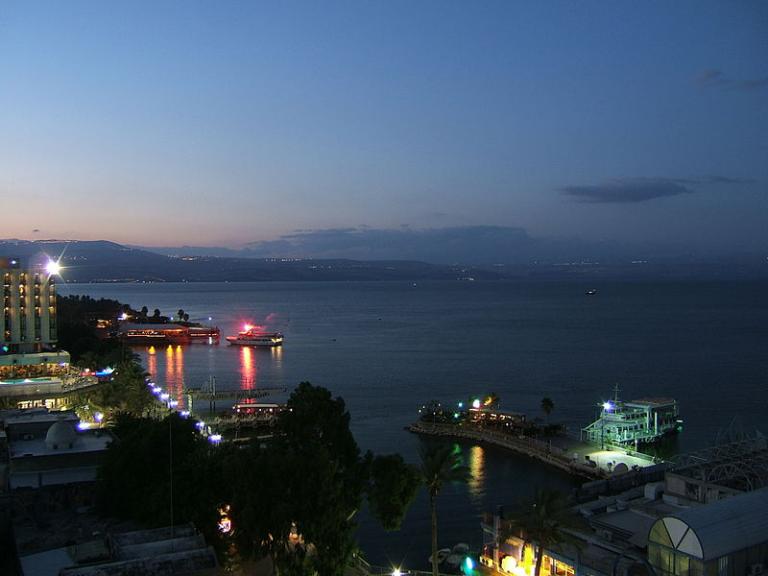
The Sea of Galilee at Tiberias (Wikimedia Commons)
British troops took Mesopotamia away from the Ottoman Turks during the First World War (1914-1918), and in 1920 they received a mandate from the League of Nations to administer the area. Losing little time, they helped the locals to set up a government in 1921, under the name of “Iraq,” and brought in a new ruler to serve as monarch under the title of Faisal I. (This was the same Faisal whose troops the British officer known as “Lawrence of Arabia” had fought in league with against the Turks during the war.) But Faisal and his government were allowed precious little freedom to govern their new nation as they saw fit; Great Britain reserved for itself authority over Iraq’s economic, military, and foreign affairs. In 1932, the League of Nations finally ended the British mandate over Iraq and admitted the newly independent state to membership.
In 1958, though, a group of army officers, led by General Abdul Karim Qasim, overthrew the monarchy, wiping out the royal family and declaring Iraq a republic. It was hardly that, though. The new government ruled by decree. It reversed Iraq’s traditional pro-Western stance and turned to the Communist world for economic and military assistance. (This was about the time that Nasser in Egypt was doing much the same thing.) General Qasim’s government was corrupt and treated the people harshly. Among other things, he dispatched the army against Kurdish separatists in the north in 1961.
In 1963, another military coup assassinated General Qasim. The new revolutionary regime, led by officers who belonged to a political party known as the Ba‘th, promised justice and reform. There was rejoicing in the streets and among Iraqi exiles abroad. Badr Shakir al-Sayyab’s poem “An Ode to Revolutionary Iraq,” written while he was undergoing medical treatment in London, is dramatic testimony to the high hopes that the new leaders of the country aroused in the hearts of many.
The agents of Qasim open fire upon the spring,
But all the illicit wealth they have amassed
Will melt like ice, to be again water,
Gushing along streams and brooks,
Bringing back the luster of life to the dry branches,
Restoring, without loss, all stolen from them in Qasim’s winter. O Iraq!
O Iraq! I can almost glimpse, across the raging seas,
At every turn, in every street and road and alley,
Beyond the ports and highways,
Smiling faces that say: “The Tatars have fled,
God has returned to the mosques with the break of day, A day on which the sun shall never set!”
You are avenged on the traitors at the hands of my people in revolt.
The enemy of the people is cast down to the lowest hell… The doctor hurried to my side.
Was it that he had found a cure for the disease in my body? The doctor hurried to my side and said:
“What is this news from Iraq?
The army has rebelled, Qasim is dead!”
What joyous, health-restoring tidings!
In my joy, I almost stood up, walked, ran,
As if cured.
Rejoice! What liberation, what release!
Rejoice! The army of the Arab nation has torn off the bonds! O my brethren in God, in blood, in Arabism, in hope,
Arise, for tyrants are laid low,
And light has dispelled the night.
Guard well the Arab revolution
That crushed the “comrades,” cast down the oppressors, For Tammuz, his splendor once stolen by the traitor,[1] Has arisen, and Iraq is reborn.[2]
Mercifully, perhaps, al-Sayyab died an early death in 1964, still in London. He never had to see what became of his hoped-for revolution.
[1] Tammuz was an ancient Mesopotamian god of vegetation, who died and was then reborn. Thus, he became a god of resurrection as well. He is mentioned in the Bible at Ezekiel 8:14.
[2] Translated in An Anthology of Modern Arabic Poetry, edited by Mounah A. Khouri and Hamid Algar (Berkeley: University of California Press, 1975), 91-93.
Posted from Tiberias, Israel
Previous Post

April 26, 2018
Objective Proof in Religion
Next Post
April 28, 2018 My Life as a Straw Man
Browse Our Archives
Select a Category Uncategorized
Select a Month October 2026 September 2026 August 2026 July 2026 June 2026 May 2026 April 2026 March 2026 February 2026 January 2026 December 2025 November 2025 October 2025 September 2025 August 2025 July 2025 June 2025 May 2025 April 2025 March 2025 February 2025 January 2025 December 2024 November 2024 October 2024 September 2024 August 2024 July 2024 June 2024 May 2024 April 2024 March 2024 February 2024 January 2024 December 2023 November 2023 October 2023 September 2023 August 2023 July 2023 June 2023 May 2023 April 2023 March 2023 February 2023 January 2023 December 2022 November 2022 October 2022 September 2022 August 2022 July 2022 June 2022 May 2022 April 2022 March 2022 February 2022 January 2022 December 2021 November 2021 October 2021 September 2021 August 2021 July 2021 June 2021 May 2021 April 2021 March 2021 February 2021 January 2021 December 2020 November 2020 October 2020 September 2020 August 2020 July 2020 June 2020 May 2020 April 2020 March 2020 February 2020 January 2020 December 2019 November 2019 October 2019 September 2019 August 2019 July 2019 June 2019 May 2019 April 2019 March 2019 February 2019 January 2019 December 2018 November 2018 October 2018 September 2018 August 2018 July 2018 June 2018 May 2018 April 2018 March 2018 February 2018 January 2018 December 2017 November 2017 October 2017 September 2017 August 2017 July 2017 June 2017 May 2017 April 2017 March 2017 February 2017 January 2017 December 2016 November 2016 October 2016 September 2016 August 2016 July 2016 June 2016 May 2016 April 2016 March 2016 February 2016 January 2016 December 2015 November 2015 October 2015 September 2015 August 2015 July 2015 June 2015 May 2015 April 2015 March 2015 February 2015 January 2015 December 2014 November 2014 March 2014 August 2013 February 2012
Follow Us!
TAKE THE
Religious Wisdom Quiz
Who was made mute and only spoke God's word until Jerusalem fell?
Select your answer to see how you score.
Ezekiel Daniel Jonah Amos
Related posts from Sic et Non

The Iron Gates and the Lion of the...


Learning more about a region of which I've...

From Serbia's "White City," Belgrade
TRENDING AT PATHEOS Latter-day Saint

'Super Scam Me' Exposes AI Jon Bon Jovi...
Leslie Pickett believed she was in a relationship with Jon Bon Jovi....

The Brazilian Remake of Kendricks' 'Flywheel' Opens in...
“Flywheel,” the story that launched the Kendrick Brothers’ filmmaking career is getting...

The Dangers of Gradual Accommodation (Winking at Sin)
Recently, the “law of gradualness” resurfaced during the opening of a weeklong,...

The Iron Gates and the Lion of the...
Yesterday, I didn't finish my report about, well, yesterday. So I'll...

The Image: On the Horror of Capitalism and...
The Image Then went the Pharisees, and took counsel how they might...

We are approaching the date of our new American national holiday: October...
view all Latter-day Saint blogs
Ad-Free & Subscriber Log-In Subscription Support
- About Us
- 2026 Calendar
- Videos
- Podcasts
- Library of World Religions
- Faith In Media Tracker
- Advertise With Us
- Write for Us
- Privacy Policy
- Terms of Service
- Do Not Sell My Data
- Contact Us
- Radiant Digital
- Manage Newsletter Subscriptions
- Unsubscribe From Notifications
- Sitemap
Copyright 2008-2026, Patheos. All rights reserved.
Subscription Support Ad-Free & Subscriber Log-In
Follow Patheos