
BuddhistCatholicContemplativeEvangelicalGeneral ChristianHinduJewishLatter-day SaintMuslimNew VisionsProgressive Christian
Beliefs
- Buddhist
- Catholic
- Contemplative
- Evangelical
- General Christian
- Hindu
- Jewish
- Latter-day Saint
- More Voices
- Muslim
- New Visions
- Pagan
- Progressive Christian
Topics
- Religion News
- Food and Religion
- Sports and Religion
- Religious Art
- Religious Music and Entertainment
- Religious Events
- History and Religion
- Style and Religion
- Politics and Religion
- Women in Religion
- Recreation Outdoors and Religion
- Business Finance and Religion
- Careers Workplace and Religion
- Education and Religion
- Family Parenting and Religion
- Health Fitness and Religion
- Home and Religion
- Relationships and Religion
- Technology and Religion
- Travel and Religion
Columnists
- Buddhist Columnists
- Business Finance and Religion Columnists
- Careers Workplace and Religion Columnists
- Catholic Columnists
- Contemplative Columnists
- Education and Religion Columnists
- Evangelists Columnists
- Family Parenting and Religion Columnists
- General Christian Columnists
- Health Fitness and Religion Columnists
- Hindu Columnists
- History and Religion Columnists
- Home and Religion Columnists
- Jewish Columnists
- More Voices Columnists
- Latter Day Columnists
- Muslim Columnists
- New Visions Columnists
- Nonreligious Columnists
- Pagan Columnists
- Politics and Religion Columnists
- Progressive Columnists
- Recreation Outdoors and Religion Columnists
- Relationships and Religion Columnists
- Religion News Columnists
- Religious Art Columnists
- Religious Events Columnists
- Religious Music and Entertainment Columnists
- Sports and Religion Columnists
- Style and Religion Columnists
- Technology and Religion Columnists
- Travel and Religion Columnists
- Women in Religion Columnists
Resource Library
- 2026 Calendar
- Library of World Religions
- The 100 Most Holy Places on Earth
- Patheos Answers
- Podcasts
- Videos
- Faith Leaders Database
- Anglican Episcopalian
- Bahai
- Baptist
- Buddhism
- Christianity
- Confucianism
- Eastern Orthodoxy
- Hinduism
- Holiness and Pentecostal
- ISKCON
- Islam
- Judaism
- Lutheran
- Methodist
- The Church of Jesus Christ of Latter-day Saints
- New Age
- Paganism
- Presbytarian and Reformed
- Protestantism
- Religion Behind the Scenes
- Roman Catholic
- Scientology
- Shia Islam
- Sikhism
- Sufism
- Sunni Islam
- Taoism
- Zen
- See all religions
Research Tools
 Ad-Free & Subscriber Log-In Subscription Support
Ad-Free & Subscriber Log-In Subscription Support
Follow Patheos 

- Trending:
- Forgiveness
- |
- Marriage
- |
- Consciousness
- |
- Death Penalty
- |
- Election
- |
- Halloween

- Home
- Latter-day Saint
- The Period of the Gunpowder Empires, from 1500 to 1800
The Period of the Gunpowder Empires, from 1500 to 1800
Last updated on: March 21, 2018 at 12:17 am by Dan Peterson
The Period of the Gunpowder Empires, from 1500 to 1800 2018-03-21T00:17:22-06:00 Dan Peterson
Patheos Explore the world's faith through different perspectives on religion and spirituality! Patheos has the views of the prevalent religions and spiritualities of the world.
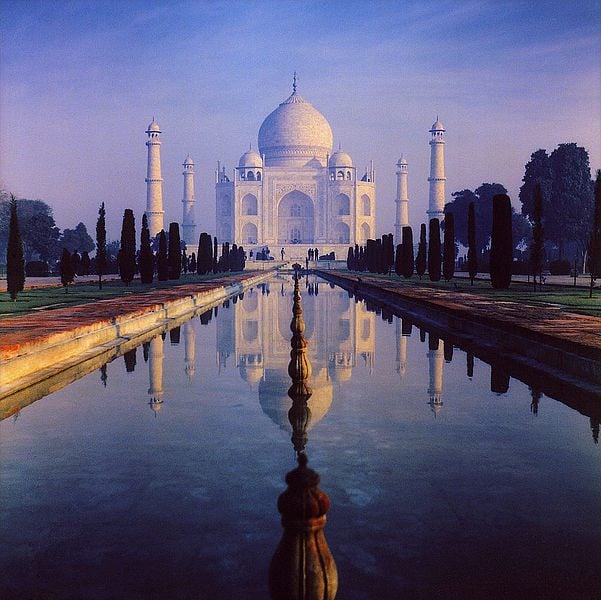
The Taj Mahal, near Agra, Uttar Pradesh, India (Wikimedia Commons)
Coming still closer to the present:
As might be guessed from Hodgson’s title for this period, the important fact about the time was gunpowder. This new technology, borrowed from the West (and, ultimately, from China), allowed the existence of greater states and thus permitted greater centralization of power. Putting it less abstractly, the states that adopted the new military technology gobbled up the states that did not. What marks the period, then, is a partial recovery from the political fragmentation that was the special characteristic of the Middle Periods. But if that seems like a healthy development for the Muslims, it should be remembered that the period also saw the beginning of the spectacular rise of the West and its expansion in every direction. Muslim rulers were not aware of it yet, but their states were headed for turmoil.
Three notable Islamic empires flourished during the “Gunpowder Period.” These were the Mogul or Mughal Empire in India, the Safavid Empire in Persia, and the Ottoman Empire in the remainder of the Islamic world. I shall have something to say about each one of these.
As their name indicates, the Mughal or Mogul dynasty derived from Mongol stock, converted to the religion of Islam. They ruled most of India and Afghanistan during the 1500s and 1600s. The most glorious of their sultans was the great city-builder and patron of the arts Akbar the Great, who reigned from 1556 to 1605 and was thus a contemporary of Queen Elizabeth of England. But the best known fact about the Mughals in the West is unquestionably the building of the beautiful Taj Mahal, one of the world’s finest pieces of architecture, during the reign of Shah Jahan (1627-1658).
Early in the 1700s, the empire began to break up. Nevertheless, the Mughals continued to rule a small kingdom centered in the city of Delhi until the British conquest of India in the nineteenth century. It is worth stopping for a moment to consider the remarkable fact that the British were able to complete so stunning an achievement, to reflect that we are tempted simply to say “the British conquest of India” without being properly astonished at the improbability of it. Yet it is amazing to realize that the small island nation of Great Britain was able to conquer the entire Indian subcontinent, thousands of miles away, and to hold it for a long period of time. That they were able to do so is yet another example of the fact that disunity invites conquest. If the Indians had been united and the Mughal Empire intact, the British could never have dreamed of controlling that vast nation.
The Safavis, a Turkish tribe, gained control over areas of Iran in the late 1400s and early 1500s. But the official beginning of the Safavid Empire must be placed in the year 1501, when the tribe’s leader, Ismail Safavi, was crowned shah, or king. It is the Safavids who made Iran a Shiite nation and linked Shiism with the Persians in a firm bond that has never been challenged in the intervening centuries. The greatest ruler of the dynasty was Shah Abbas, who reigned between 1587 and 1629 and was thus himself a younger contemporary of Elizabeth I. He and his successors strongly supported architecture and the other arts, and—something that is considerably more rare—showed remarkable good taste in doing so. The blue and gold mosques of Iran, the Persian miniature paintings that were used to illustrate books of the period, and the magnificent carpets produced by the country’s craftsmen all testify to the remarkable legacy of civilization given to the world by Iran. In 1598, Shah Abbas made the city of Isfahan his capital and devoted himself to planning parks and mosques and large public squares. It rapidly became known as one of the world’s most beautiful cities. But beauty does not abide forever. In 1722, little more than a century after Shah Abbas, fierce Afghan armies invaded Iran and conquered the city, putting an end to the Safavid dynasty.
Previous Post

March 18, 2018
"As seedlings of God"
Next Post
March 19, 2018 LDS Missons and "Eunuchs for the Kingdom"
Browse Our Archives
Select a Category Uncategorized
Select a Month October 2026 September 2026 August 2026 July 2026 June 2026 May 2026 April 2026 March 2026 February 2026 January 2026 December 2025 November 2025 October 2025 September 2025 August 2025 July 2025 June 2025 May 2025 April 2025 March 2025 February 2025 January 2025 December 2024 November 2024 October 2024 September 2024 August 2024 July 2024 June 2024 May 2024 April 2024 March 2024 February 2024 January 2024 December 2023 November 2023 October 2023 September 2023 August 2023 July 2023 June 2023 May 2023 April 2023 March 2023 February 2023 January 2023 December 2022 November 2022 October 2022 September 2022 August 2022 July 2022 June 2022 May 2022 April 2022 March 2022 February 2022 January 2022 December 2021 November 2021 October 2021 September 2021 August 2021 July 2021 June 2021 May 2021 April 2021 March 2021 February 2021 January 2021 December 2020 November 2020 October 2020 September 2020 August 2020 July 2020 June 2020 May 2020 April 2020 March 2020 February 2020 January 2020 December 2019 November 2019 October 2019 September 2019 August 2019 July 2019 June 2019 May 2019 April 2019 March 2019 February 2019 January 2019 December 2018 November 2018 October 2018 September 2018 August 2018 July 2018 June 2018 May 2018 April 2018 March 2018 February 2018 January 2018 December 2017 November 2017 October 2017 September 2017 August 2017 July 2017 June 2017 May 2017 April 2017 March 2017 February 2017 January 2017 December 2016 November 2016 October 2016 September 2016 August 2016 July 2016 June 2016 May 2016 April 2016 March 2016 February 2016 January 2016 December 2015 November 2015 October 2015 September 2015 August 2015 July 2015 June 2015 May 2015 April 2015 March 2015 February 2015 January 2015 December 2014 November 2014 March 2014 August 2013 February 2012
Follow Us!
TAKE THE
Religious Wisdom Quiz
How old was Jesus when He started His public ministry?
Select your answer to see how you score.
About 12 About 30 About 21 About 50
Related posts from Sic et Non

Islam in America or Islam versus America?

A basic working chronology of Islamic-era Iran

Actual Data and Actual Crusades

TRENDING AT PATHEOS Latter-day Saint

Methodist Central Hall and Westminster Abbey
Situated on the same square is Methodist Central Hall and Westminster Abbey. ...

57th Dove Awards Honor Dolly Parton, Crown New...
On gospel music’s biggest night, the 57th annual GMA Dove Awards honored...

The First Eucharistic Controversy: Christ’s Real Presence
For Catholics, the Eucharist is the source and summit of the Christian...

What a Stop Sign Can Teach Us About...
How to Make a Decision When You Can't Hear God Main point:...

Archdiocese Hosts Military Marriage Retreat in Germany
RASTATT, Germany — The transient military lifestyle, with its frequent deployments and...

Nearly every morning, I make the drive to Detroit with my high-school-age...
view all Latter-day Saint blogs
Ad-Free & Subscriber Log-In Subscription Support
- About Us
- 2026 Calendar
- Videos
- Podcasts
- Library of World Religions
- Faith In Media Tracker
- Advertise With Us
- Write for Us
- Privacy Policy
- Terms of Service
- Do Not Sell My Data
- Contact Us
- Radiant Digital
- Manage Newsletter Subscriptions
- Unsubscribe From Notifications
- Sitemap
Copyright 2008-2026, Patheos. All rights reserved.
Subscription Support Ad-Free & Subscriber Log-In
Follow Patheos