
BuddhistCatholicContemplativeEvangelicalGeneral ChristianHinduJewishLatter-day SaintMuslimNew VisionsProgressive Christian
Beliefs
- Buddhist
- Catholic
- Contemplative
- Evangelical
- General Christian
- Hindu
- Jewish
- Latter-day Saint
- More Voices
- Muslim
- New Visions
- Pagan
- Progressive Christian
Topics
- Religion News
- Food and Religion
- Sports and Religion
- Religious Art
- Religious Music and Entertainment
- Religious Events
- History and Religion
- Style and Religion
- Politics and Religion
- Women in Religion
- Recreation Outdoors and Religion
- Business Finance and Religion
- Careers Workplace and Religion
- Education and Religion
- Family Parenting and Religion
- Health Fitness and Religion
- Home and Religion
- Relationships and Religion
- Technology and Religion
- Travel and Religion
Columnists
- Buddhist Columnists
- Business Finance and Religion Columnists
- Careers Workplace and Religion Columnists
- Catholic Columnists
- Contemplative Columnists
- Education and Religion Columnists
- Evangelists Columnists
- Family Parenting and Religion Columnists
- General Christian Columnists
- Health Fitness and Religion Columnists
- Hindu Columnists
- History and Religion Columnists
- Home and Religion Columnists
- Jewish Columnists
- More Voices Columnists
- Latter Day Columnists
- Muslim Columnists
- New Visions Columnists
- Nonreligious Columnists
- Pagan Columnists
- Politics and Religion Columnists
- Progressive Columnists
- Recreation Outdoors and Religion Columnists
- Relationships and Religion Columnists
- Religion News Columnists
- Religious Art Columnists
- Religious Events Columnists
- Religious Music and Entertainment Columnists
- Sports and Religion Columnists
- Style and Religion Columnists
- Technology and Religion Columnists
- Travel and Religion Columnists
- Women in Religion Columnists
Resource Library
- 2026 Calendar
- Library of World Religions
- The 100 Most Holy Places on Earth
- Patheos Answers
- Podcasts
- Videos
- Faith Leaders Database
- Anglican Episcopalian
- Bahai
- Baptist
- Buddhism
- Christianity
- Confucianism
- Eastern Orthodoxy
- Hinduism
- Holiness and Pentecostal
- ISKCON
- Islam
- Judaism
- Lutheran
- Methodist
- The Church of Jesus Christ of Latter-day Saints
- New Age
- Paganism
- Presbytarian and Reformed
- Protestantism
- Religion Behind the Scenes
- Roman Catholic
- Scientology
- Shia Islam
- Sikhism
- Sufism
- Sunni Islam
- Taoism
- Zen
- See all religions
Research Tools
 Ad-Free & Subscriber Log-In Subscription Support
Ad-Free & Subscriber Log-In Subscription Support
Follow Patheos 

- Trending:
- Forgiveness
- |
- Marriage
- |
- Consciousness
- |
- Death Penalty
- |
- Election
- |
- Halloween

- Home
- Latter-day Saint
- The Late Middle Period, from 1258 to 1500
The Late Middle Period, from 1258 to 1500
Last updated on: March 22, 2018 at 8:15 pm by Dan Peterson
The Late Middle Period, from 1258 to 1500 2018-03-22T20:15:59-06:00 Dan Peterson
Patheos Explore the world's faith through different perspectives on religion and spirituality! Patheos has the views of the prevalent religions and spiritualities of the world.
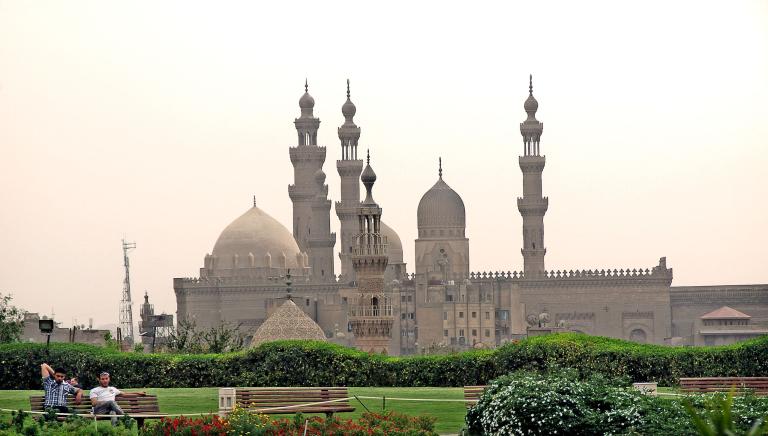
A scene in Cairo, near the Mosque of al-Rifa‘i
(Wikimedia CC photo by David Sánchez Núñez)
Still moving systematically forward:
As is to be expected, Hodgson’s “Late Middle Period” of Islamic history is marked by Mongol dominance. The problem of political fragmentation was still there, as was the problem of the military elite controlling a population whose language and culture they never fully grasped. But the identity of the foreign ruling class had changed. The Turks who dominated the Early Middle Period were now replaced in many areas (though not all) by Mongols.
Like the Crusaders before them, the Mongols were intruders who encountered a vastly superior civilization. Soon, they were smitten by it—that is, with the portion that they themselves had not smitten—and began to take on Islamic ways. Indeed, the Mongols who settled in the Islamic world actually converted to the religion of Muhammad. Like the other regimes of the Middle Periods, the Mongols richly patronized the arts. (Hodgson calls these “military-patronage states.”) The maidens looking out from the miniature paintings of this new era have pale, round faces, with almond eyes—the Mongol ideal of beauty. But, in keeping with the spirit or the demon of the age, the new conquerors could not maintain unity. Several Mongol empires resulted, including the White Horde, the Golden Horde, the Il-Khanid empire, and the Chaghatay empire. But these were, for the most part, in the Persian area of Islam that lay to the East. Thus, they are somewhat beyond the scope of the present book, which is focused on the Arabs as children and heirs of Abraham. We will return to the Arab world.
In Egypt and Syria, the stock of the Mamluks was definitely on the rise. The desolation of Baghdad in 1258 left Cairo the greatest of Muslim cities. It had been founded only in 969, by the Fatimids, and so was a comparatively new city by Near Eastern standards. (It was built near the old seventh-century Arab military garrison town of Fustat, which was built near an even older Christian settlement. And the capital of the Old Kingdom pharaohs, Memphis, with its great pyramids across the Nile, was not far away. Cairo itself, though, was new.) But the city rose to its new status. A new group of Mamluks, loosely called “Circassians,” from a region in the Caucasus mountains, were passionate builders and patrons of art. The years after 1200 A.D. saw Cairo’s greatest blossoming as a Mamluk city, overflowing with great wealth and lovely architecture.
For all its elegance and appeal, there were factors that would make Circassian blossoming a brief and transitory thing. In the middle of the 14th century, the Black Death swept through the Near East, killing hundreds of thousands, leaving many cities and towns at a fraction of their former populations. Still, the lavish building programs of the Circassian Mamluks continued. Each sultan attempted to outshine his predecessor in the glory of the mosques he built and in the magnificence of the mausoleum he constructed to be his own final resting place. (Something in the air of Egypt seems to encourage the building of spectacular tombs.) Members of the ruling elite vied with one another in their patronage of architecture. Such efforts required large sums of money, but the economic base of the country was now weaker than before. So the Egyptian regime turned to taxes and to tariffs on trade, desperate for new revenue. But their demands grew so high that European merchants began to seek cheaper ways to do business, ways that would not require them to cross Mamluk domains. When, in 1498, Vasco da Gama found the sea route around the cape of Africa to India, the Egyptian economy took yet another blow.
Previous Post

March 17, 2018
Thinking of Hugh B. Brown
Next Post
March 18, 2018 "So I ate his lunch!"
Browse Our Archives
Select a Category Uncategorized
Select a Month October 2026 September 2026 August 2026 July 2026 June 2026 May 2026 April 2026 March 2026 February 2026 January 2026 December 2025 November 2025 October 2025 September 2025 August 2025 July 2025 June 2025 May 2025 April 2025 March 2025 February 2025 January 2025 December 2024 November 2024 October 2024 September 2024 August 2024 July 2024 June 2024 May 2024 April 2024 March 2024 February 2024 January 2024 December 2023 November 2023 October 2023 September 2023 August 2023 July 2023 June 2023 May 2023 April 2023 March 2023 February 2023 January 2023 December 2022 November 2022 October 2022 September 2022 August 2022 July 2022 June 2022 May 2022 April 2022 March 2022 February 2022 January 2022 December 2021 November 2021 October 2021 September 2021 August 2021 July 2021 June 2021 May 2021 April 2021 March 2021 February 2021 January 2021 December 2020 November 2020 October 2020 September 2020 August 2020 July 2020 June 2020 May 2020 April 2020 March 2020 February 2020 January 2020 December 2019 November 2019 October 2019 September 2019 August 2019 July 2019 June 2019 May 2019 April 2019 March 2019 February 2019 January 2019 December 2018 November 2018 October 2018 September 2018 August 2018 July 2018 June 2018 May 2018 April 2018 March 2018 February 2018 January 2018 December 2017 November 2017 October 2017 September 2017 August 2017 July 2017 June 2017 May 2017 April 2017 March 2017 February 2017 January 2017 December 2016 November 2016 October 2016 September 2016 August 2016 July 2016 June 2016 May 2016 April 2016 March 2016 February 2016 January 2016 December 2015 November 2015 October 2015 September 2015 August 2015 July 2015 June 2015 May 2015 April 2015 March 2015 February 2015 January 2015 December 2014 November 2014 March 2014 August 2013 February 2012
Follow Us!
TAKE THE
Religious Wisdom Quiz
Who was lowered through a roof to be healed by Jesus?
Select your answer to see how you score.
A paralyzed man Jairus' daughter A blind man A leper
Related posts from Sic et Non

Islam in America or Islam versus America?

A basic working chronology of Islamic-era Iran

Actual Data and Actual Crusades

TRENDING AT PATHEOS Latter-day Saint

The First Eucharistic Controversy: Christ’s Real Presence
For Catholics, the Eucharist is the source and summit of the Christian...

What a Stop Sign Can Teach Us About...
How to Make a Decision When You Can't Hear God Main point:...

Archdiocese Hosts Military Marriage Retreat in Germany
RASTATT, Germany — The transient military lifestyle, with its frequent deployments and...

Nearly every morning, I make the drive to Detroit with my high-school-age...

The Real AI Story Is Adoption Without Trust
Artificial intelligence has crossed a political threshold. It is no longer a...

A new article, written by Jeff Lindsay and Gale L. Pooley,...
view all Latter-day Saint blogs
Ad-Free & Subscriber Log-In Subscription Support
- About Us
- 2026 Calendar
- Videos
- Podcasts
- Library of World Religions
- Faith In Media Tracker
- Advertise With Us
- Write for Us
- Privacy Policy
- Terms of Service
- Do Not Sell My Data
- Contact Us
- Radiant Digital
- Manage Newsletter Subscriptions
- Unsubscribe From Notifications
- Sitemap
Copyright 2008-2026, Patheos. All rights reserved.
Subscription Support Ad-Free & Subscriber Log-In
Follow Patheos