
BuddhistCatholicContemplativeEvangelicalGeneral ChristianHinduJewishLatter-day SaintMuslimNew VisionsProgressive Christian
Beliefs
- Buddhist
- Catholic
- Contemplative
- Evangelical
- General Christian
- Hindu
- Jewish
- Latter-day Saint
- More Voices
- Muslim
- New Visions
- Pagan
- Progressive Christian
Topics
- Religion News
- Food and Religion
- Sports and Religion
- Religious Art
- Religious Music and Entertainment
- Religious Events
- History and Religion
- Style and Religion
- Politics and Religion
- Women in Religion
- Recreation Outdoors and Religion
- Business Finance and Religion
- Careers Workplace and Religion
- Education and Religion
- Family Parenting and Religion
- Health Fitness and Religion
- Home and Religion
- Relationships and Religion
- Technology and Religion
- Travel and Religion
Columnists
- Buddhist Columnists
- Business Finance and Religion Columnists
- Careers Workplace and Religion Columnists
- Catholic Columnists
- Contemplative Columnists
- Education and Religion Columnists
- Evangelists Columnists
- Family Parenting and Religion Columnists
- General Christian Columnists
- Health Fitness and Religion Columnists
- Hindu Columnists
- History and Religion Columnists
- Home and Religion Columnists
- Jewish Columnists
- More Voices Columnists
- Latter Day Columnists
- Muslim Columnists
- New Visions Columnists
- Nonreligious Columnists
- Pagan Columnists
- Politics and Religion Columnists
- Progressive Columnists
- Recreation Outdoors and Religion Columnists
- Relationships and Religion Columnists
- Religion News Columnists
- Religious Art Columnists
- Religious Events Columnists
- Religious Music and Entertainment Columnists
- Sports and Religion Columnists
- Style and Religion Columnists
- Technology and Religion Columnists
- Travel and Religion Columnists
- Women in Religion Columnists
Resource Library
- 2026 Calendar
- Library of World Religions
- The 100 Most Holy Places on Earth
- Patheos Answers
- Podcasts
- Videos
- Faith Leaders Database
- Anglican Episcopalian
- Bahai
- Baptist
- Buddhism
- Christianity
- Confucianism
- Eastern Orthodoxy
- Hinduism
- Holiness and Pentecostal
- ISKCON
- Islam
- Judaism
- Lutheran
- Methodist
- The Church of Jesus Christ of Latter-day Saints
- New Age
- Paganism
- Presbytarian and Reformed
- Protestantism
- Religion Behind the Scenes
- Roman Catholic
- Scientology
- Shia Islam
- Sikhism
- Sufism
- Sunni Islam
- Taoism
- Zen
- See all religions
Research Tools
 Ad-Free & Subscriber Log-In Subscription Support
Ad-Free & Subscriber Log-In Subscription Support
Follow Patheos 

- Trending:
- Forgiveness
- |
- Marriage
- |
- Consciousness
- |
- Death Penalty
- |
- Election
- |
- Halloween

- Home
- Latter-day Saint
- “We are stardust, we are golden, we are billion-year-old carbon”
“We are stardust, we are golden, we are billion-year-old carbon”
Last updated on: January 6, 2018 at 3:03 pm by Dan Peterson
“We are stardust, we are golden, we are billion-year-old carbon” 2018-01-06T15:03:08-07:00 Dan Peterson
Patheos Explore the world's faith through different perspectives on religion and spirituality! Patheos has the views of the prevalent religions and spiritualities of the world.
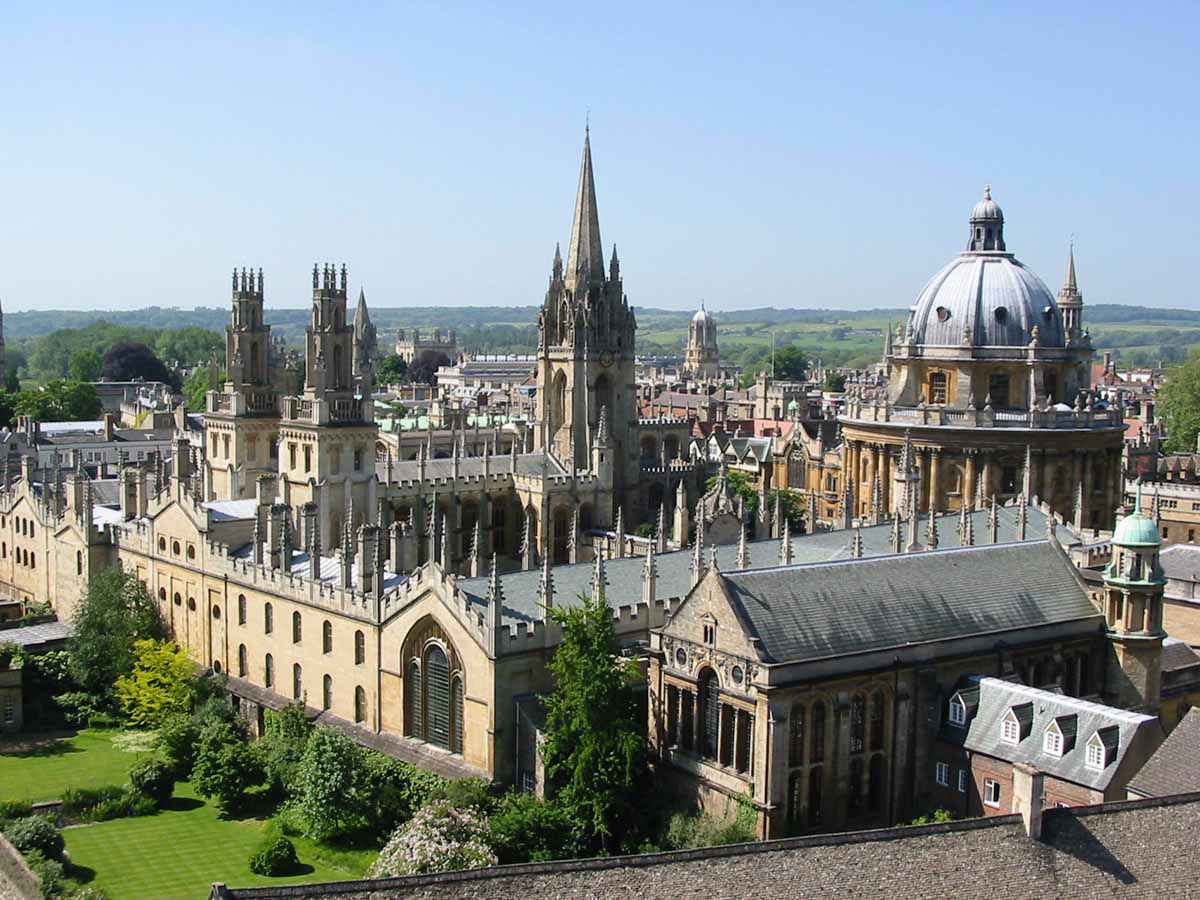
A scene in the English Bible Belt town of Oxford (Wikimedia Commons public domain)
Extracted from Alister E. McGrath, Surprised by Meaning: Science, Faith, and How We Make Sense of Things (Louisville: Westminster John Knox Press, 2011):
One of the most significant scientific discoveries of the last generation is that the universe was pregnant with the possibility of human existence right from its very start. The laws of nature seem to be “fine-tuned” in order to make life possible. As we noted in an earlier chapter, the early universe produced nearly nothing other than hydrogen and helium. Yet the chemistry upon which life depends is ultimately the chemistry of carbon, and there is only one place in the whole universe where carbon can be created: inside stars. If the fundamental constants of nature were not what they actually are, stars might never have formed. The heavier elements on which life depends — such as carbon, nitrogen, and oxygen — were all created within stellar cores.
So how are we to account for the origins of life? Nobody really knows the answer to this question. What can be said, however, is that biochemically critical elements such as carbon, nitrogen, and oxygen did not form, and could not have formed, in the early history of the universe. Their existence is the consequence of the “clumping” or “accretion” of material into stars, with the subsequent initiation of nuclear fusion reactions. Carbon is essential to life. Yet its origins depend totally on how the universe developed after the big bang. The ratio of the gravitational binding force to rest-mass energy is such that it permitted the gradual “clumping” of material into larger bodies: the stars. Stars form as a result of turbulence in giant clouds of matter within the tenuous interstellar medium. All the heavier elements of the universe, from carbon upward, are believed to be the result of nuclear fusion within stars, and not to be a direct outcome of the primordial fireball. Without the formation of stars, the universe would have been limited to hydrogen and helium, with only a tiny percentage of other elements, such as lithium and beryllium.
The nucleosynthesis of carbon, nitrogen, and oxygen must therefore be regarded as essential to the emergence of life. (66-67)
To be continued.
“We are stardust,” sang Crosby, Stills, and Nash (and, before them, the song’s composer, the great Joni Mitchell). “We are golden. We are billion-year-old carbon.”
They were literally right, of course. Except that they put the age of our carbon quite a bit too low.
By the way: I’ve been ridiculed, of late, for my embarrassing scientific ignorance and for my invariable dependence, in my blog entries regarding science, on a comical assortment of flakes, charlatans, and pseudo-scientists.
I hope that those leveling the accusation aren’t referring to the various Nobel laureates that I’ve often cited here, or to people like Francis Collins, Hans-Georg Gadamer, F. A. von Hayek, Ian Hutchinson, and my former California neighbor Allan Sandage. But, since those are the kinds of people to whom I mostly refer on scientific subjects, it seems that they are. Wow.
So here’s the background on Alister McGrath: It’s true that he’s an Anglican priest and that he’s a theologian at the notoriously anti-scientific obscurantist Bible college called “Oxford University,” and it’s true that he holds Oxford doctorates in the non-scientific fields of theology and intellectual history. Before those, though, he had also earned a D.Phil. — alas, again from the lowly University of Oxford, that infamous hotbed of ignorant cranks — in molecular biophysics.
***
My friend and neighbor Tom Pittman, a Native American from Alaska, kindly called this interesting item to my attention a few days ago:
“Alaskan infant’s DNA tells story of ‘first Americans'”
Some critics of the Church, by the way — not Tom — are hailing it as yet another nail in the coffin of the Book of Mormon. I confess that I can’t see why.
Previous Post

January 6, 2018
A preliminary note on Islamic moral teaching
Next Post
January 6, 2018 The Book of Mormon, rich complexity, and martyrdom
Browse Our Archives
Select a Category Uncategorized
Select a Month October 2026 September 2026 August 2026 July 2026 June 2026 May 2026 April 2026 March 2026 February 2026 January 2026 December 2025 November 2025 October 2025 September 2025 August 2025 July 2025 June 2025 May 2025 April 2025 March 2025 February 2025 January 2025 December 2024 November 2024 October 2024 September 2024 August 2024 July 2024 June 2024 May 2024 April 2024 March 2024 February 2024 January 2024 December 2023 November 2023 October 2023 September 2023 August 2023 July 2023 June 2023 May 2023 April 2023 March 2023 February 2023 January 2023 December 2022 November 2022 October 2022 September 2022 August 2022 July 2022 June 2022 May 2022 April 2022 March 2022 February 2022 January 2022 December 2021 November 2021 October 2021 September 2021 August 2021 July 2021 June 2021 May 2021 April 2021 March 2021 February 2021 January 2021 December 2020 November 2020 October 2020 September 2020 August 2020 July 2020 June 2020 May 2020 April 2020 March 2020 February 2020 January 2020 December 2019 November 2019 October 2019 September 2019 August 2019 July 2019 June 2019 May 2019 April 2019 March 2019 February 2019 January 2019 December 2018 November 2018 October 2018 September 2018 August 2018 July 2018 June 2018 May 2018 April 2018 March 2018 February 2018 January 2018 December 2017 November 2017 October 2017 September 2017 August 2017 July 2017 June 2017 May 2017 April 2017 March 2017 February 2017 January 2017 December 2016 November 2016 October 2016 September 2016 August 2016 July 2016 June 2016 May 2016 April 2016 March 2016 February 2016 January 2016 December 2015 November 2015 October 2015 September 2015 August 2015 July 2015 June 2015 May 2015 April 2015 March 2015 February 2015 January 2015 December 2014 November 2014 March 2014 August 2013 February 2012
Follow Us!
TAKE THE
Religious Wisdom Quiz
True or False: 1 John teaches that if we say we have no sin, we deceive ourselves.
Select your answer to see how you score.
FALSE TRUE
Related posts from Sic et Non

The Iron Gates and the Lion of the...


Learning more about a region of which I've...

From Serbia's "White City," Belgrade
TRENDING AT PATHEOS Latter-day Saint

In one sense walking into Westminster Abbey is like walking down the...

'Super Scam Me' Exposes AI Jon Bon Jovi...
Leslie Pickett believed she was in a relationship with Jon Bon Jovi....

The Brazilian Remake of Kendricks' 'Flywheel' Opens in...
“Flywheel,” the story that launched the Kendrick Brothers’ filmmaking career is getting...

The Dangers of Gradual Accommodation (Winking at Sin)
Recently, the “law of gradualness” resurfaced during the opening of a weeklong,...

The Iron Gates and the Lion of the...
Yesterday, I didn't finish my report about, well, yesterday. So I'll...

The Image: On the Horror of Capitalism and...
The Image Then went the Pharisees, and took counsel how they might...
view all Latter-day Saint blogs
Ad-Free & Subscriber Log-In Subscription Support
- About Us
- 2026 Calendar
- Videos
- Podcasts
- Library of World Religions
- Faith In Media Tracker
- Advertise With Us
- Write for Us
- Privacy Policy
- Terms of Service
- Do Not Sell My Data
- Contact Us
- Radiant Digital
- Manage Newsletter Subscriptions
- Unsubscribe From Notifications
- Sitemap
Copyright 2008-2026, Patheos. All rights reserved.
Subscription Support Ad-Free & Subscriber Log-In
Follow Patheos