
BuddhistCatholicContemplativeEvangelicalGeneral ChristianHinduJewishLatter-day SaintMuslimNew VisionsProgressive Christian
Beliefs
- Buddhist
- Catholic
- Contemplative
- Evangelical
- General Christian
- Hindu
- Jewish
- Latter-day Saint
- More Voices
- Muslim
- New Visions
- Pagan
- Progressive Christian
Topics
- Religion News
- Food and Religion
- Sports and Religion
- Religious Art
- Religious Music and Entertainment
- Religious Events
- History and Religion
- Style and Religion
- Politics and Religion
- Women in Religion
- Recreation Outdoors and Religion
- Business Finance and Religion
- Careers Workplace and Religion
- Education and Religion
- Family Parenting and Religion
- Health Fitness and Religion
- Home and Religion
- Relationships and Religion
- Technology and Religion
- Travel and Religion
Columnists
- Buddhist Columnists
- Business Finance and Religion Columnists
- Careers Workplace and Religion Columnists
- Catholic Columnists
- Contemplative Columnists
- Education and Religion Columnists
- Evangelists Columnists
- Family Parenting and Religion Columnists
- General Christian Columnists
- Health Fitness and Religion Columnists
- Hindu Columnists
- History and Religion Columnists
- Home and Religion Columnists
- Jewish Columnists
- More Voices Columnists
- Latter Day Columnists
- Muslim Columnists
- New Visions Columnists
- Nonreligious Columnists
- Pagan Columnists
- Politics and Religion Columnists
- Progressive Columnists
- Recreation Outdoors and Religion Columnists
- Relationships and Religion Columnists
- Religion News Columnists
- Religious Art Columnists
- Religious Events Columnists
- Religious Music and Entertainment Columnists
- Sports and Religion Columnists
- Style and Religion Columnists
- Technology and Religion Columnists
- Travel and Religion Columnists
- Women in Religion Columnists
Resource Library
- 2026 Calendar
- Library of World Religions
- The 100 Most Holy Places on Earth
- Patheos Answers
- Podcasts
- Videos
- Faith Leaders Database
- Anglican Episcopalian
- Bahai
- Baptist
- Buddhism
- Christianity
- Confucianism
- Eastern Orthodoxy
- Hinduism
- Holiness and Pentecostal
- ISKCON
- Islam
- Judaism
- Lutheran
- Methodist
- The Church of Jesus Christ of Latter-day Saints
- New Age
- Paganism
- Presbytarian and Reformed
- Protestantism
- Religion Behind the Scenes
- Roman Catholic
- Scientology
- Shia Islam
- Sikhism
- Sufism
- Sunni Islam
- Taoism
- Zen
- See all religions
Research Tools
 Ad-Free & Subscriber Log-In Subscription Support
Follow Patheos 

- Trending:
- Advent
- |
- Forgiveness
- |
- Thanksgiving
- |
- Election
- |
- Seasonal Holidays
- |
- Marriage
 Off the Cushion
- Home
- Buddhist
- His Holiness the Dalai Lama’s Support for Gay Marriage in Light of Past Comments
His Holiness the Dalai Lama’s Support for Gay Marriage in Light of Past Comments
Last updated on: March 16, 2014 at 2:24 pm by dannyfisher
His Holiness the Dalai Lama’s Support for Gay Marriage in Light of Past Comments 2014-03-16T14:24:37-07:00 dannyfisher
Patheos Explore the world's faith through different perspectives on religion and spirituality! Patheos has the views of the prevalent religions and spiritualities of the world.

Shambhala Sun Space recently noted His Holiness the Dalai Lama’s support for gay marriage (and denunciation of violence against and harassment of LGBTQI people) during an interview with Larry King (see below). Additionally, Barbara O’Brien at Barbara’s About Buddhism Blog reminds us that His Holiness’ past comments on homosexuality have not always read as supportive.
In fact, Barbara sees His Holiness’ comments to King as inconsistent with what he has said in the past on the matter. She provides a page “clarifying” the position of His Holiness on this matter. It bears mentioning, however, that this page misses a couple of noteworthy points in the Dalai Lama’s evolution on LGBTQI issues.
To set the stage, one of the things I pointed out in a post on this matter at my personal website five years ago is how His Holiness has evolved on a number of positions, making it often problematic to hold him to things he has said in the past. Consider, for example, his stance on the Tibet issue twenty years ago to his stance now. He’s not a particularly rigid thinker, and has demonstrated that he’s open to being shown when he is wrong.
That said, I think the late Steve Peskind, who created the Buddhist AIDS Project, was right to observe in a piece he wrote for Shambhala Sun that there seem to have been two different kinds of statements coming from His Holiness on the matter of homosexuality. The first kind are quite supportive. In particular, Peskind points to statements made by His Holiness as far back as twenty years ago, in a 1994 interview with OUT Magazine:
If someone comes to me and asks whether it is okay or not, I will first ask if you have some religious vows to uphold. Then my next question is, What is your companion’s opinion? If you both agree, then I think I would say, if two males or two females voluntarily agree to have mutual satisfaction without further implication of harming others, then it is okay.
His Holiness has also made it a special point in recent years to include the LGBTQI community in his comments about universal human rights. In 2006, for example, his office sent a special message to the XXIII World Conference of the International Lesbian and Gay Association (ILGA), saying:
His Holiness welcomes the special attention given at this conference to religious tolerance and respect for diversity.
His Holiness is greatly concerned by reports of violence and discrimination against gay, lesbian, bisexual and transgender people.
His Holiness opposes violence and discrimination based on sexual orientation and gender identity and urges respect, tolerance, and the full recognition of human rights for all.
In light of such statements and affirmations, His Holiness’ recent, explicit support for gay marriage is not at all out of character or inconsistent.
Elsewhere, however, generally in the context of conversations about traditional Buddhist thought and practice specifically, His Holiness has made statements of a less friendly-sounding nature. Some of them have even been downright confusing. Peskind points to a passage in 1996’s Beyond Dogma: Dialogues and Discourses, which records His Holiness as having said:
A sexual act is deemed proper when the couples use the organs intended for sexual intercourse and nothing else….Homosexuality, whether it is between men or between women, is not improper in itself. What is improper is the use of organs already defined as inappropriate for sexual contact. Is this clear?
With this answer not at all clear to Peskind and many others, His Holiness was invited to participate in a private meeting between with seven gay and lesbian leaders in San Francisco in 1997. He agreed and clarified his remarks there by saying:
We have to make a distinction between believers and unbelievers. From a Buddhist point of view, men-to-men and women-to-women is generally considered sexual misconduct…Even with your wife, using one’s mouth or the other hole is sexual misconduct. Using one’s hand, that is sexual misconduct.
His Holiness, a celibate Buddhist monk and scholar, was, I think, doing his best here to accurately represent what the monastic-led tradition has historically said about sexual activity (heterosexual or homosexual) that is not procreative.
Peskind offers a few other important observations about the meeting, writing:
In preparation for the meeting the Dalai Lama had traced the sexual misconduct teachings back to the Indian Buddhist scholar Ashvaghosha, and said they may reflect the moral codes of India at the time, “which stress moral purity.” He was open to the possibility of Buddhist tradition changing eventually in response to science, modern social history, and discussion within the various Buddhist sanghas. He urged all of us to go forth and advocate our interests, basing our action on Buddhist principles of “rigorous investigation and non-violence.” He noted that he is not unilaterally empowered to change tradition: “Change can only come on the collective level,” he said.
As I said five years ago, there are certainly things His Holiness could say that he’s not saying, as well as things he could not say that he’s saying. While he is right to consistently remind people that he’s not the pope of all Buddhists, I think Peskind too is right to note that he could do more to “commit himself to helping correct harmful Buddhist teachings still on the books–including the conduct codes which can fuel homophobic behavior among Buddhist teachers and students.” While His Holiness can’t change the tradition all by himself, I suspect certain kinds of statements would be enormously influential coming from him. Imagine if he said, “According to the Buddhist tradition, homosexuality is sexual misconduct…but that’s an idea that’s a product of the time of the tradition’s origins and we should throw it away.” Call me overly optimistic, but I think that would have a pretty big ripple effect. He’s not a Buddhist pope, but, when this Dalai Lama speaks, a lot of Buddhists–a lot of people in the world–listen.
With all due respect to His Holiness, it doesn’t quite do to say “According to the Buddhist tradition…” and leave it at that. I believe that can lead to homophobic and dangerous behavior.
More needs to be said by His Holiness about Buddhism and homosexuality — absolutely. To be fair, though, we should make sure to note that when it comes to speaking broadly about LGBTQI people and their rights, he’s been supportive for a long time and is growing steadily into a very fine ally.
Previous Post

March 16, 2014
"Buddhist Economics": A Sophomore Class at UC-Berkeley
Next Post
March 16, 2014 Al Jazeera English's The Stream Looks at Buddhist Nationalism in Sri Lanka
Browse Our Archives
Select a Category Uncategorized
Select a Month March 2015 December 2014 August 2014 July 2014 June 2014 May 2014 April 2014 March 2014 February 2014 January 2014 December 2013 November 2013 October 2013 September 2013 August 2013 July 2013 June 2013 May 2013 April 2013 March 2013 February 2013 January 2013 December 2012 November 2012 October 2012 September 2012 August 2012 July 2012 June 2012 April 2012 March 2012 February 2012 January 2012 December 2011
Follow Us!
TAKE THE
Religious Wisdom Quiz
What small part of the body does James say is a restless evil, full of deadly poison?
Select your answer to see how you score.
The tongue The hand The eye The heart
Related posts from Off the Cushion

On Quitting Things (Including This Blog)
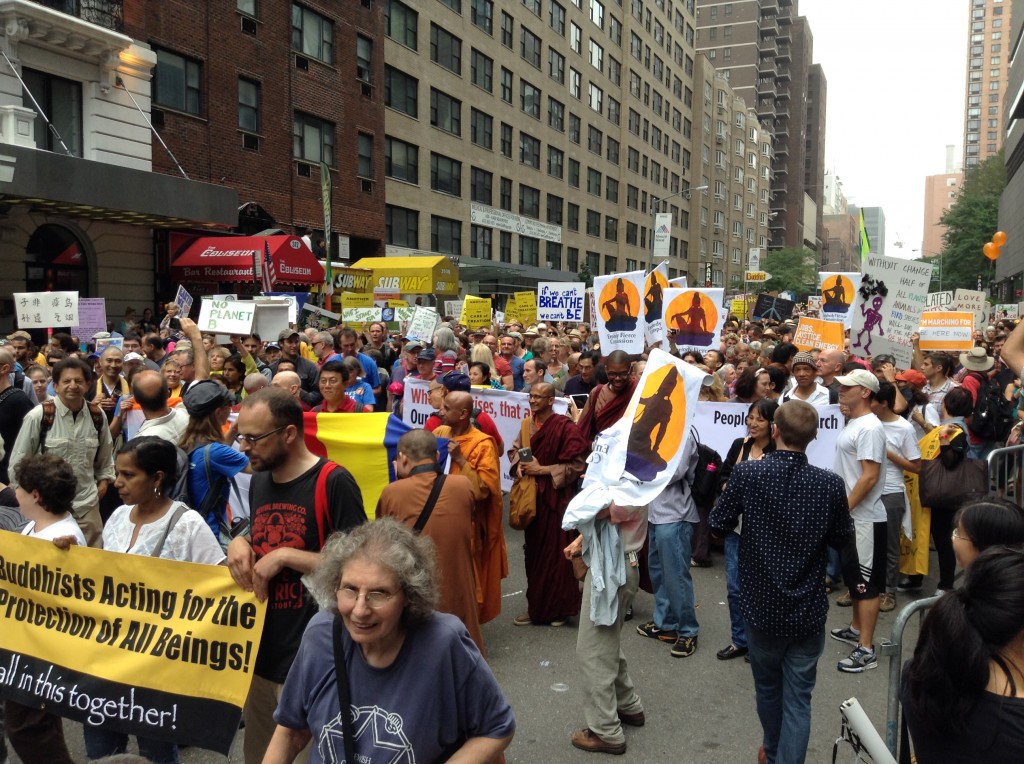
Who Are My Heroes of 2014? Maybe You...

A Roundabout Defense of the “Mandala Form” for...
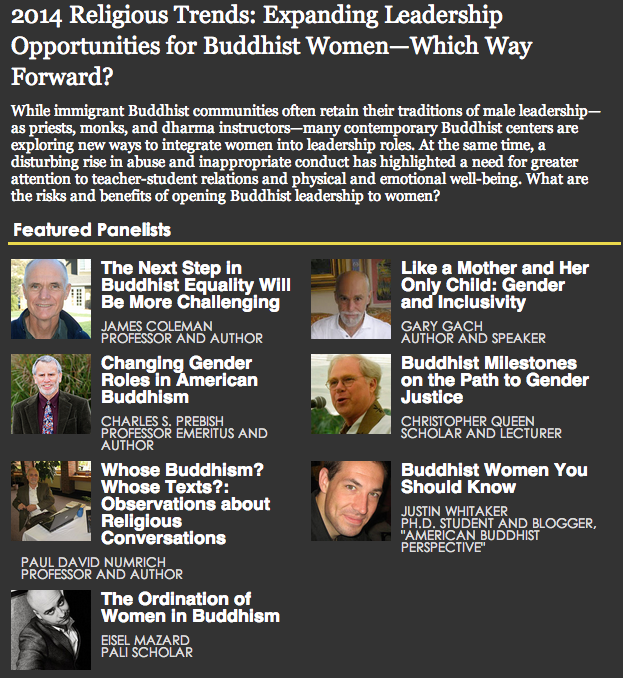
TRENDING AT PATHEOS Buddhist
On Taking Refuge in the Dharma
(Here I continue the feature of sharing talks and essays by teachers...
(Continuing my intention to share talks and essays by other members of Empty...
The Subtle Art of Bowing: A Dharma Discourse
(This presentation was first offered by my dear friend Dharma Holder Tom...

Internal Family Systems Can Heal you Mentally &...
How IFS Helped Me Stop Fighting Myself Internal Family Systems (IFS) is...

The Bible No One Spoke About: A Family’s...
A mysterious family Bible, unspoken faith, and a journey from curiosity to...

How Uncertainty Can Transform Your Life in 2025
Embracing Uncertainty: A New Year’s Resolution for the Brave As 2025 approaches,...
view all Buddhist blogs
Ad-Free & Subscriber Log-In Subscription Support
- About Us
- 2026 Calendar
- Videos
- Podcasts
- Library of World Religions
- Faith In Media Tracker
- Advertise With Us
- Write for Us
- Privacy Policy
- Terms of Service
- Do Not Sell My Data
- Contact Us
- Radiant Digital
- Manage Newsletter Subscriptions
- Unsubscribe From Notifications
- Sitemap
Copyright 2008-2026, Patheos, part of the Radiant Digital network of media brands. All rights reserved.
Subscription Support Ad-Free & Subscriber Log-In
Follow Patheos