
BuddhistCatholicContemplativeEvangelicalGeneral ChristianHinduJewishLatter-day SaintMuslimNew VisionsProgressive Christian
Beliefs
- Buddhist
- Catholic
- Contemplative
- Evangelical
- General Christian
- Hindu
- Jewish
- Latter-day Saint
- More Voices
- Muslim
- New Visions
- Pagan
- Progressive Christian
Topics
- Religion News
- Food and Religion
- Sports and Religion
- Religious Art
- Religious Music and Entertainment
- Religious Events
- History and Religion
- Style and Religion
- Politics and Religion
- Women in Religion
- Recreation Outdoors and Religion
- Business Finance and Religion
- Careers Workplace and Religion
- Education and Religion
- Family Parenting and Religion
- Health Fitness and Religion
- Home and Religion
- Relationships and Religion
- Technology and Religion
- Travel and Religion
Columnists
- Buddhist Columnists
- Business Finance and Religion Columnists
- Careers Workplace and Religion Columnists
- Catholic Columnists
- Contemplative Columnists
- Education and Religion Columnists
- Evangelists Columnists
- Family Parenting and Religion Columnists
- General Christian Columnists
- Health Fitness and Religion Columnists
- Hindu Columnists
- History and Religion Columnists
- Home and Religion Columnists
- Jewish Columnists
- More Voices Columnists
- Latter Day Columnists
- Muslim Columnists
- New Visions Columnists
- Nonreligious Columnists
- Pagan Columnists
- Politics and Religion Columnists
- Progressive Columnists
- Recreation Outdoors and Religion Columnists
- Relationships and Religion Columnists
- Religion News Columnists
- Religious Art Columnists
- Religious Events Columnists
- Religious Music and Entertainment Columnists
- Sports and Religion Columnists
- Style and Religion Columnists
- Technology and Religion Columnists
- Travel and Religion Columnists
- Women in Religion Columnists
Resource Library
- 2026 Calendar
- Library of World Religions
- The 100 Most Holy Places on Earth
- Patheos Answers
- Podcasts
- Videos
- Faith Leaders Database
- Anglican Episcopalian
- Bahai
- Baptist
- Buddhism
- Christianity
- Confucianism
- Eastern Orthodoxy
- Hinduism
- Holiness and Pentecostal
- ISKCON
- Islam
- Judaism
- Lutheran
- Methodist
- The Church of Jesus Christ of Latter-day Saints
- New Age
- Paganism
- Presbytarian and Reformed
- Protestantism
- Religion Behind the Scenes
- Roman Catholic
- Scientology
- Shia Islam
- Sikhism
- Sufism
- Sunni Islam
- Taoism
- Zen
- See all religions
Research Tools
 Ad-Free & Subscriber Log-In Subscription Support
Follow Patheos 

- Trending:
- Advent
- |
- Forgiveness
- |
- Thanksgiving
- |
- Election
- |
- Seasonal Holidays
- |
- Marriage
 Off the Cushion
- Home
- Buddhist
- Do Archaeological Discoveries at Lumbini Really Change the Estimated Date of the Buddha’s Birth? [UPDATED]
Do Archaeological Discoveries at Lumbini Really Change the Estimated Date of the Buddha’s Birth? [UPDATED]
Last updated on: December 1, 2013 at 5:31 pm by dannyfisher
Do Archaeological Discoveries at Lumbini Really Change the Estimated Date of the Buddha’s Birth? [UPDATED] 2013-12-01T17:31:18-07:00 dannyfisher
Patheos Explore the world's faith through different perspectives on religion and spirituality! Patheos has the views of the prevalent religions and spiritualities of the world.

“Archaeologists have uncovered a series of ancient temples within the Maya Devi Temple in Nepal.” Photo by Ira Block for National Geographic.
Though this story doesn’t yet seem to have an angle relevant to the social justice focus of this blog, a lot of people asked me this week about an article that appeared in the New York Times. The report details an archaeological discovery at Lumbini in Nepal, the site of the Buddha’s birth, and suggests that it may influence how we estimate the timeline of the Buddha’s life. Author John Noble Wilford says:
Until now, archaeological evidence favored a date [for the Buddha’s birth] no earlier than the third century B.C., when the Emperor Asoka promoted the spread of Buddhism through South Asia, leaving a scattering of shrines and inscriptions to the man who became “the enlightened one.” A white temple on a gently sloping plateau at Lumbini, 20 miles from the border with India, draws hundreds of thousands of pilgrims each year to read a sandstone pillar documenting Asoka’s homage at the Buddha’s birthplace.
But new excavations by archaeologists at Lumbini have uncovered evidence of a much earlier timber shrine and brick structures above it — all of which lay beneath the temple that is a UNESCO World Heritage site long identified as the birthplace. Dating fragments of charcoal and grains of sand, researchers determined that the lower structures were erected as early as the sixth century B.C.
The international team of archaeologists said the lower structures were laid out on the same design as the more recent temple. The timber shrine even had an open space in the center that suggested a link to the Buddha’s nativity tradition. Deep tree roots in the center space may even have been from the tree his mother presumably held on to.
The archaeologists, led by Robin A. E. Coningham of Durham University in England, reported the findings on Monday in an article published online in the December issue of the international journal Antiquity. This was, they said, “the first archaeological evidence regarding the date of the life of Buddha.”
Though I’m not an archaeologist, nor a specialist in this area of Buddhist Studies, and (like a lot of people) I haven’t seen the Anquity report yet, a couple of questions came up for me in looking at the Times piece. Matthew Kapstein, Directeur d’études at Ecole Pratique des Hautes Etudes and Numata Visiting Professor of Buddhist Studies at the University of Chicago, put some of those same questions into a succinct statement at H-Buddhism (The Buddhist Scholars Information Network):
The date of Asoka, of course, is not at all taken as the date of the Buddha. Even the ‘short chronology’ would place the Buddha’s passing a century or so earlier. It is not at all clear to me why the discovery of a sixth century BCE structure at Lumbini thought to be a “shrine” warrants the assumption that it is a Buddhist shrine.
Following Kapstein’s comments, Jonathan A. Silk, another noted Buddhologist (at Leiden University), who has seen the Antiquity findings, then chimed in at H-Buddhism with his thoughts:
Regarding the recent report from Lumbini, mentioned by Matthew Kapstein, as one might expect, the facts do not bear out the hype.
I read the article in question yesterday (before the embargo was lifted) because a journalist contacted me about it (you can read about it in the Volkskrant if you read Dutch…), but when Matthew and others read the article, what will be evident is that what has been found is wood beneath the Asokan layer. There is *no* indication that the wood is connected with the Buddha in any way shape or form. It is logical to think that a tree shrine on the spot considered to be the birthplace of the Buddha could easily have predated anything about Buddhism–of course, the tree selected as “the tree” under which the Buddha was born should be a sacred tree, hence it had a shrine associated with it.
And in fact, except for a single–I would say incautious–sentence, the article basically says this. I’m sure it will be spun for all it’s worth, but there’s nothing there, except perhaps (and even this is not 100% clear) some evidence that, despite an earlier botched excavation by a Japanese team (which, the authors imply, threw away valuable evidence), the traditional spot rebuilt by Asoka had earlier a wooden structure upon it. What that structure may have been, and whether it could conceivably have had any connection with the Buddha–no evidence at all!
So, there you have it: some strong initial reactions from two mighty forces in the world of Buddhist Studies. No doubt more opinions will follow once others are able to see the Antiquity article. I think that Kapstein and Silk’s logic here, though, will be difficult to refute without more substantial evidence.
—
UPDATE***:*** Over at their blog, Tricycle posts the Religion News Service’s report on the find, which includes comments from two more preeminent Buddhist Studies scholars: Donald Lopez and Richard Gombrich. As to the assertions that the discovery is a Buddhist shrine, Gombrich is pithy and direct: “Rubbish!”
SECOND UPDATE***:*** Over at his blog Jayarava’s Raves, the eponymous author Jayarava Attwood has an awesome post about all of this.
Previous Post

November 24, 2013
Buddhist Global Relief's 2013 Los Angeles Walk to Feed the Hungry
Next Post
December 1, 2013 "Mindfulness or Mindlessness?"
Browse Our Archives
Select a Category Uncategorized
Select a Month March 2015 December 2014 August 2014 July 2014 June 2014 May 2014 April 2014 March 2014 February 2014 January 2014 December 2013 November 2013 October 2013 September 2013 August 2013 July 2013 June 2013 May 2013 April 2013 March 2013 February 2013 January 2013 December 2012 November 2012 October 2012 September 2012 August 2012 July 2012 June 2012 April 2012 March 2012 February 2012 January 2012 December 2011
Follow Us!
TAKE THE
Religious Wisdom Quiz
Which tribe did NOT ask for land on the east side of Jordan?
Select your answer to see how you score.
Reuben Gad Manasseh Issachar
Related posts from Off the Cushion

On Quitting Things (Including This Blog)
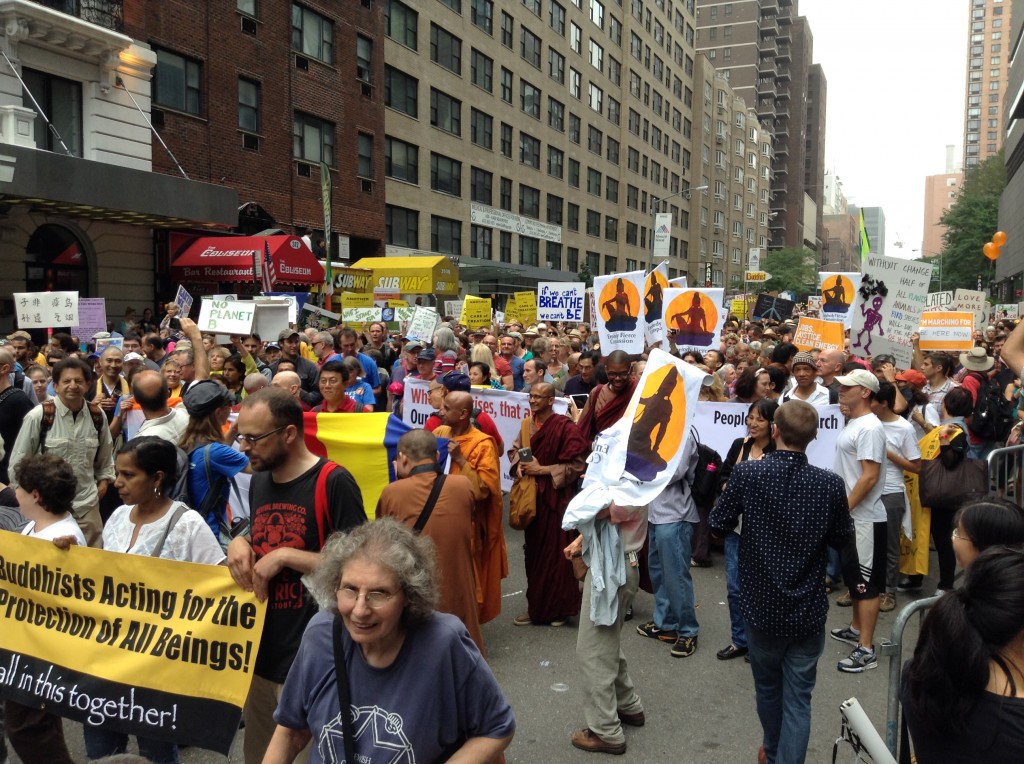
Who Are My Heroes of 2014? Maybe You...

A Roundabout Defense of the “Mandala Form” for...
TRENDING AT PATHEOS Buddhist
On Taking Refuge in the Dharma
(Here I continue the feature of sharing talks and essays by teachers...
(Continuing my intention to share talks and essays by other members of Empty...
The Subtle Art of Bowing: A Dharma Discourse
(This presentation was first offered by my dear friend Dharma Holder Tom...

Internal Family Systems Can Heal you Mentally &...
How IFS Helped Me Stop Fighting Myself Internal Family Systems (IFS) is...

The Bible No One Spoke About: A Family’s...
A mysterious family Bible, unspoken faith, and a journey from curiosity to...

How Uncertainty Can Transform Your Life in 2025
Embracing Uncertainty: A New Year’s Resolution for the Brave As 2025 approaches,...
view all Buddhist blogs
Ad-Free & Subscriber Log-In Subscription Support
- About Us
- 2026 Calendar
- Videos
- Podcasts
- Library of World Religions
- Faith In Media Tracker
- Advertise With Us
- Write for Us
- Privacy Policy
- Terms of Service
- Do Not Sell My Data
- Contact Us
- Radiant Digital
- Manage Newsletter Subscriptions
- Unsubscribe From Notifications
- Sitemap
Copyright 2008-2026, Patheos, part of the Radiant Digital network of media brands. All rights reserved.
Subscription Support Ad-Free & Subscriber Log-In
Follow Patheos