
BuddhistCatholicContemplativeEvangelicalGeneral ChristianHinduJewishLatter-day SaintMuslimNew VisionsProgressive Christian
Beliefs
- Buddhist
- Catholic
- Contemplative
- Evangelical
- General Christian
- Hindu
- Jewish
- Latter-day Saint
- More Voices
- Muslim
- New Visions
- Pagan
- Progressive Christian
Topics
- Religion News
- Food and Religion
- Sports and Religion
- Religious Art
- Religious Music and Entertainment
- Religious Events
- History and Religion
- Style and Religion
- Politics and Religion
- Women in Religion
- Recreation Outdoors and Religion
- Business Finance and Religion
- Careers Workplace and Religion
- Education and Religion
- Family Parenting and Religion
- Health Fitness and Religion
- Home and Religion
- Relationships and Religion
- Technology and Religion
- Travel and Religion
Columnists
- Buddhist Columnists
- Business Finance and Religion Columnists
- Careers Workplace and Religion Columnists
- Catholic Columnists
- Contemplative Columnists
- Education and Religion Columnists
- Evangelists Columnists
- Family Parenting and Religion Columnists
- General Christian Columnists
- Health Fitness and Religion Columnists
- Hindu Columnists
- History and Religion Columnists
- Home and Religion Columnists
- Jewish Columnists
- More Voices Columnists
- Latter Day Columnists
- Muslim Columnists
- New Visions Columnists
- Nonreligious Columnists
- Pagan Columnists
- Politics and Religion Columnists
- Progressive Columnists
- Recreation Outdoors and Religion Columnists
- Relationships and Religion Columnists
- Religion News Columnists
- Religious Art Columnists
- Religious Events Columnists
- Religious Music and Entertainment Columnists
- Sports and Religion Columnists
- Style and Religion Columnists
- Technology and Religion Columnists
- Travel and Religion Columnists
- Women in Religion Columnists
Resource Library
- 2026 Calendar
- Library of World Religions
- The 100 Most Holy Places on Earth
- Patheos Answers
- Podcasts
- Videos
- Faith Leaders Database
- Anglican Episcopalian
- Bahai
- Baptist
- Buddhism
- Christianity
- Confucianism
- Eastern Orthodoxy
- Hinduism
- Holiness and Pentecostal
- ISKCON
- Islam
- Judaism
- Lutheran
- Methodist
- The Church of Jesus Christ of Latter-day Saints
- New Age
- Paganism
- Presbytarian and Reformed
- Protestantism
- Religion Behind the Scenes
- Roman Catholic
- Scientology
- Shia Islam
- Sikhism
- Sufism
- Sunni Islam
- Taoism
- Zen
- See all religions
Research Tools
 Ad-Free & Subscriber Log-In Subscription Support
Ad-Free & Subscriber Log-In Subscription Support
Follow Patheos 

- Trending:
- Forgiveness
- |
- Marriage
- |
- Consciousness
- |
- Death Penalty
- |
- Election
- |
- Halloween
 Off the Cushion
- Home
- Buddhist
- INTERVIEW: Douglas Penick, Author of Dreamers and Their Shadows
INTERVIEW: Douglas Penick, Author of Dreamers and Their Shadows
Last updated on: September 9, 2013 at 4:35 pm by dannyfisher
INTERVIEW: Douglas Penick, Author of Dreamers and Their Shadows 2013-09-09T16:35:59-07:00 dannyfisher
Patheos Explore the world's faith through different perspectives on religion and spirituality! Patheos has the views of the prevalent religions and spiritualities of the world.
 Douglas Penick is a 30 year practitioner of Tibetan Buddhism, a former research associate at the Museum of Modern Art in New York and at The Institute for Architecture and Urban Studies. He wrote the National Film Board of Canada’s award-winning two-part series on the Tibetan Book of the Dead and the libretti for the operas King Gesar and Ashoka’s Dream (with composer Peter Lieberson). Douglas has also written pieces to music by Philip Glass, for choreographer Katsura Kan, and on commission from the New York Philharmonic, the Boulder Symphony, Denver Eclectic Concerts and others. His writing has appeared in the pages of Shambhala Sun, Parabola, Porte Des Singes, Cahiers de L’Herne, Publishers Weekly and others.
Readers of this blog might recognize him first and foremost as the author of three books on the Central Asian warrior hero, King Gesar of Ling (most notably the first book, The Warrior Song of King Gesar, which is published by Wisdom Publications).
When Douglas got in touch with me recently about his latest book, a novel called Dreamers and Their Shadows, I asked if I could interview him for the blog, and he graciously agreed…
*
Douglas, for those who are unfamiliar, can you tell us about Dreamers and Their Shadows? What is the basic plot, and what are the book’s major themes?
Thank you, Danny, for taking an interest and the time in doing this interview.
The novel begins when workmen clearing a bombsite in Tokyo in the 1950’s discover a safe that contains among other treasures, two scrolls, titled The Secret Annals. This text gives an account of the life and teachings of an otherwise unknown 16th Century Japanese spiritual leader who, in a time of great social unrest, leads his followers in establishing an enlightened society.
This story is one strand of the novel; the other is about two men who, even when the scrolls are revealed to be forgeries, become completely obsessed with the text, with who could have made it and how it still seems to be exerting an influence in the world.
Among the themes I wanted to explore were how inspiration and memory come together and part; how they take on a range of forms; how memory and inspiration cannot be owned or possessed, but still somehow continue.
You told me that the novel “evolved out of [your] life in [Chogyam] Trungpa Rinpoche’s world.” Can you say more about that? Also, how was it that this evolution led to a novel rather than, say, a memoir?
A memoir, of necessity, gets so caught up in the whos, whats, wheres, and most questionably, the whys. In DREAMERS AND THEIR SHADOWS, the main character may resemble Trungpa Rinpoche and his circle in some ways, but not in others.
Trungpa Rinpoche was very kind to involve me in his life. I wasn’t an important part of his world, but I was familiar with the atmospheres through which he conveyed his teachings. How such things continue, how they disappear seemed worth talking about.
You’ve done other kinds of writing as well as films, operas, cooking, architecture, modern art, short fiction, essays, and poetry…and now a novel. Can you say a bit about the intersection between your practice and all things arts and culture? How does your practice serve you as you engage in all the areas of work that you do? Similarly, how does the wider world of arts and culture serve you as a practitioner?
Well, as you know, spiritual practice and the arts have been interwoven since the very beginning.
Orgyen Kusum Lingpa, in a famous quote, said that the essence of all Buddhist meditation is not following thoughts. In other words, practice involves an exploration and refinement of our experience beyond ego, beyond the limits of our conventions and concepts. The challenge in art is similar. Self-expression is the conventional limit.
The worlds that manifest in spiritual practice and art nourish and inspire each other. All we need to do is look at Bach, Milarepa, Kabir, Giotto, Lady Murasaki, Ikkyu, Proust, Vyasa, among many others.
Douglas, you’re also the author of a three-book cycle about King Gesar of Ling. Given the themes in his story and the focus of this blog (Buddhism and social justice), I’m curious: what do you think the story of King Gesar has to say to those of us concerned with Buddhism and social justice issues?
Gesar, King of Ling struggled to establish enlightened society. He was concerned to eliminate the obstacles and obsessions that come to have a demonic power in our minds and act as barriers in our relationships with others. Gesar is continually acting to renew our inspiration and to open our hearts. With Gesar, it’s particularly clear that enlightenment is not merely an individual enterprise, but the essential base of social life as well. So, that tradition is deeply linked to the social dimension of the Buddhist path.
Lastly, what’s next for you? What projects are you working on now?
Well, I’m working on some more performance pieces to do with my wife, Deborah Marshall. She’s an astounding artist, a clarinetist, and combining words and music is an ongoing interest. Beyond that I promised Trungpa Rinpoche I would work to extend people’s awareness of the four Ancestral Sovereigns of Shambhala. These four: Ashoka Maharaja, Gesar of Ling, the Yong Le Emperor and Prince Shotoku Taishi each exemplify different aspects of ruling and enlightened society. I, often working with Peter Lieberson, completed pieces about the first three. I wrote a piece Shotoku Taishi for musical setting but regrettably Peter did not live to do it.
So, I’m now reworking and going deeper into Shotoku Taishi’s realm. And, this is challenging and, as it turns out, particularly timely. Prince Shotoku was deeply concerned with how continuity can be created for a culture of wakefulness. It seems that this is a discussion worth undertaking at a time when exclusive concern with profit and loss, mass entertainment and consumerism are sweeping so much away.

Browse Our Archives
Select a Category Uncategorized
Select a Month March 2015 December 2014 August 2014 July 2014 June 2014 May 2014 April 2014 March 2014 February 2014 January 2014 December 2013 November 2013 October 2013 September 2013 August 2013 July 2013 June 2013 May 2013 April 2013 March 2013 February 2013 January 2013 December 2012 November 2012 October 2012 September 2012 August 2012 July 2012 June 2012 April 2012 March 2012 February 2012 January 2012 December 2011
Follow Us!
TAKE THE
Religious Wisdom Quiz
True or False: The feast of Purim commemorates the Jewish people's deliverance from Haman's plot.
Select your answer to see how you score.
TRUE FALSE
Related posts from Off the Cushion

On Quitting Things (Including This Blog)
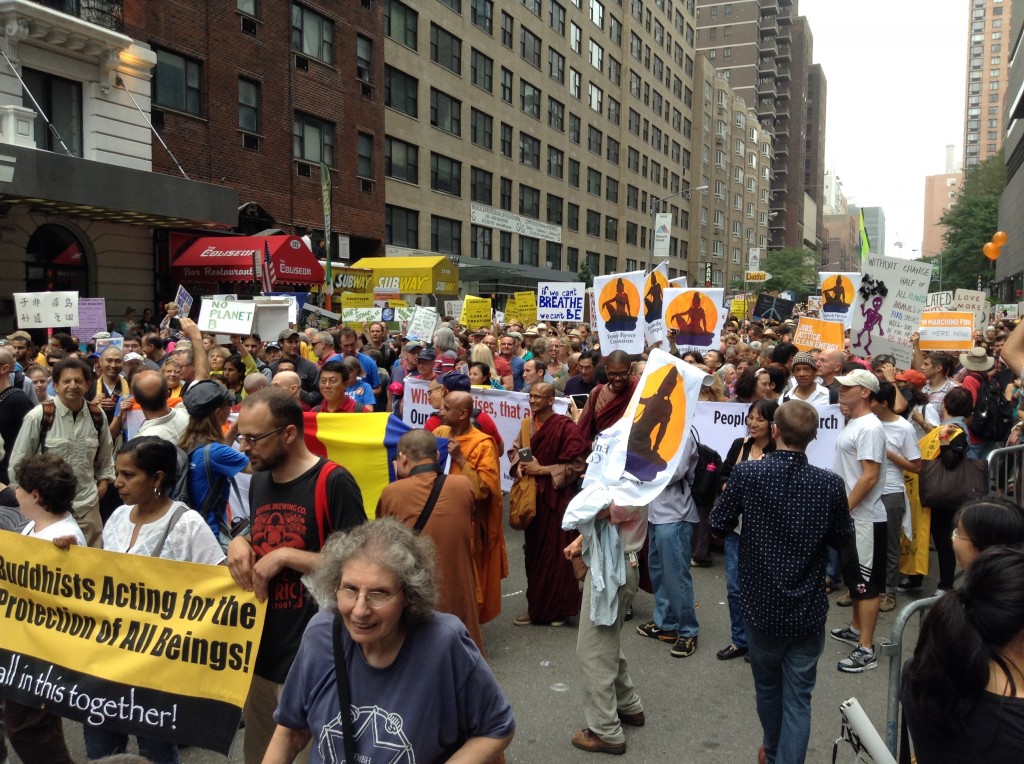
Who Are My Heroes of 2014? Maybe You...

A Roundabout Defense of the “Mandala Form” for...
TRENDING AT PATHEOS Buddhist

On Taking Refuge in the Dharma
(Here I continue the feature of sharing talks and essays by teachers...

(Continuing my intention to share talks and essays by other members of Empty...
The Subtle Art of Bowing: A Dharma Discourse
(This presentation was first offered by my dear friend Dharma Holder Tom...

Internal Family Systems Can Heal you Mentally &...
How IFS Helped Me Stop Fighting Myself Internal Family Systems (IFS) is...

The Bible No One Spoke About: A Family’s...
A mysterious family Bible, unspoken faith, and a journey from curiosity to...

How Uncertainty Can Transform Your Life in 2025
Embracing Uncertainty: A New Year’s Resolution for the Brave As 2025 approaches,...
view all Buddhist blogs
Ad-Free & Subscriber Log-In Subscription Support
- About Us
- 2026 Calendar
- Videos
- Podcasts
- Library of World Religions
- Faith In Media Tracker
- Advertise With Us
- Write for Us
- Privacy Policy
- Terms of Service
- Do Not Sell My Data
- Contact Us
- Radiant Digital
- Manage Newsletter Subscriptions
- Unsubscribe From Notifications
- Sitemap
Copyright 2008-2026, Patheos. All rights reserved.
Subscription Support Ad-Free & Subscriber Log-In
Follow Patheos