
BuddhistCatholicContemplativeEvangelicalGeneral ChristianHinduJewishLatter-day SaintMuslimNew VisionsProgressive Christian
Beliefs
- Buddhist
- Catholic
- Contemplative
- Evangelical
- General Christian
- Hindu
- Jewish
- Latter-day Saint
- More Voices
- Muslim
- New Visions
- Pagan
- Progressive Christian
Topics
- Religion News
- Food and Religion
- Sports and Religion
- Religious Art
- Religious Music and Entertainment
- Religious Events
- History and Religion
- Style and Religion
- Politics and Religion
- Women in Religion
- Recreation Outdoors and Religion
- Business Finance and Religion
- Careers Workplace and Religion
- Education and Religion
- Family Parenting and Religion
- Health Fitness and Religion
- Home and Religion
- Relationships and Religion
- Technology and Religion
- Travel and Religion
Columnists
- Buddhist Columnists
- Business Finance and Religion Columnists
- Careers Workplace and Religion Columnists
- Catholic Columnists
- Contemplative Columnists
- Education and Religion Columnists
- Evangelists Columnists
- Family Parenting and Religion Columnists
- General Christian Columnists
- Health Fitness and Religion Columnists
- Hindu Columnists
- History and Religion Columnists
- Home and Religion Columnists
- Jewish Columnists
- More Voices Columnists
- Latter Day Columnists
- Muslim Columnists
- New Visions Columnists
- Nonreligious Columnists
- Pagan Columnists
- Politics and Religion Columnists
- Progressive Columnists
- Recreation Outdoors and Religion Columnists
- Relationships and Religion Columnists
- Religion News Columnists
- Religious Art Columnists
- Religious Events Columnists
- Religious Music and Entertainment Columnists
- Sports and Religion Columnists
- Style and Religion Columnists
- Technology and Religion Columnists
- Travel and Religion Columnists
- Women in Religion Columnists
Resource Library
- 2026 Calendar
- Library of World Religions
- The 100 Most Holy Places on Earth
- Patheos Answers
- Podcasts
- Videos
- Faith Leaders Database
- Anglican Episcopalian
- Bahai
- Baptist
- Buddhism
- Christianity
- Confucianism
- Eastern Orthodoxy
- Hinduism
- Holiness and Pentecostal
- ISKCON
- Islam
- Judaism
- Lutheran
- Methodist
- The Church of Jesus Christ of Latter-day Saints
- New Age
- Paganism
- Presbytarian and Reformed
- Protestantism
- Religion Behind the Scenes
- Roman Catholic
- Scientology
- Shia Islam
- Sikhism
- Sufism
- Sunni Islam
- Taoism
- Zen
- See all religions
Research Tools
 Ad-Free & Subscriber Log-In Subscription Support
Ad-Free & Subscriber Log-In Subscription Support
Follow Patheos 

- Trending:
- Forgiveness
- |
- Marriage
- |
- Consciousness
- |
- Death Penalty
- |
- Election
- |
- Halloween
 Off the Cushion
- Home
- Buddhist
- INTERVIEW: Araia Tesfamariam, Director of Big Araia
INTERVIEW: Araia Tesfamariam, Director of Big Araia
Last updated on: April 19, 2012 at 3:39 pm by dannyfisher
INTERVIEW: Araia Tesfamariam, Director of Big Araia 2012-04-19T15:39:34-07:00 dannyfisher
Patheos Explore the world's faith through different perspectives on religion and spirituality! Patheos has the views of the prevalent religions and spiritualities of the world.
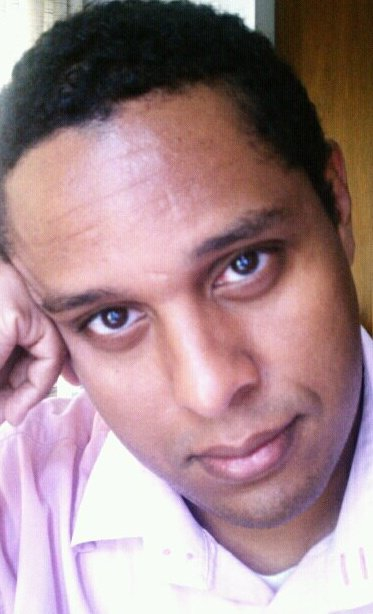
Araia Tesfamariam
Araia Tesfamariam is an independent film and TV producer who has worked with, among others, the preeminent American pastor T.D. Jakes. In addition, Araia is an old and dear friend of mine from college days.
Araia is currently at work on a documentary entitled Big Araia. The film will focus on his late father, whom Araia never knew and about whom he knows very little. (In an incredibly powerful gimmick, Araia built the first trailer for the film out of literally all the images and information he has about his father, underscoring the extent of the mystery.)
Beyond the dramatic personal story here, Big Araia will also have a unique focus on Eritrea — the country in the Horn of Africa from which the eponymous “Big Araia” hailed. As Araia notes in the promotional material for his documentary, “Eritrea is a country few people know about. The small East African nation holds within it a people and culture that has survived an epic war and built a brighter future in its short, but extraordinary existence.”
After seeing the trailer for Big Araia and talking to my friend about his project, I decided to interview Araia for this blog. While there’s nothing in what follows about one of our focuses (Buddhism), there’s certainly plenty that’s relevant to the other (social justice).
Here is our discussion. On behalf of our readers, I say to Araia: Thank you, haway.
*
The trailer for Big Araia is very powerful, in that it begins by noting that you’ve not had much knowledge of your father beyond what we are shown: his name, his country of origin, the photographs we see, and what we hear in the recorded phone call. You write that Big Araia is “a reclamation of a lost connection with a very personal history.” Would you tell us about your father? What have you learned about him in the process of making this film so far?
First, the film has not been shot yet. The trailer that is online now is being used to promote the fund raising effort to hire a film crew. I will will being traveling to Eritrea for the first time in July of this year and I want to make a documentary of that experience.
This project is a reclamation of a lost part of my own story. My father, Araia Selassie Tesfamariam, immigrated to the United States from Eritrea in the early seventies. I am not exactly sure how old he was, even my mother never really knew his age. From the time I was a small child until today, all the information I had about him was from stories. Even when I met his relatives that live in the US, they had little to give in the way of new information because they had been small kids living in a village when he left Eritrea as an adult. What I do know is that he was a well respected and well liked guy with a great sense of humor. He had attended Central State University for a time and also worked at a gas station. I just don’t have very many facts. By the time I was old enough to really ask my mother questions about the man I called Big Araia, all she could give me were hints of memories, emotional flashbacks, and a some funny stories. What I do know is that he loved my mother very much and that he loved his country and always wanted to return there.
The goal of this project is to learn more about him, his people and his culture. Hopefully, I will be able to piece together this jigsaw that is my father’s story by meeting relatives in Eritrea that really knew him.
Can you tell us what happened to your father?
My father died in a car accident in North Carolina in march of 1978, three months before I was born. I don’t have much detail beyond that. He had recently moved there ahead of my mother to get the new house ready and start a new job. My mom was in the process of packing up their old house when the police came to her door to tell her he had passed away. That is all I know about that incident, it is probably all I will ever know.
You write that the film will be “about diaspora.” We’ve just talked about the personal quality of the film, but can you talk about this aspect?
Many African-Americans have a hunger to learn more about their cultural and genealogical ties to Africa. Some even get blood tests done just to get an idea of what part (or in most cases, parts) of the continent their ancestors came from. Knowing where you are from and what you are is part of what makes you whole. For those peoples and nations that have that knowledge, they take it for granted because it has always been there. But, for African-Americans, we have had to piece together a cultural identity and history without any documentation, or religion, or even an oral tradition -the raw materials by which a culture can build upon. When people say that slavery was such a long time ago, the inference is that its significance and effects are no longer relevant. In truth, that period in our nation’s history robbed an entire race of people of their identity. Over the course of several hundred years African-Americans have built a new and dynamic society to replace what was lost, but many of us hear the call of our forebearers back home. That cry is in a voice so faint that even when we strain to listen, we can’t find our way back without an effort of oddyssian proportions.
What do you hope to see more of in terms of work helping African-Americans learn more about cultural and genealogical ties to Africa. What kinds of things do you see as being most beneficial and needed?
Finding those lost connections with your African ancestors is an imposing task. Many African-Americans who attempt to trace their lineage do well if they can go back as far as a relative who was a slave. It requires a lot of money and time to research and collect data from whatever scant info is available about your family’s history beyond the 20th century. It would be great to see a collective effort from several major universities to build an online registry for African-Americans who want to attempt to discover more about their family’s past.
Why is a special focus on Eritrea so important — to you personally and to audiences in general?
For me, the focus on Eritrea is personal. My father was from there, and going back affords me the opportunity to complete a circle that has been broken for four decades. He left his country, his family, and his story when he came here. Now I will go back to do what few African-Americans ever get to do, hold their own history in their hands.
But this is more than a personal narrative, Big Araia is a film about the desire many of us have to understand more of the past that help make us into the people we are today. Eritrea itself is a large part of the story. It is a nation that few people in the West know about, and yet with its proximity to Somalia and Saudi Arabia it is now more geopolitically significant than it has ever been.
Finally, how can interested readers help you finish the film?
This film project will only succeed if I am successful at raising enough money to meet my goal on indiegogo. In a traditional attempt to raise enough money to make a film, I would have secure large sums of money from a few wealthy donors. That strategy tends to come with it’s own set of restrictions and pitfalls, like the loss of creative control and profit driven marketing decisions. The crowd sourcing model allows for the film maker to control their own project while getting the funding they need to make their artistic vision a reality. In simpler terms, instead of getting five people to give me $10,000, I am trying to get five thousand people to donate $10.00. It’s a beautifully simple concept, and indiegogo has an interface that makes it easy for creatives and their supporters interact with each other. If your readers are interested in learning more about the Big Araia film project, they can go to http://www.indiegogo.com/BigAraia.
Previous Post

January 26, 2012
Sometimes I Am a Walking Public Service Announcement
Next Post
February 2, 2012 I Stand With Planned Parenthood
Browse Our Archives
Select a Category Uncategorized
Select a Month March 2015 December 2014 August 2014 July 2014 June 2014 May 2014 April 2014 March 2014 February 2014 January 2014 December 2013 November 2013 October 2013 September 2013 August 2013 July 2013 June 2013 May 2013 April 2013 March 2013 February 2013 January 2013 December 2012 November 2012 October 2012 September 2012 August 2012 July 2012 June 2012 April 2012 March 2012 February 2012 January 2012 December 2011
Follow Us!
TAKE THE
Religious Wisdom Quiz
What does Paul say in Colossians has been nailed to the cross?
Select your answer to see how you score.
The written code with its regulations Our sins Satan's authority The old covenant
Related posts from Off the Cushion

On Quitting Things (Including This Blog)
Who Are My Heroes of 2014? Maybe You...

A Roundabout Defense of the “Mandala Form” for...
TRENDING AT PATHEOS Buddhist

On Taking Refuge in the Dharma
(Here I continue the feature of sharing talks and essays by teachers...

(Continuing my intention to share talks and essays by other members of Empty...
The Subtle Art of Bowing: A Dharma Discourse
(This presentation was first offered by my dear friend Dharma Holder Tom...

Internal Family Systems Can Heal you Mentally &...
How IFS Helped Me Stop Fighting Myself Internal Family Systems (IFS) is...

The Bible No One Spoke About: A Family’s...
A mysterious family Bible, unspoken faith, and a journey from curiosity to...

How Uncertainty Can Transform Your Life in 2025
Embracing Uncertainty: A New Year’s Resolution for the Brave As 2025 approaches,...
view all Buddhist blogs
Ad-Free & Subscriber Log-In Subscription Support
- About Us
- 2026 Calendar
- Videos
- Podcasts
- Library of World Religions
- Faith In Media Tracker
- Advertise With Us
- Write for Us
- Privacy Policy
- Terms of Service
- Do Not Sell My Data
- Contact Us
- Radiant Digital
- Manage Newsletter Subscriptions
- Unsubscribe From Notifications
- Sitemap
Copyright 2008-2026, Patheos. All rights reserved.
Subscription Support Ad-Free & Subscriber Log-In
Follow Patheos