
BuddhistCatholicContemplativeEvangelicalGeneral ChristianHinduJewishLatter-day SaintMuslimNew VisionsProgressive Christian
Beliefs
- Buddhist
- Catholic
- Contemplative
- Evangelical
- General Christian
- Hindu
- Jewish
- Latter-day Saint
- More Voices
- Muslim
- New Visions
- Pagan
- Progressive Christian
Topics
- Religion News
- Food and Religion
- Sports and Religion
- Religious Art
- Religious Music and Entertainment
- Religious Events
- History and Religion
- Style and Religion
- Politics and Religion
- Women in Religion
- Recreation Outdoors and Religion
- Business Finance and Religion
- Careers Workplace and Religion
- Education and Religion
- Family Parenting and Religion
- Health Fitness and Religion
- Home and Religion
- Relationships and Religion
- Technology and Religion
- Travel and Religion
Columnists
- Buddhist Columnists
- Business Finance and Religion Columnists
- Careers Workplace and Religion Columnists
- Catholic Columnists
- Contemplative Columnists
- Education and Religion Columnists
- Evangelists Columnists
- Family Parenting and Religion Columnists
- General Christian Columnists
- Health Fitness and Religion Columnists
- Hindu Columnists
- History and Religion Columnists
- Home and Religion Columnists
- Jewish Columnists
- More Voices Columnists
- Latter Day Columnists
- Muslim Columnists
- New Visions Columnists
- Nonreligious Columnists
- Pagan Columnists
- Politics and Religion Columnists
- Progressive Columnists
- Recreation Outdoors and Religion Columnists
- Relationships and Religion Columnists
- Religion News Columnists
- Religious Art Columnists
- Religious Events Columnists
- Religious Music and Entertainment Columnists
- Sports and Religion Columnists
- Style and Religion Columnists
- Technology and Religion Columnists
- Travel and Religion Columnists
- Women in Religion Columnists
Resource Library
- 2026 Calendar
- Library of World Religions
- The 100 Most Holy Places on Earth
- Patheos Answers
- Podcasts
- Videos
- Faith Leaders Database
- Anglican Episcopalian
- Bahai
- Baptist
- Buddhism
- Christianity
- Confucianism
- Eastern Orthodoxy
- Hinduism
- Holiness and Pentecostal
- ISKCON
- Islam
- Judaism
- Lutheran
- Methodist
- The Church of Jesus Christ of Latter-day Saints
- New Age
- Paganism
- Presbytarian and Reformed
- Protestantism
- Religion Behind the Scenes
- Roman Catholic
- Scientology
- Shia Islam
- Sikhism
- Sufism
- Sunni Islam
- Taoism
- Zen
- See all religions
Research Tools
 Ad-Free & Subscriber Log-In Subscription Support
Ad-Free & Subscriber Log-In Subscription Support
Follow Patheos 

- Trending:
- Forgiveness
- |
- Marriage
- |
- Consciousness
- |
- Death Penalty
- |
- Election
- |
- Halloween
 Danielle Kingstrom
- Home
- Progressive Christian
- You Were Wrong: Why That’s Not the End of the World
You Were Wrong: Why That’s Not the End of the World
Last updated on: March 10, 2022 at 11:56 am by Danielle Kingstrom
You Were Wrong: Why That’s Not the End of the World 2022-03-10T11:56:46-06:00 Danielle Kingstrom
Patheos Explore the world's faith through different perspectives on religion and spirituality! Patheos has the views of the prevalent religions and spiritualities of the world.
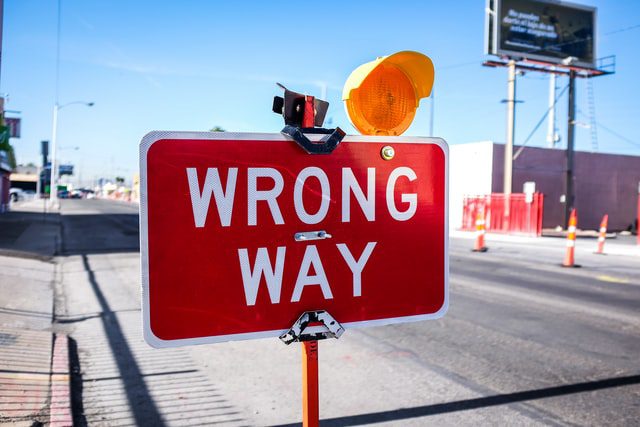
Photo by NeONBRAND on Unsplash
One of the greatest challenges in my personal life has been admitting when I am wrong. It’s so demoralizing at times to realize that after a big performative outrage, I see how incredibly assumptive and asinine I was. Or I realize that I was not listening to what was being said, I was listening to my own thoughts about how I was feeling about what was being said. In any situation, the very idea of being wrong was unacceptable.
Over the last 10 years, I have progressively strived to overcome this hindrance to eroticism in my personal life. The refusal to admit when you are wrong can severely impact every relationship in your life. Such a refusal can make communication impossible. Sadly, many of us would rather believe we are right than appear weak or uninformed. Ignorance, however, is not something to be ashamed of. The fact is, we are all ignorant—extraordinarily ignorant regarding the massive amount of information widely available. Those who are willing to admit to this shows signs of erotic intelligence. Those who refuse to acknowledge this will find themselves suffering from an erotic deficiency.
The irony of being wrong is that it can actually help us develop erotic intelligence. As if to say that the more we are wrong, the more we can learn how to do right. That’s not to say that we ought to get comfortable with the idea that we are never right and that somehow that’s a good thing—no. More so, it’s that when we become aware of our ignorance, we can utilize eroticism to manifest a desire to know. A desire to know will propel us toward seeking the truth and will give full resonance to the search for meaning.
This isn’t an easy practice, however. Learning how to accept when you are wrong feels like a brutal attack in many cases—an attack on one’s principles and beliefs. The thing is, we are better served by taking a review of our beliefs from time to time, anyway. What better an opportunity to do so than when someone we are in a relationship with contradicts our claims?
There are reasons why we don’t like to evaluate our own beliefs. One reason is that we attach our identity to them. But the reality is, the many beliefs we claim to hold in high regard are often not the beliefs that we act out in our daily lives. Most of us are just floating around high on virtue, or rather the idea of virtue. And social media allows us the space to lay claim to all our virtues without ever having to prove in action what we claim to believe. Relationships, on the other hand, do not allow space for such a contradiction of values over actions. When our actions do not match our words, it doesn’t go unnoticed in intimate relationship spaces.
Attaching your identity to your beliefs isn’t necessarily a bad thing. Sometimes, how we represent ourselves really does match what we believe. Jesus, of course, was a model of such a feat. And for a long time, that was easier said than done. Before the multitudes of social and political influences brought to us by Pfizer—I mean brought to us by mega-media conglomerates, newspapers, and social media influencers, it was much easier to act out our principles and be recognized for them. In 2022, however, it’s a very different story. It’s quite easy to pretend to care about certain issues in the public view while ignoring all the claims in the comfort of our own homes. We do this because we do care what people think about us. We care how others perceive us. We want others to like us and believe we are good people.
Here’s the thing. Many times, when we are wrong and we are being called out for it, it’s entirely because we are being fake. We aren’t living out the beliefs we claim to value. Someone in an intimate relationship with us would be able to recognize that. Don’t we all value honesty in a relationship? Don’t we want someone we love or respect to be able to say, “Hey, look, you’re wrong, and that’s OK, but let’s discuss this.”? I know I do. But what I want more than that is the ability to pause before I even say something wrong in the first place. To get to that point, we must begin by stepping into awareness of ourselves and our idealized sentiments about being right.
We begin this process by reviewing what it is that we believe. From time to time, our beliefs change. And the reason our beliefs change is that we are given new information. New information expands our perception of the world and of what we believe. Personal experiences shift what we believe to be true about the world as well. There’s a reason why change comes from an intimate level. It’s something we participate in and with. It’s also one of the reasons that it takes a personal experience for a person to recognize bigger issues like racism, sexism, classism, and more. We can better relate to something or someone if we have lived an experience like how they did.
I once believed in an eternal hell and a wrathful God. But new information helped me see God in a new light. Many people believed an experimental medical therapy would prevent them from contracting an illness, but new information demonstrates that is not the case. Some others believe that all news is legitimately investigated and fact-checked, but new information has blatantly demonstrated that this is a lie.
When we come into information that activates our sense of pride and urges to defend what we believe, this should be a sign that it’s time to evaluate one’s beliefs. That doesn’t mean that all information presented proves that what you believe is wrong. It means that it’s just good to reexamine what it is you do believe and utilize a metric of logic and understanding that helps you decide the reasonableness of an idea. Another good indicator that what you believe may be incorrect is whether your belief requires others to agree that it is true, for it to be true.
The thing is, we don’t want to believe that we are gullible or that we can be deceived. We prefer thinking that what we believe is backed by expert opinion and scientific quantitative backing. Other people simply prefer letting more qualified people do the dirty work of critical thinking and evaluation and attach themselves to ideas that sound good and are deemed socially acceptable. This path isn’t really all that beneficial to relationships of any kind because aesthetics doesn’t measure up to the standards of authenticity.
When we refuse to admit when we are wrong, the only thing we are protecting is our ego. There is nothing morally wrong with being incorrect from time to time. And in many circumstances, it’s almost impossible to be accountable for deception. Sometimes, we are fooled. It’s not the end of the world.
What’s important is that we acknowledge that, at least for ourselves and within intimate relationships. When we are deceived, we want to disconnect and hide in our shame. That’s understandable. How do we prevent it?
Think about what you currently believe about the world. Pick any topic. Maybe it’s the God, climate change, the Ukraine invasion, the Pandemic, Dr. Fauci, Donald Trump, Joe Biden, golf, the Superbowl, sex before marriage, abortion—anything. What is your initial reaction to this topic? Write it down. Why do you believe this to be true? Write it down. What would happen if you discovered that what you believe is all a lie? What would that change about you? Write it down. What would it change about your proximal reality? What would it change about your daily activities and productivity? Write it down.
If after reflection you find yourself only slightly inconvenienced by the time spent writing this down, but realize nothing about your present reality would change, then you are well on your way toward the continuing education of erotic intelligence. You see that so much about the world doesn’t really impact your world as you once thought. That doesn’t mean that you don’t care about what is going on. It means that you see where your energy can be better spent in your proximal world—the world that you touch and that touches you, literally.
If you find yourself wholly impacted by half-truths
and outright lies, many things can be going on here. You could have been physically affected by the thing that you discovered was a lie. Many war veterans have come to such realizations. Yet the fact remains that you cannot change anything about a physical impact because you cannot rewind time. The only course of correction here that makes sense is healing.
You could also find yourself so impacted by this discovery that you don’t trust the reality around you. You may begin to think that everything is a lie and that everyone is deceiving you to hide some bigger, more diabolical agenda. There’s much to be said about healthy skepticism. In fact, it’s more beneficial to remain skeptical until more information is available to prove otherwise. But many people are finding themselves in a place where they do not trust their own reality. Paranoia often takes the place of reflection. In many cases, there is no way to prove who is right or who is wrong. If you find yourself in a space of paranoia, it may be time to take a break from researching and “seeking the truth.” There is such a thing as information overload, and it can have dire effects on how we relate to others.
It’s pretty obvious in the current global situation that we don’t have all the information. We do not have transparent governments or media corporations. We do not have lie detectors always attached to us. We can’t always fact-check everything that someone said. We cannot hold everyone else accountable all the time. What we can do is hold ourselves accountable and be mindful of how our desire to be right can impact our relationships. If you are wrong, just admit it and apologize. Wrongness is not attached to our identity. It doesn’t harm our character if we admit we didn’t have all the information or that we forgot about something. Instances like these help us cultivate grace and forgiveness in our relationships. And we do need more grace and forgiveness, don’t we?
One mantra that has always been beneficial to me is this: “Do you want to be right, or do you want to be happy?” I have heard it put another way, most recently, “Do you want to be right, or do you want to be effective?” Let these taglines be an encouraging educative tool for you to equip your relationship with all the erotic tools you need to further develop healthy and effective relationships.
For more Erotic Intelligence advice, consider following me over here on the TikTok.

About Danielle M Kingstrom
Danielle is a writer, podcaster, and home-school teacher. She lives in rural Minnesota on a farm with her husband and five children. Together, they maintain a fourth generation legacy farm and raise chickens and cattle. When she is not reading, writing, or self-educating; she can be found outdoors in nature’s naked elements. Danielle is an avid gardener, a lover of art, knowledge, and always a student. She is active in revitalization projects within her community, partnering with committees to bridge the Rural Divide. Unafraid of sparking controversy, Danielle is a frequently published author, appearing regularly in her community’s local newspaper; writing about provocative issues and asking challenging questions that raise a few eyebrows. She is currently working on two books. You can read more about the author here.
Previous Post

February 19, 2022
Holding Myself Accountable: An Affirmation of Humility & Hope
Next Post
March 19, 2022 A Look at the "Don't Say Gay" Bill: A Need for Sex Education Reformation
Browse Our Archives
Select a Category Authentic Connection Ego Love Self Suffering Uncategorized
Select a Month October 2022 September 2022 August 2022 July 2022 June 2022 April 2022 March 2022 February 2022 January 2022 December 2021 November 2021 September 2021 July 2021 June 2021 May 2021 April 2021 March 2021 February 2021 January 2021 December 2020 November 2020 October 2020 September 2020 August 2020 July 2020 June 2020 May 2020 April 2020 March 2020 February 2020 January 2020 December 2019 November 2019 October 2019 September 2019 August 2019 July 2019 June 2019 May 2019 April 2019 March 2019
TAKE THE
Religious Wisdom Quiz
What does "Immanuel" mean in Hebrew?
Select your answer to see how you score.
God with us The Lord reigns The Anointed One Prince of Peace
Related posts from Danielle Kingstrom

The Greatest in the Kingdom of Heaven: Confidence...

Lens on Life: Do You See Abundance or...

Debt Forgiveness and the Parable of the Unmerciful...

Are We Sacrificing Liberty & Freedom for the...
TRENDING AT PATHEOS Progressive Christian

Why Christians Have a Sacred Duty to Vote:...
The Bible offers strong support for the sacred duty to vote. Here...

What Being a Modern-Day Apostle Means to Me
In my last column, I discussed the ins and outs of modern-day...

Did Ancient China Once Worship the God of...
Across human history, a common thread weaves through the origins of the...

Love Your Neighbor – Including Earth-Kin: Lev. 19,...
God’s command to love your neighbor means acting in an ethical and...

Lead a Church Study of “Jesus and Lao...
Guest writer Jack Thomas (The Irreverent Reverend) reflects on leading his church...

Principles for Understanding the Apostolic Ministry Today
Whenever people discover that my formal ministry title is "apostle," as in...
view all Progressive Christian blogs
Ad-Free & Subscriber Log-In Subscription Support
- About Us
- 2026 Calendar
- Videos
- Podcasts
- Library of World Religions
- Faith In Media Tracker
- Advertise With Us
- Write for Us
- Privacy Policy
- Terms of Service
- Do Not Sell My Data
- Contact Us
- Radiant Digital
- Manage Newsletter Subscriptions
- Unsubscribe From Notifications
- Sitemap
Copyright 2008-2026, Patheos. All rights reserved.
Subscription Support Ad-Free & Subscriber Log-In
Follow Patheos