
BuddhistCatholicContemplativeEvangelicalGeneral ChristianHinduJewishLatter-day SaintMuslimNew VisionsProgressive Christian
Beliefs
- Buddhist
- Catholic
- Contemplative
- Evangelical
- General Christian
- Hindu
- Jewish
- Latter-day Saint
- More Voices
- Muslim
- New Visions
- Pagan
- Progressive Christian
Topics
- Religion News
- Food and Religion
- Sports and Religion
- Religious Art
- Religious Music and Entertainment
- Religious Events
- History and Religion
- Style and Religion
- Politics and Religion
- Women in Religion
- Recreation Outdoors and Religion
- Business Finance and Religion
- Careers Workplace and Religion
- Education and Religion
- Family Parenting and Religion
- Health Fitness and Religion
- Home and Religion
- Relationships and Religion
- Technology and Religion
- Travel and Religion
Columnists
- Buddhist Columnists
- Business Finance and Religion Columnists
- Careers Workplace and Religion Columnists
- Catholic Columnists
- Contemplative Columnists
- Education and Religion Columnists
- Evangelists Columnists
- Family Parenting and Religion Columnists
- General Christian Columnists
- Health Fitness and Religion Columnists
- Hindu Columnists
- History and Religion Columnists
- Home and Religion Columnists
- Jewish Columnists
- More Voices Columnists
- Latter Day Columnists
- Muslim Columnists
- New Visions Columnists
- Nonreligious Columnists
- Pagan Columnists
- Politics and Religion Columnists
- Progressive Columnists
- Recreation Outdoors and Religion Columnists
- Relationships and Religion Columnists
- Religion News Columnists
- Religious Art Columnists
- Religious Events Columnists
- Religious Music and Entertainment Columnists
- Sports and Religion Columnists
- Style and Religion Columnists
- Technology and Religion Columnists
- Travel and Religion Columnists
- Women in Religion Columnists
Resource Library
- 2026 Calendar
- Library of World Religions
- The 100 Most Holy Places on Earth
- Patheos Answers
- Podcasts
- Videos
- Faith Leaders Database
- Anglican Episcopalian
- Bahai
- Baptist
- Buddhism
- Christianity
- Confucianism
- Eastern Orthodoxy
- Hinduism
- Holiness and Pentecostal
- ISKCON
- Islam
- Judaism
- Lutheran
- Methodist
- The Church of Jesus Christ of Latter-day Saints
- New Age
- Paganism
- Presbytarian and Reformed
- Protestantism
- Religion Behind the Scenes
- Roman Catholic
- Scientology
- Shia Islam
- Sikhism
- Sufism
- Sunni Islam
- Taoism
- Zen
- See all religions
Research Tools
 Ad-Free & Subscriber Log-In Subscription Support
Ad-Free & Subscriber Log-In Subscription Support
Follow Patheos 

- Trending:
- Forgiveness
- |
- Marriage
- |
- Consciousness
- |
- Death Penalty
- |
- Election
- |
- Halloween
 Danielle Kingstrom
- Home
- Progressive Christian
- During a Crisis, We Must Ask: What Do I Believe?
During a Crisis, We Must Ask: What Do I Believe?
Last updated on: May 2, 2020 at 11:34 am by Danielle Kingstrom
During a Crisis, We Must Ask: What Do I Believe? 2020-05-02T11:34:25-06:00 Danielle Kingstrom
Patheos Explore the world's faith through different perspectives on religion and spirituality! Patheos has the views of the prevalent religions and spiritualities of the world.
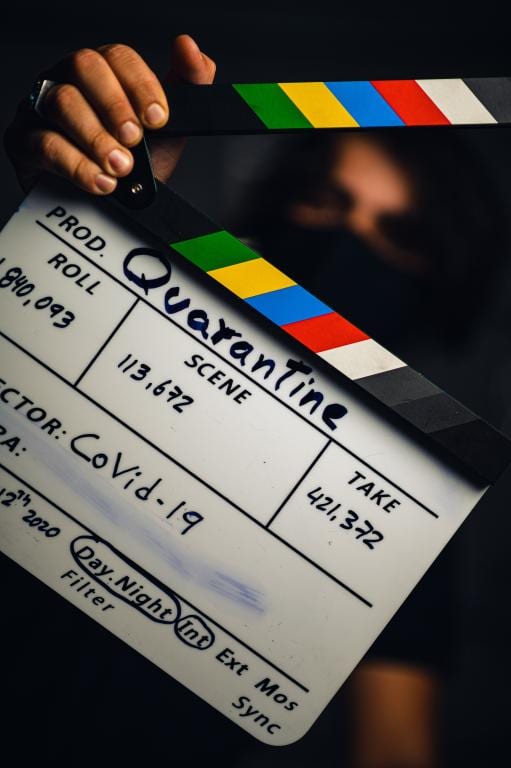
Photo by Andy Montes de Oca on Unsplash
During a crisis, one finds themselves questioning their beliefs—or at least I do. I question what I believe to be true. I ask myself if there are enough puzzle pieces available to unveil the image others claim is visible. In a recent recording, one of my guests, Jack Call—author of Psychedelic Christianity, put it this way, “I didn’t want to call myself a Christian unless I really believed those things that Christians believe.”
He later alluded to the fact that we are not aware of what we really believe. His following statement really struck a chord with me. “I don’t just care only about what’s objectively true—I also have a subjective side that cares about me.” Many of us have struggled with objective truth versus subjective truth. It’s one of philosophy’s longest unresolved arguments, as well as one of the greatest unanswered questions of the New Testament; what is truth?
Before any of us can discern the truth, we have to first know what we believe, do we not? We are bombarded by messaging and programming and channeling that influence and imprint the way we perceive and what we believe and why. But is that true? Who defines the truth? Is truth easily reduced to something that is believable? How big does the consensus have to be? Which authority qualifies it? How many experts does it take to define truth? Do we know the answer? Do we care?
I don’t want to say that I believe anything unless I really believe it. Thomas Jay Oord once wrote that “It’s part of being Christian to seek believable answers to the “why” questions.” That raises another question: What does it mean to be Christian? And so on and so forth. There is a terribly exhaustive tunnel down into countless rabbit holes if we continue to seek out answers that are believable and also true. Anyone who has been following the political entertainment of the government, along with the cooperation by the media and Hollywood can tell you that it’s almost impossible to know who or what to believe and why for that matter.
Sure, many could say that there are enough believable reasons to believe what we are being told. But how many of us have been victim to that sort of rhetoric within churches? We know that imitation and influence are two of the heaviest applications that can literally forge or force (or enforce) a consensus or collective morality. I am not here to quibble about what is moral and what is immoral. My only point is that imprints from societal messaging leave us faced with many false dichotomies to choose from: Ally or enemy, friend or foe, red or blue, black or white, Republican or Democrat (in the United States, more so), Conservative or Liberal, for Trump or against Trump, etc.
More than that, but in the search to seek out answers to what is believable, you must be easily identifiable by why you seek and what you seek. Ergo, we must latch on to labels that categorize the way we think, behave, the people we are willing to relate to or associate with, how we vote, and even how and who we fuck.
I won’t bother trying to convince you to reject all the labels. That’s too much of a fight I won’t put the energy into. I will, however, urge you to sit with yourself and ask yourself “What do I believe?”
In the last few weeks, I have changed my mind so many times about what I believe that it’s taken a toll on me— mentally and emotionally. There is so much information out there yet at the same time, it seems like there is not enough. Perhaps that is the lie of lack creeping in, convincing me that there isn’t enough. I know that there are syndromes dedicated to the availability of too much information—information overload.
So, we could separate objective truths from subjective truths by deciding that all math and science is objective. Unfortunately, I have a hard time believing that with common core frustrating the millions of parents now forced to homeschool, that math does not change over time.
Science is interesting. We like to believe it’s objective, but how can it be when a subjective person is forming a hypothesis? More than that, science has excluded women until recently, so does that have any impact on the objective nature of the field?
How is objectivity utilized?
“Objectivity in science is an attempt to uncover truths about the natural world by eliminating personal biases, emotions, and false beliefs. It is often linked to observation as part of the scientific method. It is thus intimately related to the aim of testability and reproducibility. To be considered objective, the results of measurement must be communicated from person to person, and then demonstrated for third parties, as an advance in a collective understanding of the world. Such demonstrable knowledge has ordinarily conferred demonstrable powers of prediction or technology.”
That which is objective is observed (in most cases). For me, this means that to believe something, I must see it. But how do I reconcile that with my faith? If “being Christian” means “to seek believable answers to the ‘why’ questions,” as Oord stated, but objective truth rests on observable data, can I say that I objectively believe in God? The simple answer is “no.” Alas, humans are complex.
One of the oddest remarks about scientific objectivity, for me, is found in Stanford’s Encyclopedia of Philosophy.
“Objectivity as Faithfulness to Facts: The idea of this first conception of objectivity is that scientific claims are objective in so far as they faithfully describe facts about the world.”
What I know about faithfulness is that it is the fruit of the Spirit. Faith, the base word, is a term I was convinced had nothing to do with science. Now, you can call my perspective limited (and you would be right) but for me, this combination is off-putting. And it’s also probably why this practice of objectivity is not routinely endorsed within the scientific field as its primary methodological approach to authorizing truths. The scientific method, however, is.
My issue is not with how science comes to terms with facts or truths. My concern is that we don’t stop and think about, well, anything, really. Mainly, we don’t stop and ask ourselves “what is true?” or “what do I believe?”.
I don’t know how you are handling this pandemic. I will only assume you are handling it the same as I am in one regard—the best I can. It’s not the way I want to, it’s not the way I envisioned it for myself, but I am doing what I can. Screwing things up, saying things I didn’t mean, and arguing over things I may not even really believe. So, instead of investing energy into defending truths or facts that you may not even believe, let’s pause and ask ourselves bigger questions.
-
What do I believe?
-
What makes me a Christian?
-
Do I need to be defined by the beliefs that I have outgrown?
-
Do I need someone else to believe what I believe? If yes, why?
Do what you can to invite yourself inward, into the mind, the heart, the soul. The silver lining in all of this may be that we get to know ourselves a little bit better and fully believe the things we claim to believe or reject the things we never really believed in the first place. It may not be observable, it may not even be reproducible for anyone else, but it will provide you with a deeper truth about yourself. Once you fully know yourself, it’s a hell of a lot easier to know others and to know God.
Stay healthy out there beautiful people.
If you’re looking for stimulating discussions on a variety of topics- from theology, current events, psychology, philosophy, and even a little conspiracy; I highly recommend Recorded Conversations. A Podcast dedicated to compassionately considering all perspectives while engaging in authentic, connected dialogue, with me, as your host. (Available wherever you get your pods.)

About Danielle Kingstrom
Lover of legwarmers, coffee until 2 am, good books and comfy nooks. You can read more about the author here.
Previous Post

March 31, 2020
The Corona Storm
Next Post
May 2, 2020 The Masks People Wear and What it Means: Psychology + Coronavirus
Browse Our Archives
Select a Category Authentic Connection Ego Love Self Suffering Uncategorized
Select a Month October 2022 September 2022 August 2022 July 2022 June 2022 April 2022 March 2022 February 2022 January 2022 December 2021 November 2021 September 2021 July 2021 June 2021 May 2021 April 2021 March 2021 February 2021 January 2021 December 2020 November 2020 October 2020 September 2020 August 2020 July 2020 June 2020 May 2020 April 2020 March 2020 February 2020 January 2020 December 2019 November 2019 October 2019 September 2019 August 2019 July 2019 June 2019 May 2019 April 2019 March 2019
TAKE THE
Religious Wisdom Quiz
Who played instruments in Temple?
Select your answer to see how you score.
Levites Priests Prophets Kings
Related posts from Danielle Kingstrom
Threats of Erotic Extermination: Is There an Erotic...
The Reality of the Denial of Dignity
Jesus & Joe Rogan: They're the Same
TRENDING AT PATHEOS Progressive Christian

Why Christians Have a Sacred Duty to Vote:...
The Bible offers strong support for the sacred duty to vote. Here...

What Being a Modern-Day Apostle Means to Me
In my last column, I discussed the ins and outs of modern-day...

Did Ancient China Once Worship the God of...
Across human history, a common thread weaves through the origins of the...

Love Your Neighbor – Including Earth-Kin: Lev. 19,...
God’s command to love your neighbor means acting in an ethical and...

Lead a Church Study of “Jesus and Lao...
Guest writer Jack Thomas (The Irreverent Reverend) reflects on leading his church...

Principles for Understanding the Apostolic Ministry Today
Whenever people discover that my formal ministry title is "apostle," as in...
view all Progressive Christian blogs
Ad-Free & Subscriber Log-In Subscription Support
- About Us
- 2026 Calendar
- Videos
- Podcasts
- Library of World Religions
- Faith In Media Tracker
- Advertise With Us
- Write for Us
- Privacy Policy
- Terms of Service
- Do Not Sell My Data
- Contact Us
- Radiant Digital
- Manage Newsletter Subscriptions
- Unsubscribe From Notifications
- Sitemap
Copyright 2008-2026, Patheos. All rights reserved.
Subscription Support Ad-Free & Subscriber Log-In
Follow Patheos