
BuddhistCatholicContemplativeEvangelicalGeneral ChristianHinduJewishLatter-day SaintMuslimNew VisionsProgressive Christian
Beliefs
- Buddhist
- Catholic
- Contemplative
- Evangelical
- General Christian
- Hindu
- Jewish
- Latter-day Saint
- More Voices
- Muslim
- New Visions
- Pagan
- Progressive Christian
Topics
- Religion News
- Food and Religion
- Sports and Religion
- Religious Art
- Religious Music and Entertainment
- Religious Events
- History and Religion
- Style and Religion
- Politics and Religion
- Women in Religion
- Recreation Outdoors and Religion
- Business Finance and Religion
- Careers Workplace and Religion
- Education and Religion
- Family Parenting and Religion
- Health Fitness and Religion
- Home and Religion
- Relationships and Religion
- Technology and Religion
- Travel and Religion
Columnists
- Buddhist Columnists
- Business Finance and Religion Columnists
- Careers Workplace and Religion Columnists
- Catholic Columnists
- Contemplative Columnists
- Education and Religion Columnists
- Evangelists Columnists
- Family Parenting and Religion Columnists
- General Christian Columnists
- Health Fitness and Religion Columnists
- Hindu Columnists
- History and Religion Columnists
- Home and Religion Columnists
- Jewish Columnists
- More Voices Columnists
- Latter Day Columnists
- Muslim Columnists
- New Visions Columnists
- Nonreligious Columnists
- Pagan Columnists
- Politics and Religion Columnists
- Progressive Columnists
- Recreation Outdoors and Religion Columnists
- Relationships and Religion Columnists
- Religion News Columnists
- Religious Art Columnists
- Religious Events Columnists
- Religious Music and Entertainment Columnists
- Sports and Religion Columnists
- Style and Religion Columnists
- Technology and Religion Columnists
- Travel and Religion Columnists
- Women in Religion Columnists
Resource Library
- 2026 Calendar
- Library of World Religions
- The 100 Most Holy Places on Earth
- Patheos Answers
- Podcasts
- Videos
- Faith Leaders Database
- Anglican Episcopalian
- Bahai
- Baptist
- Buddhism
- Christianity
- Confucianism
- Eastern Orthodoxy
- Hinduism
- Holiness and Pentecostal
- ISKCON
- Islam
- Judaism
- Lutheran
- Methodist
- The Church of Jesus Christ of Latter-day Saints
- New Age
- Paganism
- Presbytarian and Reformed
- Protestantism
- Religion Behind the Scenes
- Roman Catholic
- Scientology
- Shia Islam
- Sikhism
- Sufism
- Sunni Islam
- Taoism
- Zen
- See all religions
Research Tools
 Ad-Free & Subscriber Log-In Subscription Support
Ad-Free & Subscriber Log-In Subscription Support
Follow Patheos 

- Trending:
- Forgiveness
- |
- Marriage
- |
- Consciousness
- |
- Death Penalty
- |
- Election
- |
- Halloween
 Danielle Kingstrom
- Home
- Progressive Christian
- Mountain of Malaise: A Radical Transformation During a Crisis
Mountain of Malaise: A Radical Transformation During a Crisis
Last updated on: March 20, 2020 at 4:16 pm by Danielle Kingstrom
Mountain of Malaise: A Radical Transformation During a Crisis 2020-03-20T16:16:17-06:00 Danielle Kingstrom
Patheos Explore the world's faith through different perspectives on religion and spirituality! Patheos has the views of the prevalent religions and spiritualities of the world.

Photo by eberhard grossgasteiger on Unsplash
How does one even find the words to offer to an audience that has been confronted with ultimate fears?
How can we encourage others when we are just as frightened as those in need of comfort?
How can we offer compassion during a crisis?
I have wrestled between compassion and cynicism, with the inner cynic winning out in many instances, causing me to put myself on a social media time-out, almost every day. (Yeah, I try again every day, and fail.) My empathy turned into apathy and I realized it was time for me to sit in silence and just listen.
I listened and I heard the wind bustling through the trees. A storm is brewing. And as soon as we climb this mountain, we will greet the stormy sea.
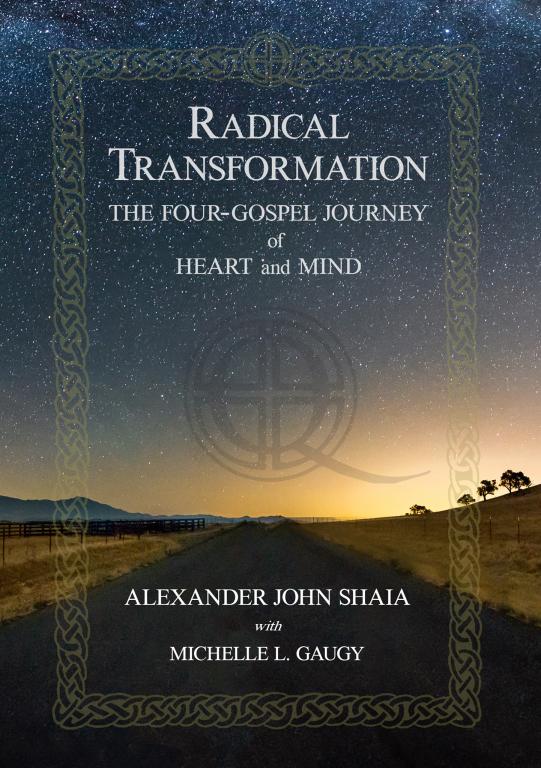
Almost a year ago, I was splashing through my own stormy sea. I embarked on a radically transformative journey by utilizing the four gospels of the Bible as my compass. (I wrote about it time and time again).
The first step of the journey incorporated the gospel of Matthew: Climbing the Great Mountain. This path asks: How do we face change? Do we do it with fear or faith?
The entire world is facing significant changes RIGHT NOW. We are facing a global pandemic, economies are crashing, people are dying, and we aren’t even sure if we can get toilet paper a month from now. (Have you considered investing in a bidet?)
The first path of a radical transformation includes a few practices to implement. The first “requires self-responsibility and presence. We need to be ‘with’ ourselves—mind, body, and spirit—in a condition of self-honesty and openness. Although we must not descend into isolation, we also cannot allow ourselves to be distracted by anything or anyone. We can take no gall. Instead, our course is prayer and the asking for wise counsel within.” (Heart and Mind, 116)
Ironically, we are all in isolation right now. So, it would seem now is as good a time as ever to embrace the isolation (as temporary, if we must, to calm our fears) as a means to focus on what is important. We need to be with ourselves. We must be honest with ourselves. That includes knowing that you don’t need 14 packages of toilet paper, you can limit yourself.
We can also limit the anxiety we allow ourselves to feel. Facing change means we face our fears, too. Since we are all quarantined, we will have much time to reflect on why the changes frighten us. What does it say about us? What does it reveal about unhealed marks of the past? I think most importantly, facing change allows us to fully see how underdeveloped we really are. There’s nothing wrong with acknowledging the work we have before us. Given the slow-down of the busy-ness of our lives, the Great Awakening can continue if we put practices into place that ask us to open ourselves up to the change.
The 2nd and 3rd practices of this first path, as outlined by Alexander John Shaia, require patience and self-compassion. How timely that we have more time to be patient, given many are no longer working. Climbing a mountain is an arduous task. One that requires careful considerations, because missteps could lead to bigger disasters. In any event, we will misstep along the way. If you pay attention to the news cycles (which I would strongly urge against) then you can see detailed, chronological lists of all the missteps that have occurred during this Corona Crisis. Keeping a record of wrongs will do us no good. (See 1 Corinthians 13)
Self-compassion means that we forgive ourselves if we stumble while climbing. Heaping shame and criticism upon ourselves for our mistakes only make the climb more formidable. The imposition of isolation doesn’t have to be met with contempt. We can open our arms to the change, greet it, and accept that this seclusion, however long it may be, will eventually break down many tribal ideologies that we have been supported by all our lives.
Jesus broke down tribal barriers. The parables he told revealed a new depiction of God’s people.
“Messianic Jews surely found…not only to be revolutionary but horrifying. They were Jews. They trusted, in an understanding as deep as their history, that their God was uniquely in their bloodline. After all, the covenant with Abraham had made them first among all people, specially privileged.” (118)
A tribe mentality served us well at the beginning of civilization. It is one of the reasons that humanity has survived for so long. But it also leads to divisions that keep people separate. In a time during separateness, we will do all we can to cling to our tribal instincts and mentalities. This means that we will race to feel a connection from social media while at the same time, perpetuating our tribal values and sense of privilege, especially our American prestige. We must not do that.
“It must have been almost impossible for them to believe that after two thousand years of their ancestors suffering, hoping, and waiting, they were not going to receive any exceptional acknowledgment. However, Jesus’ instruction tells them they have to renounce any sense of privilege that they might believe is theirs alone. Even further—they are instructed to open their hearts and minds to all tribes—in effect, to give their privilege away to ‘all nations,’ even to the oppressors!” (119)
We are not so protected in the United States. Sure, we would like to think we are immune to anything, that “we can win this war with the invisible enemy,” and that we will not be affected by this. Perhaps that is our programming speaking, but I think it’s time that we face the potentiality that we will be affected by this. Maybe we won’t lose someone close to us, but what if we never open the doors to our businesses again? What if we never go back to work for the same company again? What if we never work in the same field again? What if there is no way of knowing what tomorrow will bring?
Can we let go of our need for certainty? Can we let go of our sense of protection and privilege and open our hearts and minds to something new, different, and life-altering?
Certainty and presupposition have been written into our fabric of life. Things that are uncertain, people that we do not know intimately (or from foreign countries) make us suspicious. Are we going to choose to hold to those tribal mentalities while we are in a much-needed secluded time? Or, would we rather face the change with faith and an unattached sense of freedom?
What if this isolation can help us recalibrate and reprioritize one of our many purposes in life? What if this quiet time of self-reflection leads us to see that, no matter what color our skin is, no matter what language we speak, no matter our ancestral origins, no matter the size of our bank accounts or houses (or even if we have houses); we are not really all that different? What if we could break down these tribal barriers and see that we are all One? Could we climb this mountain together?
RIGHT NOW, we are all the same: fearful, quarantined and unsure of what will come next. RIGHT NOW, we must first extend patience and compassion to ourselves and others. RGHT NOW, we are all climbing a great mountain. And we will get over it. But how will we face the stormy sea that we will descend into on the next path?
With the help of Alexander John Shaia’s words, I will address that next. Stay tuned.

https://www.facebook.com/Shaiaspeakmanhouse/
COMING SOON!

About Danielle Kingstrom
Writer, Podcaster, Enneagram 5-1-7-4, Sagittarius, Advocate for Erotic Theology, Wife, Mother, Grandmother, Farmer, Gardener, Human. You can read more about the author here.
Previous Post

March 15, 2020
Social Distancing & the Coronavirus: Will it Lead to Social Distance?
Next Post
March 31, 2020 The Corona Storm
Browse Our Archives
Select a Category Authentic Connection Ego Love Self Suffering Uncategorized
Select a Month October 2022 September 2022 August 2022 July 2022 June 2022 April 2022 March 2022 February 2022 January 2022 December 2021 November 2021 September 2021 July 2021 June 2021 May 2021 April 2021 March 2021 February 2021 January 2021 December 2020 November 2020 October 2020 September 2020 August 2020 July 2020 June 2020 May 2020 April 2020 March 2020 February 2020 January 2020 December 2019 November 2019 October 2019 September 2019 August 2019 July 2019 June 2019 May 2019 April 2019 March 2019
TAKE THE
Religious Wisdom Quiz
What was the name of the field bought with Judas' betrayal money?
Select your answer to see how you score.
Potter's Field Field of Blood Aceldama Golgotha
Related posts from Danielle Kingstrom

The Greatest in the Kingdom of Heaven: Confidence...

Lens on Life: Do You See Abundance or...

Do Christians Make an Idol out of Jesus?
TRENDING AT PATHEOS Progressive Christian

Why Christians Have a Sacred Duty to Vote:...
The Bible offers strong support for the sacred duty to vote. Here...

What Being a Modern-Day Apostle Means to Me
In my last column, I discussed the ins and outs of modern-day...

Did Ancient China Once Worship the God of...
Across human history, a common thread weaves through the origins of the...

Love Your Neighbor – Including Earth-Kin: Lev. 19,...
God’s command to love your neighbor means acting in an ethical and...

Lead a Church Study of “Jesus and Lao...
Guest writer Jack Thomas (The Irreverent Reverend) reflects on leading his church...

Principles for Understanding the Apostolic Ministry Today
Whenever people discover that my formal ministry title is "apostle," as in...
view all Progressive Christian blogs
Ad-Free & Subscriber Log-In Subscription Support
- About Us
- 2026 Calendar
- Videos
- Podcasts
- Library of World Religions
- Faith In Media Tracker
- Advertise With Us
- Write for Us
- Privacy Policy
- Terms of Service
- Do Not Sell My Data
- Contact Us
- Radiant Digital
- Manage Newsletter Subscriptions
- Unsubscribe From Notifications
- Sitemap
Copyright 2008-2026, Patheos. All rights reserved.
Subscription Support Ad-Free & Subscriber Log-In
Follow Patheos