
BuddhistCatholicContemplativeEvangelicalGeneral ChristianHinduJewishLatter-day SaintMuslimNew VisionsProgressive Christian
Beliefs
- Buddhist
- Catholic
- Contemplative
- Evangelical
- General Christian
- Hindu
- Jewish
- Latter-day Saint
- More Voices
- Muslim
- New Visions
- Pagan
- Progressive Christian
Topics
- Religion News
- Food and Religion
- Sports and Religion
- Religious Art
- Religious Music and Entertainment
- Religious Events
- History and Religion
- Style and Religion
- Politics and Religion
- Women in Religion
- Recreation Outdoors and Religion
- Business Finance and Religion
- Careers Workplace and Religion
- Education and Religion
- Family Parenting and Religion
- Health Fitness and Religion
- Home and Religion
- Relationships and Religion
- Technology and Religion
- Travel and Religion
Columnists
- Buddhist Columnists
- Business Finance and Religion Columnists
- Careers Workplace and Religion Columnists
- Catholic Columnists
- Contemplative Columnists
- Education and Religion Columnists
- Evangelists Columnists
- Family Parenting and Religion Columnists
- General Christian Columnists
- Health Fitness and Religion Columnists
- Hindu Columnists
- History and Religion Columnists
- Home and Religion Columnists
- Jewish Columnists
- More Voices Columnists
- Latter Day Columnists
- Muslim Columnists
- New Visions Columnists
- Nonreligious Columnists
- Pagan Columnists
- Politics and Religion Columnists
- Progressive Columnists
- Recreation Outdoors and Religion Columnists
- Relationships and Religion Columnists
- Religion News Columnists
- Religious Art Columnists
- Religious Events Columnists
- Religious Music and Entertainment Columnists
- Sports and Religion Columnists
- Style and Religion Columnists
- Technology and Religion Columnists
- Travel and Religion Columnists
- Women in Religion Columnists
Resource Library
- 2026 Calendar
- Library of World Religions
- The 100 Most Holy Places on Earth
- Patheos Answers
- Podcasts
- Videos
- Faith Leaders Database
- Anglican Episcopalian
- Bahai
- Baptist
- Buddhism
- Christianity
- Confucianism
- Eastern Orthodoxy
- Hinduism
- Holiness and Pentecostal
- ISKCON
- Islam
- Judaism
- Lutheran
- Methodist
- The Church of Jesus Christ of Latter-day Saints
- New Age
- Paganism
- Presbytarian and Reformed
- Protestantism
- Religion Behind the Scenes
- Roman Catholic
- Scientology
- Shia Islam
- Sikhism
- Sufism
- Sunni Islam
- Taoism
- Zen
- See all religions
Research Tools
 Ad-Free & Subscriber Log-In Subscription Support
Ad-Free & Subscriber Log-In Subscription Support
Follow Patheos 

- Trending:
- Forgiveness
- |
- Marriage
- |
- Consciousness
- |
- Death Penalty
- |
- Election
- |
- Halloween
 Danielle Kingstrom
- Home
- Progressive Christian
- See the Beauty with Alexander Shaia: Appreciative Beauty
See the Beauty with Alexander Shaia: Appreciative Beauty
Last updated on: December 17, 2019 at 5:22 pm by Danielle Kingstrom
See the Beauty with Alexander Shaia: Appreciative Beauty 2019-12-17T17:22:58-06:00 Danielle Kingstrom
Patheos Explore the world's faith through different perspectives on religion and spirituality! Patheos has the views of the prevalent religions and spiritualities of the world.
Beauty is everywhere and evident to the naked eye, yet we seek out beauty through the strangest of methods. God has planted a luscious and verdant landscape of beauty for us to not only observe, but participate in. Yet we wait for advertisers—the “world”— to define what beauty is; what fashion runways reveal as the next greatest accessory to add to your wardrobe to make you feel beautiful.
We are creatures that seek out love and beauty, thinking that which is beautiful is lovable and that which is lovable is beautiful. Who defines which is what? For now, we continue to rely on the metrics provided by an ever-changing society.
I don’t want to quibble about what is and is not beautiful. I would rather focus on types of beauty and why understanding the variances of beauty can help us really look out into the world and see it for more than what we have assumed it to be. The world, our life—our very existence—all that makes up our reality, is an entire beauty experience. Perhaps we need to adjust our lens?
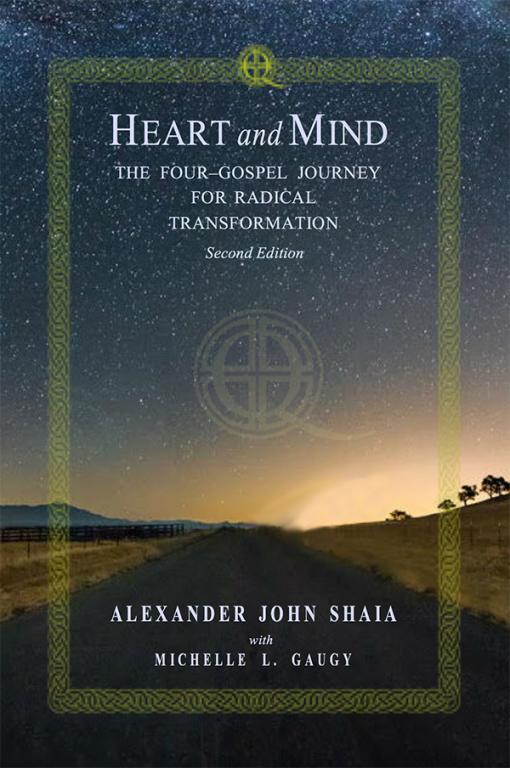
We begin the adjustment with Alexander Shaia’s Essential and Continuing Practices, as outlined in Heart and Mind: The Four-Gospel Journey for a Radical Transformation. In the second of eight practices, Shaia urges readers to remain Open and Engage the Truths of Beauty. This begins by recognizing the experience of beauty on three levels: the appreciative, the collaborative, and the creative. “All are satisfying and important, and all will yield riches as four-path practices.” (379)
What is beautiful to you? Never mind what others may say about what you find beauty in. What can you look at right now that you can appreciate without thinking something about it needs more? We often will see something beautiful and instantly diminish it, saying things like, “If it only had this behind that…” or “I would consider it beautiful if it was slightly less blue.” Leave that desire to critique behind.
Appreciating beauty means that we see it for what it is, in all its glory and distinction, knowing that the slightest edit could remove all its sacredness.
Regularly opening ourselves up to the appreciation of beauty is invaluable…we should regularly seek out the places that open us to wonder and awe, to a feeling of the holy, being connected to All. (379)
Do you revere that which you observe as beautiful? Do you stand upon its sight with an overwhelming understanding of how much bigger the world truly is? What does that beautiful scene surrender to? How do you surrender to that beauty? Do you touch it? Smell it? Taste it? Do you get lost in it?
What does that beauty reveal to you or about you? That’s the bigger question. When I take notice of how remarkably beautiful a sight it is when a honeybee covers its legs in pollen after sifting through the sunflower head; I contemplate how much fun it would be to roll around in pollen all day, flying from flower to flower.
What does that look like in my own life? Why does a bee collect pollen? To feed his colony. What do I do in my own life to feed my family? Sometimes, it feels like I fly from blossom to blossom collecting pollen to make honey. Then I go from child to child, nourishing each with not only food, but information.
The other thing about a honeybee is that it leaves remnants of pollen from the previous flower on the next flower. With each collection, he leaves behind a trace that he was on the previous flower. Similarly, we do that in every exchange and interaction we have with another. We interact with people to gather something for ourselves—whether it be attention, information, or a source of employment; yet when we leave and move on to the next person or experience, we leave traces of our previous exchange behind. We expand our experience as we fly from one blossom to another.
In order to expand our experience, we also use our imagination. We select an episode or a feeling from our lives or our work or our relationships—something from our larger world. We bring that truth into our encounter with beauty in any way that seems appropriate to us.
Appreciating beauty means that while we appreciate it, we apply what we appreciate to our life. Part of the path to Radical Transformation includes seeing everything as a gift. A gift we appreciate, not one we resent or regret. If we can be still and find beauty in the busyness and chaos of daily demands and competitive races of success, then the essential second step would be to find a way to use that beauty to integrate it with all aspects of our lives.
For example, is there a previous wound that needs healing that may have been triggered while observing and appreciating beauty? Perhaps the stillness and the awe of the beauty experience encourages you to set new goals? Maybe it sparks an idea that will help you with a project you have been working on. It could even present an answer to a question you asked months ago.
The important part is to take what rises from within and wrap it up with this particular beauty experience so that all areas of your life can be beautified. Simply put, stop and notice the beauty. Appreciate it. Combine it with something that you haven’t identified as beautiful and make it that.
This combination and method of integration will work as a necessary tool for understanding how the experience of beauty is also collaborative.
For more on Dr. Alexander J. Shaia’s Journey for Radical Transformation, click here. Visit Quadratos for more information.

About Danielle Kingstrom
Danielle is a writer, podcaster, and home-school teacher. She lives in rural Minnesota on a farm with her husband and five children. Together, they maintain a fourth generation legacy farm and raise chickens and cattle. When she is not reading, writing, or self-educating; she can be found outdoors in nature’s naked elements. Danielle is an avid gardener, a lover of art, knowledge, and always a student. She is active in revitalization projects within her community, partnering with committees to bridge the Rural Divide. Unafraid of sparking controversy, Danielle is a frequently published author, appearing regularly in her community’s local newspaper; writing about provocative issues and asking challenging questions that raise a few eyebrows. She is currently working on two books. You can read more about the author here.
Previous Post

December 11, 2019
Greet December Doubt with Warming Faith
Next Post
December 19, 2019 New Year's Resolution: Let Others have their Resolutions
Browse Our Archives
Select a Category Authentic Connection Ego Love Self Suffering Uncategorized
Select a Month October 2022 September 2022 August 2022 July 2022 June 2022 April 2022 March 2022 February 2022 January 2022 December 2021 November 2021 September 2021 July 2021 June 2021 May 2021 April 2021 March 2021 February 2021 January 2021 December 2020 November 2020 October 2020 September 2020 August 2020 July 2020 June 2020 May 2020 April 2020 March 2020 February 2020 January 2020 December 2019 November 2019 October 2019 September 2019 August 2019 July 2019 June 2019 May 2019 April 2019 March 2019
TAKE THE
Religious Wisdom Quiz
Which city did the Philistines give David as a base during his exile?
Select your answer to see how you score.
Bethlehem Gibeah Ziklag Hebron
Related posts from Danielle Kingstrom

Hey Girl, Can I Tell You Something?

The Wounding Effects of Truth-Telling: Michel Foucault &...

Post Purity Practices: How We Can Embody Eroticism

An Invitation to Love through the Night of...
TRENDING AT PATHEOS Progressive Christian

Why Christians Have a Sacred Duty to Vote:...
The Bible offers strong support for the sacred duty to vote. Here...

What Being a Modern-Day Apostle Means to Me
In my last column, I discussed the ins and outs of modern-day...

Did Ancient China Once Worship the God of...
Across human history, a common thread weaves through the origins of the...

Love Your Neighbor – Including Earth-Kin: Lev. 19,...
God’s command to love your neighbor means acting in an ethical and...

Lead a Church Study of “Jesus and Lao...
Guest writer Jack Thomas (The Irreverent Reverend) reflects on leading his church...

Principles for Understanding the Apostolic Ministry Today
Whenever people discover that my formal ministry title is "apostle," as in...
view all Progressive Christian blogs
Ad-Free & Subscriber Log-In Subscription Support
- About Us
- 2026 Calendar
- Videos
- Podcasts
- Library of World Religions
- Faith In Media Tracker
- Advertise With Us
- Write for Us
- Privacy Policy
- Terms of Service
- Do Not Sell My Data
- Contact Us
- Radiant Digital
- Manage Newsletter Subscriptions
- Unsubscribe From Notifications
- Sitemap
Copyright 2008-2026, Patheos. All rights reserved.
Subscription Support Ad-Free & Subscriber Log-In
Follow Patheos