
BuddhistCatholicContemplativeEvangelicalGeneral ChristianHinduJewishLatter-day SaintMuslimNew VisionsProgressive Christian
Beliefs
- Buddhist
- Catholic
- Contemplative
- Evangelical
- General Christian
- Hindu
- Jewish
- Latter-day Saint
- More Voices
- Muslim
- New Visions
- Pagan
- Progressive Christian
Topics
- Religion News
- Food and Religion
- Sports and Religion
- Religious Art
- Religious Music and Entertainment
- Religious Events
- History and Religion
- Style and Religion
- Politics and Religion
- Women in Religion
- Recreation Outdoors and Religion
- Business Finance and Religion
- Careers Workplace and Religion
- Education and Religion
- Family Parenting and Religion
- Health Fitness and Religion
- Home and Religion
- Relationships and Religion
- Technology and Religion
- Travel and Religion
Columnists
- Buddhist Columnists
- Business Finance and Religion Columnists
- Careers Workplace and Religion Columnists
- Catholic Columnists
- Contemplative Columnists
- Education and Religion Columnists
- Evangelists Columnists
- Family Parenting and Religion Columnists
- General Christian Columnists
- Health Fitness and Religion Columnists
- Hindu Columnists
- History and Religion Columnists
- Home and Religion Columnists
- Jewish Columnists
- More Voices Columnists
- Latter Day Columnists
- Muslim Columnists
- New Visions Columnists
- Nonreligious Columnists
- Pagan Columnists
- Politics and Religion Columnists
- Progressive Columnists
- Recreation Outdoors and Religion Columnists
- Relationships and Religion Columnists
- Religion News Columnists
- Religious Art Columnists
- Religious Events Columnists
- Religious Music and Entertainment Columnists
- Sports and Religion Columnists
- Style and Religion Columnists
- Technology and Religion Columnists
- Travel and Religion Columnists
- Women in Religion Columnists
Resource Library
- 2026 Calendar
- Library of World Religions
- The 100 Most Holy Places on Earth
- Patheos Answers
- Podcasts
- Videos
- Faith Leaders Database
- Anglican Episcopalian
- Bahai
- Baptist
- Buddhism
- Christianity
- Confucianism
- Eastern Orthodoxy
- Hinduism
- Holiness and Pentecostal
- ISKCON
- Islam
- Judaism
- Lutheran
- Methodist
- The Church of Jesus Christ of Latter-day Saints
- New Age
- Paganism
- Presbytarian and Reformed
- Protestantism
- Religion Behind the Scenes
- Roman Catholic
- Scientology
- Shia Islam
- Sikhism
- Sufism
- Sunni Islam
- Taoism
- Zen
- See all religions
Research Tools
 Ad-Free & Subscriber Log-In Subscription Support
Ad-Free & Subscriber Log-In Subscription Support
Follow Patheos 

- Trending:
- Forgiveness
- |
- Marriage
- |
- Consciousness
- |
- Death Penalty
- |
- Election
- |
- Halloween
 Danielle Kingstrom
- Home
- Progressive Christian
- Love the Shepherd, Love the Enemy
Love the Shepherd, Love the Enemy
Last updated on: October 30, 2019 at 11:38 am by Danielle Kingstrom
Love the Shepherd, Love the Enemy 2019-10-30T11:38:13-06:00 Danielle Kingstrom
Patheos Explore the world's faith through different perspectives on religion and spirituality! Patheos has the views of the prevalent religions and spiritualities of the world.

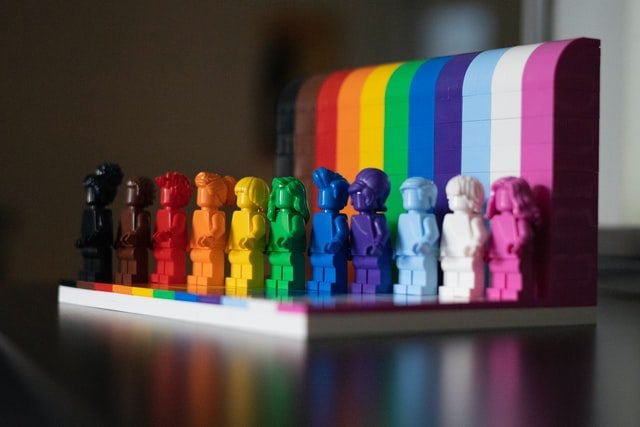
Photo by Biegun Wschodni on Unsplash
You can find all sorts of reasons to hate someone. We are quick to label others as the “enemy.” When someone shows us something dark or unsavory about themselves, we are conditioned to criticize and cancel. When another changes before our eyes, says something we disagree with, or just acts out of character to what we have come to expect; we find as many reasons as we can to dismiss, disregard, and denigrate the other.
But for those of us who follow Christ, we are called to love our enemy. Yet, we stand justified with our hatred. We are quick to pull verses out of the Bible that we can use to explain our principled and moral stances on hating what is evil.
There are many reasons why you could hate me. I have a list of reasons. I wrote them all down and I am going to share them with you.
Angels and Shepherds
I wrote down my “weaknesses” as part of a process of a transformational journey. As I have written before, I am working my way through Heart and Mind: The Four-Gospel Journey for Radical Transformation, by Alexander J. Shaia, PhD. Dr. Shaia is a gifted visionary that illuminates the path to transformation by stripping down the Gospels to reveal the naked intention of spiritual growth.
While Walking Luke’s Road of Riches, or the fourth path of Quadratos, the reader will pause to write down their Angels and Shepherds. This is a process by which we take a moral inventory of our personality, the ways in which we identify ourselves, and the traits that influence our behaviors and decision-making. Essentially, we write down our “strengths” and “weaknesses.”
Shaia employs the symbolic representation of angels and shepherds to describe our strengths and weaknesses. And he illustrates such a beautiful backstory in his book. Recall, if you will, how the angel greeted the shepherds in the gospel of Luke and invited them to be present for the birth of baby Jesus. (Luke 2:8-21) Angels are considered the highest forms and during the time of Jesus’ birth, shepherds were considered the lowliest of people.
My “Shepherds”, from my understanding, are the traits that represent my personality that need development. They are not necessarily “bad,” but make up the whole of who we are. As with those who discover their Enneagram type, the Shepherds reveal the sides of our Self that require development and integration. Some may call Shepherds the dark side of the Self or the Shadow Self. Others would simplistically call them our “demons” or even relegate them as our False Self.
Still some would say they are negative qualities of a person and provide justification for why an individual who exhibits such qualities are “bad” or deserve to be “cancelled” and hated.
For me, my Shepherds reveal aspects of my True Self that just need to be joined by my Angels. Dr. Shaia elaborates:
The aspects of ourselves that we think of as our “highest” must seek out those we think of as our “lowest” or “ugliest,” so that the two may come together in the fertile beginnings of what psychologists call “integration.
This is difficult and gradual, and the work is far more than mere acceptance, for acceptance all too readily becomes resignation. This task asks us to truly love and rejoice in those “lowly” aspects and fully join with them. Only in this way can we ensure that we have all the parts of us available when we need them for appropriate action—that no part of us has been cut off or repressed.
Shaia remarks that our angels are our hopeful selves, and our shepherds are our instinctual selves. They must be joined to fully reveal who we are.
Upon taking a moral inventory, I have deduced that my Shepherds are as following:
- Isolated
- Extreme Introversion
- Pre-occupied nature
- Unsentimental
- Uncompromising
- Non-committal
- Provocative
- Skeptical
- Overtly sarcastic
- Cynical
- Greedy with knowledge
- Critical
- Defensive of position, beliefs, stances
- Judgmental
- Blunt
- Unaccepting of easy answers or solutions
- Easily overwhelmed by the emotions of others
- Ability to cut connections easily with no regrets
- High-strung
- Confrontational
- Intense
There. I have provided for you enough reasons to deduce that my personality is not all that great. Haven’t I? Even more so, if you look at my Twitter feed and Facebook posts, you will see that I don’t always practice what I preach. Sometimes, I seemingly contradict myself. Other times, I can get down-right rude and nasty. Many people have commented on how un-Christian I can be. Some of the things I say and write aren’t always “Christ-like.”
For those who know me in real life—those who have also met my Angels— they know to take the sweet with the sour.
People are complex but simple at the same time. We can be extremely giving and selfless in one minute, and the next, we can be greedy and selfish. It’s not just me. It’s all of us. And despite how unsavory some of my personality traits may be, they make up the whole of who I am. More so, they can give reason for others to disconnect from me and write me off.
All of this is to say that we—all of humanity—are a work in progress. We are all influenced by all our personality traits. The “good” and the “bad.” Sometimes, we display our higher selves, other times we are hell bent on displaying our lower selves. That doesn’t make us completely lowly creatures.
We—I included—get caught up in focusing in on the Shepherds of others to a point that we don’t ever consider the Angels of others. If someone shows us their dark side, we assume they are all dark. That’s just how it has always been done.
But I think it’s time to push back against this simple and base approach to categorizing people. For me, because of my beliefs, I must push back against this way of valuing or devaluing others if I want to actualize the fullness of who I am. If I am called to accept all of who I am, naturally, the next step is to extend the same grace to others. Only insofar as one understands that loving the self fully helps us actualize and demonstrate an other-oriented love—which I believe it can.
Now, this does not mean that I graciously accept what many terms as “evil.” This does not mean I become a doormat for others to constantly step all over me all the while I am accepting who they are as a person. This does not mean that I ignore or excuse or diminish bad behavior or “sin.” Nor does it mean that one should be freed from consequence of poor decisions and horrendous acts of violence.
What it does mean is that, so long as I am willing to be honest with myself, I recognize that one bad act from another doesn’t mean they are entirely all bad or even that they need my judgments. I don’t need to call them out and accuse, necessarily. What good would that do? And who am I to point out the speck in another eye when this heavy plank sticks out of mine?
I can change myself, but I cannot change others. I can only influence others if they are willing to be influenced. But most people aren’t because they are afraid of not being accepted. That’s the case for all people, I think. One won’t change if one does not want to ,nor if one doesn’t believe their change will be accepted.
I have listed a bunch of reasons to hate myself if I so choose. I could easily dismiss all the shadowy features of my personality but that would be a denial of who I Am. And while I believe we should deny ourselves as Jesus the Christ called us to, I don’t believe that entails lying to myself about my potential to go low.
I believe we are to deny ourselves our comforts. I noticed that I am all too comfortable with the ways in which I jump to criticizing anything that pushes against what I believe to be true about my reality. It’s not so much that it makes me feel cozy inside; it’s more so that because it is such a habitual practice, because it is a known practice that I often resort to, it’s a comfortable choice. It’s a readily available device that I can use to insulate myself from ideas that make me second-guess myself.
However, when you start to observe things about yourself so presently that you find yourself uncomfortable with how comfortable it is to lash out and criticize the wholeness of a person; you begin to wonder if others do that to you. And when you consider how you react to criticisms launched in your direction, it’s hard to dismiss how it feels.
When I really feel low because of how another treated me or reacted to me or insulted me, I want to hide that feeling and protect myself. My Shepherds come out. They defend me. They protect me. And they can’t appear to be meager or soft or weak. Shepherds protect their flocks from wolves. But they are just as scared of the wolves as the sheep are. So really, our Shepherds provide us comfort in scary situations.
Shepherds once lived isolated lives. They were believed to be thieves, violent, and people feared them. It’s no surprise that when others reveal their Shepherds to us, we react to these traits in a similar fashion as people once did. When someone tells us something new or different, or contrary to what we hold as true, it scares us because it makes us feel as if we don’t really know the truth.
I think that is why it is so easy to jump on the cancel-culture bandwagon and point our finger at people to let others know what a “bad” person looks like. But the truth is, we can all look like a bad person. What others reveal to us by showing us their dark side is the same thing that we are all humanly capable of imitating.
The Shepherds I see in others are reflections of me. In many cases, the things I don’t like about others, the things I hate about others; they are just the things about myself that I have not accepted. Uncompromising people irritate me to no end. But I myself am uncompromising in many aspects. Those who fear commitment irk me because I fear commitment. Those who are blunt and refuse to sugar-coat things really stand out for me because I am the same way.
When we allow our Angels to join our Shepherds, however, we transform them in such a way that they stand in awe of the birth of salvation.
The Angel of curiosity can join the Shepherd of uncompromising and together, can adjust the focus on the image of the perceived wolf to reveal just a pup. The Angel of objectivity can join the Shepherd of judgment and together, can confidently and courageously stand before the perceived threat of wolves without harming them or the sheep. My Angel of non-attachment can join my Shepherd of detachment and together, connect to a larger Wholeness of the world.
And while I tend to be unaccepting of easy answers or solutions, Shaia offers a simple approach to doing this. We hold things in our hearts. Our heart is a filter. If our Shepherds want to stand tall and defend us, we must reach out and grab them and pull them into our heart to join our Angels.
This is not an easy task, warns Shaia, but the result, after much patience and practice, allows us to convert our Shepherds. They are key components to our personality, and together, they make up the sum of who we are.
Acceptance of who we are provides an easy path for us to accept others as they are. And when people feel accepted, they are more open to change because they will feel confident in continued acceptance. It creates a blissful cycle for humanity, really. Our Shepherds do not have to be the enemy within. This is how we can learn to love the enemy, by loving ourselves. The enemy will no longer exist if the enemy is loved.
‘

About Danielle Kingstrom
Danielle is a writer, podcaster, and home-school teacher. She lives in rural Minnesota on a farm with her husband and five children. Together, they maintain a fourth generation legacy farm and raise chickens and cattle. When she is not reading, writing, or self-educating; she can be found outdoors in nature’s naked elements. Danielle is an avid gardener, a lover of art, knowledge, and always a student. She is active in revitalization projects within her community, partnering with committees to bridge the Rural Divide. Unafraid of sparking controversy, Danielle is a frequently published author, appearing regularly in her community’s local newspaper; writing about provocative issues and asking challenging questions that raise a few eyebrows. She is currently working on two books. You can read more about the author here.
Previous Post

October 26, 2019
The Puzzle Pieces of Contradiction: We Contain Multitudes
Next Post
November 3, 2019 Misunderstood but Ever-Understanding: Knowing the Other
Browse Our Archives
Select a Category Authentic Connection Ego Love Self Suffering Uncategorized
Select a Month October 2022 September 2022 August 2022 July 2022 June 2022 April 2022 March 2022 February 2022 January 2022 December 2021 November 2021 September 2021 July 2021 June 2021 May 2021 April 2021 March 2021 February 2021 January 2021 December 2020 November 2020 October 2020 September 2020 August 2020 July 2020 June 2020 May 2020 April 2020 March 2020 February 2020 January 2020 December 2019 November 2019 October 2019 September 2019 August 2019 July 2019 June 2019 May 2019 April 2019 March 2019
TAKE THE
Religious Wisdom Quiz
What does "Pentecost" mean?
Select your answer to see how you score.
Fiftieth Forty Firstfruits Twelve
Related posts from Danielle Kingstrom

The Greatest in the Kingdom of Heaven: Confidence...
The Pawns and Profits of Pride

Another Church Sex Scandal: The SBC Cover-up and...

Empathy Erasure: The Remedy is Curiosity
TRENDING AT PATHEOS Progressive Christian

Why Christians Have a Sacred Duty to Vote:...
The Bible offers strong support for the sacred duty to vote. Here...

What Being a Modern-Day Apostle Means to Me
In my last column, I discussed the ins and outs of modern-day...

Did Ancient China Once Worship the God of...
Across human history, a common thread weaves through the origins of the...

Love Your Neighbor – Including Earth-Kin: Lev. 19,...
God’s command to love your neighbor means acting in an ethical and...

Lead a Church Study of “Jesus and Lao...
Guest writer Jack Thomas (The Irreverent Reverend) reflects on leading his church...

Principles for Understanding the Apostolic Ministry Today
Whenever people discover that my formal ministry title is "apostle," as in...
view all Progressive Christian blogs
Ad-Free & Subscriber Log-In Subscription Support
- About Us
- 2026 Calendar
- Videos
- Podcasts
- Library of World Religions
- Faith In Media Tracker
- Advertise With Us
- Write for Us
- Privacy Policy
- Terms of Service
- Do Not Sell My Data
- Contact Us
- Radiant Digital
- Manage Newsletter Subscriptions
- Unsubscribe From Notifications
- Sitemap
Copyright 2008-2026, Patheos. All rights reserved.
Subscription Support Ad-Free & Subscriber Log-In
Follow Patheos