
BuddhistCatholicContemplativeEvangelicalGeneral ChristianHinduJewishLatter-day SaintMuslimNew VisionsProgressive Christian
Beliefs
- Buddhist
- Catholic
- Contemplative
- Evangelical
- General Christian
- Hindu
- Jewish
- Latter-day Saint
- More Voices
- Muslim
- New Visions
- Pagan
- Progressive Christian
Topics
- Religion News
- Food and Religion
- Sports and Religion
- Religious Art
- Religious Music and Entertainment
- Religious Events
- History and Religion
- Style and Religion
- Politics and Religion
- Women in Religion
- Recreation Outdoors and Religion
- Business Finance and Religion
- Careers Workplace and Religion
- Education and Religion
- Family Parenting and Religion
- Health Fitness and Religion
- Home and Religion
- Relationships and Religion
- Technology and Religion
- Travel and Religion
Columnists
- Buddhist Columnists
- Business Finance and Religion Columnists
- Careers Workplace and Religion Columnists
- Catholic Columnists
- Contemplative Columnists
- Education and Religion Columnists
- Evangelists Columnists
- Family Parenting and Religion Columnists
- General Christian Columnists
- Health Fitness and Religion Columnists
- Hindu Columnists
- History and Religion Columnists
- Home and Religion Columnists
- Jewish Columnists
- More Voices Columnists
- Latter Day Columnists
- Muslim Columnists
- New Visions Columnists
- Nonreligious Columnists
- Pagan Columnists
- Politics and Religion Columnists
- Progressive Columnists
- Recreation Outdoors and Religion Columnists
- Relationships and Religion Columnists
- Religion News Columnists
- Religious Art Columnists
- Religious Events Columnists
- Religious Music and Entertainment Columnists
- Sports and Religion Columnists
- Style and Religion Columnists
- Technology and Religion Columnists
- Travel and Religion Columnists
- Women in Religion Columnists
Resource Library
- 2026 Calendar
- Library of World Religions
- The 100 Most Holy Places on Earth
- Patheos Answers
- Podcasts
- Videos
- Faith Leaders Database
- Anglican Episcopalian
- Bahai
- Baptist
- Buddhism
- Christianity
- Confucianism
- Eastern Orthodoxy
- Hinduism
- Holiness and Pentecostal
- ISKCON
- Islam
- Judaism
- Lutheran
- Methodist
- The Church of Jesus Christ of Latter-day Saints
- New Age
- Paganism
- Presbytarian and Reformed
- Protestantism
- Religion Behind the Scenes
- Roman Catholic
- Scientology
- Shia Islam
- Sikhism
- Sufism
- Sunni Islam
- Taoism
- Zen
- See all religions
Research Tools
 Ad-Free & Subscriber Log-In Subscription Support
Ad-Free & Subscriber Log-In Subscription Support
Follow Patheos 

- Trending:
- Forgiveness
- |
- Marriage
- |
- Consciousness
- |
- Death Penalty
- |
- Election
- |
- Halloween
 Dandelionlady
- Home
- Pagan
- What’s in a Name? The Power of Defining Meditation
What’s in a Name? The Power of Defining Meditation
Last updated on: March 17, 2015 at 11:19 am by Melissa Hill
What’s in a Name? The Power of Defining Meditation 2015-03-17T11:19:00-04:00 Melissa Hill
Patheos Explore the world's faith through different perspectives on religion and spirituality! Patheos has the views of the prevalent religions and spiritualities of the world.
Before we even begin to talk about meditation first we have to figure out what exactly that means.
Meditation defined:
“The act or process of spending time in quiet thought : the act or process of meditating “ from the online Merriam-Webster dictionary.
That’s a horrible definition.
It’s circular in the first place, defining the word with the word by changing the ending. It’s also entirely missing the point. There are lots of ways to spend time in quiet thought. I can be calculating my gross income for my 1040 tax form and be engaged in quiet thought. That is not meditation.
So what is it?
Medtation as we think of it and as it has been studied comes from the many and varied Eastern traditions, all the entangled branches of Buddhism, Hinduism, Tantric practice and more. Each group has a bit of a different definition, but from my own reading and understanding it is primarily focused on what one might describe as mindfulness meditation. This is commonly thought of as the “emptying of one’s mind” enlightenment through letting go of the ego or self and the process of learning how to live within the present moment. This is hefty, powerful work and I think it benefits anyone to try this sort of meditation. But I’ve come to believe that there is more to meditation than the calming of the mind.
I’ve meditated to calm and excite my mind. I’ve meditated to heal myself, to heal others, to connect to deity, to connect to the land, to do magic, to prepare for an interview, to cope with grief and sorrow, and to prepare to lead.
I would argue that meditation is more than just the stilling of the mind. It is the basis of everything we call magic and a lot of what we call cognitive-behavioral psychology. A common definition of magic is changing consciousness at will. I see meditation as the skillset that makes that change happen. Meditation practice helps build willpower, which is essential for success at any endeavor. Neuro-Linguistic Programming is an incredibly modern viewpoint on meditation and it has some fascinating insights. We know that the ancient Europeans also had practices that one might call meditation, The Celtic poets had a process to inspire poetry which involved sensory deprivation and breath control where they went into a cave, wrapped themselves in a hide and put a rock on their chest. They effectively found a way to cut out sound and sight, and putting a rock on your chest is certainly a way to make you focus on your breath. The point of the exercise was to come out of this extended meditation with the power of inspiration in order to write grand poetry and song.
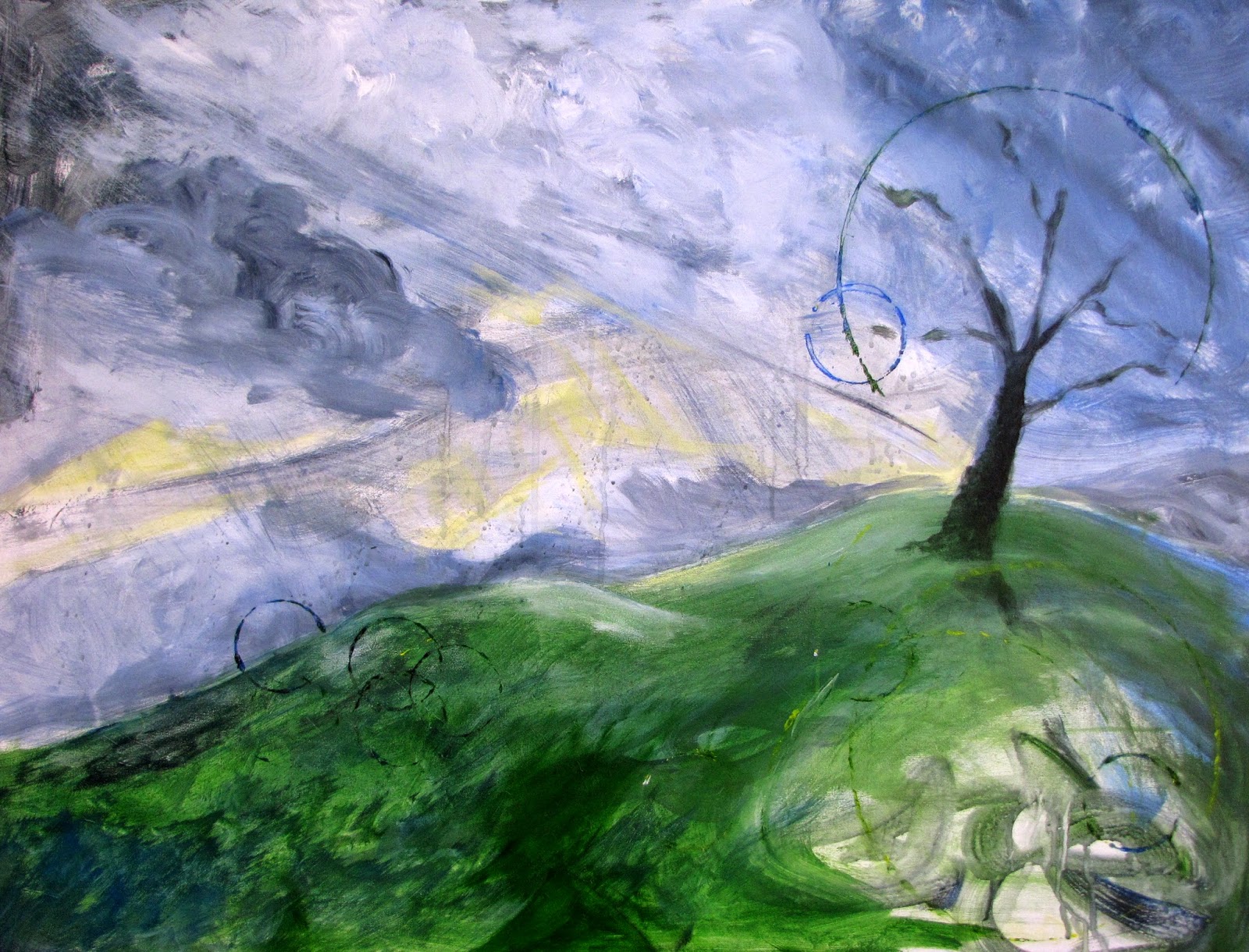
Some might argue that this is more like a trance technique than a meditation technique, but I would ask, what is the difference? Both are physical and psychological adjustments to environment in order to create a certain mental and emotional outcome. I would say that trance techniques are simply advanced meditation techniques. If that is the case, then it makes perfect sense why so many teachers from various magical traditions suggest that meditation be a basis for practice.
Meditation isn’t just for Buddhists and it never was.
I would define meditation thusly:
Meditation is any of a large group of mental and physical techniques that willfully change the state of mind of a person. This can include cognitive, emotional, and spiritual states of mind.
That’s a pretty big category, isn’t it?
But I think it fits the evidence. I started meditating when I was pretty young. I didn’t even know that was what I was doing. I had a babysitting gig the summer before high school. The kids mostly weren’t home. They went to their friend’s houses. I was mostly there to answer the phone and make lunch. I read and watched a lot of MTV. Finally I got so bored that I just sat. I sat crosslegged in their living room bored out of my freaking gourd and did nothing.

I found that nothingness was a place inside my head. It was profound. In the moment between one breath and the next was a vastness that expanded in every direction. It was beautiful darkness and I loved it. I’ve followed that beautiful darkness ever since that moment. It was accidental meditation and I fell in love with that feeling.
It fits my definition as well as being pretty close to some of the other definitions that you can find around the internetz.
So that is what I teach, and what exercise one and two are meant to demonstrate. The first is a more traditional technique for calming the mind, the second is meant to bring it up to a quicker state of mind to ready the individual for something that engages logical thought. These skills are incredibly useful and important. Certainly, some people will be better at it than others, but like everyone needs to know basic math and reading, I think everyone should know basic consciousness changing techniques, aka, meditation.
To name a thing is to begin to understand it. Language has a profound impact on culture and by choosing to understand something in a certain way it becomes that thing. I have heard it said that English doesn’t have words for many spiritual concepts, but we can. Just like our ancestors did before us we can learn to integrate the new and the very old into our worldview. We have the power to better ourselves if we choose to do so. What do you choose, dear reader?
Previous Post

March 12, 2015
Where There’s Smoke There’s Fire
Next Post
March 20, 2015 Ostara Freebies!
Browse Our Archives
Select a Category animism Cermony and Liturgy Columns Community Dandelion Seeds Health and Wellness History Holidays Magic Nature pagan parenting plant animism Politics Ritual and Practice symbolism and science Theology, Ethics, Philosophy Uncategorized
Select a Month August 2021 May 2021 April 2021 March 2021 February 2021 January 2021 December 2020 November 2020 October 2020 September 2020 August 2020 July 2020 June 2020 May 2020 April 2020 March 2020 February 2020 January 2020 December 2019 November 2019 October 2019 September 2019 August 2019 July 2019 June 2019 May 2019 April 2019 March 2019 February 2019 January 2019 December 2018 November 2018 October 2018 September 2018 August 2018 June 2018 May 2018 April 2018 March 2018 February 2018 January 2018 December 2017 November 2017 October 2017 September 2017 August 2017 July 2017 June 2017 May 2017 April 2017 March 2017 February 2017 January 2017 December 2016 November 2016 October 2016 September 2016 August 2016 July 2016 June 2016 May 2016 April 2016 March 2016 February 2016 January 2016 December 2015 November 2015 October 2015 September 2015 August 2015 July 2015 June 2015 May 2015 April 2015 March 2015 February 2015 January 2015 December 2014 November 2014 October 2014 September 2014 August 2014 January 2014 October 2013 September 2013 August 2013 July 2013 June 2013 May 2013 April 2013 February 2013 January 2013 July 2012 April 2012 March 2012 February 2012 January 2012 December 2011 November 2011 October 2011 September 2011 August 2011 July 2011 June 2011 May 2011 April 2011 March 2011 February 2011 January 2011 December 2010 November 2010 October 2010 September 2010 August 2010 July 2010 June 2010 May 2010 April 2010 March 2010 February 2010 January 2010 December 2009 November 2009 October 2009 September 2009 August 2009 July 2009 June 2009 May 2009 April 2009 March 2009 February 2009
Follow Us!
TAKE THE
Religious Wisdom Quiz
What theme is central to both Isaiah and Jeremiah's prophecies?
Select your answer to see how you score.
Military conquest Judgment and restoration Priestly leadership Genealogy
Related posts from Dandelionlady
Use Science and Magic to Empower Your Practice
The Four Elements In a New Form, Inspired...

Working with Your Local River as a Center...
What is Animism: Finding the Spirit of All...
TRENDING AT PATHEOS Pagan

I was recently chatting with someone on Instagram. She asked me what...

While there are many people who share their results, the end of...

On July 23, I saw Christopher Nolan's The Odyssey which is Homer’s...

As I write this two big events have just finished up. One...

Restoring the Watershed of Divine Love
Perhaps cooperation is not something we manufacture through legislation, ideology, or moral...

Many UUs don’t pray because of bad experiences in a previous religion,...
view all Pagan blogs
Ad-Free & Subscriber Log-In Subscription Support
- About Us
- 2026 Calendar
- Videos
- Podcasts
- Library of World Religions
- Faith In Media Tracker
- Advertise With Us
- Write for Us
- Privacy Policy
- Terms of Service
- Do Not Sell My Data
- Contact Us
- Radiant Digital
- Manage Newsletter Subscriptions
- Unsubscribe From Notifications
- Sitemap
Copyright 2008-2026, Patheos. All rights reserved.
Subscription Support Ad-Free & Subscriber Log-In
Follow Patheos