
BuddhistCatholicContemplativeEvangelicalGeneral ChristianHinduJewishLatter-day SaintMuslimNew VisionsProgressive Christian
Beliefs
- Buddhist
- Catholic
- Contemplative
- Evangelical
- General Christian
- Hindu
- Jewish
- Latter-day Saint
- More Voices
- Muslim
- New Visions
- Pagan
- Progressive Christian
Topics
- Religion News
- Food and Religion
- Sports and Religion
- Religious Art
- Religious Music and Entertainment
- Religious Events
- History and Religion
- Style and Religion
- Politics and Religion
- Women in Religion
- Recreation Outdoors and Religion
- Business Finance and Religion
- Careers Workplace and Religion
- Education and Religion
- Family Parenting and Religion
- Health Fitness and Religion
- Home and Religion
- Relationships and Religion
- Technology and Religion
- Travel and Religion
Columnists
- Buddhist Columnists
- Business Finance and Religion Columnists
- Careers Workplace and Religion Columnists
- Catholic Columnists
- Contemplative Columnists
- Education and Religion Columnists
- Evangelists Columnists
- Family Parenting and Religion Columnists
- General Christian Columnists
- Health Fitness and Religion Columnists
- Hindu Columnists
- History and Religion Columnists
- Home and Religion Columnists
- Jewish Columnists
- More Voices Columnists
- Latter Day Columnists
- Muslim Columnists
- New Visions Columnists
- Nonreligious Columnists
- Pagan Columnists
- Politics and Religion Columnists
- Progressive Columnists
- Recreation Outdoors and Religion Columnists
- Relationships and Religion Columnists
- Religion News Columnists
- Religious Art Columnists
- Religious Events Columnists
- Religious Music and Entertainment Columnists
- Sports and Religion Columnists
- Style and Religion Columnists
- Technology and Religion Columnists
- Travel and Religion Columnists
- Women in Religion Columnists
Resource Library
- 2026 Calendar
- Library of World Religions
- The 100 Most Holy Places on Earth
- Patheos Answers
- Podcasts
- Videos
- Faith Leaders Database
- Anglican Episcopalian
- Bahai
- Baptist
- Buddhism
- Christianity
- Confucianism
- Eastern Orthodoxy
- Hinduism
- Holiness and Pentecostal
- ISKCON
- Islam
- Judaism
- Lutheran
- Methodist
- The Church of Jesus Christ of Latter-day Saints
- New Age
- Paganism
- Presbytarian and Reformed
- Protestantism
- Religion Behind the Scenes
- Roman Catholic
- Scientology
- Shia Islam
- Sikhism
- Sufism
- Sunni Islam
- Taoism
- Zen
- See all religions
Research Tools
 Ad-Free & Subscriber Log-In Subscription Support
Follow Patheos 

- Trending:
- Advent
- |
- Forgiveness
- |
- Thanksgiving
- |
- Election
- |
- Seasonal Holidays
- |
- Marriage
 Cultivare
- Home
- Evangelical
- The Battle Rages: Can We Move Beyond the “Conflict Model”?
The Battle Rages: Can We Move Beyond the “Conflict Model”?
Last updated on: February 6, 2014 at 2:55 pm by Kyle Roberts
The Battle Rages: Can We Move Beyond the “Conflict Model”? 2014-02-06T14:55:51-04:00 Kyle Roberts
Patheos Explore the world's faith through different perspectives on religion and spirituality! Patheos has the views of the prevalent religions and spiritualities of the world.
I’m a day late and a dollar short with this post, since yesterday was the prime day to enter the fray and offer perspectives on the recent Creation debate.
But hey, I haven’t blogged in awhile, and I have a cool photo to share.

Yeah, that pretty much sums it up. Jesus versus Darwin. The Bible versus the Scientific Method. The authority of Scripture versus the authority of rational thought and empirical observation. Right? (if the above picture is accurate, Jesus clearly has the upper hand).
Ian Barbour’s influential taxonomy of the relation between science and religion includes the well-known “conflict” model. Much of the history of the relation between scientific thought on the one hand, and religious ideas and practice on the other hand, has been characterized by conflict. However, scholars have also shown that this characteristic is far too simplistic. Many of the most important scientists throughout history have been religious people–even theologians and religious philosophers. They often found scientific study to be simultaneously a cause for theological reflection–even worship. And they had a sense for when–and how–to discern what purposes were to be served by the respective sources of science and religion.Galileo, pleading the obvious point that the Bible is not a science textbook) famously quoted the Cardinal Baronius: “The intention of the Holy Ghost is to teach us how one goes to heaven, not how heaven goes.” And even Darwin (despite his own atheism–and despite the above picture) believed the theory of evolution to be compatible with theistic faith.
Alister McGrath’s use of Roy Bhaskar’s metaphor of stratification, or layers of explanation, has helped me to think about the relation between science and religion. To have as complete an understanding as humans possibly can (which is admittedly, surely rather minuscule) we need to honor reality by seeking after truth in all its forms and wherever we can find it. Alan Padgett’s mutuality model of is also helpful. In Science and the Study of God, he writes:
Theological, philosophical and scientific evidence are all relevant to answering important worldview questions, and any attempt to hermetically seal-off these disciplines will lead to incoherence…There is one God (or religious Reality) and one world, which we are all struggling to discover more fully (20).
It is time for Christians to move beyond the “conflict model” and to figure out how to relate their faith in an explicitly integrative way with science, while acknowledging the finitude of our interpretations of Scripture as well as the tentativeness and inherent limitations of science. Neither science nor biblical interpretation or theology becomes the ultimate authority. Rather, this approach pleads for humility and for “mutuality,” or a collegial stance, in which the various spheres of life and learning contribute to a greater understanding of the world in which we live–and of our experience of the God who dwells in our midst. I don’t think either Ham or Nye, in their respective debate positions last night, reflects the collegial model. It’s classic “conflict” all the way down. Either metaphysical naturalism or a tenaciously dogmatic affirmation of the authority of an interpretation of Scripture.
There’s got to be a better way.
This conviction is the motivation behind “Intersections: Science and the Church,” a 24 month grant project at Bethel University funded by the John Templeton Foundation. My colleague, Christian Collins Winn, and I received the grant and we will be embarking on a number of activities, including roundtable workshops for pastors and other church leaders, two large Summit conferences, and church-based adult education courses. We will draw on an inter-disciplinary team of Bethel University (undergraduate and seminary) professors to accomplish the goals of the grant in resourcing churches to engage with tough questions at the intersection of science and Christian faith and theology. Ken Reynhout, who recently received his Ph.D. in the area of theology and science, will be directing the project. I will post a link to the official announcement in coming days.
So let’s get started. It’s time.
Next Post

February 12, 2014 Just Work
Browse Our Archives
Select a Category Alex Blondeau Authors Daniel Harrell Daniel Siedell Dawn Duncan Harrell Kyle Roberts Uncategorized Wyndy Corbin
Select a Month November 2014 October 2014 September 2014 August 2014 July 2014 June 2014 May 2014 April 2014 March 2014 February 2014 January 2014 December 2013 November 2013 October 2013 September 2013 August 2013 July 2013 June 2013 May 2013 April 2013 March 2013 February 2013 January 2013 December 2012 November 2012 October 2012 September 2012 August 2012 July 2012 June 2012 May 2012
TAKE THE
Religious Wisdom Quiz
What Christian group requires its members to serve as missionaries?
Select your answer to see how you score.
Jehovah’s Witnesses Anglicans Latter-day Saints Baptists
Related posts from Cultivare
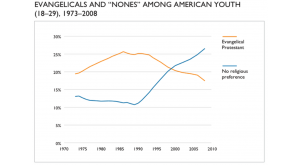
Young Evangelicals and the "Nones": Jumping Ship


Calling For Public Theology (A Brief Convocation Address)

Don't Ask How to Grow Your Church
TRENDING AT PATHEOS Evangelical

Making Stones Into Bread: Choosing the “Right” Work
I was on my online arts ministry Zoom meeting with the International...

Ukraine’s exhausted Christians face fifth winter of war
By Julian Lukins The full-scale war in Ukraine is taking “a serious...

Russell Brand's Conviction is not anti-Christian Persecution
How do we shed the reputation that the Church is OK with...

Have you ever caught yourself saying, “I’ll do it tomorrow,” or “Now...

Write Your Story: A Great Way to Find...
A few month’s back, my son was scrolling around Facebook and saw...

Throughout history, people have pursued pleasure, possessions, relationships, and success in an...
view all Evangelical blogs
Ad-Free & Subscriber Log-In Subscription Support
- About Us
- 2026 Calendar
- Videos
- Podcasts
- Library of World Religions
- Faith In Media Tracker
- Advertise With Us
- Write for Us
- Privacy Policy
- Terms of Service
- Do Not Sell My Data
- Contact Us
- Radiant Digital
- Manage Newsletter Subscriptions
- Unsubscribe From Notifications
- Sitemap
Copyright 2008-2026, Patheos, part of the Radiant Digital network of media brands. All rights reserved.
Subscription Support Ad-Free & Subscriber Log-In
Follow Patheos