
BuddhistCatholicContemplativeEvangelicalGeneral ChristianHinduJewishLatter-day SaintMuslimNew VisionsProgressive Christian
Beliefs
- Buddhist
- Catholic
- Contemplative
- Evangelical
- General Christian
- Hindu
- Jewish
- Latter-day Saint
- More Voices
- Muslim
- New Visions
- Pagan
- Progressive Christian
Topics
- Religion News
- Food and Religion
- Sports and Religion
- Religious Art
- Religious Music and Entertainment
- Religious Events
- History and Religion
- Style and Religion
- Politics and Religion
- Women in Religion
- Recreation Outdoors and Religion
- Business Finance and Religion
- Careers Workplace and Religion
- Education and Religion
- Family Parenting and Religion
- Health Fitness and Religion
- Home and Religion
- Relationships and Religion
- Technology and Religion
- Travel and Religion
Columnists
- Buddhist Columnists
- Business Finance and Religion Columnists
- Careers Workplace and Religion Columnists
- Catholic Columnists
- Contemplative Columnists
- Education and Religion Columnists
- Evangelists Columnists
- Family Parenting and Religion Columnists
- General Christian Columnists
- Health Fitness and Religion Columnists
- Hindu Columnists
- History and Religion Columnists
- Home and Religion Columnists
- Jewish Columnists
- More Voices Columnists
- Latter Day Columnists
- Muslim Columnists
- New Visions Columnists
- Nonreligious Columnists
- Pagan Columnists
- Politics and Religion Columnists
- Progressive Columnists
- Recreation Outdoors and Religion Columnists
- Relationships and Religion Columnists
- Religion News Columnists
- Religious Art Columnists
- Religious Events Columnists
- Religious Music and Entertainment Columnists
- Sports and Religion Columnists
- Style and Religion Columnists
- Technology and Religion Columnists
- Travel and Religion Columnists
- Women in Religion Columnists
Resource Library
- 2026 Calendar
- Library of World Religions
- The 100 Most Holy Places on Earth
- Patheos Answers
- Podcasts
- Videos
- Faith Leaders Database
- Anglican Episcopalian
- Bahai
- Baptist
- Buddhism
- Christianity
- Confucianism
- Eastern Orthodoxy
- Hinduism
- Holiness and Pentecostal
- ISKCON
- Islam
- Judaism
- Lutheran
- Methodist
- The Church of Jesus Christ of Latter-day Saints
- New Age
- Paganism
- Presbytarian and Reformed
- Protestantism
- Religion Behind the Scenes
- Roman Catholic
- Scientology
- Shia Islam
- Sikhism
- Sufism
- Sunni Islam
- Taoism
- Zen
- See all religions
Research Tools
 Ad-Free & Subscriber Log-In Subscription Support
Ad-Free & Subscriber Log-In Subscription Support
Follow Patheos 

- Trending:
- Forgiveness
- |
- Marriage
- |
- Consciousness
- |
- Death Penalty
- |
- Election
- |
- Halloween
 Cultivare
- Home
- Evangelical
- Twister
Twister
Last updated on: May 22, 2013 at 4:03 pm by Daniel Harrell
Twister 2013-05-22T16:03:25-04:00 Daniel Harrell
Patheos Explore the world's faith through different perspectives on religion and spirituality! Patheos has the views of the prevalent religions and spiritualities of the world.
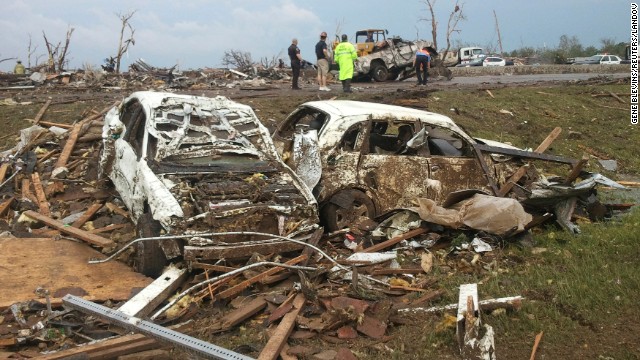
In the aftermath of another horrific natural disaster, I include a few comments from my book Nature’s Witness reflecting on the theological implications, with no intent to address the deep pastoral concerns for the people in Moore (for that see Rachel Held Evan’s recent tet-a-tet with John Piper). In fact, if you’re suffering in Moore, read this next year.
Meteorologically speaking (this from meteorologist Paul Douglas in Minneapolis):
In spite a warming Earth there’s no conclusive, scientific evidence that we’re seeing more violent tornadoes. There’s more water vapor and instability to fuel severe storms, but in a warming world wind shear necessary for violent tornadoes should decrease over time. More research is needed, but I suspect the real culprit here is land use – suburban sprawl. The same monster tornado that hit farmland 20 years ago is now grinding into subdivisions and shopping malls.
Doppler radar can’t always estimate the intensity of a developing tornado, and as a nation we suffer from tornado fatigue: too many warnings. Out of 10 tornado warnings only 3 will produce a tornado, and the ones that form are usually small and brief. This breeds apathy and cynicism, so when the big one, the nightmare (“Tornado Emergency”) becomes reality – people are skeptical.
Theologically speaking:
When it comes to natural disaster, I prefer the doctrine of a fallen creation—that somehow our succumbing to sin fueled the chaos we experience as disease and disaster, especially given the biblical connections between human sin and creation’s decay (Gen 3:17; Rom 8:21–22). But diseases and disasters occurred long before Adam bit off more than he could chew, long before Homo sapiens showed up at all. Therefore it really doesn’t work to say that diseases and disasters are outcomes of a fallen creation. They’re the outcomes of a competent yet free creation, a creation that operates the way God made it.
Human freedom and creation’s freedom often clash. But the clash is usually due to human choice. You can’t blame God when you build your house too close to the shore or along a known geologic fault line or in tornado alley. You can pray that God might redirect the weather or stabilize tectonic plates, but to be realistic, living in God’s world is more about conforming to its limits than expecting God to conform to human demands. Still, I would like to think that God would do more to guard his people from harm. Earthquakes and tsunamis and tornados kill thousands. Is this an unavoidable outcome of freedom? The unavoidable consequence of human choices? Does God value freedom so much as to be constrained by it?
Frankly, there are too many places in the Bible where God defies creaturely freedom to suggest that his hands are ever tied. However in most of those places, God’s defiance of creaturely freedom is in response to human abuses of freedom, such as when disease, weather or earthquakes are employed as agents of divine judgment (e.g., Exod 9:3; 1 Kings 17:1; Isa 29:6). The same is true with regard to redemption. God defies creaturely freedom in response to human abuses of freedom by dying on the cross and rising from the dead. However there are other places where bad things just happen. God’s response there is to suggest that you see it as incentive to get your life in order (Luke 13:1–5).
If God is a competent creator, we have to view natural phenomena as exhibitions of his competence—and as far as earthquakes and hurricanes go, exhibitions of his majesty (Isa 29:6 and elsewhere). God’s involvement is miraculous at times, though miracles remain the exception rather than the rule. If miracles were normal, we couldn’t call them miraculous. Miracles show up at special intersections in biblical history as exclamation points to stress the purposes and identity of God. God need not miraculously intervene to be involved in his creation. To love sometimes means to let things be. For God to so love the world may mean a refusal to flout his own craftsmanship or to violate the character of relationship. God curbs his omnipotence, if you will, for love’s sake.
This is the last post for a few weeks while I’m on vacation. If you’re a Cultivare reader, bask in the brilliance of Kyle Roberts in my absence and I will return in July. Grace and peace.
Previous Post

May 15, 2013
Minnesota Rice
Next Post
June 1, 2013 Evangelicalism, Salvation, and other Religions: The Conversation Continues
Browse Our Archives
Select a Category Alex Blondeau Authors Daniel Harrell Daniel Siedell Dawn Duncan Harrell Kyle Roberts Uncategorized Wyndy Corbin
Select a Month November 2014 October 2014 September 2014 August 2014 July 2014 June 2014 May 2014 April 2014 March 2014 February 2014 January 2014 December 2013 November 2013 October 2013 September 2013 August 2013 July 2013 June 2013 May 2013 April 2013 March 2013 February 2013 January 2013 December 2012 November 2012 October 2012 September 2012 August 2012 July 2012 June 2012 May 2012
TAKE THE
Religious Wisdom Quiz
Who anointed David as king as a boy?
Select your answer to see how you score.
Saul Moses Nathan Samuel
Related posts from Cultivare




Adam and Science: A Possible Compromise
TRENDING AT PATHEOS Evangelical

The REST of Your Life: A Creative Wrestles...
This week I had a conversation with a good friend from church....

How the author of the world's best hymn...
I've been working with John Newton for a while now. This makes...

Long before this Lectio Divina, Psalm 130 - the song - started...

What About the Trees? Another Living Parable
After I finished writing the last article about falling leaves as a...

Why Classical Education Is a Conversation, Not a...
Come and Read: Joy in Classical Education When I was a little...

Cornell University has received a great deal of negative publicity and intense...
view all Evangelical blogs
Ad-Free & Subscriber Log-In Subscription Support
- About Us
- 2026 Calendar
- Videos
- Podcasts
- Library of World Religions
- Faith In Media Tracker
- Advertise With Us
- Write for Us
- Privacy Policy
- Terms of Service
- Do Not Sell My Data
- Contact Us
- Radiant Digital
- Manage Newsletter Subscriptions
- Unsubscribe From Notifications
- Sitemap
Copyright 2008-2026, Patheos. All rights reserved.
Subscription Support Ad-Free & Subscriber Log-In
Follow Patheos