
BuddhistCatholicContemplativeEvangelicalGeneral ChristianHinduJewishLatter-day SaintMuslimNew VisionsProgressive Christian
Beliefs
- Buddhist
- Catholic
- Contemplative
- Evangelical
- General Christian
- Hindu
- Jewish
- Latter-day Saint
- More Voices
- Muslim
- New Visions
- Pagan
- Progressive Christian
Topics
- Religion News
- Food and Religion
- Sports and Religion
- Religious Art
- Religious Music and Entertainment
- Religious Events
- History and Religion
- Style and Religion
- Politics and Religion
- Women in Religion
- Recreation Outdoors and Religion
- Business Finance and Religion
- Careers Workplace and Religion
- Education and Religion
- Family Parenting and Religion
- Health Fitness and Religion
- Home and Religion
- Relationships and Religion
- Technology and Religion
- Travel and Religion
Columnists
- Buddhist Columnists
- Business Finance and Religion Columnists
- Careers Workplace and Religion Columnists
- Catholic Columnists
- Contemplative Columnists
- Education and Religion Columnists
- Evangelists Columnists
- Family Parenting and Religion Columnists
- General Christian Columnists
- Health Fitness and Religion Columnists
- Hindu Columnists
- History and Religion Columnists
- Home and Religion Columnists
- Jewish Columnists
- More Voices Columnists
- Latter Day Columnists
- Muslim Columnists
- New Visions Columnists
- Nonreligious Columnists
- Pagan Columnists
- Politics and Religion Columnists
- Progressive Columnists
- Recreation Outdoors and Religion Columnists
- Relationships and Religion Columnists
- Religion News Columnists
- Religious Art Columnists
- Religious Events Columnists
- Religious Music and Entertainment Columnists
- Sports and Religion Columnists
- Style and Religion Columnists
- Technology and Religion Columnists
- Travel and Religion Columnists
- Women in Religion Columnists
Resource Library
- 2026 Calendar
- Library of World Religions
- The 100 Most Holy Places on Earth
- Patheos Answers
- Podcasts
- Videos
- Faith Leaders Database
- Anglican Episcopalian
- Bahai
- Baptist
- Buddhism
- Christianity
- Confucianism
- Eastern Orthodoxy
- Hinduism
- Holiness and Pentecostal
- ISKCON
- Islam
- Judaism
- Lutheran
- Methodist
- The Church of Jesus Christ of Latter-day Saints
- New Age
- Paganism
- Presbytarian and Reformed
- Protestantism
- Religion Behind the Scenes
- Roman Catholic
- Scientology
- Shia Islam
- Sikhism
- Sufism
- Sunni Islam
- Taoism
- Zen
- See all religions
Research Tools
 Ad-Free & Subscriber Log-In Subscription Support
Ad-Free & Subscriber Log-In Subscription Support
Follow Patheos 

- Trending:
- Forgiveness
- |
- Marriage
- |
- Consciousness
- |
- Death Penalty
- |
- Election
- |
- Halloween
 Cultivare
- Home
- Evangelical
- The Idolatry of the Penultimate
The Idolatry of the Penultimate
Last updated on: April 16, 2013 at 4:01 pm by Daniel A. Siedell
The Idolatry of the Penultimate 2013-04-16T16:01:39-04:00 Daniel A. Siedell
Patheos Explore the world's faith through different perspectives on religion and spirituality! Patheos has the views of the prevalent religions and spiritualities of the world.
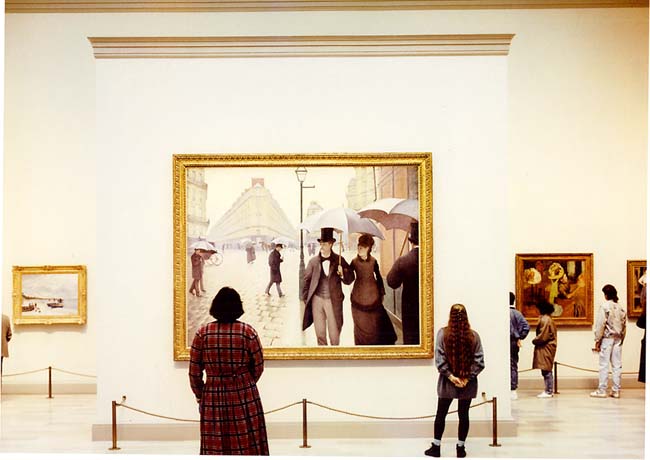
What do looking at paintings have to do with what most evangelicals understand by “engaging,” “transforming,” and “redeeming” culture?
Not much.
It is no secret that North American evangelicals regard politics to be the primary means by which God is active in the world. And many evangelicals have recently become convinced that “culture” (i.e., films, television—media with large audience constituencies like YouTube) is an important means by which electoral politics can be affected and public policy shaped. This view, that the arts are simply “images” that shape desire is based on the classical Greek assumption that virtuous action requires virtuous images to contemplate. Change the images that speak to the heart and you can change behavior.
Yet no evangelical would follow Aristotle and the classical tradition and claim the polis to be of ultimate value, or conclude, as did the tutor of Alexander the Great, that if “ethics” is the diagnosis of the soul, then “politics” is its cure. It is Christ and his gospel that is the cure. It is not the City of Man, as St. Augustine called it, but the City of God, to which we look.
However, most evangelicals would agree, if not in word then in deed, that politics is the primary means by which we are called to bear witness to Christ in the world. If Christ is ultimate, then politics is “ultimately” penultimate. It is the standard against which all practices are evaluated and to which all forms of culture making must aspire to be a truly relevant Christian presence in the public sphere, either by connecting it to electoral politics or public policy, which are believed to secure and shape virtue.
The dominance of politics as the ultimately penultimate among evangelicals means that other cultural practices struggle for relevancy and support. It is presumed that theologies of culture and a robust Christian cultural presence must lead to or incorporate politics or policy. Paintings must lead to commentary on political action, poems to reflection on policy.
What is lost is the aesthetic integrity of a painting qua painting, poem qua poem, film qua film. Art’s relevance and usefulness is thus determined by how smooth the transition can be to a discussion of politics, public policy, and the public good—the issues that really matter.
But the gospel goes further than simply destroying the ultimacy of politics. It destroys all the penultimates—all those “secondary” practices and beliefs, professions and institutions, that we piously claim “protect” the gospel or preserve the freedom and virtue necessary for Christ to be heard. The gospel levels all vocations, all institutional structures.
Luther’s rediscovery of justification by faith meant a radical reconceptualization of vocation. If our work in the world—our good works—doesn’t go up to God, where does it go? Luther concluded that it goes out to our neighbor. And if none of our good works go up to God, then there are no vocations—including the “religious” vocations like priests and monks—which are superior to others.
From the priest to the shoe maker, the prince to the baker, all vocations, claimed Luther, were means by which God was busy at work in the world. If, as Luther argued, our vocations are not primarily about our self-fulfillment and justifying ourselves before God, but are expressions of our love for our neighbor, then it is not merely through political and policy work or through church work that God is present. He but he is active even in the most humblest endeavors, like waiting tables, and the most opaque of practices, like looking at paintings.
The gospel cuts the cables that we attach to God, those cables that we claim are only penultimate, but are in reality ways to prioritize how we think God should be active in the world. The gospel renders all work, all vocations, all institutions equally penultimate. It returns our endeavors to each and every one of us, liberating us from the burden of being relevant, from making shoes and mid-level management to making paintings and serving in public office.
And that is liberating not only to me, who feels called to write about paintings as a theologian of culture, but to you as well, who probably feel the same pressure that I do—the pressure to be a faithful Christian witness. The gospel also frees me to not justify my particular work by exaggerating its importance, by claiming that looking at a Cézanne painting, watching a Tarkovsky film, listening to Arvo Pärt, or reading a Mandelstam poem is somehow more important or more useful to God than looking at a Kinkade print, watching Star Wars, listening to Maroon 5, or reading Work, Love, Pray.
Called to do what I’m already doing, the gospel frees me to trust that God is busy at work in and through it, even if I can’t seem to figure out how or am able to convince others.
Let’s face it, God is busy at work in the living rooms of a married couple watching the new season of Mad Men on Sunday night just as he is in movie theaters and art museums, poetry readings, concert venues—just as he is in the voting booth, in Supreme Court, in Congress.
Through his Word, God’s work is already connected to my work and to yours—I don’t have to try to connect it because God has already done all the hard work.
All we need to do is respond, vocationally, in faith.
Previous Post

April 12, 2013
Reflecting on "The Heavenly Good of Earthly Work"
Next Post
April 17, 2013 Heartbreak Hill
Browse Our Archives
Select a Category Alex Blondeau Authors Daniel Harrell Daniel Siedell Dawn Duncan Harrell Kyle Roberts Uncategorized Wyndy Corbin
Select a Month November 2014 October 2014 September 2014 August 2014 July 2014 June 2014 May 2014 April 2014 March 2014 February 2014 January 2014 December 2013 November 2013 October 2013 September 2013 August 2013 July 2013 June 2013 May 2013 April 2013 March 2013 February 2013 January 2013 December 2012 November 2012 October 2012 September 2012 August 2012 July 2012 June 2012 May 2012
TAKE THE
Religious Wisdom Quiz
Which church tradition celebrates the Feast of Epiphany as "Three Kings' Day"?
Select your answer to see how you score.
Western Christianity Eastern Christianity Baptist Quakerism
Related posts from Cultivare


Young Evangelicals and the "Nones": Jumping Ship


Calling For Public Theology (A Brief Convocation Address)
TRENDING AT PATHEOS Evangelical

The REST of Your Life: A Creative Wrestles...
This week I had a conversation with a good friend from church....

How the author of the world's best hymn...
I've been working with John Newton for a while now. This makes...

Long before this Lectio Divina, Psalm 130 - the song - started...

What About the Trees? Another Living Parable
After I finished writing the last article about falling leaves as a...

Why Classical Education Is a Conversation, Not a...
Come and Read: Joy in Classical Education When I was a little...

Cornell University has received a great deal of negative publicity and intense...
view all Evangelical blogs
Ad-Free & Subscriber Log-In Subscription Support
- About Us
- 2026 Calendar
- Videos
- Podcasts
- Library of World Religions
- Faith In Media Tracker
- Advertise With Us
- Write for Us
- Privacy Policy
- Terms of Service
- Do Not Sell My Data
- Contact Us
- Radiant Digital
- Manage Newsletter Subscriptions
- Unsubscribe From Notifications
- Sitemap
Copyright 2008-2026, Patheos. All rights reserved.
Subscription Support Ad-Free & Subscriber Log-In
Follow Patheos