
BuddhistCatholicContemplativeEvangelicalGeneral ChristianHinduJewishLatter-day SaintMuslimNew VisionsProgressive Christian
Beliefs
- Buddhist
- Catholic
- Contemplative
- Evangelical
- General Christian
- Hindu
- Jewish
- Latter-day Saint
- More Voices
- Muslim
- New Visions
- Pagan
- Progressive Christian
Topics
- Religion News
- Food and Religion
- Sports and Religion
- Religious Art
- Religious Music and Entertainment
- Religious Events
- History and Religion
- Style and Religion
- Politics and Religion
- Women in Religion
- Recreation Outdoors and Religion
- Business Finance and Religion
- Careers Workplace and Religion
- Education and Religion
- Family Parenting and Religion
- Health Fitness and Religion
- Home and Religion
- Relationships and Religion
- Technology and Religion
- Travel and Religion
Columnists
- Buddhist Columnists
- Business Finance and Religion Columnists
- Careers Workplace and Religion Columnists
- Catholic Columnists
- Contemplative Columnists
- Education and Religion Columnists
- Evangelists Columnists
- Family Parenting and Religion Columnists
- General Christian Columnists
- Health Fitness and Religion Columnists
- Hindu Columnists
- History and Religion Columnists
- Home and Religion Columnists
- Jewish Columnists
- More Voices Columnists
- Latter Day Columnists
- Muslim Columnists
- New Visions Columnists
- Nonreligious Columnists
- Pagan Columnists
- Politics and Religion Columnists
- Progressive Columnists
- Recreation Outdoors and Religion Columnists
- Relationships and Religion Columnists
- Religion News Columnists
- Religious Art Columnists
- Religious Events Columnists
- Religious Music and Entertainment Columnists
- Sports and Religion Columnists
- Style and Religion Columnists
- Technology and Religion Columnists
- Travel and Religion Columnists
- Women in Religion Columnists
Resource Library
- 2026 Calendar
- Library of World Religions
- The 100 Most Holy Places on Earth
- Patheos Answers
- Podcasts
- Videos
- Faith Leaders Database
- Anglican Episcopalian
- Bahai
- Baptist
- Buddhism
- Christianity
- Confucianism
- Eastern Orthodoxy
- Hinduism
- Holiness and Pentecostal
- ISKCON
- Islam
- Judaism
- Lutheran
- Methodist
- The Church of Jesus Christ of Latter-day Saints
- New Age
- Paganism
- Presbytarian and Reformed
- Protestantism
- Religion Behind the Scenes
- Roman Catholic
- Scientology
- Shia Islam
- Sikhism
- Sufism
- Sunni Islam
- Taoism
- Zen
- See all religions
Research Tools
 Ad-Free & Subscriber Log-In Subscription Support
Ad-Free & Subscriber Log-In Subscription Support
Follow Patheos 

- Trending:
- Forgiveness
- |
- Marriage
- |
- Consciousness
- |
- Death Penalty
- |
- Election
- |
- Halloween
 Cultivare
- Home
- Evangelical
- You Can Always Go On
You Can Always Go On
Last updated on: June 15, 2013 at 12:27 pm by Daniel A. Siedell
You Can Always Go On 2013-06-15T12:27:04-04:00 Daniel A. Siedell
Patheos Explore the world's faith through different perspectives on religion and spirituality! Patheos has the views of the prevalent religions and spiritualities of the world.
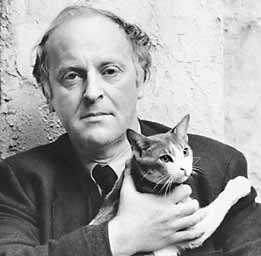
One of the more interesting resources on the Internet is the collected interviews at Paris Review. It is a sixty-year archive of hundreds of long form conversations with poets and writers, like Mary Karr, R Crumb, Billy Collins, Robert Frost, Jack Kerouac, and Czeslaw Milosz, among many, many others.
One of the more provocative interviews is with the Russian poet Joseph Brodsky, whose critical prose has a significant impact on me, opening up to me the work of Robert Frost, W.H. Auden, Osip Mandelstam, Anna Akhmatova, and Tomas Venclova. Here’s something from Joseph Brodsky’s 1982 interview that has occupied my thoughts lately.
The thing is that you can always go on, even when you have the most terrific ending. For the poet the credo or doctrine is not the point of arrival but is, on the contrary, the point of departure for the metaphysical journey. For instance, you write a poem about the crucifixion. You have decided to go ten stanzas—and yet it’s the third stanza and you’ve already dealt with the crucifixion. You have to go beyond that and add something—to develop it into something which is not there yet. Basically what I’m saying is that the poetic notion of infinity is far greater, and it’s almost self-propelled by the form. Once in a conversation with Tony Hecht at Breadloaf we were talking about the usage of the Bible, and he said, “Joseph, wouldn’t you agree that what a poet does is to try to make more sense out of these things?” And that’s what it is—there’s more sense, ya? In the works of the better poets you get the sensation that they’re not talking to people anymore, or to some seraphical creature. What they’re doing is simply talking back to the language itself—as beauty, sensuality, wisdom, irony—those aspects of language of which the poet is a clear mirror. Poetry is not an art or a branch of art, it’s something more. If what distinguishes us from other species is speech, then poetry, which is the supreme linguistic operation, is our anthropological, indeed genetic, goal. Anyone who regards poetry as an entertainment, as a “read,” commits an anthropological crime, in the first place, against himself.
If God speaks and does so through promises (“I am the Lord your God,” “Be opened!” “I will be with you even unto the end of the age”), he has, however, entrusted these promises, divine speech acts that do what they say, to be communicated “from creature to creature,” as Kant’s friend and chief critic Johann Georg Hamann once said. Moreover, creation itself speaks, pouring forth speech daily (Ps 19). In fact, theologian Oswald Bayer has even called creation itself a “speech act,” one that can only be received as a promise.
What is a poet doing when, as Brodsky observes, he is “simply talking back to the language itself?”
What does the poet hear?
And how are we to understand poetry in relation to divine speech, since, in the Christian tradition, we confess that God is a human being?
Perhaps it is because of that “terrific ending,” that the poet can always go on.
Previous Post

April 26, 2013
The High Cost of Cheap Clothes
Next Post
May 2, 2013 The Will to Live
Browse Our Archives
Select a Category Alex Blondeau Authors Daniel Harrell Daniel Siedell Dawn Duncan Harrell Kyle Roberts Uncategorized Wyndy Corbin
Select a Month November 2014 October 2014 September 2014 August 2014 July 2014 June 2014 May 2014 April 2014 March 2014 February 2014 January 2014 December 2013 November 2013 October 2013 September 2013 August 2013 July 2013 June 2013 May 2013 April 2013 March 2013 February 2013 January 2013 December 2012 November 2012 October 2012 September 2012 August 2012 July 2012 June 2012 May 2012
TAKE THE
Religious Wisdom Quiz
What does the Hebrew word 'El Shaddai' mean?
Select your answer to see how you score.
Everlasting Father God Holy One The Lord is my Shepherd
Related posts from Cultivare


Young Evangelicals and the "Nones": Jumping Ship


Calling For Public Theology (A Brief Convocation Address)
TRENDING AT PATHEOS Evangelical

The REST of Your Life: A Creative Wrestles...
This week I had a conversation with a good friend from church....

How the author of the world's best hymn...
I've been working with John Newton for a while now. This makes...

Long before this Lectio Divina, Psalm 130 - the song - started...

What About the Trees? Another Living Parable
After I finished writing the last article about falling leaves as a...

Why Classical Education Is a Conversation, Not a...
Come and Read: Joy in Classical Education When I was a little...

Cornell University has received a great deal of negative publicity and intense...
view all Evangelical blogs
Ad-Free & Subscriber Log-In Subscription Support
- About Us
- 2026 Calendar
- Videos
- Podcasts
- Library of World Religions
- Faith In Media Tracker
- Advertise With Us
- Write for Us
- Privacy Policy
- Terms of Service
- Do Not Sell My Data
- Contact Us
- Radiant Digital
- Manage Newsletter Subscriptions
- Unsubscribe From Notifications
- Sitemap
Copyright 2008-2026, Patheos. All rights reserved.
Subscription Support Ad-Free & Subscriber Log-In
Follow Patheos