
BuddhistCatholicContemplativeEvangelicalGeneral ChristianHinduJewishLatter-day SaintMuslimNew VisionsProgressive Christian
Beliefs
- Buddhist
- Catholic
- Contemplative
- Evangelical
- General Christian
- Hindu
- Jewish
- Latter-day Saint
- More Voices
- Muslim
- New Visions
- Pagan
- Progressive Christian
Topics
- Religion News
- Food and Religion
- Sports and Religion
- Religious Art
- Religious Music and Entertainment
- Religious Events
- History and Religion
- Style and Religion
- Politics and Religion
- Women in Religion
- Recreation Outdoors and Religion
- Business Finance and Religion
- Careers Workplace and Religion
- Education and Religion
- Family Parenting and Religion
- Health Fitness and Religion
- Home and Religion
- Relationships and Religion
- Technology and Religion
- Travel and Religion
Columnists
- Buddhist Columnists
- Business Finance and Religion Columnists
- Careers Workplace and Religion Columnists
- Catholic Columnists
- Contemplative Columnists
- Education and Religion Columnists
- Evangelists Columnists
- Family Parenting and Religion Columnists
- General Christian Columnists
- Health Fitness and Religion Columnists
- Hindu Columnists
- History and Religion Columnists
- Home and Religion Columnists
- Jewish Columnists
- More Voices Columnists
- Latter Day Columnists
- Muslim Columnists
- New Visions Columnists
- Nonreligious Columnists
- Pagan Columnists
- Politics and Religion Columnists
- Progressive Columnists
- Recreation Outdoors and Religion Columnists
- Relationships and Religion Columnists
- Religion News Columnists
- Religious Art Columnists
- Religious Events Columnists
- Religious Music and Entertainment Columnists
- Sports and Religion Columnists
- Style and Religion Columnists
- Technology and Religion Columnists
- Travel and Religion Columnists
- Women in Religion Columnists
Resource Library
- 2026 Calendar
- Library of World Religions
- The 100 Most Holy Places on Earth
- Patheos Answers
- Podcasts
- Videos
- Faith Leaders Database
- Anglican Episcopalian
- Bahai
- Baptist
- Buddhism
- Christianity
- Confucianism
- Eastern Orthodoxy
- Hinduism
- Holiness and Pentecostal
- ISKCON
- Islam
- Judaism
- Lutheran
- Methodist
- The Church of Jesus Christ of Latter-day Saints
- New Age
- Paganism
- Presbytarian and Reformed
- Protestantism
- Religion Behind the Scenes
- Roman Catholic
- Scientology
- Shia Islam
- Sikhism
- Sufism
- Sunni Islam
- Taoism
- Zen
- See all religions
Research Tools
 Ad-Free & Subscriber Log-In Subscription Support
Ad-Free & Subscriber Log-In Subscription Support
Follow Patheos 

- Trending:
- Forgiveness
- |
- Marriage
- |
- Consciousness
- |
- Death Penalty
- |
- Election
- |
- Halloween
 Cultivare
- Home
- Evangelical
- “You Will Make Bells & I Will Paint Icons”
“You Will Make Bells & I Will Paint Icons”
Last updated on: March 12, 2013 at 1:29 pm by Daniel A. Siedell
“You Will Make Bells & I Will Paint Icons” 2013-03-12T13:29:24-04:00 Daniel A. Siedell
Patheos Explore the world's faith through different perspectives on religion and spirituality! Patheos has the views of the prevalent religions and spiritualities of the world.
Rublev Fasts
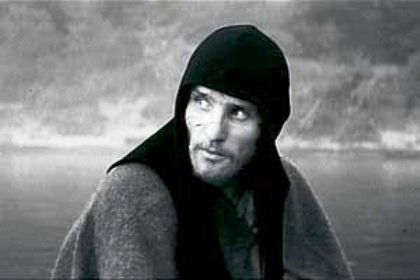
Andrei Tarkovsky’s epic film, The Passion of Andrei Rublev (1966) is a Lenten film par excellence. It depicts the spiritual struggle of one of Russia’s great cultural heroes, the painter of icons Andrei Rublev (1360-1430), who is most famous for his stunningly original, The Holy Trinity (c. 1420). Although I wrote about the movie here at CULTIVARE a few months ago (“Art and Grace“), it continues to shape and challenge my thinking about art and faith.
Tarkovsky narrates Rublev’s spiritual crisis brought on by a call from the Trinity Lavra of St. Sergius outside of Moscow, the spiritual center of the Russian Orthodox Church, to paint an icon of the Trinity. Rublev resists. He believes his crisis of faith, his struggle to reconcile the love of God with the evil and brutality which he has observed in the world and in his heart, disqualifies himself to paint icons, to open heaven through paint.
And so Rublev fasts.
He fasts from speaking. He fasts from community. And he fasts from his vocation.
As he wanders the Russian countryside wrestling with his disbelief and denying his vocation, he comes upon a young boy, Boriska, who is involved in another kind of vocational struggle. His father, a bell maker, has just died, forcing upon him the responsibility to finish the casting of a bell for a village church. The boy, desperate to achieve recognition from the townspeople and the Prince who commissioned the bell, risks his life by claiming to have been given the secret of bell making by his father.
But Boriska has lied. He doesn’t have the secret. His father withheld it from him, or so he believes. Yet Boriska risks his life to cast the bell. (We learn that because of the cost of the project, the Prince will kill Boriska if he fails.)
Rublev watches Boriska, alone, from a distance in silence.
Boriska succeeds. He casts the bell for the village. But he collapses from exhaustion, grief, and anguish. His father has died. He has taken the secrets of bell making to his grave, leaving the young boy alone—a son with no father, a vocation with no knowledge.
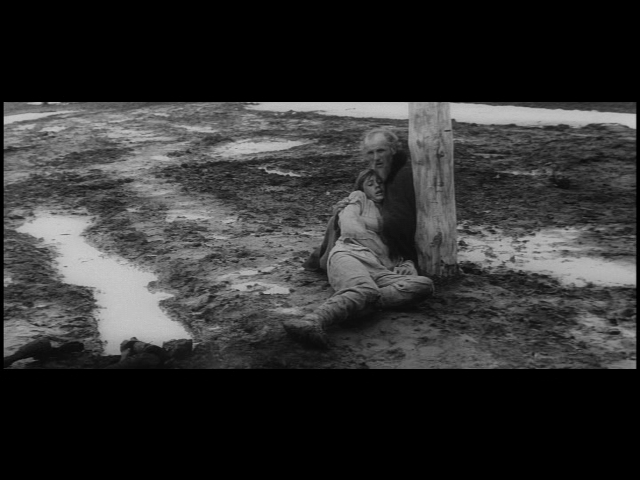
Breaking his fast to comfort the suffering boy, Rublev vows to break another fast,
“We will go to the Trinity Monastery, and you will make bells and I will paint icons.”
Rublev recovers his vocation and a new insight into his faith by breaking his fast to offer Boriska a word of comfort and a promise.
For all of his self-discipline and ascetic rigor, Rublev recovers his vocation through love of his neighbor.
Rublev is Freed
Lent is an observance that reveals our weakness and failure in remarkable ways. Each year we vow to “keep” it better, each year we fail, often in unexpected ways—either in the mounting sense of pride we experience in our self-sufficiency, dedication, and discipline or in the despair that our failures somehow reveal God’s true assessment of us.
And so it is appropriate to consider vocation during this most sensitive time of the year, a time in which are reminded that we are unable to set aside those things that so easily ensnare us, like food, drink, Twitter, and sin. Lent reminds us that the Christian, as Martin Luther says, “lives not in himself, but in Christ and neighbor,” in Christ through faith and in the neighbor through love. Lent reminds us just how much we live in ourselves. And our work is one of the most explicit ways in which we do so.
We are trained in the church to think about the work that we do—our vocation—as a means by which we please, honor, or otherwise show God our gratitude. In short, we are trained to regard our work as a form of justification before God—to make God love us or to keep him loving us. Our work is a matter between God and us—it’s a private “spiritual” affair—a matter of “worship.”
Yet the work that we do is unable to justify us. Because we are justified by faith, apart from works (Rom. 3. 28) God doesn’t need our work. But, as Gustaf Wingren observed in his ground-breaking study, Luther on Vocation (1942), even though God doesn’t need our good works, our neighbor does.
For Luther, the doctrine of justification freed the Christian to work not for God but for his neighbor. It freed the Christian to be content to make a good shoe and sell it at a fair price. Our vocations, the work that we do, whether coaching a football team, shuffling papers, or painting pictures, exists for our neighbor. Vocation is, then, merely the outgrowth of the implications of the doctrine of justification. For justification by faith is the means by which we live in Christ and vocation is the means by which we live in our neighbor.
This is especially difficult for artists to understand. They’ve been trained to think about art as a private, devotional, priestly affair, the result of a special encounter with God. But Rublev’s breakthrough occurs when he discovers his neighbor—not God—in his vocation. Through Boriska—observing and comforting him and promising to care for him as a father—by being Christ to his neighbor, as Luther once said—Rublev receives his vocation anew. He receives it liberated of the burden to justify himself through paint before the face of God.
Sitting in the mud with a broken, grieving orphan, Rublev is truly free.
He is free to paint icons.
May God use this season of Lent, and the failures it brings, to set us free to see the face of our neighbor.
Previous Post

March 8, 2013
Relax, People: "The World is Not Ours to Save"
Next Post
March 13, 2013 A Man Had Two Sons
Browse Our Archives
Select a Category Alex Blondeau Authors Daniel Harrell Daniel Siedell Dawn Duncan Harrell Kyle Roberts Uncategorized Wyndy Corbin
Select a Month November 2014 October 2014 September 2014 August 2014 July 2014 June 2014 May 2014 April 2014 March 2014 February 2014 January 2014 December 2013 November 2013 October 2013 September 2013 August 2013 July 2013 June 2013 May 2013 April 2013 March 2013 February 2013 January 2013 December 2012 November 2012 October 2012 September 2012 August 2012 July 2012 June 2012 May 2012
TAKE THE
Religious Wisdom Quiz
Who said, "To the pure, all things are pure"?
Select your answer to see how you score.
Paul John Peter James
Related posts from Cultivare


Young Evangelicals and the "Nones": Jumping Ship


Calling For Public Theology (A Brief Convocation Address)
TRENDING AT PATHEOS Evangelical

The REST of Your Life: A Creative Wrestles...
This week I had a conversation with a good friend from church....

How the author of the world's best hymn...
I've been working with John Newton for a while now. This makes...

Long before this Lectio Divina, Psalm 130 - the song - started...

What About the Trees? Another Living Parable
After I finished writing the last article about falling leaves as a...

Why Classical Education Is a Conversation, Not a...
Come and Read: Joy in Classical Education When I was a little...

Cornell University has received a great deal of negative publicity and intense...
view all Evangelical blogs
Ad-Free & Subscriber Log-In Subscription Support
- About Us
- 2026 Calendar
- Videos
- Podcasts
- Library of World Religions
- Faith In Media Tracker
- Advertise With Us
- Write for Us
- Privacy Policy
- Terms of Service
- Do Not Sell My Data
- Contact Us
- Radiant Digital
- Manage Newsletter Subscriptions
- Unsubscribe From Notifications
- Sitemap
Copyright 2008-2026, Patheos. All rights reserved.
Subscription Support Ad-Free & Subscriber Log-In
Follow Patheos