
BuddhistCatholicContemplativeEvangelicalGeneral ChristianHinduJewishLatter-day SaintMuslimNew VisionsProgressive Christian
Beliefs
- Buddhist
- Catholic
- Contemplative
- Evangelical
- General Christian
- Hindu
- Jewish
- Latter-day Saint
- More Voices
- Muslim
- New Visions
- Pagan
- Progressive Christian
Topics
- Religion News
- Food and Religion
- Sports and Religion
- Religious Art
- Religious Music and Entertainment
- Religious Events
- History and Religion
- Style and Religion
- Politics and Religion
- Women in Religion
- Recreation Outdoors and Religion
- Business Finance and Religion
- Careers Workplace and Religion
- Education and Religion
- Family Parenting and Religion
- Health Fitness and Religion
- Home and Religion
- Relationships and Religion
- Technology and Religion
- Travel and Religion
Columnists
- Buddhist Columnists
- Business Finance and Religion Columnists
- Careers Workplace and Religion Columnists
- Catholic Columnists
- Contemplative Columnists
- Education and Religion Columnists
- Evangelists Columnists
- Family Parenting and Religion Columnists
- General Christian Columnists
- Health Fitness and Religion Columnists
- Hindu Columnists
- History and Religion Columnists
- Home and Religion Columnists
- Jewish Columnists
- More Voices Columnists
- Latter Day Columnists
- Muslim Columnists
- New Visions Columnists
- Nonreligious Columnists
- Pagan Columnists
- Politics and Religion Columnists
- Progressive Columnists
- Recreation Outdoors and Religion Columnists
- Relationships and Religion Columnists
- Religion News Columnists
- Religious Art Columnists
- Religious Events Columnists
- Religious Music and Entertainment Columnists
- Sports and Religion Columnists
- Style and Religion Columnists
- Technology and Religion Columnists
- Travel and Religion Columnists
- Women in Religion Columnists
Resource Library
- 2026 Calendar
- Library of World Religions
- The 100 Most Holy Places on Earth
- Patheos Answers
- Podcasts
- Videos
- Faith Leaders Database
- Anglican Episcopalian
- Bahai
- Baptist
- Buddhism
- Christianity
- Confucianism
- Eastern Orthodoxy
- Hinduism
- Holiness and Pentecostal
- ISKCON
- Islam
- Judaism
- Lutheran
- Methodist
- The Church of Jesus Christ of Latter-day Saints
- New Age
- Paganism
- Presbytarian and Reformed
- Protestantism
- Religion Behind the Scenes
- Roman Catholic
- Scientology
- Shia Islam
- Sikhism
- Sufism
- Sunni Islam
- Taoism
- Zen
- See all religions
Research Tools
 Ad-Free & Subscriber Log-In Subscription Support
Ad-Free & Subscriber Log-In Subscription Support
Follow Patheos 

- Trending:
- Forgiveness
- |
- Marriage
- |
- Consciousness
- |
- Death Penalty
- |
- Election
- |
- Halloween
 Cultivare
- Home
- Evangelical
- Vocation and the Artist’s Studio
Vocation and the Artist’s Studio
Last updated on: March 15, 2013 at 4:38 pm by Daniel A. Siedell
Vocation and the Artist’s Studio 2013-03-15T16:38:07-04:00 Daniel A. Siedell
Patheos Explore the world's faith through different perspectives on religion and spirituality! Patheos has the views of the prevalent religions and spiritualities of the world.
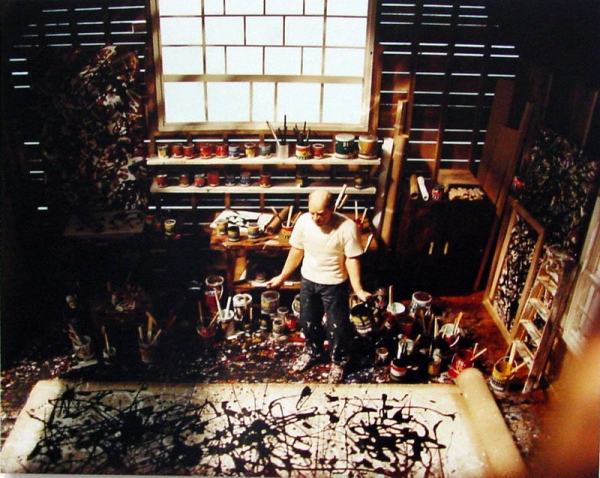
Last week I was in Pittsburgh to speak on modern art and grace at the annual Jubilee conference, an event that brings 2,000 college students together to connect their faith to their work. After my presentation, a person working in campus ministry asked me how he could support two students who happen to be artists. His question revealed just how art can challenge assumptions about vocational discipleship and a theology of work in the evangelical community.
The vocation conversation in the evangelical community
The vocation conversation ranges from work-life balance, the pressures of ministry, and what vocations are “off-limits” for Christians to workplace ethics, maximizing efficiency and productivity, and leadership development, all underwritten theologically by the “cultural mandate” of Genesis 1: 28 and our role in the eschatological fulfillment of the kingdom, whether in transforming, redeeming, making, or bearing witness to culture.
Usually absent from these conversations is the work of the artist. When the artist does figure into discussions about vocation, she is romanticized to the margins. Either she is described as the mysterious producer of a theological abstraction, “beauty,” or is reduced to an outside the box vision caster whose “creativity” adds value to this or that organization. This is not an evangelical problem. It’s a cultural problem, for we are skeptical of art’s usefulness inside and outside the church.
However, I would like to suggest that artists offer an important voice in the vocational conversation, if we take the time to probe artistic practice more deeply.
Here are just a few ways that the artist’s studio can become a crucial location for rethinking vocation.
Mid-Life Crisis at 19
My two decades of experience teaching art students, both in evangelical colleges and in public universities, is that they must face crucial vocational questions of value that usually confront those of us only later in our careers. The question that a forty-five year old lawyer asks, like, “what am I doing this for?” is asked by the art student her first semester in college, when she has to justify to her parents why they should pay hundreds of dollars per credit hour for her to push paint around on a canvas with little in the way of stable job prospects after graduation. And for her entire career as an artist, she will struggle with the value of spending long hours in the studio producing paintings that undermine our culture’s presumptions, inside and outside the church, about the “use” of her work.
Who is an artist?
There are few cultural practices with less professional structure than art. There is no bar exam, no board that confers the title “artist” on a person. And so the art student, from the very beginning, must struggle with recognition and justification in an especially acute way. What makes me an artist? Does my neighbor recognize me as an artist? Educational credentials, which usually mean so much in the workforce, are not helpful in establishing a difference between one who has an M.F.A. from an Ivy League school and says, “I’m an artist” and another, who is an investment banker, paints pictures in her spare time, and likewise claims, “I’m an artist.” The artist’s vocational identity must come from elsewhere, and although the evangelical community presumes this, a lot of vocational talk still sounds a lot like baptizing our culture’s definitions of leadership and success.
The tortured artist stereotype
Edvard Munch said, “art comes from joy and pain.” And then he added, “but mostly from pain.” The myth of the tortured artist, which has a long and distinguished history, who feels more deeply, struggles with depression, addiction, and alienation puts the artist “over there” away from “us,” either on a pedestal or in the gutter. But that posture overlooks one very important reality: the artist is exactly like us. Most of our work comes from pain. We struggle with precisely the same existential problems and insecurities as Edvard Munch, we possess the same self-doubt, insecurities, and struggle with failure. Yet our vocational conversations usually prevent such admission and the important and necessary reflection that could follow.
Vocation is more than a paycheck
The discussion of vocation inside the evangelical community and beyond often limits itself to career choice and placement. Yet, for Martin Luther, vocation was much more comprehensive. It was the result of reflection on the social implications of the doctrine of justification, forming how we respond to the faith that the Word has created that enables us to love our neighbor. Vocation underwrites all of our social roles, not just the one at the office. From the beginning, art students must recognize that their calling as artists consists of more than a pursuit of a comfortable living to support a family and acquire stuff. Moreover, most art students come to understand that they will not make a living selling their work. This is the case for nearly all artists, even those who are “successful.” Many must supplement their income creatively through teaching, real estate, or other endeavors that offer the financial stability to pursue their vocations as artists without the pressure of selling their work.
The artist’s studio as a vocational lab
The conversation in the evangelical community about vocation is important not merely for the church but for the larger culture. And the vocational implications of artistic practice are crucial for expanding its reach. The history of art, especially modern art, offers an important means by which art can contribute to this conversation, opening up new space to reflect on the Word that establishes the work of our hands (Ps. 90.17)—and the importance of failure, suffering, and doubt in this work.
Previous Post

February 19, 2013
Quantity vs Quality
Next Post
February 27, 2013 The Futility of Painting
Browse Our Archives
Select a Category Alex Blondeau Authors Daniel Harrell Daniel Siedell Dawn Duncan Harrell Kyle Roberts Uncategorized Wyndy Corbin
Select a Month November 2014 October 2014 September 2014 August 2014 July 2014 June 2014 May 2014 April 2014 March 2014 February 2014 January 2014 December 2013 November 2013 October 2013 September 2013 August 2013 July 2013 June 2013 May 2013 April 2013 March 2013 February 2013 January 2013 December 2012 November 2012 October 2012 September 2012 August 2012 July 2012 June 2012 May 2012
TAKE THE
Religious Wisdom Quiz
How many people were saved from Sodom?
Select your answer to see how you score.
5 3 6 4
Related posts from Cultivare


Young Evangelicals and the "Nones": Jumping Ship


Calling For Public Theology (A Brief Convocation Address)
TRENDING AT PATHEOS Evangelical

How the author of the world's best hymn...
I've been working with John Newton for a while now. This makes...

Long before this Lectio Divina, Psalm 130 - the song - started...

What About the Trees? Another Living Parable
After I finished writing the last article about falling leaves as a...

Why Classical Education Is a Conversation, Not a...
Come and Read: Joy in Classical Education When I was a little...

Falling Leaves: A Living Parable on Letting Go
I’ve spent the vast majority of my life in the southeast corner...

Cornell University has received a great deal of negative publicity and intense...
view all Evangelical blogs
Ad-Free & Subscriber Log-In Subscription Support
- About Us
- 2026 Calendar
- Videos
- Podcasts
- Library of World Religions
- Faith In Media Tracker
- Advertise With Us
- Write for Us
- Privacy Policy
- Terms of Service
- Do Not Sell My Data
- Contact Us
- Radiant Digital
- Manage Newsletter Subscriptions
- Unsubscribe From Notifications
- Sitemap
Copyright 2008-2026, Patheos. All rights reserved.
Subscription Support Ad-Free & Subscriber Log-In
Follow Patheos