
BuddhistCatholicContemplativeEvangelicalGeneral ChristianHinduJewishLatter-day SaintMuslimNew VisionsProgressive Christian
Beliefs
- Buddhist
- Catholic
- Contemplative
- Evangelical
- General Christian
- Hindu
- Jewish
- Latter-day Saint
- More Voices
- Muslim
- New Visions
- Pagan
- Progressive Christian
Topics
- Religion News
- Food and Religion
- Sports and Religion
- Religious Art
- Religious Music and Entertainment
- Religious Events
- History and Religion
- Style and Religion
- Politics and Religion
- Women in Religion
- Recreation Outdoors and Religion
- Business Finance and Religion
- Careers Workplace and Religion
- Education and Religion
- Family Parenting and Religion
- Health Fitness and Religion
- Home and Religion
- Relationships and Religion
- Technology and Religion
- Travel and Religion
Columnists
- Buddhist Columnists
- Business Finance and Religion Columnists
- Careers Workplace and Religion Columnists
- Catholic Columnists
- Contemplative Columnists
- Education and Religion Columnists
- Evangelists Columnists
- Family Parenting and Religion Columnists
- General Christian Columnists
- Health Fitness and Religion Columnists
- Hindu Columnists
- History and Religion Columnists
- Home and Religion Columnists
- Jewish Columnists
- More Voices Columnists
- Latter Day Columnists
- Muslim Columnists
- New Visions Columnists
- Nonreligious Columnists
- Pagan Columnists
- Politics and Religion Columnists
- Progressive Columnists
- Recreation Outdoors and Religion Columnists
- Relationships and Religion Columnists
- Religion News Columnists
- Religious Art Columnists
- Religious Events Columnists
- Religious Music and Entertainment Columnists
- Sports and Religion Columnists
- Style and Religion Columnists
- Technology and Religion Columnists
- Travel and Religion Columnists
- Women in Religion Columnists
Resource Library
- 2026 Calendar
- Library of World Religions
- The 100 Most Holy Places on Earth
- Patheos Answers
- Podcasts
- Videos
- Faith Leaders Database
- Anglican Episcopalian
- Bahai
- Baptist
- Buddhism
- Christianity
- Confucianism
- Eastern Orthodoxy
- Hinduism
- Holiness and Pentecostal
- ISKCON
- Islam
- Judaism
- Lutheran
- Methodist
- The Church of Jesus Christ of Latter-day Saints
- New Age
- Paganism
- Presbytarian and Reformed
- Protestantism
- Religion Behind the Scenes
- Roman Catholic
- Scientology
- Shia Islam
- Sikhism
- Sufism
- Sunni Islam
- Taoism
- Zen
- See all religions
Research Tools
 Ad-Free & Subscriber Log-In Subscription Support
Ad-Free & Subscriber Log-In Subscription Support
Follow Patheos 

- Trending:
- Forgiveness
- |
- Marriage
- |
- Consciousness
- |
- Death Penalty
- |
- Election
- |
- Halloween
 Cultivare
- Home
- Evangelical
- An Advent Meditation with Gabriel Orozco
An Advent Meditation with Gabriel Orozco
Last updated on: December 24, 2012 at 7:41 am by Daniel A. Siedell
An Advent Meditation with Gabriel Orozco 2012-12-24T07:41:40-04:00 Daniel A. Siedell
Patheos Explore the world's faith through different perspectives on religion and spirituality! Patheos has the views of the prevalent religions and spiritualities of the world.
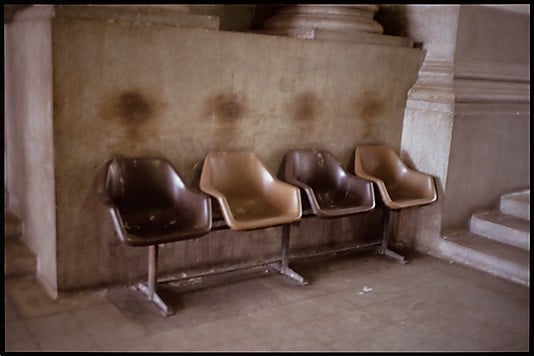
In my day job as curator of LIBERATE, the online resource ministry of Tullian Tchividjian and Coral Ridge Presbyterian Church, I was searching for a suitable image to pair with a sermon by one of our contributors, Rev. Nick Lannon, on the Advent theme of waiting. And I happened upon a photograph by contemporary artist Gabriel Orozco which I had often used to introduce his work to my undergraduate students. Now it strikes me as one of the more poignant and evocative artistic embodiments of Advent, and deserving of an Advent art critical meditation, if there exists such a thing.
Gabriel Orozco (b. 1962) is a photographer, sculptor, and conceptual artist from Mexico City who now also lives and works in New York and Paris. His work has been profoundly influential in the contemporary art world throughout the 1990s and the first decade of the twenty-first century, having been honored with large-scale exhibitions at both the Museum of Modern Art, New York and the Tate Modern in London. His is interested in capturing, preserving, collecting, and re-presenting everyday objects, observations, and experiences that are everywhere present but nowhere seen by the vast majority of us as we rush about our daily lives. He has been called a “post-studio” artist, which means that he is not sequestered in a private working area, but out in the world, in the nooks and crannies of urban life, searching for the profound among the debris of everyday life, whether it is a photograph that captures the beauty of rain water captured in a deflated and abandoned soccer ball or an empty shoebox. The world is quite literally his studio. And his work breathes with the playful poetry amidst the difficulty and weight of everyday life. It has also been criticized for not being artistic enough, for not displaying conventional artistic talent—for being too easy.
Waiting Chairs (1998) is a photograph of a row of plastic chairs taken by Orozco on a trip to India. Although the juxtaposition of these plastic chairs and the grand stone architectural structure is itself striking, what has captured Orozco’s attention is the vestiges of human presence, the grease-and dirt-stained heads that have leaned back on the stone wall. The human presence is affirmed through absence, ghostly vestiges of repeated human use.
The photograph asks us to consider the thousands of men, women, and children who have sat in these chairs and out of frustration, exhaustion, reflection, or boredom, leaned their heads back on that wall as they waited. Waited for what? For whom? Where are they going? Where have they been?
The difficulties of navigating daily life leave us chronically exhausted. Yet we respond by running faster and paddling harder, for we are defined and justified by what we do, by what we make. Yet Orozco’s art, which is “barely art,” because he seems not to have done anything but notice things, pick them up or press a camera shudder, reminds us that waiting is a necessary part but excruciatingly difficult part of our humanity. In fact, looking at a work of art is itself a certain kind of waiting, a kind of not-doing, a kind of passive attentiveness. Research at the J. Paul Getty Museum has determined that the average amount of time a viewer spends with a work of art is thirty seconds. An artist may work for years on a painting that we pass by in thirty seconds. A work of art beckons us to wait. But we usually refuse.
Walker Pearcy once described humanity as “waiting for news.” Yet it seems that we concoct ways to deny this reality. At this time of year, as our lives become even more busy, more stressful, and as we squeeze more into our days, let us remember that we were made to wait, wait on the Lord and it is in him that we live and breathe and having our being. This is why Advent exists. The church in her wisdom makes us stop, teaches us to be passive as we wait for the Lord, the Lord who kills and makes alive, born to die so that we might live.
“He who testifies to these things says, ‘Surely I am coming soon.’ Amen. Come. Lord Jesus!” (Rev 22: 20)
Previous Post

December 21, 2012
"Holy Innocents" and the Birth of Jesus
Next Post
December 26, 2012 Good King Wenceslas
Browse Our Archives
Select a Category Alex Blondeau Authors Daniel Harrell Daniel Siedell Dawn Duncan Harrell Kyle Roberts Uncategorized Wyndy Corbin
Select a Month November 2014 October 2014 September 2014 August 2014 July 2014 June 2014 May 2014 April 2014 March 2014 February 2014 January 2014 December 2013 November 2013 October 2013 September 2013 August 2013 July 2013 June 2013 May 2013 April 2013 March 2013 February 2013 January 2013 December 2012 November 2012 October 2012 September 2012 August 2012 July 2012 June 2012 May 2012
TAKE THE
Religious Wisdom Quiz
What does the name "Bethlehem" mean in Hebrew?
Select your answer to see how you score.
House of Kings House of Prayer House of Stone House of Bread
Related posts from Cultivare


Young Evangelicals and the "Nones": Jumping Ship


Calling For Public Theology (A Brief Convocation Address)
TRENDING AT PATHEOS Evangelical

The REST of Your Life: A Creative Wrestles...
This week I had a conversation with a good friend from church....

How the author of the world's best hymn...
I've been working with John Newton for a while now. This makes...

Long before this Lectio Divina, Psalm 130 - the song - started...

What About the Trees? Another Living Parable
After I finished writing the last article about falling leaves as a...

Why Classical Education Is a Conversation, Not a...
Come and Read: Joy in Classical Education When I was a little...

Cornell University has received a great deal of negative publicity and intense...
view all Evangelical blogs
Ad-Free & Subscriber Log-In Subscription Support
- About Us
- 2026 Calendar
- Videos
- Podcasts
- Library of World Religions
- Faith In Media Tracker
- Advertise With Us
- Write for Us
- Privacy Policy
- Terms of Service
- Do Not Sell My Data
- Contact Us
- Radiant Digital
- Manage Newsletter Subscriptions
- Unsubscribe From Notifications
- Sitemap
Copyright 2008-2026, Patheos. All rights reserved.
Subscription Support Ad-Free & Subscriber Log-In
Follow Patheos