
BuddhistCatholicContemplativeEvangelicalGeneral ChristianHinduJewishLatter-day SaintMuslimNew VisionsProgressive Christian
Beliefs
- Buddhist
- Catholic
- Contemplative
- Evangelical
- General Christian
- Hindu
- Jewish
- Latter-day Saint
- More Voices
- Muslim
- New Visions
- Pagan
- Progressive Christian
Topics
- Religion News
- Food and Religion
- Sports and Religion
- Religious Art
- Religious Music and Entertainment
- Religious Events
- History and Religion
- Style and Religion
- Politics and Religion
- Women in Religion
- Recreation Outdoors and Religion
- Business Finance and Religion
- Careers Workplace and Religion
- Education and Religion
- Family Parenting and Religion
- Health Fitness and Religion
- Home and Religion
- Relationships and Religion
- Technology and Religion
- Travel and Religion
Columnists
- Buddhist Columnists
- Business Finance and Religion Columnists
- Careers Workplace and Religion Columnists
- Catholic Columnists
- Contemplative Columnists
- Education and Religion Columnists
- Evangelists Columnists
- Family Parenting and Religion Columnists
- General Christian Columnists
- Health Fitness and Religion Columnists
- Hindu Columnists
- History and Religion Columnists
- Home and Religion Columnists
- Jewish Columnists
- More Voices Columnists
- Latter Day Columnists
- Muslim Columnists
- New Visions Columnists
- Nonreligious Columnists
- Pagan Columnists
- Politics and Religion Columnists
- Progressive Columnists
- Recreation Outdoors and Religion Columnists
- Relationships and Religion Columnists
- Religion News Columnists
- Religious Art Columnists
- Religious Events Columnists
- Religious Music and Entertainment Columnists
- Sports and Religion Columnists
- Style and Religion Columnists
- Technology and Religion Columnists
- Travel and Religion Columnists
- Women in Religion Columnists
Resource Library
- 2026 Calendar
- Library of World Religions
- The 100 Most Holy Places on Earth
- Patheos Answers
- Podcasts
- Videos
- Faith Leaders Database
- Anglican Episcopalian
- Bahai
- Baptist
- Buddhism
- Christianity
- Confucianism
- Eastern Orthodoxy
- Hinduism
- Holiness and Pentecostal
- ISKCON
- Islam
- Judaism
- Lutheran
- Methodist
- The Church of Jesus Christ of Latter-day Saints
- New Age
- Paganism
- Presbytarian and Reformed
- Protestantism
- Religion Behind the Scenes
- Roman Catholic
- Scientology
- Shia Islam
- Sikhism
- Sufism
- Sunni Islam
- Taoism
- Zen
- See all religions
Research Tools
 Ad-Free & Subscriber Log-In Subscription Support
Ad-Free & Subscriber Log-In Subscription Support
Follow Patheos 

- Trending:
- Forgiveness
- |
- Marriage
- |
- Consciousness
- |
- Death Penalty
- |
- Election
- |
- Halloween
 Cultivare
- Home
- Evangelical
- My Kid Can Do That
My Kid Can Do That
Last updated on: October 15, 2012 at 9:58 am by Daniel A. Siedell
My Kid Can Do That 2012-10-15T09:58:48-04:00 Daniel A. Siedell
Patheos Explore the world's faith through different perspectives on religion and spirituality! Patheos has the views of the prevalent religions and spiritualities of the world.
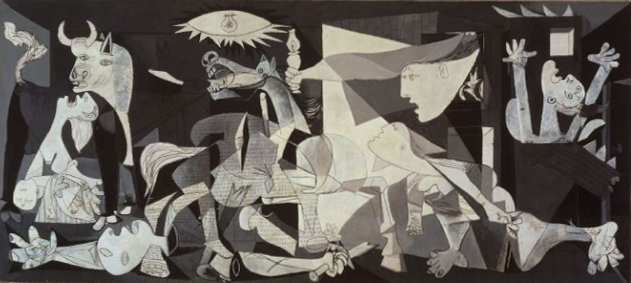 Pablo Picasso, Guernica, 1937, Reina Sofia, Madrid
“My kid can do that” is a common accusation leveled against modern artists whose paintings look nothing like the Mona Lisa, the Sistine Chapel Ceiling, or a Thomas Kinkade print. As a museum curator I heard this numerous times. Modern art frustrates our presumptions of what art should be. We want artists to impress us with their powerful talent to render likeness, entertain us with images that “look real” (i.e., look like a photograph). But we are not to be trusted. We want to be flattered and entertained (and perhaps even a bit titillated) at the art museum. And so when we happen upon a painting of colors and lines, or a composition of simple lines and distorted shapes, we’re offended, and so we dismiss it as the work of charlatan and condemn it as childish, not worthy of being called Art. However, my response to those who claimed that “my kid can do that,” was “that was the point.”
Many modern artists intentionally made paintings that looked childish. In fact, the drawings of children were powerful influences on artists in the late nineteenth century who became dissatisfied with the flamboyant artistic virtuosity and excessive rationalism that dominated academic painting.
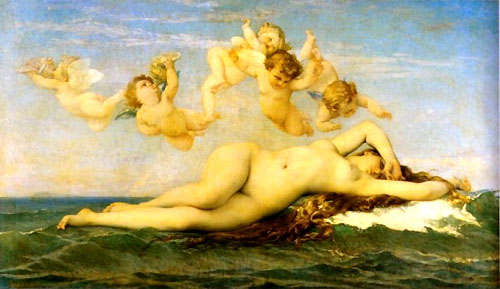
Alexander Cabanel, The Birth of Venus, 1863
For such artists academic painting, the painting of perfectly rendered heroes, erotic goddesses, revealed an artistic vision that had too easily “mastered” and “explained” the world, reducing the artist’s role to reproducing exquisite figures from classical and biblical texts. What is more, these paintings of nymphs, cherubs, gods and goddesses, were isolated from the spiritual, intellectual, and social tremors of a nineteenth century Europe in upheaval.
And so some artists, beginning with Gustave Courbet and Édouard Manet, sought to re-enchant a secularized world dominated by science and empiricism, by re-enchanting art, making it once again responsive to human experience that remains mysterious and inexplicable, in spite of the technologies that claim to control it. Some of these artists sacrificed their considerable artistic skill, trading their virtuosity for honesty and vulnerability, to make paintings that gave expression to the flame of life’s mystery that modernism could not douse. And where did some look for inspiration? Children’s drawings.
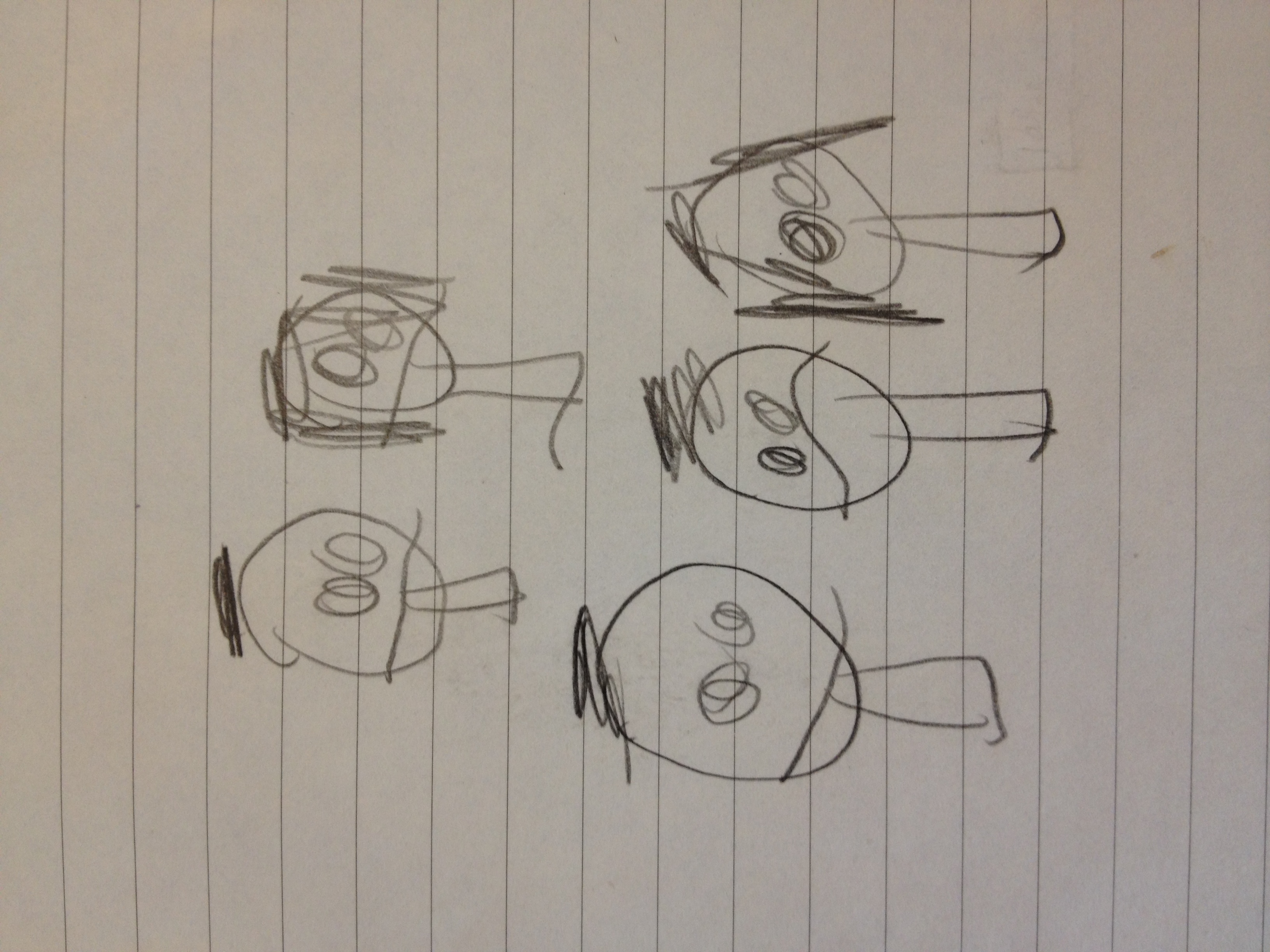
Why are we attracted to children’s drawings? One reason is that their capacity to represent the world is not capable of interpreting their experience of the world, which overwhelms them with wonder and awe. We are drawn to their honest and sincere struggle to render the complexity of the world through their inferior skill. It is this gap between their technical competency and the vastness of their subject that attracts us to these drawings. They are great because they cannot represent the world. Their beauty is in their failure.
Modern artists from Paul Gauguin to Paul Klee and Picasso were attracted to children’s drawings for precisely this gap, this failure, which they felt needed to be reasserted in artistic practice. By the mid-nineteenth century the great artistic achievements and innovations of the Renaissance had lost its connection to religious belief, mystery, and eros, and had become an aesthetic technology of control that corresponded with the disappearance of human fallibility in the wake of Enlightenment optimism. Modern art is often condemned for its arrogance. Yet in sharp contrast to its established academic rivals, modern artists were painfully aware of human weakness and brokenness and made painting that responded to this reality that we would like to forget. In fact, it might only be a slight exaggeration to claim that the development of modern art consisted in the recovery of original sin and the radically unfree will. Ironically, Christian critics have condemned modern art for rejected the form and content of academic painting, seeing in this rejection the modern artist’s participation in modernism’s attack on traditional religious belief.
The development of modern art, however, was a means to rebuild religious belief and faith through art with the theological rubble that remained after the ravages of Enlightenment atheism, moralism, and scientism, to which academic painting had become subservient. By the nineteenth century, academic painting succeeded in reducing the Christian faith to moralizing myths of heroism and virtue in service of the Enlightenment state. Artists who became dissatisfied with these conventions and developed new pictorial vocabularies, like Manet, were mocked by the academic establishment as childish and incompetent. Although an aesthetic product of the Enlightenment, modern art undermined the Enlightenment project.
These modern artists subsumed their virtuosity for the sake of assuming a child-like posture in the face of a terrible and beautiful world, in which forces act upon us, despite our attempt to control and manipulate them for our own benefit. Modern art is a lament in paint, an affirmation that we are broken and the world is not as it ought.
How else could the Spaniard Pablo Picasso have depicted the atrocities of the bombing of Guernica in 1937 during the horrific Spanish Civil War through anything other than a child-like posture of helpless wonder and incomprehension. Guernica is a massive mural, a 25 foot-long witness to art’s inability to explain or make sense of the world, a child’s lament at the unspeakable cruelty that threatens to suffocate the beauty in the world. Guernica is Picasso’s resistance to the world as it is.
Modern art reminds us that contrary to our artistic, scientific, and political pretenses to control, we remain helpless children in the face of a world we cannot comprehend, which fills us with awe and terror. And the only thing left that we as helpless children can do is to cry out for help and believe that our cry will be answered.
Even my kid can do that.
Previous Post

October 12, 2012
Us and Them
Next Post
October 16, 2012 Beyond the Image
Browse Our Archives
Select a Category Alex Blondeau Authors Daniel Harrell Daniel Siedell Dawn Duncan Harrell Kyle Roberts Uncategorized Wyndy Corbin
Select a Month November 2014 October 2014 September 2014 August 2014 July 2014 June 2014 May 2014 April 2014 March 2014 February 2014 January 2014 December 2013 November 2013 October 2013 September 2013 August 2013 July 2013 June 2013 May 2013 April 2013 March 2013 February 2013 January 2013 December 2012 November 2012 October 2012 September 2012 August 2012 July 2012 June 2012 May 2012
TAKE THE
Religious Wisdom Quiz
Who was the prophet that confronted King David about his sin with Bathsheba?
Select your answer to see how you score.
Isaiah Samuel Nathan Elijah
Related posts from Cultivare


Young Evangelicals and the "Nones": Jumping Ship


Calling For Public Theology (A Brief Convocation Address)
TRENDING AT PATHEOS Evangelical

The REST of Your Life: A Creative Wrestles...
This week I had a conversation with a good friend from church....

How the author of the world's best hymn...
I've been working with John Newton for a while now. This makes...

Long before this Lectio Divina, Psalm 130 - the song - started...

What About the Trees? Another Living Parable
After I finished writing the last article about falling leaves as a...

Why Classical Education Is a Conversation, Not a...
Come and Read: Joy in Classical Education When I was a little...

Cornell University has received a great deal of negative publicity and intense...
view all Evangelical blogs
Ad-Free & Subscriber Log-In Subscription Support
- About Us
- 2026 Calendar
- Videos
- Podcasts
- Library of World Religions
- Faith In Media Tracker
- Advertise With Us
- Write for Us
- Privacy Policy
- Terms of Service
- Do Not Sell My Data
- Contact Us
- Radiant Digital
- Manage Newsletter Subscriptions
- Unsubscribe From Notifications
- Sitemap
Copyright 2008-2026, Patheos. All rights reserved.
Subscription Support Ad-Free & Subscriber Log-In
Follow Patheos