
BuddhistCatholicContemplativeEvangelicalGeneral ChristianHinduJewishLatter-day SaintMuslimNew VisionsProgressive Christian
Beliefs
- Buddhist
- Catholic
- Contemplative
- Evangelical
- General Christian
- Hindu
- Jewish
- Latter-day Saint
- More Voices
- Muslim
- New Visions
- Pagan
- Progressive Christian
Topics
- Religion News
- Food and Religion
- Sports and Religion
- Religious Art
- Religious Music and Entertainment
- Religious Events
- History and Religion
- Style and Religion
- Politics and Religion
- Women in Religion
- Recreation Outdoors and Religion
- Business Finance and Religion
- Careers Workplace and Religion
- Education and Religion
- Family Parenting and Religion
- Health Fitness and Religion
- Home and Religion
- Relationships and Religion
- Technology and Religion
- Travel and Religion
Columnists
- Buddhist Columnists
- Business Finance and Religion Columnists
- Careers Workplace and Religion Columnists
- Catholic Columnists
- Contemplative Columnists
- Education and Religion Columnists
- Evangelists Columnists
- Family Parenting and Religion Columnists
- General Christian Columnists
- Health Fitness and Religion Columnists
- Hindu Columnists
- History and Religion Columnists
- Home and Religion Columnists
- Jewish Columnists
- More Voices Columnists
- Latter Day Columnists
- Muslim Columnists
- New Visions Columnists
- Nonreligious Columnists
- Pagan Columnists
- Politics and Religion Columnists
- Progressive Columnists
- Recreation Outdoors and Religion Columnists
- Relationships and Religion Columnists
- Religion News Columnists
- Religious Art Columnists
- Religious Events Columnists
- Religious Music and Entertainment Columnists
- Sports and Religion Columnists
- Style and Religion Columnists
- Technology and Religion Columnists
- Travel and Religion Columnists
- Women in Religion Columnists
Resource Library
- 2026 Calendar
- Library of World Religions
- The 100 Most Holy Places on Earth
- Patheos Answers
- Podcasts
- Videos
- Faith Leaders Database
- Anglican Episcopalian
- Bahai
- Baptist
- Buddhism
- Christianity
- Confucianism
- Eastern Orthodoxy
- Hinduism
- Holiness and Pentecostal
- ISKCON
- Islam
- Judaism
- Lutheran
- Methodist
- The Church of Jesus Christ of Latter-day Saints
- New Age
- Paganism
- Presbytarian and Reformed
- Protestantism
- Religion Behind the Scenes
- Roman Catholic
- Scientology
- Shia Islam
- Sikhism
- Sufism
- Sunni Islam
- Taoism
- Zen
- See all religions
Research Tools
 Ad-Free & Subscriber Log-In Subscription Support
Follow Patheos 

- Trending:
- Advent
- |
- Forgiveness
- |
- Thanksgiving
- |
- Election
- |
- Seasonal Holidays
- |
- Marriage
 Cultivare
- Home
- Evangelical
- Hunting Satan
Hunting Satan
Last updated on: October 22, 2012 at 12:35 pm by Daniel Harrell
Hunting Satan 2012-10-22T12:35:43-04:00 Daniel Harrell
Patheos Explore the world's faith through different perspectives on religion and spirituality! Patheos has the views of the prevalent religions and spiritualities of the world.
Guest blogger Dawn Duncan Harrell is author of Ten Ways to Pray. You can find her here and read more here.
“So is evil a force like gravity, the propensity to serve self at the expense of the other, or a person that tempts and oppresses humans like Satan?” my fellow reader asked.
We were sitting—she in a wheelchair—at a coffee shop discussing our fall book The Quest for the Historical Satan. It had been summer reading, but “st_ff happened.” And then her elderly father died. Compared with everything else, we wondered, what did Satan matter?
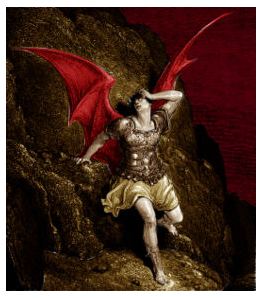 Seeking Satan
According to Miguel De La Torre, an ethicist, and Albert Hernández, an historian, at the Iliff School of Theology, Satan began his career as an adversary in Yahweh God’s council. His popular character as the author of absolute evil solidified and grew into Yahweh’s near-rival during the Babylonian exile, a position he held (with a dip during the Gospels) until the Renaissance demoted him. Psycho- analysis and science reigned in his stead throughout the Enlightenment, but the atrocities of the Holocaust suggest he did not die.
“Yes,” we agreed after reading the book. “Evil is all three: an impersonal force (Luke 13:4–5), sinful human nature (Rom 3:23), and even a celestial demonic (1 Pet 5:8).” But consenting to this multiple-personality-disorder theory for the source of evil was the easy part.
Satan existed. So what?*
“It matters little if Satan exists—evil definitely does,” answered our practical-minded authors. “Our interest in Satan has less to do with explaining his existence and more to do with understanding his function” (10, 193).
Finding Satan

Turns out personified evil has functioned to grease the wheels of all sorts of bad behavior toward those (the Other) who are different from ourselves. The bulk of The Quest demonstrates through history how Christians have demonized those who fear us, hurt us, or believe and act differently than we do. “Such thinking . . . all too easily defines everything that is suspect, unfamiliar, or ambiguous—such as the stranger, the alien, the racial or ethnic other, or dissenters from the norm—as belonging to Satan’s domain” (2).
Some of this seems harmless, calling the Yankees “the evil empire.” Some of it is harmful, calling the Soviet Union “the evil empire.” The consequences of so characterizing the Other are that we excuse ourselves from loving that person or group and rationalize acting out against them instead. How does this happen?
How does a simple statement of what may be true—“XYZ happened because of the work of the dark one”—end up justifying failure to embrace the redemptive work of God on the one hand and acts of unspeakable violence in Jesus’ name on the other? De La Torre and Hernández make several suggestions:
- When we dismiss the Other as evil, we “ignore the causes of their resentment and any validity their grievances may have” (6).
- When we blame Satan, we acquit regular folks like ourselves of our responsibility “to see the everyday immorality of social structures” and we easily tolerate our own “indifference to human suffering” (47).
- When we foment our own group’s fear of the Other, we summon ourselves to exclusivity in the name of repentance (7).
- When we invoke our own religious knowledge in self-defense against the Other, we legitimize a standard that is repressive to the Other, “if not more evil, than what we are defending ourselves from” (193).
Creating Satan
The problem is that we project our own definition of stupid, bad, evil, and satanic onto our Other (1 John 1:8). Then we can define ourselves as the opposite—smart, good, righteous, and godly—but within this tidy little package, we’ve created Satan in our own image (194; Rom 2:1).
Evil is bigger than we are. Our good self-image alone carries too puny a power and too limited a love to cope with natural disaster, habitual sin, or Satanic attack (Amos 5:19; Rom 7:23–25; Eph 6:11–13). In fact, with regard to our Other, Jesus suggests our self-image is no better than a poke in the eye with a sharp speck (Matt 7:3–5).
All Hallows Eve and Election Night converge. Who is your Other?
_____
*If my seeming flippancy about the dark one is giving you the willies, I’d suggest starting with Neil T. Anderson’s The Bondage Breaker, where he writes, “Your relationship to demonic powers in the spiritual realm is a lot like your relationship to germs in the physical realm. . . . The only appropriate response to the swarm of germs around you is to eat the right foods, get enough rest and exercise, and keep yourself and your possessions clean—and your immune system will protect you. . . . Demons are like little invisible germs looking for someone to infect. We are never told in Scripture to be afraid of them. You just need to be aware of their reality and commit yourself to live a righteous life” (93).
Previous Post

October 18, 2012
"You'd be Really Pretty if You were White": Jesus and Race in America
Next Post

October 23, 2012 Let's Explore Modern Art
Browse Our Archives
Select a Category Alex Blondeau Authors Daniel Harrell Daniel Siedell Dawn Duncan Harrell Kyle Roberts Uncategorized Wyndy Corbin
Select a Month November 2014 October 2014 September 2014 August 2014 July 2014 June 2014 May 2014 April 2014 March 2014 February 2014 January 2014 December 2013 November 2013 October 2013 September 2013 August 2013 July 2013 June 2013 May 2013 April 2013 March 2013 February 2013 January 2013 December 2012 November 2012 October 2012 September 2012 August 2012 July 2012 June 2012 May 2012
TAKE THE
Religious Wisdom Quiz
Who said, 'The Lord gives and the Lord takes away'?
Select your answer to see how you score.
Moses Job Solomon David
Related posts from Cultivare


Billy Joel, George R. R. Martin, and Job

TRENDING AT PATHEOS Evangelical

When you hear the word riches, what comes to mind? For most...

Don’t Miss the Parents: A Creative Christmas Meditation
As we enter the Advent Season, I see many people trying to...

Making Stones Into Bread: Choosing the “Right” Work
I was on my online arts ministry Zoom meeting with the International...

Ukraine’s exhausted Christians face fifth winter of war
By Julian Lukins The full-scale war in Ukraine is taking “a serious...

Russell Brand's Conviction is not anti-Christian Persecution
How do we shed the reputation that the Church is OK with...

Have you ever caught yourself saying, “I’ll do it tomorrow,” or “Now...
view all Evangelical blogs
Ad-Free & Subscriber Log-In Subscription Support
- About Us
- 2026 Calendar
- Videos
- Podcasts
- Library of World Religions
- Faith In Media Tracker
- Advertise With Us
- Write for Us
- Privacy Policy
- Terms of Service
- Do Not Sell My Data
- Contact Us
- Radiant Digital
- Manage Newsletter Subscriptions
- Unsubscribe From Notifications
- Sitemap
Copyright 2008-2026, Patheos, part of the Radiant Digital network of media brands. All rights reserved.
Subscription Support Ad-Free & Subscriber Log-In
Follow Patheos