
BuddhistCatholicContemplativeEvangelicalGeneral ChristianHinduJewishLatter-day SaintMuslimNew VisionsProgressive Christian
Beliefs
- Buddhist
- Catholic
- Contemplative
- Evangelical
- General Christian
- Hindu
- Jewish
- Latter-day Saint
- More Voices
- Muslim
- New Visions
- Pagan
- Progressive Christian
Topics
- Religion News
- Food and Religion
- Sports and Religion
- Religious Art
- Religious Music and Entertainment
- Religious Events
- History and Religion
- Style and Religion
- Politics and Religion
- Women in Religion
- Recreation Outdoors and Religion
- Business Finance and Religion
- Careers Workplace and Religion
- Education and Religion
- Family Parenting and Religion
- Health Fitness and Religion
- Home and Religion
- Relationships and Religion
- Technology and Religion
- Travel and Religion
Columnists
- Buddhist Columnists
- Business Finance and Religion Columnists
- Careers Workplace and Religion Columnists
- Catholic Columnists
- Contemplative Columnists
- Education and Religion Columnists
- Evangelists Columnists
- Family Parenting and Religion Columnists
- General Christian Columnists
- Health Fitness and Religion Columnists
- Hindu Columnists
- History and Religion Columnists
- Home and Religion Columnists
- Jewish Columnists
- More Voices Columnists
- Latter Day Columnists
- Muslim Columnists
- New Visions Columnists
- Nonreligious Columnists
- Pagan Columnists
- Politics and Religion Columnists
- Progressive Columnists
- Recreation Outdoors and Religion Columnists
- Relationships and Religion Columnists
- Religion News Columnists
- Religious Art Columnists
- Religious Events Columnists
- Religious Music and Entertainment Columnists
- Sports and Religion Columnists
- Style and Religion Columnists
- Technology and Religion Columnists
- Travel and Religion Columnists
- Women in Religion Columnists
Resource Library
- 2026 Calendar
- Library of World Religions
- The 100 Most Holy Places on Earth
- Patheos Answers
- Podcasts
- Videos
- Faith Leaders Database
- Anglican Episcopalian
- Bahai
- Baptist
- Buddhism
- Christianity
- Confucianism
- Eastern Orthodoxy
- Hinduism
- Holiness and Pentecostal
- ISKCON
- Islam
- Judaism
- Lutheran
- Methodist
- The Church of Jesus Christ of Latter-day Saints
- New Age
- Paganism
- Presbytarian and Reformed
- Protestantism
- Religion Behind the Scenes
- Roman Catholic
- Scientology
- Shia Islam
- Sikhism
- Sufism
- Sunni Islam
- Taoism
- Zen
- See all religions
Research Tools
 Ad-Free & Subscriber Log-In Subscription Support
Ad-Free & Subscriber Log-In Subscription Support
Follow Patheos 

- Trending:
- Forgiveness
- |
- Marriage
- |
- Consciousness
- |
- Death Penalty
- |
- Election
- |
- Halloween
 Cultivare
- Home
- Evangelical
- Melville’s Epilogue
Melville’s Epilogue
Last updated on: September 15, 2012 at 8:39 am by Daniel A. Siedell
Melville’s Epilogue 2012-09-15T08:39:33-04:00 Daniel A. Siedell
Patheos Explore the world's faith through different perspectives on religion and spirituality! Patheos has the views of the prevalent religions and spiritualities of the world.
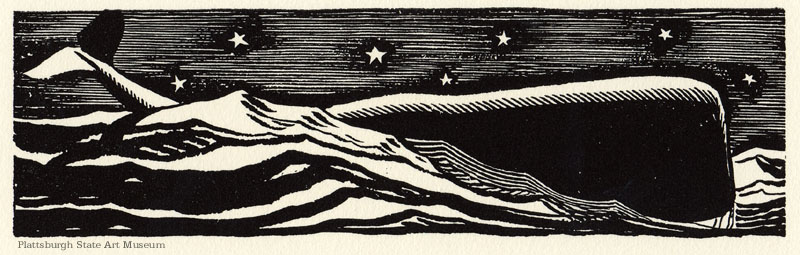
In 1857 an exhausted and depressed Herman Melville travelled to Jerusalem in an effort to recover his Christian faith. He returned bitterly disappointed with what he apparently didn’t find. Unfortunately, Melville’s life-long struggle with faith is not the exception in the history of modern art and literature. This history is characterized by loss, brokenness, and failure, and faith is often one of the consequences. Edvard Munch said that “art comes from joy and pain,” and then he added, “but mostly from pain.” Melville’s description of his recently completed novel, Moby-Dick, also describes most of the great artistic and literary achievements in the nineteenth and early twentieth centuries.
“It is of the horrible texture of a fabric that should be woven of ships’ cables & hausers. A Polar wind blows through it, & birds of prey hover over it.”
Published in 1851, Moby-Dick was ridiculed by critics and reviewers, in no small measure because his Victorian readers took offense at his impiety and latent atheism. But in reality, this literary masterpiece is one of the most aggressively honest explorations of Christianity that emerged from the nineteenth century. In his famous chapter 42, “The Whiteness of the Whale,” Melville’s Ishmael implies that God might even be responsible for evil:
Though in many of its aspects this visible world seems formed in love, the invisible spheres were formed in fright.
Melville was haunted by God’s inscrutable sovereignty, a power and majesty that terrified him because he was hidden. (In this way, Melville’s response is not unlike Luther’s well-documented hatred that he harbored at the righteousness of God before he “broke through.”) Perhaps more than any American writer, Melville felt deep in his bones the terror of a God who kills and makes alive, a God of wrath, eternal decrees, and unapproachable holiness. Melville’s God is, in the words of theologian Steven Paulson in his book Lutheran Theology, an unpreached God. Life without a preacher, Paulson writes,
is life with a silent God whose will is immutable and who stands on high mountains, like Zeus on Olympus, hurling thunderbolts called fate, judgment, and death…”
Or, in Melville’s world, this silent God is a colossal white whale that terrorizes from the unseen depths of the seas, striking all who dare pursue him. (Ahab, the lunatic captain, bears the visible marks, not unlike Jacob, of having wrestled with the Divine.) For Paulson, we must encounter and then flee from this terrifying God of seeming arbitrary wrath and judgment in order to find the God who saves. And this is done only through a preacher (Rom. 10: 14) who proclaims in Christ a God who is terrifying and arbitrarily gracious, who is not against us but for us. The preacher reveals that grace not judgment is God’s last word. But in Moby-Dick, God remains forever unpreached, and therefore, arbitrary, monstrous, and terrifying–retreating further and further away until it strikes, and completely destroys (judges) the Pequod. And yet.
And yet there is a survivor. Amidst the polar wind and birds of prey of Moby-Dick, grace operates throughout the novel. But it is most obviously and inexplicably present in the Epilogue. How does Ishmael survive the sinking of the Pequod? How does he, the one who is named after a Biblical castaway, a wanderer in the line of Cain, survive? The biblical Ishmael is the one who is rejected by his father Abraham in favor of Isaac, the child of promise. However, like his biblical namesake, who is nevertheless cared for and blessed by God, Ishmael is blessed by Melville, his creator, who, by putting the words of Job in his mouth (“And I only am escaped alone to tell thee.”)
The strangeness of Ishmael’s survival was not lost on Melville’s reviewers. Many read it as a gratuitous addition. And let’s face it, it is. Melville’s Ishmael survives only as a gratuitous decision by his creator in the form of an inexplicable, un-warranted Epilogue.
An act of one-way love.
Previous Post

September 13, 2012
Kierkegaard on the Bible's "Carefully Contrived Discrepancies"
Next Post
September 18, 2012 Hope Amidst the Ruins in Charlottesville
Browse Our Archives
Select a Category Alex Blondeau Authors Daniel Harrell Daniel Siedell Dawn Duncan Harrell Kyle Roberts Uncategorized Wyndy Corbin
Select a Month November 2014 October 2014 September 2014 August 2014 July 2014 June 2014 May 2014 April 2014 March 2014 February 2014 January 2014 December 2013 November 2013 October 2013 September 2013 August 2013 July 2013 June 2013 May 2013 April 2013 March 2013 February 2013 January 2013 December 2012 November 2012 October 2012 September 2012 August 2012 July 2012 June 2012 May 2012
TAKE THE
Religious Wisdom Quiz
How many books are in the Bible (Protestant version)?
Select your answer to see how you score.
66 40 73 12
Related posts from Cultivare

Luther, Evangelicals, and Modern Art
Art and Culture, or Politics by Other Means—Evangelical...
The Red Herring of Public Decency
TRENDING AT PATHEOS Evangelical

The REST of Your Life: A Creative Wrestles...
This week I had a conversation with a good friend from church....

How the author of the world's best hymn...
I've been working with John Newton for a while now. This makes...

Long before this Lectio Divina, Psalm 130 - the song - started...

What About the Trees? Another Living Parable
After I finished writing the last article about falling leaves as a...

Why Classical Education Is a Conversation, Not a...
Come and Read: Joy in Classical Education When I was a little...

Cornell University has received a great deal of negative publicity and intense...
view all Evangelical blogs
Ad-Free & Subscriber Log-In Subscription Support
- About Us
- 2026 Calendar
- Videos
- Podcasts
- Library of World Religions
- Faith In Media Tracker
- Advertise With Us
- Write for Us
- Privacy Policy
- Terms of Service
- Do Not Sell My Data
- Contact Us
- Radiant Digital
- Manage Newsletter Subscriptions
- Unsubscribe From Notifications
- Sitemap
Copyright 2008-2026, Patheos. All rights reserved.
Subscription Support Ad-Free & Subscriber Log-In
Follow Patheos