
BuddhistCatholicContemplativeEvangelicalGeneral ChristianHinduJewishLatter-day SaintMuslimNew VisionsProgressive Christian
Beliefs
- Buddhist
- Catholic
- Contemplative
- Evangelical
- General Christian
- Hindu
- Jewish
- Latter-day Saint
- More Voices
- Muslim
- New Visions
- Pagan
- Progressive Christian
Topics
- Religion News
- Food and Religion
- Sports and Religion
- Religious Art
- Religious Music and Entertainment
- Religious Events
- History and Religion
- Style and Religion
- Politics and Religion
- Women in Religion
- Recreation Outdoors and Religion
- Business Finance and Religion
- Careers Workplace and Religion
- Education and Religion
- Family Parenting and Religion
- Health Fitness and Religion
- Home and Religion
- Relationships and Religion
- Technology and Religion
- Travel and Religion
Columnists
- Buddhist Columnists
- Business Finance and Religion Columnists
- Careers Workplace and Religion Columnists
- Catholic Columnists
- Contemplative Columnists
- Education and Religion Columnists
- Evangelists Columnists
- Family Parenting and Religion Columnists
- General Christian Columnists
- Health Fitness and Religion Columnists
- Hindu Columnists
- History and Religion Columnists
- Home and Religion Columnists
- Jewish Columnists
- More Voices Columnists
- Latter Day Columnists
- Muslim Columnists
- New Visions Columnists
- Nonreligious Columnists
- Pagan Columnists
- Politics and Religion Columnists
- Progressive Columnists
- Recreation Outdoors and Religion Columnists
- Relationships and Religion Columnists
- Religion News Columnists
- Religious Art Columnists
- Religious Events Columnists
- Religious Music and Entertainment Columnists
- Sports and Religion Columnists
- Style and Religion Columnists
- Technology and Religion Columnists
- Travel and Religion Columnists
- Women in Religion Columnists
Resource Library
- 2026 Calendar
- Library of World Religions
- The 100 Most Holy Places on Earth
- Patheos Answers
- Podcasts
- Videos
- Faith Leaders Database
- Anglican Episcopalian
- Bahai
- Baptist
- Buddhism
- Christianity
- Confucianism
- Eastern Orthodoxy
- Hinduism
- Holiness and Pentecostal
- ISKCON
- Islam
- Judaism
- Lutheran
- Methodist
- The Church of Jesus Christ of Latter-day Saints
- New Age
- Paganism
- Presbytarian and Reformed
- Protestantism
- Religion Behind the Scenes
- Roman Catholic
- Scientology
- Shia Islam
- Sikhism
- Sufism
- Sunni Islam
- Taoism
- Zen
- See all religions
Research Tools
 Ad-Free & Subscriber Log-In Subscription Support
Ad-Free & Subscriber Log-In Subscription Support
Follow Patheos 

- Trending:
- Forgiveness
- |
- Marriage
- |
- Consciousness
- |
- Death Penalty
- |
- Election
- |
- Halloween
 Cultivare
- Home
- Evangelical
- Summer Theology Reading Suggestions
Summer Theology Reading Suggestions
Last updated on: July 26, 2012 at 8:59 am by Kyle Roberts
Summer Theology Reading Suggestions 2012-07-26T08:59:24-04:00 Kyle Roberts
Patheos Explore the world's faith through different perspectives on religion and spirituality! Patheos has the views of the prevalent religions and spiritualities of the world.
I’m going to jump into the on-going topic (see Daniel Harrell’s posts in this blog) of “summer reading.” Summer is quickly slipping away, it seems, but there’s enough time to get some quality reading done. I’m going to suggest just three books that I think are well-worth your time and money (depending on your interests, of course). I’d love for others of you to include other recommendations in the comment section.
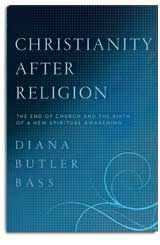
1. Christianity After Religion, by Diana Butler Bass. This is an engaging and timely work by an important leader in mainline Protestantism. Bass is very much in touch with the current state of American Christianity–not just mainline Protestantism, but the whole gamut–including evangelicalism and the various revitalizing movements that are at work (e.g. emergent/emergence). She gives the lay of the land regarding the numerical decline and corresponding wane of social influence and ponders that this might be a sort of kairos moment for re-thinking the nature of Christianity and the vocation of the church in American society. I plan to engage this book in more depth on this blog soon.
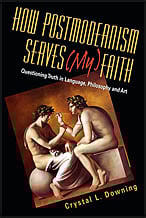
2. How Postmodernism Serves (My) Faith, by Crystal L. Downing. As a English literature professor (Messiah College), Downing brings an important perspective to the evangelical engagement with postmodernism. Too often such discussions take place in theology and philosophy, while ignoring (or minimizing) the integration of the arts with philosophy and theology. She offers a poignant and practical reflection that shows that postmodernism is not the enemy, but can be harnessed as intellectual and artistic energy for living out one’s Christian faith. (And she knows theology and philosophy pretty well, too.). This book is several years old (2006), and some have claimed we’ve arrived at the “end of postmodernism.” It seems to me, though, that we have a while yet to go wander through this postmodern maze. This book is a useful–if “introductory” guide.
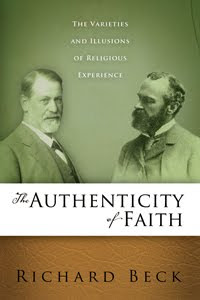
3. The Authenticity of Faith, by Richard Beck. As my colleague and friend, Steve Sandage, notes on the book jacket, Beck is probably the “liveliest voice in the contemporary integration of psychology and theology.” In this book, Beck engages his interlocutor, Ernst Becker, and the fascinating discourse of “terror management theory,” while articulating the complex varieties of religious experience — deftly drawing on William James’ classic work. He takes Freud head-on while arguing that there’s more to religion than simply wish-fulfillment. This book is great for anyone who wants to explore, in an integrative way, the underlying motivations of religious belief in a way that takes faith seriously as an existential element of the human experience.
Previous Post

July 25, 2012
Summer Reading Take Two
Next Post
July 27, 2012 Jonathan Merritt, the SBC, and the Culture Wars: What's Next?
Browse Our Archives
Select a Category Alex Blondeau Authors Daniel Harrell Daniel Siedell Dawn Duncan Harrell Kyle Roberts Uncategorized Wyndy Corbin
Select a Month November 2014 October 2014 September 2014 August 2014 July 2014 June 2014 May 2014 April 2014 March 2014 February 2014 January 2014 December 2013 November 2013 October 2013 September 2013 August 2013 July 2013 June 2013 May 2013 April 2013 March 2013 February 2013 January 2013 December 2012 November 2012 October 2012 September 2012 August 2012 July 2012 June 2012 May 2012
TAKE THE
Religious Wisdom Quiz
How does Isaiah describe the suffering servant's reaction to unjust treatment?
Select your answer to see how you score.
Roaring like a lion Silent as a sheep Fleeing to Egypt Weeping loudly
Related posts from Cultivare


Young Evangelicals and the "Nones": Jumping Ship


Calling For Public Theology (A Brief Convocation Address)
TRENDING AT PATHEOS Evangelical

The REST of Your Life: A Creative Wrestles...
This week I had a conversation with a good friend from church....

How the author of the world's best hymn...
I've been working with John Newton for a while now. This makes...

Long before this Lectio Divina, Psalm 130 - the song - started...

What About the Trees? Another Living Parable
After I finished writing the last article about falling leaves as a...

Why Classical Education Is a Conversation, Not a...
Come and Read: Joy in Classical Education When I was a little...

Cornell University has received a great deal of negative publicity and intense...
view all Evangelical blogs
Ad-Free & Subscriber Log-In Subscription Support
- About Us
- 2026 Calendar
- Videos
- Podcasts
- Library of World Religions
- Faith In Media Tracker
- Advertise With Us
- Write for Us
- Privacy Policy
- Terms of Service
- Do Not Sell My Data
- Contact Us
- Radiant Digital
- Manage Newsletter Subscriptions
- Unsubscribe From Notifications
- Sitemap
Copyright 2008-2026, Patheos. All rights reserved.
Subscription Support Ad-Free & Subscriber Log-In
Follow Patheos