
BuddhistCatholicContemplativeEvangelicalGeneral ChristianHinduJewishLatter-day SaintMuslimNew VisionsProgressive Christian
Beliefs
- Buddhist
- Catholic
- Contemplative
- Evangelical
- General Christian
- Hindu
- Jewish
- Latter-day Saint
- More Voices
- Muslim
- New Visions
- Pagan
- Progressive Christian
Topics
- Religion News
- Food and Religion
- Sports and Religion
- Religious Art
- Religious Music and Entertainment
- Religious Events
- History and Religion
- Style and Religion
- Politics and Religion
- Women in Religion
- Recreation Outdoors and Religion
- Business Finance and Religion
- Careers Workplace and Religion
- Education and Religion
- Family Parenting and Religion
- Health Fitness and Religion
- Home and Religion
- Relationships and Religion
- Technology and Religion
- Travel and Religion
Columnists
- Buddhist Columnists
- Business Finance and Religion Columnists
- Careers Workplace and Religion Columnists
- Catholic Columnists
- Contemplative Columnists
- Education and Religion Columnists
- Evangelists Columnists
- Family Parenting and Religion Columnists
- General Christian Columnists
- Health Fitness and Religion Columnists
- Hindu Columnists
- History and Religion Columnists
- Home and Religion Columnists
- Jewish Columnists
- More Voices Columnists
- Latter Day Columnists
- Muslim Columnists
- New Visions Columnists
- Nonreligious Columnists
- Pagan Columnists
- Politics and Religion Columnists
- Progressive Columnists
- Recreation Outdoors and Religion Columnists
- Relationships and Religion Columnists
- Religion News Columnists
- Religious Art Columnists
- Religious Events Columnists
- Religious Music and Entertainment Columnists
- Sports and Religion Columnists
- Style and Religion Columnists
- Technology and Religion Columnists
- Travel and Religion Columnists
- Women in Religion Columnists
Resource Library
- 2026 Calendar
- Library of World Religions
- The 100 Most Holy Places on Earth
- Patheos Answers
- Podcasts
- Videos
- Faith Leaders Database
- Anglican Episcopalian
- Bahai
- Baptist
- Buddhism
- Christianity
- Confucianism
- Eastern Orthodoxy
- Hinduism
- Holiness and Pentecostal
- ISKCON
- Islam
- Judaism
- Lutheran
- Methodist
- The Church of Jesus Christ of Latter-day Saints
- New Age
- Paganism
- Presbytarian and Reformed
- Protestantism
- Religion Behind the Scenes
- Roman Catholic
- Scientology
- Shia Islam
- Sikhism
- Sufism
- Sunni Islam
- Taoism
- Zen
- See all religions
Research Tools
 Ad-Free & Subscriber Log-In Subscription Support
Ad-Free & Subscriber Log-In Subscription Support
Follow Patheos 

- Trending:
- Forgiveness
- |
- Marriage
- |
- Consciousness
- |
- Death Penalty
- |
- Election
- |
- Halloween
 Cultivare
- Home
- Evangelical
- Summer Reading Take Two
Summer Reading Take Two
Last updated on: July 25, 2012 at 8:00 am by Daniel Harrell
Summer Reading Take Two 2012-07-17T09:32:11-04:00 Daniel Harrell
Patheos Explore the world's faith through different perspectives on religion and spirituality! Patheos has the views of the prevalent religions and spiritualities of the world.
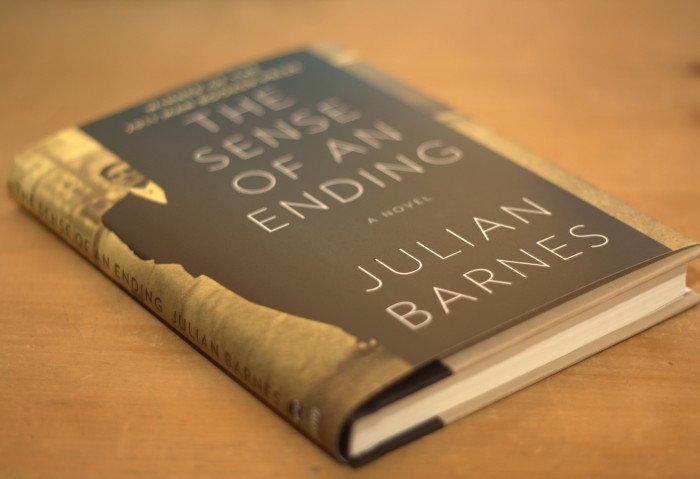 Over at a friend’s house the other night, the conversation kept going back to high school as if that was the high peak of people’s lives even as they’ve moved into middle age. What is it about those experiences of youth—the fleeting moments of adventure and love and excitement (or at least as we remember them) that haunt us as we get older? Julian Barnes in his best-seller, The Sense of an Ending, let’s us explore this reality through the eyes of Tony Webster, a man who narrates from his sixties about the obsessions of his early twenties. Tony ruminates over and over again as if to suck every last drop of energy out of encounters that comprise mere blips in his personal history, mere blips that nevertheless ripple into his present like so many butterfly flaps that transform into hurricanes (again, in our minds).
Barnes’ writing is both clever and gut-wrenching. It eats at the way we over-regard our own importance, presuming that our influence matters and that we really do affect profound change in the lives of others with indelible frequency. Not that Tony doesn’t recognize this himself:
But time … how time first grounds us and then confounds us. We thought we were being mature when we were only being safe. We imagined we were being responsible but were only being cowardly. What we called realism turned out to be a way of avoiding things rather than facing them. Time … give us enough time and our best-supported decisions will seem wobbly, our certainties whimsical. [Barnes, Julian (2011-10-05). The Sense of an Ending (Borzoi Books) (p. 102). Random House, Inc.. Kindle Edition.]
Tony is familiarly self-absorbed, predictably generating existential angst and relational turmoil. It makes for good, if painful, reading (since for the similarly self-absorbed to read any book is to see themselves in it). Scripture repeatedly cautions against self-absorption in favor of humility. Hebrew College professor Solomon Schimmel reminds that humility requires us to be brutally honest with ourselves even if we are unhappy with what we see. The proud person rationalizes his faults, since to acknowledge them would threaten his sense of superiority. The humble person, on the other hand, readily admits guilt and patiently listens to reproof—even from her enemies. Your enemies never try to protect your self-image. Their scrutiny is often more accurate than that of your friends who’ll lie to make you feel better.
Of course, if such scrutiny only leads you to blame yourself unduly for your faults and shortcomings, then it is not genuine humility. To excessively berate yourself puts you in that twisted position of being proud of your humbleness. In the end you’re just as obsessed with yourself as you were when you were smug. Pride is inordinate self-concern whether you cloak it in self-congratulation or self-condemnation. Both attribute more power and importance to yourself than you actually possess.
They key to true humility is not to think less of yourself, but to think of yourself less. Catholic mystic Thomas Merton once asked, “How can you be humble if you are always paying attention to yourself? If you were truly humble you would not bother about yourself at all.” And you wouldn’t be so bothered by Barnes’ book.
Previous Post

July 24, 2012
Art and Culture, or Politics by Other Means—Evangelical Style
Next Post
July 26, 2012 Summer Theology Reading Suggestions
Browse Our Archives
Select a Category Alex Blondeau Authors Daniel Harrell Daniel Siedell Dawn Duncan Harrell Kyle Roberts Uncategorized Wyndy Corbin
Select a Month November 2014 October 2014 September 2014 August 2014 July 2014 June 2014 May 2014 April 2014 March 2014 February 2014 January 2014 December 2013 November 2013 October 2013 September 2013 August 2013 July 2013 June 2013 May 2013 April 2013 March 2013 February 2013 January 2013 December 2012 November 2012 October 2012 September 2012 August 2012 July 2012 June 2012 May 2012
TAKE THE
Religious Wisdom Quiz
How many psalms are attributed to Moses?
Select your answer to see how you score.
One Five Ten Three
Related posts from Cultivare



Adam and Science: A Possible Compromise
TRENDING AT PATHEOS Evangelical

The REST of Your Life: A Creative Wrestles...
This week I had a conversation with a good friend from church....

How the author of the world's best hymn...
I've been working with John Newton for a while now. This makes...

Long before this Lectio Divina, Psalm 130 - the song - started...

What About the Trees? Another Living Parable
After I finished writing the last article about falling leaves as a...

Why Classical Education Is a Conversation, Not a...
Come and Read: Joy in Classical Education When I was a little...

Cornell University has received a great deal of negative publicity and intense...
view all Evangelical blogs
Ad-Free & Subscriber Log-In Subscription Support
- About Us
- 2026 Calendar
- Videos
- Podcasts
- Library of World Religions
- Faith In Media Tracker
- Advertise With Us
- Write for Us
- Privacy Policy
- Terms of Service
- Do Not Sell My Data
- Contact Us
- Radiant Digital
- Manage Newsletter Subscriptions
- Unsubscribe From Notifications
- Sitemap
Copyright 2008-2026, Patheos. All rights reserved.
Subscription Support Ad-Free & Subscriber Log-In
Follow Patheos