
BuddhistCatholicContemplativeEvangelicalGeneral ChristianHinduJewishLatter-day SaintMuslimNew VisionsProgressive Christian
Beliefs
- Buddhist
- Catholic
- Contemplative
- Evangelical
- General Christian
- Hindu
- Jewish
- Latter-day Saint
- More Voices
- Muslim
- New Visions
- Pagan
- Progressive Christian
Topics
- Religion News
- Food and Religion
- Sports and Religion
- Religious Art
- Religious Music and Entertainment
- Religious Events
- History and Religion
- Style and Religion
- Politics and Religion
- Women in Religion
- Recreation Outdoors and Religion
- Business Finance and Religion
- Careers Workplace and Religion
- Education and Religion
- Family Parenting and Religion
- Health Fitness and Religion
- Home and Religion
- Relationships and Religion
- Technology and Religion
- Travel and Religion
Columnists
- Buddhist Columnists
- Business Finance and Religion Columnists
- Careers Workplace and Religion Columnists
- Catholic Columnists
- Contemplative Columnists
- Education and Religion Columnists
- Evangelists Columnists
- Family Parenting and Religion Columnists
- General Christian Columnists
- Health Fitness and Religion Columnists
- Hindu Columnists
- History and Religion Columnists
- Home and Religion Columnists
- Jewish Columnists
- More Voices Columnists
- Latter Day Columnists
- Muslim Columnists
- New Visions Columnists
- Nonreligious Columnists
- Pagan Columnists
- Politics and Religion Columnists
- Progressive Columnists
- Recreation Outdoors and Religion Columnists
- Relationships and Religion Columnists
- Religion News Columnists
- Religious Art Columnists
- Religious Events Columnists
- Religious Music and Entertainment Columnists
- Sports and Religion Columnists
- Style and Religion Columnists
- Technology and Religion Columnists
- Travel and Religion Columnists
- Women in Religion Columnists
Resource Library
- 2026 Calendar
- Library of World Religions
- The 100 Most Holy Places on Earth
- Patheos Answers
- Podcasts
- Videos
- Faith Leaders Database
- Anglican Episcopalian
- Bahai
- Baptist
- Buddhism
- Christianity
- Confucianism
- Eastern Orthodoxy
- Hinduism
- Holiness and Pentecostal
- ISKCON
- Islam
- Judaism
- Lutheran
- Methodist
- The Church of Jesus Christ of Latter-day Saints
- New Age
- Paganism
- Presbytarian and Reformed
- Protestantism
- Religion Behind the Scenes
- Roman Catholic
- Scientology
- Shia Islam
- Sikhism
- Sufism
- Sunni Islam
- Taoism
- Zen
- See all religions
Research Tools
 Ad-Free & Subscriber Log-In Subscription Support
Ad-Free & Subscriber Log-In Subscription Support
Follow Patheos 

- Trending:
- Forgiveness
- |
- Marriage
- |
- Consciousness
- |
- Death Penalty
- |
- Election
- |
- Halloween
 Cultivare
- Home
- Evangelical
- How Theological is the “Missional Church”?
How Theological is the “Missional Church”?
Last updated on: June 28, 2012 at 10:15 am by Kyle Roberts
How Theological is the “Missional Church”? 2012-06-28T10:15:01-04:00 Kyle Roberts
Patheos Explore the world's faith through different perspectives on religion and spirituality! Patheos has the views of the prevalent religions and spiritualities of the world.
“Missional” has been a buzzword in evangelicalism for a number of years now. It’s been the safer alternative to “emergent.” People from pretty much any evangelical perspective — and beyond — can gather around the notion that God is a “missionary God” and that a primary–if not the primary–purpose of the church is to witness to and serve those outside the church, with a special focus on immediate and surrounding neighborhoods. Missional churches seek to be driven by the specific “DNA” of the locality in which they find themselves. They pay close attention to the socio-cultural contexts in which they minister, orienting their activities, their values, and their vision around what they take to be God’s redemptive purposes in those contexts.
Karl Barth, the eminent Protestant theologian, was a major influence on the origin of this movement. A lecture he gave to a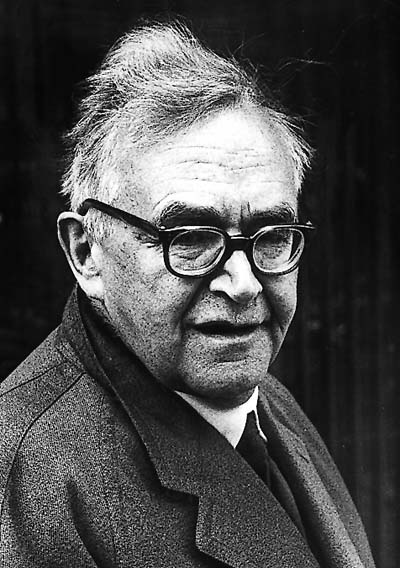 missionary conference in 1932 became a touch-stone for the twentieth-century turn to “missional.” He spoke there of the “actio Dei” (a phrase which eventually morphed — by others — into the Missio Dei–now a motto of the missional church movement. For Barth, God is a God whose being is in becoming. God acts; his action involves a sending. The Father sends the Son and the Spirit into the world to en-act the reconciliation of God with humanity, grounded in God’s freedom to elect humanity for salvation in Jesus Christ. Similarly, but derivatively, the church has been “sent” by God into the world as witnesses to God’s reconciliation.
In his interesting essay, “The Church in Karl Barth and Evangelicalism: Conversations Across the Aisle,” Kimlyn Bender argues that Barth united the doctrine of salvation, the mission of the church, and the significance of the wider culture (world) into a holistic theology of the gospel. Salvation cannot be sharply distinguished from the creation of and the mission of the church. The church does not exist as its own end, but as a (flawed) means to a greater, wider purpose in God’s reconcilation with the world.
Paul Chung, in Reclaiming Mission as Constructive Theology, details the origin of the modern missional theology movement in Barth’s trinitarian theology. He gives a tip o’ the hat to Christoph Blumhardt’s influence on Barth’s fully-orbed understanding of the gospel as necessitating outward, social witness. The social outworking is grounded in Barth’s trinitarian theology of mission, which “becomes more holistic, dynamic, and socially and critically engaged in the public sphere” (109).
In short, Barth’s deep theology of the church (which upholds the significance of the church, but in a relativized way since it is subservient to and in service of the Kingdom of God), has a unique ability to provide the church with a deep theological rationale, not only for its missional activity, but for its continued existence.
Reading about the origin of the modern movement in the theology of Barth — and theological missiologists — makes me wonder how much of the missional church / missional theology movement is currently grounded in a deep theology? How pervasive, within the movement, is a reflective (and critical) theological articulation of the church’s existence–in relation to the trinitarian God and to the fully-orbed nature of the Gospel? I don’t know the answer to this, but it does seem that “missional church” could easily become a catch-phrase which works well for marketing, but would not have much staying power if it is not grounded in a deep theological perspective.
I’d be interested in hearing from those of you who are involved in “missional” churches. How theological is the missional church?
Previous Post

June 27, 2012
Having It All
Next Post
July 2, 2012 The Moral Vacuum of the Health Care Debates
Browse Our Archives
Select a Category Alex Blondeau Authors Daniel Harrell Daniel Siedell Dawn Duncan Harrell Kyle Roberts Uncategorized Wyndy Corbin
Select a Month November 2014 October 2014 September 2014 August 2014 July 2014 June 2014 May 2014 April 2014 March 2014 February 2014 January 2014 December 2013 November 2013 October 2013 September 2013 August 2013 July 2013 June 2013 May 2013 April 2013 March 2013 February 2013 January 2013 December 2012 November 2012 October 2012 September 2012 August 2012 July 2012 June 2012 May 2012
TAKE THE
Religious Wisdom Quiz
Why did Joseph's brothers sell him?
Select your answer to see how you score.
Love Jealousy Mercy Poverty
Related posts from Cultivare


Young Evangelicals and the "Nones": Jumping Ship


Calling For Public Theology (A Brief Convocation Address)
TRENDING AT PATHEOS Evangelical

The REST of Your Life: A Creative Wrestles...
This week I had a conversation with a good friend from church....

How the author of the world's best hymn...
I've been working with John Newton for a while now. This makes...

Long before this Lectio Divina, Psalm 130 - the song - started...

What About the Trees? Another Living Parable
After I finished writing the last article about falling leaves as a...

Why Classical Education Is a Conversation, Not a...
Come and Read: Joy in Classical Education When I was a little...

Cornell University has received a great deal of negative publicity and intense...
view all Evangelical blogs
Ad-Free & Subscriber Log-In Subscription Support
- About Us
- 2026 Calendar
- Videos
- Podcasts
- Library of World Religions
- Faith In Media Tracker
- Advertise With Us
- Write for Us
- Privacy Policy
- Terms of Service
- Do Not Sell My Data
- Contact Us
- Radiant Digital
- Manage Newsletter Subscriptions
- Unsubscribe From Notifications
- Sitemap
Copyright 2008-2026, Patheos. All rights reserved.
Subscription Support Ad-Free & Subscriber Log-In
Follow Patheos