
BuddhistCatholicContemplativeEvangelicalGeneral ChristianHinduJewishLatter-day SaintMuslimNew VisionsProgressive Christian
Beliefs
- Buddhist
- Catholic
- Contemplative
- Evangelical
- General Christian
- Hindu
- Jewish
- Latter-day Saint
- More Voices
- Muslim
- New Visions
- Pagan
- Progressive Christian
Topics
- Religion News
- Food and Religion
- Sports and Religion
- Religious Art
- Religious Music and Entertainment
- Religious Events
- History and Religion
- Style and Religion
- Politics and Religion
- Women in Religion
- Recreation Outdoors and Religion
- Business Finance and Religion
- Careers Workplace and Religion
- Education and Religion
- Family Parenting and Religion
- Health Fitness and Religion
- Home and Religion
- Relationships and Religion
- Technology and Religion
- Travel and Religion
Columnists
- Buddhist Columnists
- Business Finance and Religion Columnists
- Careers Workplace and Religion Columnists
- Catholic Columnists
- Contemplative Columnists
- Education and Religion Columnists
- Evangelists Columnists
- Family Parenting and Religion Columnists
- General Christian Columnists
- Health Fitness and Religion Columnists
- Hindu Columnists
- History and Religion Columnists
- Home and Religion Columnists
- Jewish Columnists
- More Voices Columnists
- Latter Day Columnists
- Muslim Columnists
- New Visions Columnists
- Nonreligious Columnists
- Pagan Columnists
- Politics and Religion Columnists
- Progressive Columnists
- Recreation Outdoors and Religion Columnists
- Relationships and Religion Columnists
- Religion News Columnists
- Religious Art Columnists
- Religious Events Columnists
- Religious Music and Entertainment Columnists
- Sports and Religion Columnists
- Style and Religion Columnists
- Technology and Religion Columnists
- Travel and Religion Columnists
- Women in Religion Columnists
Resource Library
- 2026 Calendar
- Library of World Religions
- The 100 Most Holy Places on Earth
- Patheos Answers
- Podcasts
- Videos
- Faith Leaders Database
- Anglican Episcopalian
- Bahai
- Baptist
- Buddhism
- Christianity
- Confucianism
- Eastern Orthodoxy
- Hinduism
- Holiness and Pentecostal
- ISKCON
- Islam
- Judaism
- Lutheran
- Methodist
- The Church of Jesus Christ of Latter-day Saints
- New Age
- Paganism
- Presbytarian and Reformed
- Protestantism
- Religion Behind the Scenes
- Roman Catholic
- Scientology
- Shia Islam
- Sikhism
- Sufism
- Sunni Islam
- Taoism
- Zen
- See all religions
Research Tools
 Ad-Free & Subscriber Log-In Subscription Support
Ad-Free & Subscriber Log-In Subscription Support
Follow Patheos 

- Trending:
- Forgiveness
- |
- Marriage
- |
- Consciousness
- |
- Death Penalty
- |
- Election
- |
- Halloween
 Cultivare
- Home
- Evangelical
- Did Schaeffer’s Prayer Save a Plane From Crashing? A Little Reflection on “Miracles”
Did Schaeffer’s Prayer Save a Plane From Crashing? A Little Reflection on “Miracles”
Last updated on: June 21, 2012 at 10:08 am by Kyle Roberts
Did Schaeffer’s Prayer Save a Plane From Crashing? A Little Reflection on “Miracles” 2012-06-21T10:08:06-04:00 Kyle Roberts
Patheos Explore the world's faith through different perspectives on religion and spirituality! Patheos has the views of the prevalent religions and spiritualities of the world.
I recently came across an intriguing story Francis Schaeffer recounted in his book Death in the City. The story was re-posted on a popular Reformed baptist blog. Schaeffer tells of the time he was on a trans-Atlantic flight when the engine seemed to cut out and the plane took a long, seemingly perilous dive toward the ocean. He fervently prayed (as you do). Somehow an SOS alert had gotten out over the radio about the failed engine. His wife and three kids, at home in St. Louis, also were praying. After a harrowing descent toward the sea, the plane’s engines restarted and doom was averted.
Schaeffer described his encounter with the pilot after the plane safely landed:
When we got down I found the pilot and asked what happened. “Well,” he said, “it’s a strange thing, something we can’t explain. Only rarely do two motors stop on one wing, but you can make an absolute rule that when they do, they don’t start again. We don’t understand it.”
So I turned to him and I said, “I can explain it.”
He looked at me: “How?”
And I said, “My Father in heaven started it because I was praying.”
That man had the strangest look on his face and he turned away.
My reaction, upon reading this story, was to imagine what the pilot was thinking. It might have gone something like: “What you’re telling me is, because you prayed, God saved our lives. If you 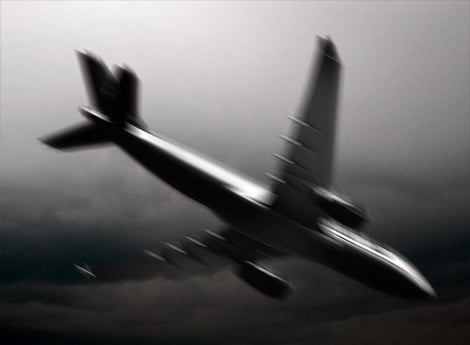 hadn’t prayed, the plane would have crashed, and hundreds of people (men, women, children) would have died. What kind of God would “need” (require?) someone to pray in order to get his attention–or to motivate his intervention? Why does the God who apparently created or sovereignly permitted (in ‘your’ theology) this world to be the way it is, only seemingly act with such power and grace sporadically? What is the basis for this miraculous, gracious action? By what rationale? Whose prayers count? And why?”
We are now knee deep into the so-called “problem of evil and suffering,” as it relates to the doctrine of providence (God’s continual over-sight, guidance, etc. of creation and history). Philosophers and theologians exhale countless words discussing the manner and extent of God’s apparent activity, agency and interaction in our world.
Alvin Plantinga, in his recent book, Where the Conflict Really Lies, quotes philosopher George Ellis, who succinctly describes the problem. from a ‘skeptical’ point of view (the very problem that Schaeffer’s pilot might have been contemplating, with furrowed brow):
The problem of allowing miraculous intervention, to turn water into wine, to heal the sick, to raise the dead…is that this involves either a suspension or alteration of the natural order. Thus the question arises as to why this happens so seldom. If this is allowed to achieve some good, why is it not allowed all the time, to assuage my toothche as well as the evils of Auschwitz?
In other words, why would God prevent some (many?) tragedies from happening, while allowing so many others? Schaeffer notes that the flight scare happened in 1947. According to an online database, there were 81 recorded fatal airline crashes in that year, totaling hundreds of fatalities. Did anyone pray on any of those planes as they were going down?
I’m asking lots of questions here, not because I don’t believe in miracles (I do) and not because I don’t believe God answers prayer in ‘miraculous’ ways (I do). (Indeed: who knows how many plane crashes God might have prevented in 1947?) I’m asking them because when we speak about what we perceive to be miraculous answers to prayer, we ought to keep in mind the other side of the coin. Suppose you have two friends, both of whom have been unemployed for over a year. You–and others–are praying for both. One gets a job, the other doesn’t. The answered prayers of the one can underscore the unanswered prayers of the other.
Keeping this in mind needn’t make us pessimistic about God’s involvement in the world–and in our lives. Nor should it keep us from praying for miracles. As Plantinga notes, we simply cannot know why God might choose to do ‘miracles’ in some cases but not in others. I put ‘miracle’ in quotes here because its definition is contested. Is a miracle an interruption of a natural law? Or is a miracle not an interruption of natural law, but a re-description or re-definition of it. In other words, God may sometimes act in ways that are surprising and unusual to us, but they are exceptions–not the norm. But those exceptions mean that “natural law” is not closed or final.
Schaeffer warned his readers to not be “materialists”; that is, to keep us mindful that the God who created the universe still acts–sometimes in surprising and extraordinary ways–within it. But there’s another danger which comes from assuming too much. God has his own reasons for interacting in the ways that he does (or does not) in the world. We should certainly trust God to be wise, just and loving in his providence. We can thank God for all of the good things we receive through his continual provision and we can pray for miracles–for the special, unusual activity of God in our midst–but we should also keep in mind the other side of the coin. And we might also be circumspect in how we speak of God’s interactivity in history and in our lives. That’s the tragic dimension of this life — that which existentialists call “the absurd,” which keeps us oriented to reality as both mysterious and sacred and which keeps us oriented to God as “holy love,” as we long for creation’s healing. Presumably, God’s special actions in history will ultimately remain mysterious and elusive to us; they may–or may not–be detectable to our perception. So we must deal with the nagging, parenthetical “perhaps.” To some that might seem faithless; to me, that’s what makes faith, faith.
Previous Post

June 20, 2012
Jerry Be Good
Next Post
June 22, 2012 "Am I Not Merciful?" Why "Wrath of God" Language Can be Misleading
Browse Our Archives
Select a Category Alex Blondeau Authors Daniel Harrell Daniel Siedell Dawn Duncan Harrell Kyle Roberts Uncategorized Wyndy Corbin
Select a Month November 2014 October 2014 September 2014 August 2014 July 2014 June 2014 May 2014 April 2014 March 2014 February 2014 January 2014 December 2013 November 2013 October 2013 September 2013 August 2013 July 2013 June 2013 May 2013 April 2013 March 2013 February 2013 January 2013 December 2012 November 2012 October 2012 September 2012 August 2012 July 2012 June 2012 May 2012
TAKE THE
Religious Wisdom Quiz
In Revelation, what is the name of the city that comes down out of heaven?
Select your answer to see how you score.
Zion The City of God New Jerusalem The Holy City
Related posts from Cultivare

Young Evangelicals and the "Nones": Jumping Ship


Calling For Public Theology (A Brief Convocation Address)

Don't Ask How to Grow Your Church
TRENDING AT PATHEOS Evangelical

The REST of Your Life: A Creative Wrestles...
This week I had a conversation with a good friend from church....

How the author of the world's best hymn...
I've been working with John Newton for a while now. This makes...

Long before this Lectio Divina, Psalm 130 - the song - started...

What About the Trees? Another Living Parable
After I finished writing the last article about falling leaves as a...

Why Classical Education Is a Conversation, Not a...
Come and Read: Joy in Classical Education When I was a little...

Cornell University has received a great deal of negative publicity and intense...
view all Evangelical blogs
Ad-Free & Subscriber Log-In Subscription Support
- About Us
- 2026 Calendar
- Videos
- Podcasts
- Library of World Religions
- Faith In Media Tracker
- Advertise With Us
- Write for Us
- Privacy Policy
- Terms of Service
- Do Not Sell My Data
- Contact Us
- Radiant Digital
- Manage Newsletter Subscriptions
- Unsubscribe From Notifications
- Sitemap
Copyright 2008-2026, Patheos. All rights reserved.
Subscription Support Ad-Free & Subscriber Log-In
Follow Patheos