
BuddhistCatholicContemplativeEvangelicalGeneral ChristianHinduJewishLatter-day SaintMuslimNew VisionsProgressive Christian
Beliefs
- Buddhist
- Catholic
- Contemplative
- Evangelical
- General Christian
- Hindu
- Jewish
- Latter-day Saint
- More Voices
- Muslim
- New Visions
- Pagan
- Progressive Christian
Topics
- Religion News
- Food and Religion
- Sports and Religion
- Religious Art
- Religious Music and Entertainment
- Religious Events
- History and Religion
- Style and Religion
- Politics and Religion
- Women in Religion
- Recreation Outdoors and Religion
- Business Finance and Religion
- Careers Workplace and Religion
- Education and Religion
- Family Parenting and Religion
- Health Fitness and Religion
- Home and Religion
- Relationships and Religion
- Technology and Religion
- Travel and Religion
Columnists
- Buddhist Columnists
- Business Finance and Religion Columnists
- Careers Workplace and Religion Columnists
- Catholic Columnists
- Contemplative Columnists
- Education and Religion Columnists
- Evangelists Columnists
- Family Parenting and Religion Columnists
- General Christian Columnists
- Health Fitness and Religion Columnists
- Hindu Columnists
- History and Religion Columnists
- Home and Religion Columnists
- Jewish Columnists
- More Voices Columnists
- Latter Day Columnists
- Muslim Columnists
- New Visions Columnists
- Nonreligious Columnists
- Pagan Columnists
- Politics and Religion Columnists
- Progressive Columnists
- Recreation Outdoors and Religion Columnists
- Relationships and Religion Columnists
- Religion News Columnists
- Religious Art Columnists
- Religious Events Columnists
- Religious Music and Entertainment Columnists
- Sports and Religion Columnists
- Style and Religion Columnists
- Technology and Religion Columnists
- Travel and Religion Columnists
- Women in Religion Columnists
Resource Library
- 2026 Calendar
- Library of World Religions
- The 100 Most Holy Places on Earth
- Patheos Answers
- Podcasts
- Videos
- Faith Leaders Database
- Anglican Episcopalian
- Bahai
- Baptist
- Buddhism
- Christianity
- Confucianism
- Eastern Orthodoxy
- Hinduism
- Holiness and Pentecostal
- ISKCON
- Islam
- Judaism
- Lutheran
- Methodist
- The Church of Jesus Christ of Latter-day Saints
- New Age
- Paganism
- Presbytarian and Reformed
- Protestantism
- Religion Behind the Scenes
- Roman Catholic
- Scientology
- Shia Islam
- Sikhism
- Sufism
- Sunni Islam
- Taoism
- Zen
- See all religions
Research Tools
 Ad-Free & Subscriber Log-In Subscription Support
Follow Patheos 

- Trending:
- Advent
- |
- Forgiveness
- |
- Thanksgiving
- |
- Election
- |
- Seasonal Holidays
- |
- Marriage
 Cultivare
- Home
- Evangelical
- The Scream
The Scream
Last updated on: June 18, 2012 at 6:14 am by Daniel A. Siedell
The Scream 2012-06-18T06:14:21-04:00 Daniel A. Siedell
Patheos Explore the world's faith through different perspectives on religion and spirituality! Patheos has the views of the prevalent religions and spiritualities of the world.

Edvard Munch, The Scream, 1895
Last week one of Edvard Munch’s four versions of The Scream (1895) sold at auction for a record price of $120 million. An icon of modernism, The Scream was made by a truly great but complicated artist whose remarkable body of work produced throughout his sixty-year career put a sizable dent in the twentieth century artistic universe. This enigmatic Norwegian artist and his work will play an important role in my theological reflections on artistic and cultural practices here at CULTIVARE.
Nature
Like many avant-garde artists, Edvard Munch was fascinated and terrified by nature. Although not “realistic” in any conventional or illustrative way (e.g. Thomas Kinkade or Norman Rockwell), Munch’s work remains tethered to the figure in the landscape, however tenuous it appears to be. Moreover, Munch, also like many of his avant-garde colleagues, understood an important theological point: nature is much more than what you see, or have been conditioned to see. In 1907 Munch wrote, “Nature is not only that which is visible to the eye. It is also the inner image of the mind. The images upon the reverse of the eye.” Munch despised academic painting–the pictures of nymphs, nudes, and angels that populated the salons and academies of his day–because it presented a nature de-fanged– explained and interpreted–through excessive allegorizing and spiritualizing. For Munch, nature was mysterious, brilliantly opaque, and dangerously violent. He perceived in nature something terrible and unrelenting. It demands our life. He confronted and made sense of this demand by making it the crux of his work. This is why he often painted outside in the snow in his studio in Ekely, near Oslo, Norway, subjecting his canvases to the cold, wind, rain, snow, bird droppings, and anything else that nature could throw at it. He did not consider his paintings to be delicate objects, but psychic, intellectual, imaginative struggles with nature, and the elements gave them a patina that tested their mettle and commemorated their fight. And this is also why many shocked viewers, erroneously presuming art’s role to be comfort, affirm, and entertain, found them sickening. In his paintings, Munch peers into the maw of death: he grows old, his eyesight fails, he loses his virility, experiences the death of loved ones, and he dwells in the growing isolation and desperation of a modern life in which even the most routine daily tasks have the potential to ignite into violent confrontations with his most deepest fears. Nothing is hidden from the viewer.
Space
A remarkable characteristic of fifteenth-century Renaissance painting is its capacity to create space. Two strokes of paint side by side can open up space as vast as the eye can see. Abstraction in the late nineteenth and early twentieth centuries reverses this development, closing space down by flattening the pictorial surface, reminding us that we are looking at a flat surface smeared with paint as well as a figure in a landscape, a vase, a sunrise. This technical, formal, pictorial transformation has theological implications. For the Renaissance artist, shaped by a sacramental worldview, a painting reveals nature to be open to grace, to complete, infuse, or fulfill it. Nature is porous, transcendent, charged with salvific potential. Yet for Munch and his avant-garde colleagues, for whom God had been exorcised (although never completely), nature cannot be allegorized and spiritualized—graced. In many ways nature becomes more remarkable, mysterious, and awe-inspiring in avant-garde painting. (The avant-garde’s fascination with children’s drawings was an attempt to recapture a second innocence, in which the child struggled to depict a fascinating world with limited skills.) But nature also becomes violently mute. The agnostically spiritual Munch, who was raised in a devout Lutheran home, makes paintings that share Martin Luther’s deep skepticism of natural theology. For Luther nature must be revealed in all its violence in order to enable a greater violence, the Gospel of grace, to overcome it. According to Luther, nature needs recreation, not completion. But Munch cannot find grace, or what he called, “a way out.” The Scream, like all of his work, is deaf and mute. Munch knew that his paintings were silent. And this silence terrified him. It became an echo chamber where his own anxiety in the face of death, a subject with which he was obsessed, can only yield a desperate, silent scream. Munch’s paintings are remarkable because they give us nature undiluted, “red in tooth and claw,” and force us to swallow it. The Scream is the sound of our response to nature’s brut silence. About this work, Munch remembers, “I felt a huge endless scream course through nature.”

Edvard Munch, Self-Portrait in Hell, 1903. Munch Museum, Oslo, Norway.
Ephphatha
In the gospel of Mark, Jesus heals a man born deaf and mute in a manner that recalls the mystery of creation:
And taking him aside from the crowd privately, he put his fingers into his ears, and after spitting touched his tongue. And looking up to heaven, he sighed and said to him, “Ephphatha,” that is, “Be opened” (Mk 7: 33-34).
On September 8, 1538, Martin Luther preached a sermon on this text that focused on Jesus’s sigh, which opened the man’s ears to hear and loosened his tongue to speak. For Luther, Christ comes to open our ears so that we may be able to hear his Word in the world. But without Christ’s “Ephphatha,” we hear nothing but the sound of death, the sound of our own anxiety. “Art emerges from joy and pain,” Munch wrote in his journal in 1905. But he concluded, “Mostly from pain.” Munch’s work destroys the veneer of aesthetic sentimentality in art that often obscures the violence of nature. It presents nature undiluted, making us yearn for the sound of grace that can overcome violence and pain that comes to us through the Word, even if Munch himself was unable to hear it.
Previous Post

May 7, 2012
The Art of Seeing
Next Post
May 9, 2012 Jesus as An Avenger?
Browse Our Archives
Select a Category Alex Blondeau Authors Daniel Harrell Daniel Siedell Dawn Duncan Harrell Kyle Roberts Uncategorized Wyndy Corbin
Select a Month November 2014 October 2014 September 2014 August 2014 July 2014 June 2014 May 2014 April 2014 March 2014 February 2014 January 2014 December 2013 November 2013 October 2013 September 2013 August 2013 July 2013 June 2013 May 2013 April 2013 March 2013 February 2013 January 2013 December 2012 November 2012 October 2012 September 2012 August 2012 July 2012 June 2012 May 2012
TAKE THE
Religious Wisdom Quiz
"I am the ____ and the truth and the life. No one comes to the Father except through me."
Select your answer to see how you score.
Way Word Alpha Omega
Related posts from Cultivare

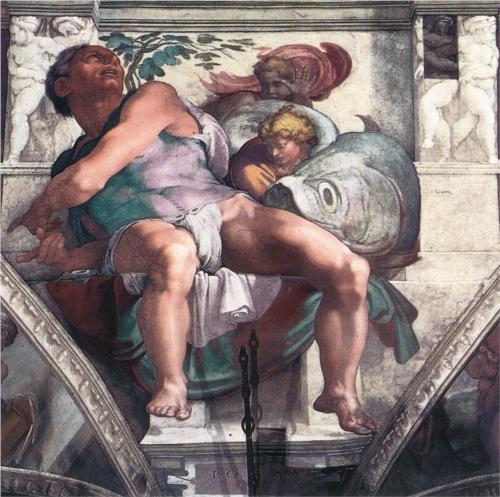

Luther, Evangelicals, and Modern Art
TRENDING AT PATHEOS Evangelical

Don’t Miss the Parents: A Creative Christmas Meditation
As we enter the Advent Season, I see a lot of people...

Making Stones Into Bread: Choosing the “Right” Work
I was on my online arts ministry Zoom meeting with the International...

Ukraine’s exhausted Christians face fifth winter of war
By Julian Lukins The full-scale war in Ukraine is taking “a serious...

Russell Brand's Conviction is not anti-Christian Persecution
How do we shed the reputation that the Church is OK with...

Have you ever caught yourself saying, “I’ll do it tomorrow,” or “Now...

Throughout history, people have pursued pleasure, possessions, relationships, and success in an...
view all Evangelical blogs
Ad-Free & Subscriber Log-In Subscription Support
- About Us
- 2026 Calendar
- Videos
- Podcasts
- Library of World Religions
- Faith In Media Tracker
- Advertise With Us
- Write for Us
- Privacy Policy
- Terms of Service
- Do Not Sell My Data
- Contact Us
- Radiant Digital
- Manage Newsletter Subscriptions
- Unsubscribe From Notifications
- Sitemap
Copyright 2008-2026, Patheos, part of the Radiant Digital network of media brands. All rights reserved.
Subscription Support Ad-Free & Subscriber Log-In
Follow Patheos