
BuddhistCatholicContemplativeEvangelicalGeneral ChristianHinduJewishLatter-day SaintMuslimNew VisionsProgressive Christian
Beliefs
- Buddhist
- Catholic
- Contemplative
- Evangelical
- General Christian
- Hindu
- Jewish
- Latter-day Saint
- More Voices
- Muslim
- New Visions
- Pagan
- Progressive Christian
Topics
- Religion News
- Food and Religion
- Sports and Religion
- Religious Art
- Religious Music and Entertainment
- Religious Events
- History and Religion
- Style and Religion
- Politics and Religion
- Women in Religion
- Recreation Outdoors and Religion
- Business Finance and Religion
- Careers Workplace and Religion
- Education and Religion
- Family Parenting and Religion
- Health Fitness and Religion
- Home and Religion
- Relationships and Religion
- Technology and Religion
- Travel and Religion
Columnists
- Buddhist Columnists
- Business Finance and Religion Columnists
- Careers Workplace and Religion Columnists
- Catholic Columnists
- Contemplative Columnists
- Education and Religion Columnists
- Evangelists Columnists
- Family Parenting and Religion Columnists
- General Christian Columnists
- Health Fitness and Religion Columnists
- Hindu Columnists
- History and Religion Columnists
- Home and Religion Columnists
- Jewish Columnists
- More Voices Columnists
- Latter Day Columnists
- Muslim Columnists
- New Visions Columnists
- Nonreligious Columnists
- Pagan Columnists
- Politics and Religion Columnists
- Progressive Columnists
- Recreation Outdoors and Religion Columnists
- Relationships and Religion Columnists
- Religion News Columnists
- Religious Art Columnists
- Religious Events Columnists
- Religious Music and Entertainment Columnists
- Sports and Religion Columnists
- Style and Religion Columnists
- Technology and Religion Columnists
- Travel and Religion Columnists
- Women in Religion Columnists
Resource Library
- 2026 Calendar
- Library of World Religions
- The 100 Most Holy Places on Earth
- Patheos Answers
- Podcasts
- Videos
- Faith Leaders Database
- Anglican Episcopalian
- Bahai
- Baptist
- Buddhism
- Christianity
- Confucianism
- Eastern Orthodoxy
- Hinduism
- Holiness and Pentecostal
- ISKCON
- Islam
- Judaism
- Lutheran
- Methodist
- The Church of Jesus Christ of Latter-day Saints
- New Age
- Paganism
- Presbytarian and Reformed
- Protestantism
- Religion Behind the Scenes
- Roman Catholic
- Scientology
- Shia Islam
- Sikhism
- Sufism
- Sunni Islam
- Taoism
- Zen
- See all religions
Research Tools
 Ad-Free & Subscriber Log-In Subscription Support
Ad-Free & Subscriber Log-In Subscription Support
Follow Patheos 

- Trending:
- Forgiveness
- |
- Marriage
- |
- Consciousness
- |
- Death Penalty
- |
- Election
- |
- Halloween
 Cry 'Woof'
-
Series
- Home
- Catholic
- The Apostasy That Wasn’t
The Apostasy That Wasn’t
Last updated on: June 1, 2016 at 2:36 pm by willduquette
The Apostasy That Wasn’t 2016-06-01T14:36:39-05:00 willduquette
Patheos Explore the world's faith through different perspectives on religion and spirituality! Patheos has the views of the prevalent religions and spiritualities of the world.
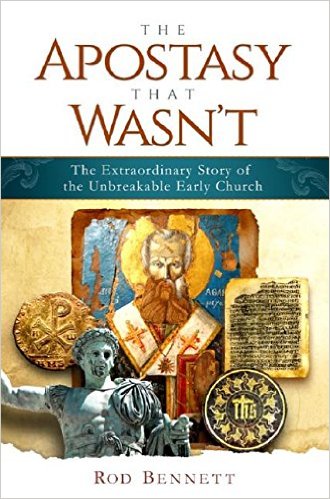 Way back in 2005 while investigating the nature of the Early Church I found and read Rod Bennett's Four Witnesses. In that book, Bennett traces a golden thread from the Apostolic Age through the end of the second century, by way of Clement of Rome, Ignatius of Antioch, Justin Martyr, and Irenaeus of Lyons. It was while reading Justin Martyr's description of the Mass that I uttered a rude word. See, I was an Anglican in those days…but the Mass Justin Martyr described was recognizably the Mass I'd grown up with as a Catholic. It took two more years and lots of prayer and study for me to return home to Rome, but my trajectory was pretty well set in that moment.
Consequently, when Bennett announced a book about Emperor Constantine and the Arian heresy I jumped on it; and I have to say I enjoyed it thoroughly.
Just as Four Witnesses arose from Bennett's personal attempts to come to grips with the Early Church, so also The Apostasy That Wasn't. In certain circles of Evangelicalism it's an article of faith that the Early Church suffered the Great Apostasy around the time of Constantine, leaving only a small faithful remnant of believers hidden somewhere while the broader church wandered off into error for over a thousand years. The amusing truth is that there was a great rising of apostasy during that time period, but it ultimately failed and orthodox was saved.
As before, Bennett draws a golden thread of orthodoxy from St. Antony of Egypt, who entered the desert prior to the persecutions of Diocletian, through Antony's protege Athanasius who defended the orthodox faith against the Arians at the First Ecumenical Council at Nicaea, then through St. Basil and the two Gregories who defended the faith against both the Arians and Emperor Julian the Apostate, before ending with the Second Ecumenical Council in Constantinople and a young lad named Jerome who went on to translate the Bible into Latin.
Along the way he draws remarkable portraits of the principle characters and navigates the complex waters of the Arian controversy with aplomb.
The Arians, in a nutshell, believed that Son was not co-eternal with the Father; their rallying cry was that "there was a time when he was not!" Athanasius insisted on the orthodox position that (A) The Son is not the Father, (B) The Father and the Son are both God, and (C) God is One, and that hence the Son must be uncreated and co-eternal with the Father. (We could get caught up in lots of hifalutin' theologically language, here; go read my series on Thomas Aquinas' Compendium Theologiae if you want to see how it worked out in the long run.)
What I hadn't appreciated was that this wasn't simply a dry theological dispute. The Arian doctrine was quite self-consciously an attempt to paganize Christianity, to revise Christianity so that it could syncretistically be identified with the highest expressions of Roman paganism, precisely to make it faith that would be acceptable to the elites across the eastern Roman Empire. In short, it was an attempt to make the Faith more worldly, and it was pushed from the top down. The rank and file were staunchly attached to orthodoxy, and made Athanasius their champion.
I've read other books about the period, but Bennett's is the most accessible and the most pleasant to read that I've yet encountered, and it's just chock-full of interesting little tidbits. I had not realized, for example, that not only were St. Basil and St. Gregory Nanzianzen contemporaries of Julian the Apostate, they had all gone to school and been drinking buddies together in Athens. It's a small world.
Anyway, if you've gotten this far in the review you're clearly a member of Bennett's intended audience; so go buy his book already!
And don’t forget to read Vikings at Dino’s!
Previous Post

May 30, 2016
Vikings at Dino's: Houston, We Have Ignition
Next Post

June 1, 2016 To Go Left, First Turn Right
Browse Our Archives
Select a Category Admin App o' the Morning Ask the Dogmat Believing Thomas Bits of Fiction Blasts from the Past Bootstrapping the Interior Life Catholic Mom Christian Living Deep Thoughts from the Doghouse Dominicana Evangelii Gaudium Interviews It Was A Dark and Stormy Night Links to This and That Lumen Fidei Meme Watch On Writing Operation Gratitude Pedant Errant Photography Quill Random Barkings S'Mary's World Shakers of Salt Software Development The Dog Whistler The Dogmat Sez Third Orders Thomas Aquinas Uncategorized Vikings at Dinos Woof Guide to Cinema Woof Guide to History Woof Guide to Literature Woof Guide to Obscure Catholic Music Woof Guide to Philosophy Woof Guide to Popular Music Woof Guide to Technology Woof Guide to Theology Words I Wish I'd Written Works For Me
Select a Month September 2016 August 2016 June 2016 May 2016 April 2016 March 2016 February 2016 January 2016 December 2015 November 2015 October 2015 September 2015 August 2015 July 2015 June 2015 May 2015 April 2015 March 2015 February 2015 January 2015 December 2014 November 2014 October 2014 September 2014 August 2014 July 2014 June 2014 May 2014 April 2014 March 2014 February 2014 January 2014 December 2013 November 2013 October 2013
Follow Us!
TAKE THE
Religious Wisdom Quiz
Who was David's military commander and nephew?
Select your answer to see how you score.
Ittai Joab Abishai Benaiah
Related posts from Cry 'Woof'
They Also Serve Who Only Sit And Study
Book Review: Catholic Commentary on Sacred Scripture, The...

What's Your Conception of God?

The Human Wisdom of St. Thomas, by Josef...
TRENDING AT PATHEOS Catholic

Rejecting Doom: Christian Hope And Human Action
Christianity is a religion of hope. We are to have hope and...

It’s What Comes From Within Which Matters
One of the most difficult things for us to understand is why...

Why I Choose the Eucharist Over the Sermon
Choose the Eucharist, Not the Sermon What are we supposed to get...

5 Design Elements Found in Spiritually Rooted Homes
Putting Spirituality Into Home Decor Our homes are more than our living...

Credo: A Story of God Told with the...
About 10 years ago, I began to imagine a personal "Credo" that...

The Anatomy of Divine Revelation in Catholic Thought
The claim that God has made Himself known to human beings is...
view all Catholic blogs
Ad-Free & Subscriber Log-In Subscription Support
- About Us
- 2026 Calendar
- Videos
- Podcasts
- Library of World Religions
- Faith In Media Tracker
- Advertise With Us
- Write for Us
- Privacy Policy
- Terms of Service
- Do Not Sell My Data
- Contact Us
- Radiant Digital
- Manage Newsletter Subscriptions
- Unsubscribe From Notifications
- Sitemap
Copyright 2008-2026, Patheos. All rights reserved.
Subscription Support Ad-Free & Subscriber Log-In
Follow Patheos