
BuddhistCatholicContemplativeEvangelicalGeneral ChristianHinduJewishLatter-day SaintMuslimNew VisionsProgressive Christian
Beliefs
- Buddhist
- Catholic
- Contemplative
- Evangelical
- General Christian
- Hindu
- Jewish
- Latter-day Saint
- More Voices
- Muslim
- New Visions
- Pagan
- Progressive Christian
Topics
- Religion News
- Food and Religion
- Sports and Religion
- Religious Art
- Religious Music and Entertainment
- Religious Events
- History and Religion
- Style and Religion
- Politics and Religion
- Women in Religion
- Recreation Outdoors and Religion
- Business Finance and Religion
- Careers Workplace and Religion
- Education and Religion
- Family Parenting and Religion
- Health Fitness and Religion
- Home and Religion
- Relationships and Religion
- Technology and Religion
- Travel and Religion
Columnists
- Buddhist Columnists
- Business Finance and Religion Columnists
- Careers Workplace and Religion Columnists
- Catholic Columnists
- Contemplative Columnists
- Education and Religion Columnists
- Evangelists Columnists
- Family Parenting and Religion Columnists
- General Christian Columnists
- Health Fitness and Religion Columnists
- Hindu Columnists
- History and Religion Columnists
- Home and Religion Columnists
- Jewish Columnists
- More Voices Columnists
- Latter Day Columnists
- Muslim Columnists
- New Visions Columnists
- Nonreligious Columnists
- Pagan Columnists
- Politics and Religion Columnists
- Progressive Columnists
- Recreation Outdoors and Religion Columnists
- Relationships and Religion Columnists
- Religion News Columnists
- Religious Art Columnists
- Religious Events Columnists
- Religious Music and Entertainment Columnists
- Sports and Religion Columnists
- Style and Religion Columnists
- Technology and Religion Columnists
- Travel and Religion Columnists
- Women in Religion Columnists
Resource Library
- 2026 Calendar
- Library of World Religions
- The 100 Most Holy Places on Earth
- Patheos Answers
- Podcasts
- Videos
- Faith Leaders Database
- Anglican Episcopalian
- Bahai
- Baptist
- Buddhism
- Christianity
- Confucianism
- Eastern Orthodoxy
- Hinduism
- Holiness and Pentecostal
- ISKCON
- Islam
- Judaism
- Lutheran
- Methodist
- The Church of Jesus Christ of Latter-day Saints
- New Age
- Paganism
- Presbytarian and Reformed
- Protestantism
- Religion Behind the Scenes
- Roman Catholic
- Scientology
- Shia Islam
- Sikhism
- Sufism
- Sunni Islam
- Taoism
- Zen
- See all religions
Research Tools
 Ad-Free & Subscriber Log-In Subscription Support
Ad-Free & Subscriber Log-In Subscription Support
Follow Patheos 

- Trending:
- Forgiveness
- |
- Marriage
- |
- Consciousness
- |
- Death Penalty
- |
- Election
- |
- Halloween
 Cry 'Woof'
-
Series
- Home
- Catholic
- Today’s Aquinas: God of God, Light of Light, True God of True God
Today’s Aquinas: God of God, Light of Light, True God of True God
Last updated on: August 3, 2015 at 6:00 am by willduquette
Today’s Aquinas: God of God, Light of Light, True God of True God 2015-08-01T11:38:43-05:00 willduquette
Patheos Explore the world's faith through different perspectives on religion and spirituality! Patheos has the views of the prevalent religions and spiritualities of the world.
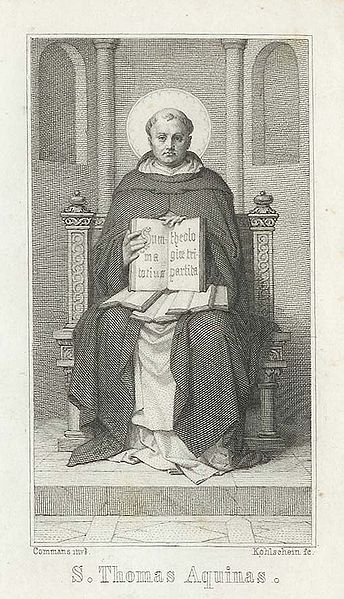 We’re blogging through St. Thomas Aquinas’ Compendium Theologiae, sometimes called his Shorter Summa. Find the previous posts here.
Last week, Thomas showed that God’s Word is not distinct from God in time, that is, that God and His Word are co-eternal. Next, Thomas shows that there is no distinction between God and His Word according to species. Remember that two things are of different species if they belong to the same genus but are distinguished by some specific difference; thus, oak trees and apple trees are logically of the same genus, trees, but of different species.
According to species, too, it is impossible for the Word of God to differ from God, as though He were inferior; for God does not understand Himself to be less than He is. The Word has a perfect likeness to the Father, because that whereof He is the Word is perfectly understood. Therefore the Word of God must be absolutely perfect according to the species of divinity.
God generates the Word by a process we regard as analogous to biological and intellectual conception; and in biological generation, the being generated is of the same species as the parent(s). The Word has, similarly, a perfect likeness to the Father, because the He is the Father’s understanding of Himself, and the Father’s understanding is perfect. The Word is therefore fully divine, contrary to (say) the Arians who would make Him first among creatures.
I’ll note that Thomas is speaking of logical species here, rather than metaphysical species, because he’s already shown that God is neither a species nor a member of any species in the metaphysical sense.
Some beings, it is true, that proceed from others, are found not to inherit the perfect species of those from whom they proceed. One way in which this can happen is in equivocal generations: the sun does not generate a sun, but an animal of some kind. To exclude imperfection of this sort from divine generation, we proclaim that the Word is born “God of God.”
In Thomas’ day, it was thought that maggots arose in rotting meat by a kind of spontaneous generation caused by the Sun; they had no microscopes or magnifying glasses, and no one had any idea that flies laid eggs that were too small to see. However, flesh tended to rot more actively when the sun was hot, and so the maggots were attributed to the effect of the sun. This was called an equivocal generation, where a one thing generates something else that is very different.
We know now that animals do not arise by spontaneous generation in this way; whether there are any examples of equivocal generation that have withstood the march of science, I don’t know. Either way, it doesn’t matter; Thomas’ whole point is that the generation of the Word by the Father isn’t this kind of thing. Consequently, the creed says that the Son is “God of God”, not “Something other than God from God”.
There’s a second way a thing can generate something not identical to it:
The same thing occurs in another way when that which proceeds from another differs from the latter because of a defect in purity; that is, when something is produced from what is simple and pure in itself by being applied to extraneous matter, and so turns out to be inferior to the original species. Thus, from a house that is in the architect’s mind, a house is fashioned in various materials; and from light received in the surface of a body, color results; and from fire, by adding other elements, a mixture is produced; and from a beam of light, by interposing an opaque body, shadow is caused. To exclude any imperfection of this kind from divine generation, we add: “Light of Light.”
And these kinds of generation clearly do happen. The design that is in my mind is translated into the house that I build: but the design is not the house, though they have a resemblance one to another. The shadow I cast on the sidewalk bears something of my shape. But the generation of the Word is not of this kind either: not shadow from light but “Light of Light”.
There’s yet a third way, which is subtly different from the previous one: likeness without true generation.
In yet a third way, what proceeds from another can fail to equal the latter’s species, because of a deficiency in truth. That is, it does not truly receive the nature of its original, but only a certain likeness thereof; for example, an image in a mirror or in a picture or in a statue; also, the likeness of a thing in the intellect or in one of the senses. For the image of a man is not said to be a true man, but is a likeness of a man; and a stone is not in the soul, as the Philosopher notes [De anima, III, 8, 431 b 29], but a likeness of the stone is in the soul. To exclude all this from divine generation, we subjoin: “True God of true God.”
The house proceeds from the architect’s design, and resembles it somewhat; the shadow proceeds from light shining on the object, and has something of the same shape; but then there are those things like paintings and photographs which do not proceed from the subject directly but might resemble it strongly though imperfectly. A painting can be a perfect image of a man, but is not the man: it is not all that the man is, even if it is a perfect likeness. But the Word is all that God is; and so the creed says “True God of true God.”
Next week, Thomas will show how the Word is not distinct from God in nature.
_____
photo credit: Public Domain; source Wikimedia Commons

Previous Post

July 31, 2015
The Nashville Cats meet Noshville Katz!
Next Post

August 4, 2015 When Your Fist Strikes My Face, That's a Choice
Browse Our Archives
Select a Category Admin App o' the Morning Ask the Dogmat Believing Thomas Bits of Fiction Blasts from the Past Bootstrapping the Interior Life Catholic Mom Christian Living Deep Thoughts from the Doghouse Dominicana Evangelii Gaudium Interviews It Was A Dark and Stormy Night Links to This and That Lumen Fidei Meme Watch On Writing Operation Gratitude Pedant Errant Photography Quill Random Barkings S'Mary's World Shakers of Salt Software Development The Dog Whistler The Dogmat Sez Third Orders Thomas Aquinas Uncategorized Vikings at Dinos Woof Guide to Cinema Woof Guide to History Woof Guide to Literature Woof Guide to Obscure Catholic Music Woof Guide to Philosophy Woof Guide to Popular Music Woof Guide to Technology Woof Guide to Theology Words I Wish I'd Written Works For Me
Select a Month September 2016 August 2016 June 2016 May 2016 April 2016 March 2016 February 2016 January 2016 December 2015 November 2015 October 2015 September 2015 August 2015 July 2015 June 2015 May 2015 April 2015 March 2015 February 2015 January 2015 December 2014 November 2014 October 2014 September 2014 August 2014 July 2014 June 2014 May 2014 April 2014 March 2014 February 2014 January 2014 December 2013 November 2013 October 2013
Follow Us!
TAKE THE
Religious Wisdom Quiz
Who became David's closest friend, even though he was Saul's son?
Select your answer to see how you score.
Jonathan Abner Shimei Ish-bosheth
Related posts from Cry 'Woof'

Today's Aquinas: Form Over Matter
Today's Aquinas: Only God can Create
Today's Aquinas: Something from Nothing
Today's Aquinas: The Chicken or the Egg
TRENDING AT PATHEOS Catholic

Creation, Preservation, and Teleology in Catholic Theology
As I write this, it is very early Monday morning. Like millions...

The Parable Of The Sower And The Word...
One of Christ’s most famous parables is that of the sower who...

Rejecting Doom: Christian Hope And Human Action
Christianity is a religion of hope. We are to have hope and...

Why I Choose the Eucharist Over the Sermon
Choose the Eucharist, Not the Sermon What are we supposed to get...

5 Design Elements Found in Spiritually Rooted Homes
Putting Spirituality Into Home Decor Our homes are more than our living...

Credo: A Story of God Told with the...
About 10 years ago, I began to imagine a personal "Credo" that...
view all Catholic blogs
Ad-Free & Subscriber Log-In Subscription Support
- About Us
- 2026 Calendar
- Videos
- Podcasts
- Library of World Religions
- Faith In Media Tracker
- Advertise With Us
- Write for Us
- Privacy Policy
- Terms of Service
- Do Not Sell My Data
- Contact Us
- Radiant Digital
- Manage Newsletter Subscriptions
- Unsubscribe From Notifications
- Sitemap
Copyright 2008-2026, Patheos. All rights reserved.
Subscription Support Ad-Free & Subscriber Log-In
Follow Patheos