
BuddhistCatholicContemplativeEvangelicalGeneral ChristianHinduJewishLatter-day SaintMuslimNew VisionsProgressive Christian
Beliefs
- Buddhist
- Catholic
- Contemplative
- Evangelical
- General Christian
- Hindu
- Jewish
- Latter-day Saint
- More Voices
- Muslim
- New Visions
- Pagan
- Progressive Christian
Topics
- Religion News
- Food and Religion
- Sports and Religion
- Religious Art
- Religious Music and Entertainment
- Religious Events
- History and Religion
- Style and Religion
- Politics and Religion
- Women in Religion
- Recreation Outdoors and Religion
- Business Finance and Religion
- Careers Workplace and Religion
- Education and Religion
- Family Parenting and Religion
- Health Fitness and Religion
- Home and Religion
- Relationships and Religion
- Technology and Religion
- Travel and Religion
Columnists
- Buddhist Columnists
- Business Finance and Religion Columnists
- Careers Workplace and Religion Columnists
- Catholic Columnists
- Contemplative Columnists
- Education and Religion Columnists
- Evangelists Columnists
- Family Parenting and Religion Columnists
- General Christian Columnists
- Health Fitness and Religion Columnists
- Hindu Columnists
- History and Religion Columnists
- Home and Religion Columnists
- Jewish Columnists
- More Voices Columnists
- Latter Day Columnists
- Muslim Columnists
- New Visions Columnists
- Nonreligious Columnists
- Pagan Columnists
- Politics and Religion Columnists
- Progressive Columnists
- Recreation Outdoors and Religion Columnists
- Relationships and Religion Columnists
- Religion News Columnists
- Religious Art Columnists
- Religious Events Columnists
- Religious Music and Entertainment Columnists
- Sports and Religion Columnists
- Style and Religion Columnists
- Technology and Religion Columnists
- Travel and Religion Columnists
- Women in Religion Columnists
Resource Library
- 2026 Calendar
- Library of World Religions
- The 100 Most Holy Places on Earth
- Patheos Answers
- Podcasts
- Videos
- Faith Leaders Database
- Anglican Episcopalian
- Bahai
- Baptist
- Buddhism
- Christianity
- Confucianism
- Eastern Orthodoxy
- Hinduism
- Holiness and Pentecostal
- ISKCON
- Islam
- Judaism
- Lutheran
- Methodist
- The Church of Jesus Christ of Latter-day Saints
- New Age
- Paganism
- Presbytarian and Reformed
- Protestantism
- Religion Behind the Scenes
- Roman Catholic
- Scientology
- Shia Islam
- Sikhism
- Sufism
- Sunni Islam
- Taoism
- Zen
- See all religions
Research Tools
 Ad-Free & Subscriber Log-In Subscription Support
Ad-Free & Subscriber Log-In Subscription Support
Follow Patheos 

- Trending:
- Forgiveness
- |
- Marriage
- |
- Consciousness
- |
- Death Penalty
- |
- Election
- |
- Halloween
 Cry 'Woof'
-
Series
- Home
- Catholic
- Divine Intelligence: What’s That?
Divine Intelligence: What’s That?
Last updated on: June 1, 2015 at 6:00 am by willduquette
Divine Intelligence: What’s That? 2015-05-30T12:59:07-05:00 willduquette
Patheos Explore the world's faith through different perspectives on religion and spirituality! Patheos has the views of the prevalent religions and spiritualities of the world.
During the course of a sprawling but enjoyable combox conversation with atheist commenter Ragarth I posed the question,
…specifically with regard to Christianity: what kind of evidence would you consider sufficient, and what is the evidence it would have to outweigh?
Ragarth invoked parsimony: theism involves an intelligent creator, and an uncaused cause could just as easily be mindless as intelligent:
Specifically regarding intelligent creative forces, there is nothing they can do regarding the creation of the universe that cannot also be explained by a non-intelligent natural force. If an intelligent creator can be uncaused, then why can’t an unintelligent force? If an intelligent creator can create the universe from him/her/itself, then why can’t an unintelligent force? So given this, I believe that in all cases of universal creation that are reasonable given current scientific understanding, the intelligent entity will always have an additional, unnecessary assumption of intelligence.
So what would prove theism for me? Something that breaks the above logic. Evidence that intelligence is a necessary component for the creation of the universe. If that could be proven to a sufficiently likely level, then I’d at least be a deist of some form.
I then asked for Ragarth‘s definition of intelligence, so as to avoid speaking at cross-purposes, and got this response. He (?) comes from a cognitive science background, and suggests this pithy definition:
In regards to this discussion, let us define intelligence as the capacity to think about and understand stimuli.
And so I’m glad I asked. This definition works for human intelligence, so far as it goes, but gets the relationship between God and His creation entirely wrong according to classic theism.
For human beings (leaving the question of animal intelligence entirely to the side), we take in perceptions through our senses: we receive stimuli. We learn some things directly from these perceptions, while other things we need to work for: we need to reason to them. The earth is a sphere; this is not something we can directly perceive from the ground, but it is something we can reason to based on our perceptions (and the ancients did).
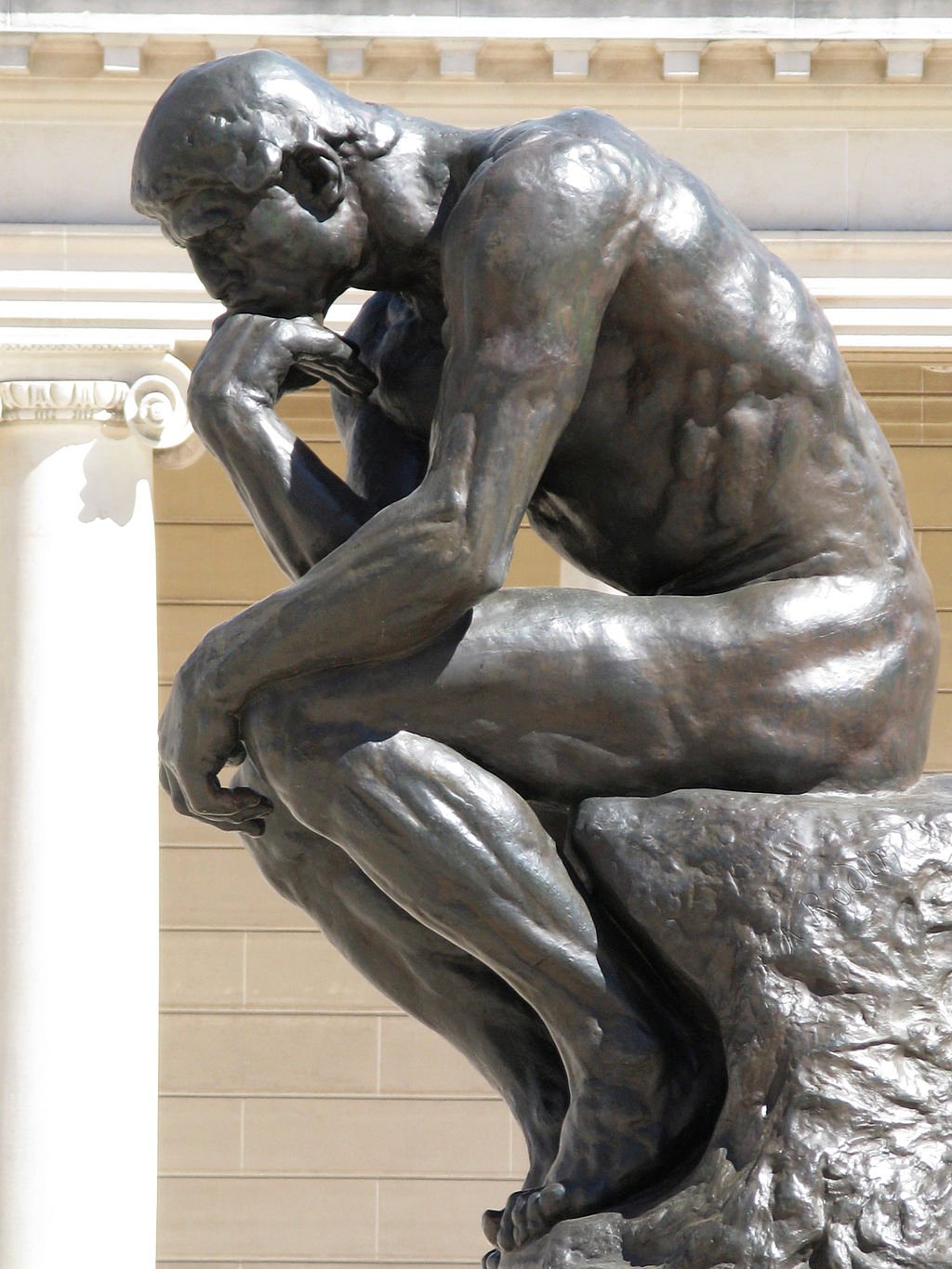
God doesn’t have to do this.
God does not have intelligence in this sense, according to the theistic account; He doesn’t need it. God’s intellect is more powerful than ours; where we have to work to know things, and often can know them only in part, imperfectly, God simply knows, and knows perfectly. God doesn’t have senses as we do; rather, He has direct access to all of creation—and that, you might say, from the inside. In theological terms, we say that God is immanent in creation: He is active in all places at all times.
If creation were a computer simulation (Minecraft, say), you might say that God plays the role of the computer on which it is running (among other things). There is no part of the running simulation in which the computer is not intimately involved; and if you were to ask where the computer is in the simulated world the only possible answer is, “Everywhere, sort of, but it’s complicated.” And if the computer were self-aware, we would say that the computer knows everything about the simulated world by virtue of it all being in the computer’s memory. The various animals in a Minecraft world have senses of a sort; but the computer wouldn’t need to use those senses to know what’s going on. It would know.
And so with God. Mind you, theism also claims that God is transcendent as well as immanent: He is active in all places and times in the universe, but He is not identical to the universe, nor is it part of Him.
This is how theism differs from pantheism on the one hand (God is immanent but not transcendent) and deism on the other (God is transcendent but not immanent).
Now, let’s go back to Ragarth’s question. He (?) is looking for “Evidence that intelligence is a necessary component for the creation of the universe.” I don’t pretend to have shown that yet; I’m just trying to “come to terms,” as Mortimer Adler would say. Now it’s Ragarth’s chance to agree or disagree about whether we’ve done so.
____
photo credit: By Yair Haklai (Own work) [CC BY-SA 3.0 or GFDL], via Wikimedia Commons

Deep Thoughts from the Doghouse
divine intelligence vs human intelligence
Previous Post

May 29, 2015
Dream a Little Dream: Ella Fitzgerald and Louis Armstrong
Next Post

June 2, 2015 A Note for Passing Atheists
Browse Our Archives
Select a Category Admin App o' the Morning Ask the Dogmat Believing Thomas Bits of Fiction Blasts from the Past Bootstrapping the Interior Life Catholic Mom Christian Living Deep Thoughts from the Doghouse Dominicana Evangelii Gaudium Interviews It Was A Dark and Stormy Night Links to This and That Lumen Fidei Meme Watch On Writing Operation Gratitude Pedant Errant Photography Quill Random Barkings S'Mary's World Shakers of Salt Software Development The Dog Whistler The Dogmat Sez Third Orders Thomas Aquinas Uncategorized Vikings at Dinos Woof Guide to Cinema Woof Guide to History Woof Guide to Literature Woof Guide to Obscure Catholic Music Woof Guide to Philosophy Woof Guide to Popular Music Woof Guide to Technology Woof Guide to Theology Words I Wish I'd Written Works For Me
Select a Month September 2016 August 2016 June 2016 May 2016 April 2016 March 2016 February 2016 January 2016 December 2015 November 2015 October 2015 September 2015 August 2015 July 2015 June 2015 May 2015 April 2015 March 2015 February 2015 January 2015 December 2014 November 2014 October 2014 September 2014 August 2014 July 2014 June 2014 May 2014 April 2014 March 2014 February 2014 January 2014 December 2013 November 2013 October 2013
Follow Us!
TAKE THE
Religious Wisdom Quiz
I carried a letter from the king giving me authority and resources to rebuild Jerusalem. Who am I?
Select your answer to see how you score.
Zerubbabel Artaxerxes Ezra Nehemiah
Related posts from Cry 'Woof'


When Amorous Leticia Met the Deacon...

The Glory of God and the Total Perspective...

TRENDING AT PATHEOS Catholic

Rejecting Doom: Christian Hope And Human Action
Christianity is a religion of hope. We are to have hope and...

It’s What Comes From Within Which Matters
One of the most difficult things for us to understand is why...

Why I Choose the Eucharist Over the Sermon
Choose the Eucharist, Not the Sermon What are we supposed to get...

5 Design Elements Found in Spiritually Rooted Homes
Putting Spirituality Into Home Decor Our homes are more than our living...

Credo: A Story of God Told with the...
About 10 years ago, I began to imagine a personal "Credo" that...

The Anatomy of Divine Revelation in Catholic Thought
The claim that God has made Himself known to human beings is...
view all Catholic blogs
Ad-Free & Subscriber Log-In Subscription Support
- About Us
- 2026 Calendar
- Videos
- Podcasts
- Library of World Religions
- Faith In Media Tracker
- Advertise With Us
- Write for Us
- Privacy Policy
- Terms of Service
- Do Not Sell My Data
- Contact Us
- Radiant Digital
- Manage Newsletter Subscriptions
- Unsubscribe From Notifications
- Sitemap
Copyright 2008-2026, Patheos. All rights reserved.
Subscription Support Ad-Free & Subscriber Log-In
Follow Patheos