
BuddhistCatholicContemplativeEvangelicalGeneral ChristianHinduJewishLatter-day SaintMuslimNew VisionsProgressive Christian
Beliefs
- Buddhist
- Catholic
- Contemplative
- Evangelical
- General Christian
- Hindu
- Jewish
- Latter-day Saint
- More Voices
- Muslim
- New Visions
- Pagan
- Progressive Christian
Topics
- Religion News
- Food and Religion
- Sports and Religion
- Religious Art
- Religious Music and Entertainment
- Religious Events
- History and Religion
- Style and Religion
- Politics and Religion
- Women in Religion
- Recreation Outdoors and Religion
- Business Finance and Religion
- Careers Workplace and Religion
- Education and Religion
- Family Parenting and Religion
- Health Fitness and Religion
- Home and Religion
- Relationships and Religion
- Technology and Religion
- Travel and Religion
Columnists
- Buddhist Columnists
- Business Finance and Religion Columnists
- Careers Workplace and Religion Columnists
- Catholic Columnists
- Contemplative Columnists
- Education and Religion Columnists
- Evangelists Columnists
- Family Parenting and Religion Columnists
- General Christian Columnists
- Health Fitness and Religion Columnists
- Hindu Columnists
- History and Religion Columnists
- Home and Religion Columnists
- Jewish Columnists
- More Voices Columnists
- Latter Day Columnists
- Muslim Columnists
- New Visions Columnists
- Nonreligious Columnists
- Pagan Columnists
- Politics and Religion Columnists
- Progressive Columnists
- Recreation Outdoors and Religion Columnists
- Relationships and Religion Columnists
- Religion News Columnists
- Religious Art Columnists
- Religious Events Columnists
- Religious Music and Entertainment Columnists
- Sports and Religion Columnists
- Style and Religion Columnists
- Technology and Religion Columnists
- Travel and Religion Columnists
- Women in Religion Columnists
Resource Library
- 2026 Calendar
- Library of World Religions
- The 100 Most Holy Places on Earth
- Patheos Answers
- Podcasts
- Videos
- Faith Leaders Database
- Anglican Episcopalian
- Bahai
- Baptist
- Buddhism
- Christianity
- Confucianism
- Eastern Orthodoxy
- Hinduism
- Holiness and Pentecostal
- ISKCON
- Islam
- Judaism
- Lutheran
- Methodist
- The Church of Jesus Christ of Latter-day Saints
- New Age
- Paganism
- Presbytarian and Reformed
- Protestantism
- Religion Behind the Scenes
- Roman Catholic
- Scientology
- Shia Islam
- Sikhism
- Sufism
- Sunni Islam
- Taoism
- Zen
- See all religions
Research Tools
 Ad-Free & Subscriber Log-In Subscription Support
Ad-Free & Subscriber Log-In Subscription Support
Follow Patheos 

- Trending:
- Forgiveness
- |
- Marriage
- |
- Consciousness
- |
- Death Penalty
- |
- Election
- |
- Halloween
 Cry 'Woof'
-
Series
- Home
- Catholic
- Today’s Aquinas: Nobler Beings? Who says?
Today’s Aquinas: Nobler Beings? Who says?
Last updated on: April 20, 2015 at 9:27 am by willduquette
Today’s Aquinas: Nobler Beings? Who says? 2015-04-20T09:27:06-05:00 willduquette
Patheos Explore the world's faith through different perspectives on religion and spirituality! Patheos has the views of the prevalent religions and spiritualities of the world.
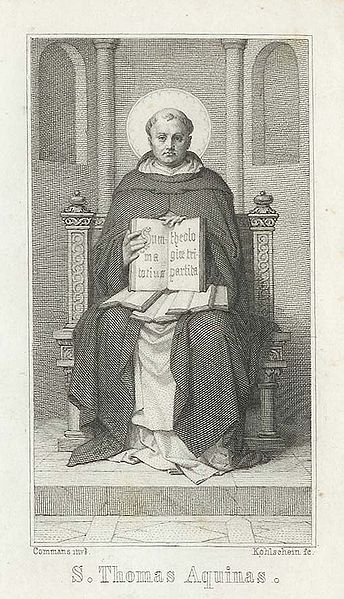 Last week a reader took issue with Thomas’ use of the term “nobler beings” as being a subjective judgement. Here is the passage in question:
Another consideration: among the various perfections of things, the chief are intellect and will. A sign of this is that they are found in the nobler beings.
(Emphasis mine.) The word “noble” is a fraught one in American usage. We either associate it with altruistic self-sacrifice (as in “a noble act”) or with the whole European social scheme we left behind after the American Revolution. And when we consider English nobility with our notion of “noble” as a superlative we naturally find them wanting.
In Thomas’ day, though, the term would have been seen in terms of hierarchy. Society was highly stratified, and there was little social mobility; you belonged to the class you were born into. The classes were ranked from less noble to more noble, and everyone pretty much knew where everyone else belonged. (This is why it was such a scandal for Thomas to join the Dominicans. They were beggars, and Thomas’ family were nobles, and closely related to the Emperor.) For someone of Thomas’ day to describe a man as “noble” was primarily to indicate his objective position in society, not his character.
Thus, when Thomas refers to the “nobler beings”, he is referring to the beings who are highest in some ranking; for Thomas, that ranking would be the extent to which the creature’s essence expressed the perfections of God. In his day, this ranking was seen as a strict ordering of all beings from greater to lesser; you might have heard it by the name of the Great Chain of Being.
This strict ordering is partially objective, partially subjective, and partially somewhat confused.
It is subjective in that we do not know just how different creatures express the perfections of God. Thomas famously observed that we cannot even exhaust the essence of a simple housefly; how then should we compare a housefly with a mosquito and judge that one is above the other?
It is confused in that God’s perfections are manifold and infinite. Cheetahs can run quite fast, but drown in water. Tuna can live in underwater indefinitely, but they cannot run at all. They can’t even crawl. Cheetahs excel tuna in one way, and tuna excel cheetahs in another. Which one would you put first? Each resembles God in its own way.
Nevertheless, there are certain broad categories, of which we can say that members of this category excel members of that category.
Plants, for example, are nobler than stones. Stones are inert (and so, one might say, they reflect God’s unchangingness). But stones do not act of themselves, ever, except insofar as they attract other bodies by force of gravity. If a stone ever moves or changes, it is because it was acted upon by something else in a mechanical fashion.
Plants have all of the capabilities of stones. They take up space; they have mass, so they exert the force of gravity on other beings; they persist over time. But they also act of themselves: they grow, and they take in nourishment. They are, in fact, alive, as stones are not. They exhibit the perfections of stones, but additional perfections as well.
Animals are nobler than plants. Plants do not move except by growing, or as moved by external forces such as wind and water. Some seed pods exhibit a kind of movement; dandelion seeds fly, and some seed pods crawl by expanding and contract with levels of moisture; but they do so mechanically, taking advantage of forces that act upon them. Plants are both acting and acted upon.
Animals have all of the capabilities of plants. They take up space and persist over time like stones; they take in nourishment and grow like plants; but they also sense their surroundings in a manner that no plant does and move from place to place seeking food, warmth, sex, and so forth. They are more acting and less acted upon than plants.
Human beings have all of the capabilities of animals; in fact, they are animals, as everyone knows. The Tree of Porphyry lays out being like this:
First you have bodies that take up space. Bodies are living or non-living.
Living bodies are of two kinds: those that do not move by themselves (plants) and those that do (animals). Animals are so called because they are animate.
Animals are of two kinds: non-rational and rational. Cheetahs are non-rational; human beings are rational. Rational animals have all of the capabilities of animals, taking up space, persisting, growing, eating, perceiving, and moving; but they can also reason, and judge the truth of propositions, and understand (at some level) the essence of other beings in a manner that cheetahs don’t.
Porphyry took this scheme one farther; he divided human beings into two categories, mortal and immortal; the immortals were the gods of Greece and Roman. But we don’t need to go there. Another side note: if there were intelligent life on Mars, Thomas would class them as rational animals, and hence human beings. We would then need to distinguish between Earth humans and Mars humans. But I digress.
The point is, each category of being adds something to the previous. Thus, there is an objective sense in which human beings are nobler than potatoes: we truly are higher in the hierarchy.
I’ve noted that the Great Chain of Being is somewhat subjective, because we don’t know enough to truly rank anything, and somewhat confused, because two beings might excel each other in different ways. But it is also objective in that this knowledge exists perfectly in the mind of God. We might not be able to objectively rank all beings, but God can, even if it’s a hierarchy of sorts rather than a strict chain.
Deep Thoughts from the Doghouse
Previous Post

April 17, 2015
They've Seen Him Out Dressed In My Clothes
Next Post

April 21, 2015 Learning Something New: Establishing a Bridgehead
Browse Our Archives
Select a Category Admin App o' the Morning Ask the Dogmat Believing Thomas Bits of Fiction Blasts from the Past Bootstrapping the Interior Life Catholic Mom Christian Living Deep Thoughts from the Doghouse Dominicana Evangelii Gaudium Interviews It Was A Dark and Stormy Night Links to This and That Lumen Fidei Meme Watch On Writing Operation Gratitude Pedant Errant Photography Quill Random Barkings S'Mary's World Shakers of Salt Software Development The Dog Whistler The Dogmat Sez Third Orders Thomas Aquinas Uncategorized Vikings at Dinos Woof Guide to Cinema Woof Guide to History Woof Guide to Literature Woof Guide to Obscure Catholic Music Woof Guide to Philosophy Woof Guide to Popular Music Woof Guide to Technology Woof Guide to Theology Words I Wish I'd Written Works For Me
Select a Month September 2016 August 2016 June 2016 May 2016 April 2016 March 2016 February 2016 January 2016 December 2015 November 2015 October 2015 September 2015 August 2015 July 2015 June 2015 May 2015 April 2015 March 2015 February 2015 January 2015 December 2014 November 2014 October 2014 September 2014 August 2014 July 2014 June 2014 May 2014 April 2014 March 2014 February 2014 January 2014 December 2013 November 2013 October 2013
Follow Us!
TAKE THE
Religious Wisdom Quiz
What Jewish festival celebrates the deliverance in Esther?
Select your answer to see how you score.
Tabernacles Passover Purim Hanukkah
Related posts from Cry 'Woof'

When Amorous Leticia Met the Deacon...

Today's Aquinas: Form Over Matter
Today's Aquinas: Only God can Create
TRENDING AT PATHEOS Catholic

The Parable Of The Sower And The Word...
One of Christ’s most famous parables is that of the sower who...

Rejecting Doom: Christian Hope And Human Action
Christianity is a religion of hope. We are to have hope and...

Why I Choose the Eucharist Over the Sermon
Choose the Eucharist, Not the Sermon What are we supposed to get...

5 Design Elements Found in Spiritually Rooted Homes
Putting Spirituality Into Home Decor Our homes are more than our living...

Credo: A Story of God Told with the...
About 10 years ago, I began to imagine a personal "Credo" that...

The Anatomy of Divine Revelation in Catholic Thought
The claim that God has made Himself known to human beings is...
view all Catholic blogs
Ad-Free & Subscriber Log-In Subscription Support
- About Us
- 2026 Calendar
- Videos
- Podcasts
- Library of World Religions
- Faith In Media Tracker
- Advertise With Us
- Write for Us
- Privacy Policy
- Terms of Service
- Do Not Sell My Data
- Contact Us
- Radiant Digital
- Manage Newsletter Subscriptions
- Unsubscribe From Notifications
- Sitemap
Copyright 2008-2026, Patheos. All rights reserved.
Subscription Support Ad-Free & Subscriber Log-In
Follow Patheos