
BuddhistCatholicContemplativeEvangelicalGeneral ChristianHinduJewishLatter-day SaintMuslimNew VisionsProgressive Christian
Beliefs
- Buddhist
- Catholic
- Contemplative
- Evangelical
- General Christian
- Hindu
- Jewish
- Latter-day Saint
- More Voices
- Muslim
- New Visions
- Pagan
- Progressive Christian
Topics
- Religion News
- Food and Religion
- Sports and Religion
- Religious Art
- Religious Music and Entertainment
- Religious Events
- History and Religion
- Style and Religion
- Politics and Religion
- Women in Religion
- Recreation Outdoors and Religion
- Business Finance and Religion
- Careers Workplace and Religion
- Education and Religion
- Family Parenting and Religion
- Health Fitness and Religion
- Home and Religion
- Relationships and Religion
- Technology and Religion
- Travel and Religion
Columnists
- Buddhist Columnists
- Business Finance and Religion Columnists
- Careers Workplace and Religion Columnists
- Catholic Columnists
- Contemplative Columnists
- Education and Religion Columnists
- Evangelists Columnists
- Family Parenting and Religion Columnists
- General Christian Columnists
- Health Fitness and Religion Columnists
- Hindu Columnists
- History and Religion Columnists
- Home and Religion Columnists
- Jewish Columnists
- More Voices Columnists
- Latter Day Columnists
- Muslim Columnists
- New Visions Columnists
- Nonreligious Columnists
- Pagan Columnists
- Politics and Religion Columnists
- Progressive Columnists
- Recreation Outdoors and Religion Columnists
- Relationships and Religion Columnists
- Religion News Columnists
- Religious Art Columnists
- Religious Events Columnists
- Religious Music and Entertainment Columnists
- Sports and Religion Columnists
- Style and Religion Columnists
- Technology and Religion Columnists
- Travel and Religion Columnists
- Women in Religion Columnists
Resource Library
- 2026 Calendar
- Library of World Religions
- The 100 Most Holy Places on Earth
- Patheos Answers
- Podcasts
- Videos
- Faith Leaders Database
- Anglican Episcopalian
- Bahai
- Baptist
- Buddhism
- Christianity
- Confucianism
- Eastern Orthodoxy
- Hinduism
- Holiness and Pentecostal
- ISKCON
- Islam
- Judaism
- Lutheran
- Methodist
- The Church of Jesus Christ of Latter-day Saints
- New Age
- Paganism
- Presbytarian and Reformed
- Protestantism
- Religion Behind the Scenes
- Roman Catholic
- Scientology
- Shia Islam
- Sikhism
- Sufism
- Sunni Islam
- Taoism
- Zen
- See all religions
Research Tools
 Ad-Free & Subscriber Log-In Subscription Support
Ad-Free & Subscriber Log-In Subscription Support
Follow Patheos 

- Trending:
- Forgiveness
- |
- Marriage
- |
- Consciousness
- |
- Death Penalty
- |
- Election
- |
- Halloween
 Cry 'Woof'
-
Series
- Home
- Catholic
- Learning Something New: Establishing a Bridgehead
Learning Something New: Establishing a Bridgehead
Last updated on: April 21, 2015 at 8:00 am by willduquette
Learning Something New: Establishing a Bridgehead 2015-04-18T13:38:42-05:00 willduquette
Patheos Explore the world's faith through different perspectives on religion and spirituality! Patheos has the views of the prevalent religions and spiritualities of the world.
Over the last couple of days I’ve been looking through some of the books (and by “books” I mean books, with covers and paper pages) I’ve bought over the last ten years, in an attempt to bring some order to my bedroom and den. I’ve been using Kindle for most of my fiction reading since the first Amazon Kindle, and so most of the books I’ve been looking at involve my various interests over that period. I’ve acquired a lot of books about photography (a big interest in the 2005-2006 time frame), and many, many books about philosophy, theology, and other aspects of the Catholic faith. Some of them have become stalwart friends; others were interesting at the time but won’t be re-read; and others I’d gladly see the back of.
But it got me reflecting on how I pick up a new topic that I don’t know much about. In a nutshell, I read a lot. A whole lot. I buy lots of books that look like they might be helpful, and some are and some aren’t. Some I devour, and some I attempt and then pass by, for a time or forever. I suck in information by the ton, and ultimately begin to make sense of it.
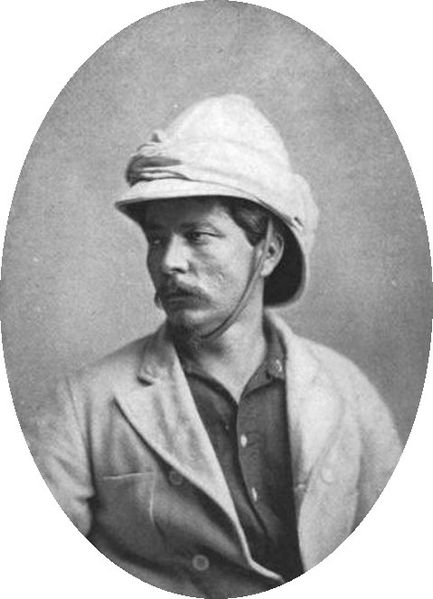
The Explorer Sets Out
I often think of this process as “map-making”: I’m building my mental map of a new territory, much as I would built a mental map of a new city.
The first step is to map the broad outlines: the major landmarks, the prominent neighborhoods, the places I want to go and the places I don’t want to go. I do that by looking for introductory material, or surveys of the whole subject. When I began to get interested in history, decades ago, I began by picking up a copy of Will and Ariel Durant’s The Story of Civilization. The Durants aren’t always accurate, it seems, and I found that they got mired in minutiae after about the Renaissance, but for the span up to then they gave me that broad sweep I was looking for. When I began to get interested in photography, I picked up Bryan Peterson’s Understanding Digital Photography, a book that got me started in understanding what I was trying to do, and led me on to other things. When I began to get interested in the Catholic Church I read Catholic blogs, and then books recommended by Catholic blogs, and on and on, and things progressed fairly well.
But sometimes it isn’t that easy. Early on in my Catholic reading I devoured G.K. Chesterton’s biography of St. Thomas Aquinas—so far, so good. And that led me to Peter Kreeft’s Summa of the Summa, an abridged version of Thomas’ Summa Theologiae with comments. I was excited to get into it…
…and I bounced. I couldn’t see what Thomas was trying to do; I didn’t understand how he used words; I didn’t get it. I wanted to, but I didn’t.
You might say that I didn’t know where to begin making my map: I didn’t know how to situate what he was saying relative to other things I knew. I felt lost, at sea, and I hate that.
Now, there are two ways to deal with material like this. The first (and it’s a good way if you can hack it) is to just keep reading, skimming what you don’t understand, latching on to what you do understand, trying to fill in the major bits from the author’s point of view even if you don’t see how they go together. And then you go back and read it again, more carefully, paying attention to the words and working out what they have to mean for everything to make sense. This is Mortimer Adler’s approach, as immortalized in How to Read a Book, and it’s a neat trick if you can do it. But you have to have a really good memory and the ability to hold unfamiliar concepts in mind even though you can’t see how they connect up with each other and with what you already know.
Alas, I’m not especially good at that. It might be my software background, but I find I need to build things from the ground up, each brick fitting in with each other brick, until I’ve got a structure that will support its own weight. (I sometimes think my success as a software developer is my ability to construct my software so that the amount of information I have to remember at any one time is minimized. I might write about that some day.)
So what do you do instead? You look for books that cover the subject at a simpler, more basic level. You look for books that approach it from different points of view. You look for that fixed point that relates what it’s all about to what you already know. Mixing metaphors egregiously, I call that “finding a place to hang my hat.” It gives me a place to stand.
Learning a subject of this kind is more like fighting your way through contested terrain than it is like mapping a friendly territory. The terrain is rugged, and there are enemies who fight back every step of the way. The first thing you need in this case is a bridgehead…and once you’ve established your bridgehead you send out columns of troops to conquer territory. And you look for allies to help you in your struggle.
Finding that bridgehead can be difficult. But once you’ve got it, once you’ve got your feet under you and you’ve got your hat properly hung up, you’re set.
For me, with respect to Thomist philosophy and theology, my bridgehead was, first, Jacques Maritain’s Introduction to Philosophy, and second, Edward Feser’s books (disregarding The Last Superstition, which is too polemical, though I’ve known it to work for some people). I’ve been fighting my way through it ever since.
Yesterday I looked through some of the books I bought as I was looking for that bridgehead; some of them I’m getting rid of, and others I plan to look at again, in hopes that I now have the background to make sense of them. We’ll see.
Deep Thoughts from the Doghouse
Previous Post

April 20, 2015
Today's Aquinas: Nobler Beings? Who says?
Next Post

April 22, 2015 Second Look: Amazon Echo after One Week
Browse Our Archives
Select a Category Admin App o' the Morning Ask the Dogmat Believing Thomas Bits of Fiction Blasts from the Past Bootstrapping the Interior Life Catholic Mom Christian Living Deep Thoughts from the Doghouse Dominicana Evangelii Gaudium Interviews It Was A Dark and Stormy Night Links to This and That Lumen Fidei Meme Watch On Writing Operation Gratitude Pedant Errant Photography Quill Random Barkings S'Mary's World Shakers of Salt Software Development The Dog Whistler The Dogmat Sez Third Orders Thomas Aquinas Uncategorized Vikings at Dinos Woof Guide to Cinema Woof Guide to History Woof Guide to Literature Woof Guide to Obscure Catholic Music Woof Guide to Philosophy Woof Guide to Popular Music Woof Guide to Technology Woof Guide to Theology Words I Wish I'd Written Works For Me
Select a Month September 2016 August 2016 June 2016 May 2016 April 2016 March 2016 February 2016 January 2016 December 2015 November 2015 October 2015 September 2015 August 2015 July 2015 June 2015 May 2015 April 2015 March 2015 February 2015 January 2015 December 2014 November 2014 October 2014 September 2014 August 2014 July 2014 June 2014 May 2014 April 2014 March 2014 February 2014 January 2014 December 2013 November 2013 October 2013
Follow Us!
TAKE THE
Religious Wisdom Quiz
What did Elisha heal by throwing salt into it?
Select your answer to see how you score.
A spring of water River Jordan A fig tree A pot of stew
Related posts from Cry 'Woof'

When Amorous Leticia Met the Deacon...

The Glory of God and the Total Perspective...
TRENDING AT PATHEOS Catholic

Rejecting Doom: Christian Hope And Human Action
Christianity is a religion of hope. We are to have hope and...

It’s What Comes From Within Which Matters
One of the most difficult things for us to understand is why...

Why I Choose the Eucharist Over the Sermon
Choose the Eucharist, Not the Sermon What are we supposed to get...

5 Design Elements Found in Spiritually Rooted Homes
Putting Spirituality Into Home Decor Our homes are more than our living...

Credo: A Story of God Told with the...
About 10 years ago, I began to imagine a personal "Credo" that...

The Anatomy of Divine Revelation in Catholic Thought
The claim that God has made Himself known to human beings is...
view all Catholic blogs
Ad-Free & Subscriber Log-In Subscription Support
- About Us
- 2026 Calendar
- Videos
- Podcasts
- Library of World Religions
- Faith In Media Tracker
- Advertise With Us
- Write for Us
- Privacy Policy
- Terms of Service
- Do Not Sell My Data
- Contact Us
- Radiant Digital
- Manage Newsletter Subscriptions
- Unsubscribe From Notifications
- Sitemap
Copyright 2008-2026, Patheos. All rights reserved.
Subscription Support Ad-Free & Subscriber Log-In
Follow Patheos