
BuddhistCatholicContemplativeEvangelicalGeneral ChristianHinduJewishLatter-day SaintMuslimNew VisionsProgressive Christian
Beliefs
- Buddhist
- Catholic
- Contemplative
- Evangelical
- General Christian
- Hindu
- Jewish
- Latter-day Saint
- More Voices
- Muslim
- New Visions
- Pagan
- Progressive Christian
Topics
- Religion News
- Food and Religion
- Sports and Religion
- Religious Art
- Religious Music and Entertainment
- Religious Events
- History and Religion
- Style and Religion
- Politics and Religion
- Women in Religion
- Recreation Outdoors and Religion
- Business Finance and Religion
- Careers Workplace and Religion
- Education and Religion
- Family Parenting and Religion
- Health Fitness and Religion
- Home and Religion
- Relationships and Religion
- Technology and Religion
- Travel and Religion
Columnists
- Buddhist Columnists
- Business Finance and Religion Columnists
- Careers Workplace and Religion Columnists
- Catholic Columnists
- Contemplative Columnists
- Education and Religion Columnists
- Evangelists Columnists
- Family Parenting and Religion Columnists
- General Christian Columnists
- Health Fitness and Religion Columnists
- Hindu Columnists
- History and Religion Columnists
- Home and Religion Columnists
- Jewish Columnists
- More Voices Columnists
- Latter Day Columnists
- Muslim Columnists
- New Visions Columnists
- Nonreligious Columnists
- Pagan Columnists
- Politics and Religion Columnists
- Progressive Columnists
- Recreation Outdoors and Religion Columnists
- Relationships and Religion Columnists
- Religion News Columnists
- Religious Art Columnists
- Religious Events Columnists
- Religious Music and Entertainment Columnists
- Sports and Religion Columnists
- Style and Religion Columnists
- Technology and Religion Columnists
- Travel and Religion Columnists
- Women in Religion Columnists
Resource Library
- 2026 Calendar
- Library of World Religions
- The 100 Most Holy Places on Earth
- Patheos Answers
- Podcasts
- Videos
- Faith Leaders Database
- Anglican Episcopalian
- Bahai
- Baptist
- Buddhism
- Christianity
- Confucianism
- Eastern Orthodoxy
- Hinduism
- Holiness and Pentecostal
- ISKCON
- Islam
- Judaism
- Lutheran
- Methodist
- The Church of Jesus Christ of Latter-day Saints
- New Age
- Paganism
- Presbytarian and Reformed
- Protestantism
- Religion Behind the Scenes
- Roman Catholic
- Scientology
- Shia Islam
- Sikhism
- Sufism
- Sunni Islam
- Taoism
- Zen
- See all religions
Research Tools
 Ad-Free & Subscriber Log-In Subscription Support
Ad-Free & Subscriber Log-In Subscription Support
Follow Patheos 

- Trending:
- Forgiveness
- |
- Marriage
- |
- Consciousness
- |
- Death Penalty
- |
- Election
- |
- Halloween
 Cry 'Woof'
-
Series
- Home
- Catholic
- Third Orders Aren’t First Orders
Third Orders Aren’t First Orders
Last updated on: March 11, 2015 at 8:00 am by willduquette
Third Orders Aren’t First Orders 2015-03-10T19:22:38-05:00 willduquette
Patheos Explore the world's faith through different perspectives on religion and spirituality! Patheos has the views of the prevalent religions and spiritualities of the world.
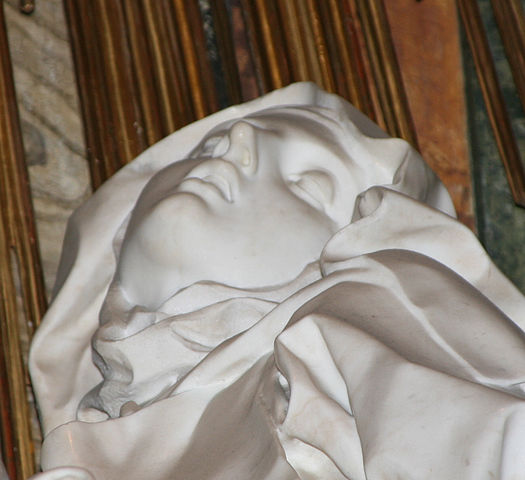 Clare Short recently began formation as a Secular Carmelite, and has been blogging about it. She’s the mother of young children, and the other day she received a message about her vocation from a priest who should know better:
I was recently sent a rather snooty message by a diocesan priest who used to be a Trappist monk. He was telling me that it was basically impossible for me to live a contemplative life in the context of a family home. He told me my children would not find my ‘requirement’ for silence much fun. He also told me it was impossible to be a contemplative without silence.
Clare goes on to explain how she’s been preparing (rather willy-nilly) for a vocation of silence in the midst of noise for the past five years, courtesy of a nasty case of tinnitus. It’s a beautiful story you really should read. (I’ll wait.)
As a Lay Dominican I find Clare’s story interesting because it points out some interesting things about our vocations as tertiaries.*
First, the vocation to be a tertiary is a genuine vocation, a real calling from God. Not everyone is called to it; and those who are called are suited to it, because grace perfects nature. It’s a sign of Clare’s calling as a Secular Carmelite, a contemplative order, that she can find her Carmel deep within, in the middle of her daily life.
Clare’s correspondent is a former Trappist, an order that emphasizes silence. For the record, the Cistercian Order was founded as a reform of the Benedictine order, and the Trappists as a reform of the Cistercians. These people are hard-core. I doubt you could live a First-Order Trappist vocation without all of the external help (including silence) that you can get. But Carmelites are not Trappists; and Secular Carmelites are most especially not First-Order Trappists.
Second, a tertiary’s vocation isn’t simply an attenuated or watered-down version of the First or Second Order’s vocation: it’s a different vocation altogether. It’s frequently a secondary vocation; for married tertiaries, our primary vocation is to our marriage. And it’s always a vocation to be lived out in day-to-day life in the world.
This is to say that it’s simply a part of the vocation of a tertiary to make time for God in the midst of a busy secular life. It’s simply what we do.
And third, to be a Dominican tertiary is a very different thing than to be a Carmelite or Franciscan or Benedictine tertiary. The orders do have quite distinct charisms, and though I love Clare’s description of finding that desert deep within her soul it isn’t anything that I’ve been looking for. Carmelites are made to live in silence; Dominicans, well, you can’t shut us up.
____
* Most of the major religious orders—Benedictines, the Franciscans, the Carmelites, the Dominicans, and so forth—have both men (priests or brothers) and women (nuns or sisters) as consecrated members of the order. And most of them also have what you might call a lay auxiliary: lay people who are attracted to the order’s spirituality and charism, and have formally become members of the order. It used to be that such lay people were said to be Third Orders or tertiaries: the consecrated men were the order’s First Order, the consecrated women were the Second Order, and the affiliated layfolk the Third Order. Some time late last century, the powers that be decided that the “First/Second/Third” terminology was demeaning to the Second and Third Orders, and more or less abolished it.
And then each order adopted its own terminology for their Third Order members. Third-Order Benedictines became Benedictine Oblates. Third-Order Franciscans and Carmelites became Secular Franciscans and Carmelites. And Third-Order Dominicans became Lay Dominicans.
Do you see the problem? There is now no authorized term shorter than “layperson affiliated in some way with a religious order” that applies to all such people. Consequently, I and most people I know have gone on calling them Third-Orders or tertiaries. It’s a nuisance, is what it is.)
____
Photo Credit: Nina Aldin Thune, CC-BY-SA 2.5

Previous Post

March 10, 2015
C.S. Lewis: The Space Trilogy
Next Post

March 12, 2015 Leslie Charteris on Getting Your Goat
Browse Our Archives
Select a Category Admin App o' the Morning Ask the Dogmat Believing Thomas Bits of Fiction Blasts from the Past Bootstrapping the Interior Life Catholic Mom Christian Living Deep Thoughts from the Doghouse Dominicana Evangelii Gaudium Interviews It Was A Dark and Stormy Night Links to This and That Lumen Fidei Meme Watch On Writing Operation Gratitude Pedant Errant Photography Quill Random Barkings S'Mary's World Shakers of Salt Software Development The Dog Whistler The Dogmat Sez Third Orders Thomas Aquinas Uncategorized Vikings at Dinos Woof Guide to Cinema Woof Guide to History Woof Guide to Literature Woof Guide to Obscure Catholic Music Woof Guide to Philosophy Woof Guide to Popular Music Woof Guide to Technology Woof Guide to Theology Words I Wish I'd Written Works For Me
Select a Month September 2016 August 2016 June 2016 May 2016 April 2016 March 2016 February 2016 January 2016 December 2015 November 2015 October 2015 September 2015 August 2015 July 2015 June 2015 May 2015 April 2015 March 2015 February 2015 January 2015 December 2014 November 2014 October 2014 September 2014 August 2014 July 2014 June 2014 May 2014 April 2014 March 2014 February 2014 January 2014 December 2013 November 2013 October 2013
Follow Us!
TAKE THE
Religious Wisdom Quiz
Which Christian denomination practices baptism by immersion only and adult profession of faith?
Select your answer to see how you score.
Catholic Anglican Baptist Methodist
Related posts from Cry 'Woof'

Pier Giorgio Frassati, Man of the Beatitudes

Celebrating the Dominican Jubilee with Lectio Divina #OP800


Formation Notes: Paul Gives the Romans the Straight...
TRENDING AT PATHEOS Catholic

Rejecting Doom: Christian Hope And Human Action
Christianity is a religion of hope. We are to have hope and...

It’s What Comes From Within Which Matters
One of the most difficult things for us to understand is why...

Why I Choose the Eucharist Over the Sermon
Choose the Eucharist, Not the Sermon What are we supposed to get...

5 Design Elements Found in Spiritually Rooted Homes
Putting Spirituality Into Home Decor Our homes are more than our living...

Credo: A Story of God Told with the...
About 10 years ago, I began to imagine a personal "Credo" that...

The Anatomy of Divine Revelation in Catholic Thought
The claim that God has made Himself known to human beings is...
view all Catholic blogs
Ad-Free & Subscriber Log-In Subscription Support
- About Us
- 2026 Calendar
- Videos
- Podcasts
- Library of World Religions
- Faith In Media Tracker
- Advertise With Us
- Write for Us
- Privacy Policy
- Terms of Service
- Do Not Sell My Data
- Contact Us
- Radiant Digital
- Manage Newsletter Subscriptions
- Unsubscribe From Notifications
- Sitemap
Copyright 2008-2026, Patheos. All rights reserved.
Subscription Support Ad-Free & Subscriber Log-In
Follow Patheos