
BuddhistCatholicContemplativeEvangelicalGeneral ChristianHinduJewishLatter-day SaintMuslimNew VisionsProgressive Christian
Beliefs
- Buddhist
- Catholic
- Contemplative
- Evangelical
- General Christian
- Hindu
- Jewish
- Latter-day Saint
- More Voices
- Muslim
- New Visions
- Pagan
- Progressive Christian
Topics
- Religion News
- Food and Religion
- Sports and Religion
- Religious Art
- Religious Music and Entertainment
- Religious Events
- History and Religion
- Style and Religion
- Politics and Religion
- Women in Religion
- Recreation Outdoors and Religion
- Business Finance and Religion
- Careers Workplace and Religion
- Education and Religion
- Family Parenting and Religion
- Health Fitness and Religion
- Home and Religion
- Relationships and Religion
- Technology and Religion
- Travel and Religion
Columnists
- Buddhist Columnists
- Business Finance and Religion Columnists
- Careers Workplace and Religion Columnists
- Catholic Columnists
- Contemplative Columnists
- Education and Religion Columnists
- Evangelists Columnists
- Family Parenting and Religion Columnists
- General Christian Columnists
- Health Fitness and Religion Columnists
- Hindu Columnists
- History and Religion Columnists
- Home and Religion Columnists
- Jewish Columnists
- More Voices Columnists
- Latter Day Columnists
- Muslim Columnists
- New Visions Columnists
- Nonreligious Columnists
- Pagan Columnists
- Politics and Religion Columnists
- Progressive Columnists
- Recreation Outdoors and Religion Columnists
- Relationships and Religion Columnists
- Religion News Columnists
- Religious Art Columnists
- Religious Events Columnists
- Religious Music and Entertainment Columnists
- Sports and Religion Columnists
- Style and Religion Columnists
- Technology and Religion Columnists
- Travel and Religion Columnists
- Women in Religion Columnists
Resource Library
- 2026 Calendar
- Library of World Religions
- The 100 Most Holy Places on Earth
- Patheos Answers
- Podcasts
- Videos
- Faith Leaders Database
- Anglican Episcopalian
- Bahai
- Baptist
- Buddhism
- Christianity
- Confucianism
- Eastern Orthodoxy
- Hinduism
- Holiness and Pentecostal
- ISKCON
- Islam
- Judaism
- Lutheran
- Methodist
- The Church of Jesus Christ of Latter-day Saints
- New Age
- Paganism
- Presbytarian and Reformed
- Protestantism
- Religion Behind the Scenes
- Roman Catholic
- Scientology
- Shia Islam
- Sikhism
- Sufism
- Sunni Islam
- Taoism
- Zen
- See all religions
Research Tools
 Ad-Free & Subscriber Log-In Subscription Support
Ad-Free & Subscriber Log-In Subscription Support
Follow Patheos 

- Trending:
- Forgiveness
- |
- Marriage
- |
- Consciousness
- |
- Death Penalty
- |
- Election
- |
- Halloween
 Cry 'Woof'
-
Series
- Home
- Catholic
- Today’s Aquinas: the Good vs. the good
Today’s Aquinas: the Good vs. the good
Last updated on: February 23, 2015 at 8:00 am by willduquette
Today’s Aquinas: the Good vs. the good 2015-02-21T16:15:21-05:00 willduquette
Patheos Explore the world's faith through different perspectives on religion and spirituality! Patheos has the views of the prevalent religions and spiritualities of the world.
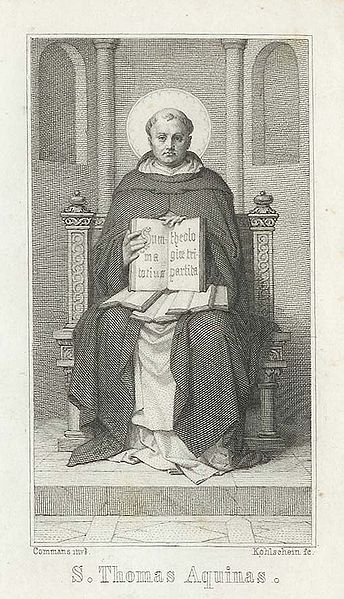 We’re blogging through St. Thomas Aquinas’ Compendium Theologiae, sometimes called his Shorter Summa. Find the previous posts here.
And now we get to something meaty: the analogy of being. We say that a statement is the truth when it corresponds with reality; we say that God is the Truth. We say that an act of generosity or charity is good; we say that God is the Good. We say that a painting or a person is a “beauty”; we say that God is the Beautiful. But are we really using the terms in the same way in each case?
Thomas answers that of course we aren’t. But we aren’t speaking irresponsibly, either; there is a connection between how we say that God is true and how we say that a statement is true:
The third point is that names applied to God and to other beings are not predicated either quite univocally or quite equivocally. They cannot be predicated univocally, because the definition of what is said of a creature is not a definition of what is said of God. Things predicated univocally must have the same definition.
Two terms are univocal if they mean the same thing, refer to the same object: they speak with one voice. The seasonal names “Fall” and “Autumn” are univocal, because they both mean the season between Summer and Winter.
Nor are these names predicated in all respects equivocally. In the case of fortuitous equivocation, a name is attached to an object that has no relation to another object bearing the same name. Hence the reasoning in which we engage about one cannot be transferred to the other. But the names predicated of God and of other things are attributed to God according to some relation He has to those things; and in their case the mind ponders what the names signify. This is why we can transfer our’ reasoning about other things to God. Therefore such terms are not predicated altogether equivocally about God and about other things, as happens in fortuitous equivocation.
Two terms are equivocal if they have quite different meanings; they speak with equal voices, and each demands to be heard. “My dear” and “My deer” are as different as Mrs. Claus and Rudolph the Red-Nosed Reindeer, and woe to Santa if he confuses them.
Now, we clearly aren’t using the word “truth” univocally when we speak of God as Truth vs. the truth of a statement. But we aren’t being equivocal either; there is a relationship between the two terms, and the meaning of one leads us to the meaning of the other. And this Thomas calls analogy:
Consequently they are predicated according to analogy, that is, according to their proportion to one thing. For, from the fact that we compare other things with God as their first origin, we attribute to God such names as signify perfections in other things. This clearly brings out the truth that, as regards the assigning of the names, such names are primarily predicated of creatures, inasmuch as the intellect that assigns the names ascends from creatures to God. But as regards the thing signified by the name, they are primarily predicated of God, from whom the perfections descend to other beings.
Here’s an example of an analogical term: when someone explains to us the causes of a situation, we say that he has “cast light on the subject”. This doesn’t mean that he brought a flashlight; rather, we mean that he helped us to see more clearly, that is, to understand. Thomas frequently refers to light in just this way, referring to the “natural light of reason” or the “divine light”.
Now, we ascend to an understanding of God, insofar as we are able, by contemplating the perfections of the things around us and recognizing that they all have their source in God, who must possess these perfections in a more eminent way. In this way, we ascribe Beauty to God by analogy with natural beauty. But what we mean by God’s Beauty isn’t quite what we mean by natural beauty; it’s something greater: something we now see as through a glass darkly, but then will see clearly.
___
photo credit: Public Domain; source Wikimedia Commons

Previous Post

February 20, 2015
Of K-Tel Ads and Nat King Cole
Next Post

February 24, 2015 Review: Between Silk and Cyanide
Browse Our Archives
Select a Category Admin App o' the Morning Ask the Dogmat Believing Thomas Bits of Fiction Blasts from the Past Bootstrapping the Interior Life Catholic Mom Christian Living Deep Thoughts from the Doghouse Dominicana Evangelii Gaudium Interviews It Was A Dark and Stormy Night Links to This and That Lumen Fidei Meme Watch On Writing Operation Gratitude Pedant Errant Photography Quill Random Barkings S'Mary's World Shakers of Salt Software Development The Dog Whistler The Dogmat Sez Third Orders Thomas Aquinas Uncategorized Vikings at Dinos Woof Guide to Cinema Woof Guide to History Woof Guide to Literature Woof Guide to Obscure Catholic Music Woof Guide to Philosophy Woof Guide to Popular Music Woof Guide to Technology Woof Guide to Theology Words I Wish I'd Written Works For Me
Select a Month September 2016 August 2016 June 2016 May 2016 April 2016 March 2016 February 2016 January 2016 December 2015 November 2015 October 2015 September 2015 August 2015 July 2015 June 2015 May 2015 April 2015 March 2015 February 2015 January 2015 December 2014 November 2014 October 2014 September 2014 August 2014 July 2014 June 2014 May 2014 April 2014 March 2014 February 2014 January 2014 December 2013 November 2013 October 2013
Follow Us!
TAKE THE
Religious Wisdom Quiz
What was the name of Saul's son who ruled Israel except Judah after Saul died?
Select your answer to see how you score.
Abner Jonathan Mephibosheth Ish-bosheth
Related posts from Cry 'Woof'

Today's Aquinas: Form Over Matter
Today's Aquinas: Only God can Create
Today's Aquinas: Something from Nothing
Today's Aquinas: The Chicken or the Egg
TRENDING AT PATHEOS Catholic

The Parable Of The Sower And The Word...
One of Christ’s most famous parables is that of the sower who...

Rejecting Doom: Christian Hope And Human Action
Christianity is a religion of hope. We are to have hope and...

Why I Choose the Eucharist Over the Sermon
Choose the Eucharist, Not the Sermon What are we supposed to get...

5 Design Elements Found in Spiritually Rooted Homes
Putting Spirituality Into Home Decor Our homes are more than our living...

Credo: A Story of God Told with the...
About 10 years ago, I began to imagine a personal "Credo" that...

The Anatomy of Divine Revelation in Catholic Thought
The claim that God has made Himself known to human beings is...
view all Catholic blogs
Ad-Free & Subscriber Log-In Subscription Support
- About Us
- 2026 Calendar
- Videos
- Podcasts
- Library of World Religions
- Faith In Media Tracker
- Advertise With Us
- Write for Us
- Privacy Policy
- Terms of Service
- Do Not Sell My Data
- Contact Us
- Radiant Digital
- Manage Newsletter Subscriptions
- Unsubscribe From Notifications
- Sitemap
Copyright 2008-2026, Patheos. All rights reserved.
Subscription Support Ad-Free & Subscriber Log-In
Follow Patheos